
Crypto Beyond Speculation: How Tokenized Assets and Stablecoins Are Quietly Rewiring Global Finance
From Speculation to Infrastructure
Over the last two years, crypto coverage in outlets like Crypto Coins News, TechCrunch, Wired, and the Financial Times has noticeably changed tone. Instead of breathless commentary on token prices, journalists now follow a quieter but more consequential shift: blockchains are being used as neutral, programmable rails for money and assets that already exist off-chain.
This evolution has three main pillars:
- Tokenized real‑world assets (RWAs): On‑chain representations of bonds, funds, treasuries, real estate, and private credit.
- Stablecoins: Fiat‑pegged digital tokens increasingly used for remittances, trading, and B2B payments.
- Compliance‑ready infrastructure: Identity, analytics, and regulatory tooling that make public blockchains usable by institutions.
At the same time, regulatory and legal battles—over whether certain tokens are securities, how stablecoin reserves must be held, and how DeFi protocols should be supervised—are defining the contours of this new landscape.
Visualizing the New Crypto Infrastructure
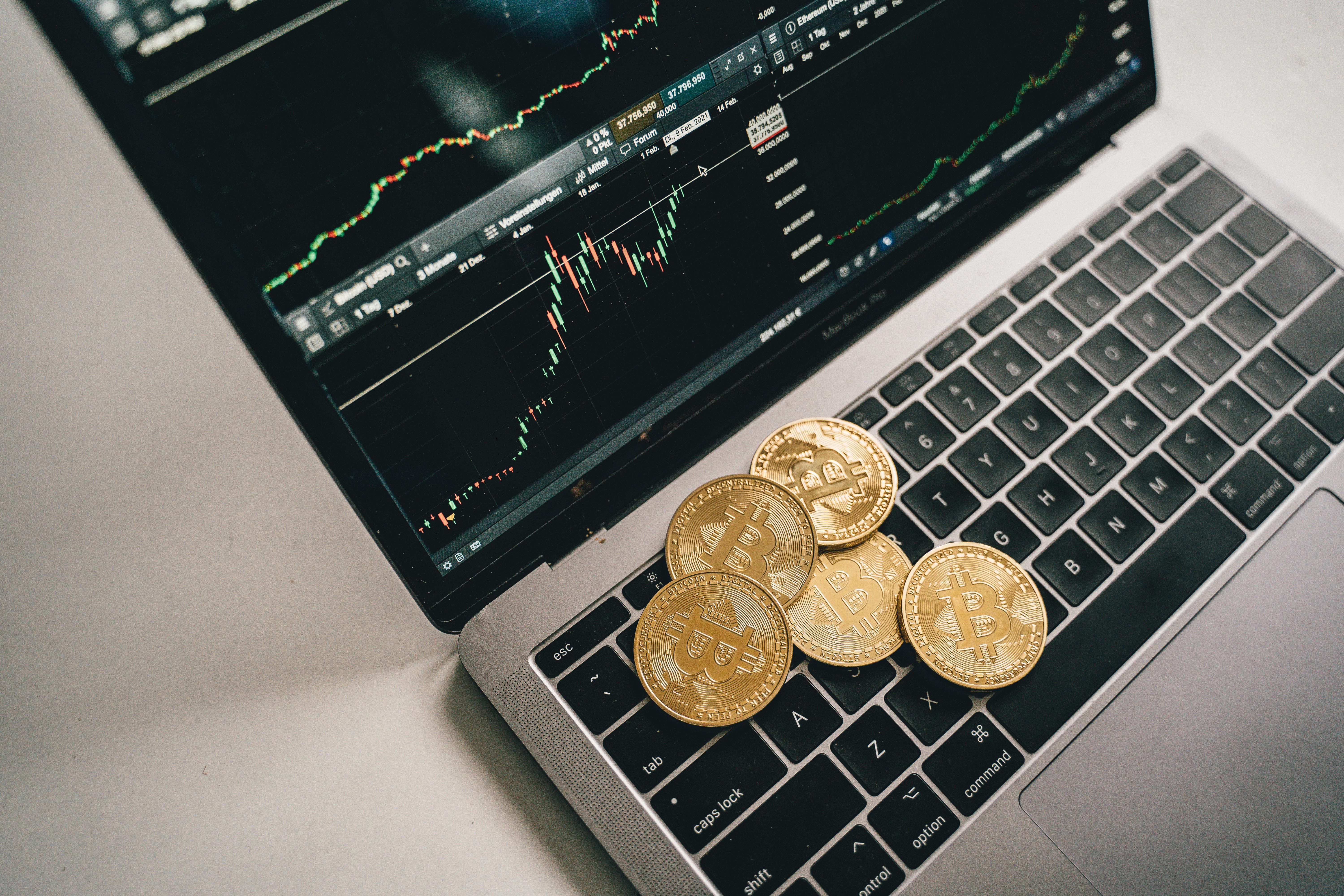


Mission Overview: Crypto as Financial Plumbing
The emerging mission of the crypto ecosystem is to become part of the invisible infrastructure of global finance—akin to how TCP/IP powers the internet without most users ever thinking about it.
In broad terms, the mission can be described as:
- Digitize existing assets so they can move at internet speed, 24/7.
- Create programmable money that can embed rules, compliance, and automation directly into transactions.
- Bridge traditional finance (TradFi) and decentralized finance (DeFi) with institutional‑grade custody, regulation, and interfaces.
- Expand global access to dollar‑like instruments and capital markets, particularly for users outside major financial centers.
“The tokenization of real‑world assets may be one of the most significant innovations in capital markets, enabling greater efficiency, transparency, and accessibility for investors.” — Larry Fink, CEO of BlackRock, discussing tokenization trends.
Tokenized Real‑World Assets (RWAs)
Tokenized RWAs are blockchain tokens that legally represent claims on off‑chain assets such as U.S. Treasuries, corporate bonds, commercial real estate, private credit, or even fine art.
Background and Current State (2024–2026)
By early 2026, multiple large asset managers and banks are piloting or expanding tokenization initiatives on both public and permissioned blockchains:
- BlackRock and Franklin Templeton have launched tokenized U.S. Treasury funds operated on public chains like Ethereum and Stellar.
- European banks are experimenting with tokenized money‑market funds under MiCA and related EU digital asset frameworks.
- Startups in Singapore, Hong Kong, and the UAE are issuing tokenized private credit and real estate under progressive virtual asset regimes.
Why Tokenize Assets?
Key motivations for tokenizing real‑world assets include:
- Faster settlement: On‑chain transfers can settle in seconds or minutes versus T+2 or longer in traditional markets.
- Programmable compliance: Smart contracts can enforce KYC/AML rules, whitelisting, and holding periods.
- Fractional ownership: Investors can hold smaller slices of high‑value assets, potentially increasing inclusion.
- 24/7 global markets: Trading is not limited by local market hours or legacy clearing systems.
- Interoperability with DeFi: Yield‑bearing RWAs can be integrated into lending protocols and automated strategies.
Legal and Custody Architecture
A critical design decision is how the legal claim on the off‑chain asset is structured. Common models include:
- Fund wrapper: The token represents a share in a regulated fund (e.g., a 1940‑Act fund in the U.S.).
- Special purpose vehicle (SPV): Tokens correspond to claims on an SPV that holds the asset.
- Direct registry linkage: The blockchain acts as an official share registry under local law.
Institutional custodians or specialized trust companies typically hold the underlying assets, while transfer agents or smart contracts maintain the on‑chain record.
“Tokenization could enhance the efficiency of capital markets, but only if the legal and operational framework tightly links tokens to the underlying claims.” — Bank for International Settlements (BIS) Quarterly Review.
Risks and Open Questions
Despite rapid growth, tokenized RWAs raise several unresolved issues:
- Legal enforceability: How courts treat token holders’ rights in insolvency or disputes.
- Jurisdictional fragmentation: Different rules across the U.S., EU, Asia, and emerging markets.
- Operational risk: Smart contract bugs or oracle failures affecting real money.
- Systemic risk: Highly leveraged, on‑chain rehypothecation of tokenized safe assets like Treasuries.
Stablecoins: The Bridge Between Fiat and Crypto
Stablecoins are crypto tokens designed to maintain a stable value, usually pegged to a fiat currency such as the U.S. dollar or euro. They now account for a large share of on‑chain transaction volume and are central to crypto’s real‑world utility.
Types of Stablecoins
- Fiat‑backed (off‑chain reserve): Tokens like USDC and USDT backed by bank deposits and short‑term Treasuries.
- On‑chain collateralized: Protocols such as DAI, backed by crypto and increasingly by tokenized RWAs.
- Algorithmic: Supply‑adjusting models; largely disfavored post‑Terra collapse due to instability risks.
Real‑World Use Cases
Recent reporting highlights several concrete applications:
- Cross‑border payments and remittances: Users in countries with high inflation or capital controls use dollar‑pegged stablecoins as a store of value and for transfers.
- B2B settlement: Crypto‑native businesses and some fintechs settle invoices and payroll denominated in stablecoins.
- Market liquidity: Exchanges and DeFi protocols rely on stablecoins as quote currencies and collateral.
“Properly regulated stablecoins have the potential to improve the efficiency of payments, especially across borders.” — International Monetary Fund (IMF) analysis on digital money.
Regulatory Treatment and Reserve Transparency
In the U.S., draft stablecoin bills and state‑level regimes aim to classify major issuers as payment stablecoin institutions or bank‑like entities, requiring:
- High‑quality liquid reserves (cash, T‑bills, reverse repos).
- Frequent independent attestations or audits.
- Redemption rights at par and clear disclosure of risks.
The EU’s MiCA framework introduces rules for “e‑money tokens” and “asset‑referenced tokens,” effectively creating a licensing regime for euro and multi‑currency stablecoins.
Technology: Infrastructure, Identity, and Compliance Tooling
Behind the scenes, a sophisticated stack of infrastructure is emerging to make public blockchains compatible with institutional compliance and risk management standards.
Core Infrastructure Layers
- Base layers (L1s) and rollups (L2s): Networks like Ethereum, Solana, and various ZK‑rollups provide settlement and execution.
- Custody and key management: Institutional custodians use hardware security modules (HSMs), multi‑party computation (MPC), and policy engines.
- Oracles: Services like Chainlink provide trusted price and data feeds, crucial for RWAs and stablecoins.
- Tokenization platforms: Middleware that handles lifecycle events—issuance, transfers, redemptions, and compliance checks.
Identity and Compliance
A growing class of companies focuses on on‑chain identity and regulatory monitoring:
- KYC/AML gateways: Users complete off‑chain identity verification to obtain on‑chain credentials or NFTs representing “verified” status.
- Travel rule compliance: Solutions that enable virtual asset service providers (VASPs) to share sender/receiver data per FATF requirements.
- Blockchain analytics: Tools that score addresses for sanctions risk, fraud, or money‑laundering typologies.
These components enable banks and payment processors to plug into public chains while satisfying regulators’ expectations.
“If we want DeFi to be used by hundreds of millions of people, it has to integrate with both identity and compliance systems without becoming fully custodial.” — Paraphrased perspective often associated with Vitalik Buterin, co‑founder of Ethereum.
User Experience and Mainstream Adoption
For non‑technical users, wallet seed phrases, gas fees, and chain selection remain major friction points. A new wave of products tries to hide this complexity.
Key UX Trends
- Account abstraction: Smart contract wallets enabling social recovery, transaction batching, and gas sponsorship.
- Embedded wallets: Apps that create wallets tied to email or biometric login, pushing seed phrase management into the background.
- Gasless or sponsored transactions: Merchants or protocols pay network fees so users see a single, all‑inclusive price.
Tech journalists increasingly evaluate these products with the same lens used for fintech: latency, error handling, security, and regulatory compliance, not just decentralization purity.
Regulation and Legal Classification Battles
Regulatory clarity is both a constraint and a catalyst. Across jurisdictions, authorities are actively defining how different digital assets fit into existing categories.
Key Regulatory Themes (Through Early 2026)
- Securities vs. commodities: Ongoing U.S. cases and guidance seek to determine whether specific tokens or staking services are investment contracts.
- Stablecoin legislation: Multiple jurisdictions are moving toward specialized stablecoin licenses and reserve rules.
- DeFi accountability: Debates over when a protocol is “sufficiently decentralized” and who is responsible for code, governance, and front‑ends.
- Travel rule and AML: Enforcement actions press exchanges and mixers to implement stronger controls.
Interestingly, some regulators have begun to distinguish between speculative tokens and infrastructure‑type activity, such as issuing tokenized government debt or regulated stablecoins, which they see as extensions of existing financial law.
“Private sector innovations, including stablecoins and tokenized deposits, could coexist with central bank money if risks are properly managed.” — Federal Reserve, discussion on digital payments.
Milestones on the Road to Institutional Crypto
Several milestones between 2023 and early 2026 have signaled that the market’s focus is shifting from retail speculation to institutional infrastructure.
- Major asset managers launching tokenized funds on public chains, validating the RWA thesis.
- Stablecoin market caps rebounding after earlier downturns, alongside increased integration into payment apps and exchanges.
- Banks piloting on‑chain settlement for intraday liquidity management and cross‑entity transfers.
- Regulated digital asset banks and trust companies obtaining charters in the U.S., EU, and Asia.
- DeFi protocols integrating RWAs as collateral, bridging crypto‑native yields with real‑world interest rates.
Challenges and Risks
Despite the momentum, using crypto as financial infrastructure faces serious technical, regulatory, and societal challenges.
Technical and Operational Risks
- Smart contract vulnerabilities: Bugs can cause irreversible loss of tokenized assets or stablecoins.
- Bridge and interoperability risks: Moving assets between chains remains a frequent attack vector.
- Scalability and congestion: Popular networks occasionally experience fee spikes that undermine the UX narrative.
Regulatory and Policy Uncertainty
- Shifting rules: Rapidly changing guidance can affect the legality or economics of business models overnight.
- Jurisdictional arbitrage: Activity may concentrate in lightly regulated regions, raising systemic risk.
- Data privacy vs. transparency: Balancing open ledgers with privacy requirements like GDPR.
Societal and Ethical Considerations
- Financial inclusion vs. new gatekeepers: On‑chain identity systems could either empower users or entrench powerful intermediaries.
- Concentration risk: If a few stablecoin or tokenization providers dominate, the system may become fragile.
- Environmental impact: While many new chains are energy‑efficient, legacy proof‑of‑work mining remains a public concern in some contexts.
Practical Tools and Resources
For practitioners, analysts, and students interested in this shift from speculation to infrastructure, a combination of educational resources and hands‑on tools can accelerate learning.
Educational and Research Resources
- BIS papers on tokenization and next‑generation financial market infrastructures
- IMF fintech and digital money research hub
- Vitalik Buterin’s blog for deep dives into Ethereum and DeFi design.
- a16z Crypto YouTube channel for panel discussions and explainers.
Hands‑On Learning and Hardware Security
For those experimenting with RWAs and stablecoins, secure key management is essential. Many professionals use hardware wallets combined with multi‑sig or MPC setups.
Highly regarded options in the U.S. include:
- Ledger Nano X hardware wallet – popular for multi‑asset support and Bluetooth connectivity.
- Trezor Model T hardware wallet – known for its open‑source firmware and touchscreen interface.
Conclusion: The Quiet Integration of Crypto and Finance
The most durable story in crypto from 2024 through early 2026 is not about meme coins or parabolic rallies. It is the gradual embedding of blockchain rails into mainstream financial products and services:
- Tokenized RWAs turning government debt and funds into programmable building blocks.
- Stablecoins providing a user‑friendly bridge between bank accounts and on‑chain applications.
- Compliance infrastructure enabling banks, payment processors, and regulators to participate without abandoning oversight.
As this integration deepens, the line between “crypto” and “finance” will blur. Users may not know—or need to know—that their payment, investment, or loan is settled on‑chain. They will simply experience faster, more transparent, and more programmable financial services.
Additional Perspective: How to Evaluate Real‑World Crypto Projects
For investors, builders, or policymakers evaluating projects in this space, a simple checklist can help distinguish substance from hype:
- Regulatory posture: Does the project operate under clear licenses or exemptions in at least one reputable jurisdiction?
- Transparency: Are reserves (for stablecoins) or underlying assets (for RWAs) independently verified and regularly disclosed?
- Technical robustness: Is the code audited, open to scrutiny, and battle‑tested in production?
- User‑centric design: Does the product make financial tasks meaningfully easier, cheaper, or safer for its target audience?
- Governance: Are upgrade mechanisms, emergency procedures, and decision‑making processes clearly defined?
Applying these criteria can help focus attention on the projects that are truly advancing digital finance beyond speculation and toward resilient, globally accessible infrastructure.
References / Sources
- BlackRock – The Tokenization of Securities
- BIS Quarterly Review – DeFi and the Future of Finance
- IMF – Stablecoins: The Promise and the Pitfalls
- European Commission – MiCA: Markets in Crypto-Assets Regulation
- Federal Reserve – Money and Payments: The U.S. Dollar in the Age of Digital Transformation
- TechCrunch – Crypto Infrastructure Coverage
- Wired – Cryptocurrency and Blockchain Articles
