
Crypto Beyond the Hype: How Real‑World Use Cases and ETFs Are Quietly Building the Next Market Cycle
After more than a decade of booms, busts, and headlines asking whether “crypto is dead,” the industry is quietly entering a more practical, infrastructure‑driven phase. Price action still dominates social feeds, but serious builders, regulators, and institutional investors are now focused on durability: which technologies, asset types, and business models will actually survive and plug into the broader economy.
In this new phase, three themes define the conversation: regulated access via exchange‑traded funds (ETFs) and similar vehicles, the rise of real‑world asset (RWA) tokenization, and the maturation of blockchain infrastructure powering payments, gaming, and on‑chain finance. At the same time, regulatory clarity, or lack thereof, is shaping where capital and talent flow globally.
As fintech analyst Lyn Alden has noted,
“The long‑term story isn’t about meme coins—it’s about which parts of the crypto stack become invisible plumbing for global value transfer and settlement.”
Mission Overview: From Speculation to Real‑World Integration
The core “mission” of the current crypto cycle is less about creating a parallel casino and more about upgrading the financial and data infrastructure of the internet. Several overlapping goals define this transition:
- Make crypto exposure accessible to mainstream investors through regulated products.
- Bring traditional assets—bonds, treasuries, real estate—on‑chain via tokenization.
- Scale blockchain networks so everyday transactions are cheap, fast, and user‑friendly.
- Create neutral, programmable settlement layers for global finance.
- Rebuild Web3 applications (NFTs, DeFi, decentralized identity) around durable, non‑speculative use cases.
This shift is visible not only in crypto‑native media but also in coverage from outlets such as the Financial Times Crypto Finance, Bloomberg Crypto, and The Information, which now focus heavily on infrastructure, regulation, and institutional participation rather than just token prices.
Technology Meets TradFi: The Rise of Crypto ETFs and Regulated Vehicles
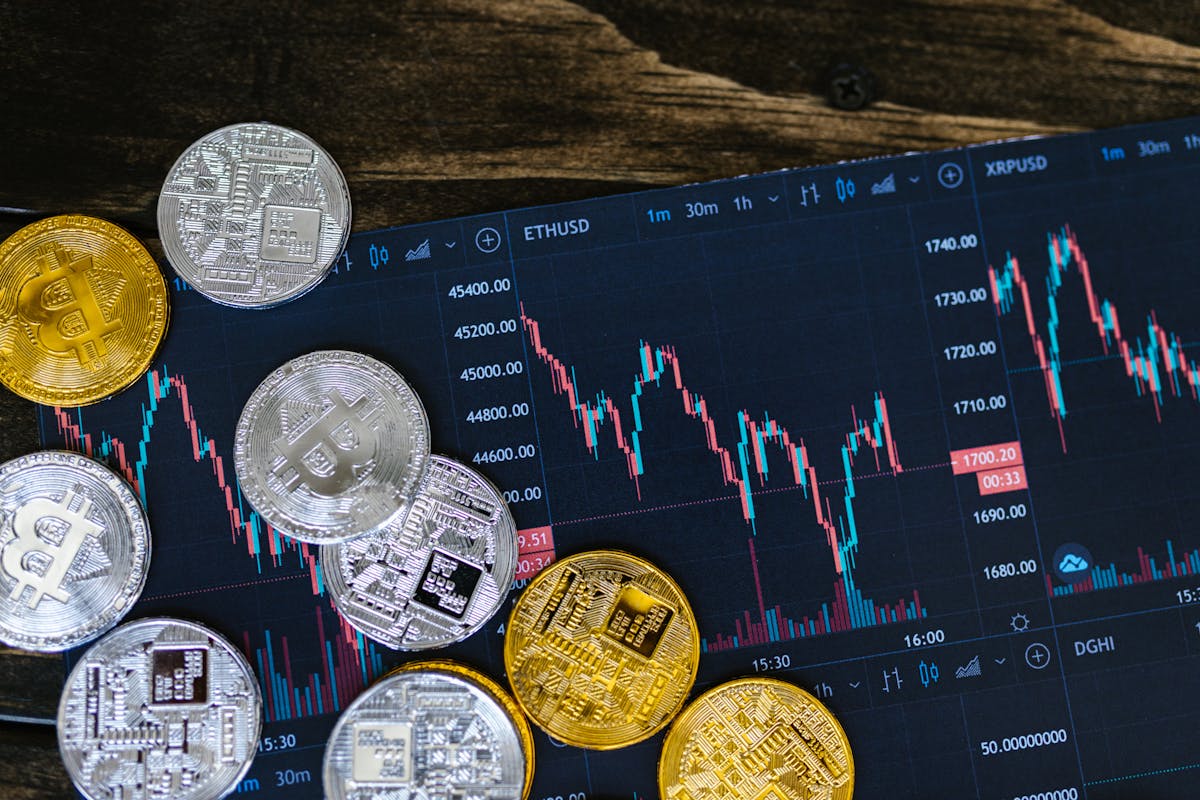
A defining feature of the current cycle is the rapid expansion of regulated investment vehicles tied to digital assets, especially spot and futures-based ETFs. These products give investors and institutions exposure to crypto without handling private keys, signing up for offshore exchanges, or worrying about self‑custody security.
Why ETFs Matter for the Next Market Cycle
Crypto ETFs and similar products (trusts, ETPs, closed‑end funds) are more than just new tickers. They impact market structure in several ways:
- Legitimacy and signaling: Approval by major regulators, such as the U.S. SEC or European ESMA‑aligned authorities, signals that Bitcoin, Ether, and other assets are being treated as investable asset classes rather than fringe experiments.
- Distribution: ETFs plug into existing wealth‑management pipes—brokerage accounts, retirement plans, financial advisors—dramatically widening the potential investor base.
- Liquidity and price discovery: Authorized participants (APs) and market makers create arbitrage channels between spot markets and ETF shares, often deepening liquidity and tightening spreads.
- Compliance and custody: Institutions can rely on regulated custodians, SOC‑audited processes, and clear tax reporting.
Tools for Retail and Professionals
For investors who want to understand or track this new wave of products, several tools and resources are useful:
- Morningstar and ETF.com for detailed ETF analytics.
- SEC filings and fact sheets to understand product structure and risk.
- Market data platforms such as CoinGecko and The Block Data to compare ETF flows with on‑chain activity.
If you want to go deeper into ETF mechanics and portfolio construction, an accessible introduction is Exchange-Traded Funds and the New Dynamics of Investing, which, while not crypto‑specific, explains how ETFs shape liquidity and market behavior.
Real‑World Asset (RWA) Tokenization: Turning Finance Into Code
Real‑world asset (RWA) tokenization refers to recording claims on traditional assets—treasuries, corporate bonds, real estate, even trade receivables—on a blockchain. Instead of PDFs, spreadsheets, and siloed databases, ownership and settlement happen on programmable ledgers.
Why RWA Tokenization Is Gaining Attention
Leading banks, asset managers, and fintech firms are running pilots in areas such as:
- On‑chain U.S. Treasuries and money‑market funds: Allowing 24/7 access to short‑term yield instruments, often used as collateral in DeFi.
- Tokenized bond issuances: Issuers can sell bonds directly on blockchain networks, reducing intermediaries and settlement times.
- Fractional real estate: Splitting ownership of property into digital tokens, potentially lowering the minimum ticket size for investors.
According to multiple industry reports, tokenized treasuries and cash‑equivalent products have grown into the tens of billions of dollars in value, with traditional players like Franklin Templeton and BlackRock experimenting with on‑chain funds on public and permissioned ledgers.
“Tokenization could be the next step in the evolution of market infrastructures, enabling a more integrated and efficient financial system.”
— Bank for International Settlements, exploratory papers on tokenization
Key Benefits and Open Questions
Potential advantages include:
- Faster settlement (minutes instead of days).
- Programmable cash flows (e.g., interest payments, fee distributions executed via smart contracts).
- Global, 24/7 access and liquidity, including fractional ownership.
However, important challenges remain:
- Legal enforceability: How do on‑chain records map to off‑chain legal claims in different jurisdictions?
- Regulatory fragmentation: Divergent rules across the U.S., EU, Asia, and emerging markets.
- Operational risk: Smart‑contract bugs, key management failures, and oracle vulnerabilities.
For a deeper dive, see the World Economic Forum’s whitepaper on RWA tokenization and the BIS Quarterly Review commentary on tokenized deposits and assets.
Technology: Layer‑2s, Rollups, and the New Blockchain Stack
The earlier crypto cycles often ran into a hard ceiling: network congestion and high fees. During 2021’s peak, some Ethereum transactions cost $50+ in gas fees, making mainstream use cases impossible. The response has been an aggressive pivot toward scaling solutions, particularly Layer‑2 rollups and alternative high‑throughput Layer‑1 (L1) chains.

Layer‑2 Rollups
Rollups batch many transactions off‑chain (or in a separate execution layer) and periodically submit compressed data to a base chain like Ethereum. Two main families dominate:
- Optimistic rollups: Assume transactions are valid by default, with a dispute window for fraud proofs.
- Zero‑knowledge (ZK) rollups: Use advanced cryptography to prove the correctness of batched transactions without revealing all underlying data.
Metrics that now matter more than theoretical throughput include:
- Daily active users and transactions.
- Median transaction fee (often under a few cents).
- Developer activity, SDK maturity, and tooling.
Alternative L1s and App‑Specific Chains
Beyond Ethereum, alternative L1s and app‑specific chains (e.g., Cosmos‑based zones, Substrate chains) aim to optimize for particular use cases like high‑frequency trading, gaming, or payments. Rather than just competing for raw TPS, they increasingly differentiate on:
- Time to finality.
- Security assumptions and validator decentralization.
- Native account‑abstraction and UX features (e.g., social logins, sponsored gas).
For developers, high‑quality technical documentation from ecosystems like Ethereum, Solana, and Cosmos has become a key differentiator in attracting talent.
Scientific Significance: Cryptography, Distributed Systems, and Economic Design
Crypto’s real innovation is the fusion of multiple disciplines—applied cryptography, distributed systems, game theory, and mechanism design—into production systems that now secure hundreds of billions of dollars in value.
Advances in Cryptography and Consensus
Over the last few years, several research themes have gone from theory to practice:
- Zero‑knowledge proofs (ZKPs): Enabling private transactions, scalable rollups, and privacy‑preserving identity systems.
- Proof‑of‑stake and hybrid consensus: More energy‑efficient security models than Bitcoin’s pure proof‑of‑work, but with new attack surfaces and economic trade‑offs.
- Threshold signatures and multi‑party computation (MPC): Enhancing custody, wallet security, and institutional controls.
“We’re moving to a world where cryptographic proofs, not institutional trust, become the default way we verify systems.”
— Vitalik Buterin, co‑founder of Ethereum
On‑Chain Data as a New Research Frontier
Unlike traditional finance, much of crypto’s activity is observable on‑chain. This allows researchers and analysts to study:
- Network health indicators (active addresses, transaction volumes, fee markets).
- Wealth distribution, long‑term holder behavior, and liquidity flows.
- DeFi systemic risk, liquidation cascades, and correlation structures.
Platforms like Dune Analytics, Glassnode, and Nansen provide rich datasets and dashboards that are increasingly referenced in both academic and industry research.
Stablecoins and Payments: The Bridge Between Old and New
Stablecoins—tokens pegged to relatively stable assets, typically the U.S. dollar—have become the de facto settlement layer of crypto markets and an important bridge into real‑world payments and remittances.
Use Cases Emerging Today
- Cross‑border payments: Individuals and businesses in emerging markets use stablecoins to circumvent slow, costly correspondent banking rails.
- On‑chain trading pair: Most crypto pairs are quoted against stablecoins, not fiat, allowing 24/7 markets.
- DeFi collateral: Stablecoins power lending markets, derivatives, and liquidity pools.
Policy debates now focus on reserve quality, regulatory status (bank vs. non‑bank issuers), and potential systemic risk if stablecoins scale into the hundreds of billions or trillions. Legislative efforts in the U.S., EU, and Asia increasingly treat stablecoins as a distinct category of financial instrument.
The Atlantic Council’s CBDC tracker and IMF fintech reports frequently analyze the interplay between privately issued stablecoins and prospective central bank digital currencies (CBDCs).
Web3 Applications: NFTs, Decentralized Identity, and the Creator Economy
After speculative manias around profile‑picture NFTs and token airdrops, Web3 applications are entering a reputational reset. The focus has shifted to use cases where blockchains add clear value, rather than being bolted on for marketing.

Pragmatic NFT Use Cases
- Ticketing and membership: NFTs as programmable, easily verifiable tickets with built‑in royalties or loyalty perks.
- Game assets: In‑game items that players actually own and can trade across marketplaces.
- Licensing and royalties: On‑chain tracking of derivative usage and revenue splits.
Decentralized Identity (DID) and Reputation
DID systems aim to give users portable, verifiable identities without relying entirely on Big Tech platforms. Combined with zero‑knowledge proofs, users can prove attributes (age, residency, credential ownership) without disclosing full identity data.
Standards efforts by groups such as the W3C Decentralized Identifiers Working Group and networks like Worldcoin (controversial but influential in discourse) illustrate both the technical potential and the ethical questions around biometrics, privacy, and governance.
Tools for Creators and Developers
Developers and creators exploring Web3 often rely on:
- Wallets and SDKs such as MetaMask, Coinbase Wallet, and WalletConnect integrations.
- Creator‑oriented platforms like OpenSea, Manifold, and Zora.
- Developer‑friendly chains with low fees and robust tooling for social apps and games.
For a wider audience, YouTube channels such as Bankless, Coin Bureau, and a16z provide regular coverage of emerging Web3 projects and trends with varying levels of technical depth.
Milestones: What Has Changed Since Earlier Cycles
Comparing the current landscape to 2017 or even 2021 reveals several structural milestones:
- Institutional-grade custody and infrastructure: Large custodians, prime brokers, and risk‑management systems now support digital assets.
- Regulated ETFs and ETPs: Multiple jurisdictions have approved physically backed or futures‑based crypto ETFs, bringing billions in assets under management.
- On‑chain treasuries and RWAs: Tokenized cash instruments have grown from experiments to a meaningful segment of on‑chain value.
- Layer‑2 mainnet adoption: Rollups have moved from whitepapers to production, with real user activity and fee markets.
- Developer tooling and security audits: The ecosystem now offers mature frameworks, formal‑verification tools, and specialized audit firms.
These milestones do not eliminate risk, but they do suggest that segments of the crypto stack are becoming embedded in the broader financial and technological fabric rather than existing purely on the speculative fringe.
Challenges: Regulation, Security, and Market Cycles
Despite progress, the path forward is not linear. Significant challenges remain across technical, regulatory, and behavioral dimensions.
Regulatory Fragmentation and Enforcement
In major markets like the United States, Europe, and parts of Asia, regulatory approaches diverge on key questions:
- Are certain tokens securities, commodities, or something entirely new?
- How should stablecoins be supervised—like banks, money‑market funds, or payment institutions?
- What licensing regimes should apply to exchanges, custodians, and DeFi front‑ends?
Enforcement‑by‑litigation in some jurisdictions creates uncertainty, pushing projects and liquidity to friendlier regulatory environments such as parts of the EU under MiCA or selected APAC hubs.
Security and Operational Risk
Hacks, exploits, and misconfigurations remain a persistent problem:
- Smart‑contract vulnerabilities leading to drained liquidity pools or exploited protocols.
- Private key theft, phishing, and social‑engineering attacks against users.
- Bridges between chains—a frequent point of failure due to complex trust assumptions.
Security‑conscious users often rely on hardware wallets such as the Ledger Nano X or Trezor Model T, combined with good operational practices (multi‑sig, passphrase hygiene, backups).
Behavioral Cycles and Speculation
Even as real‑world use cases expand, crypto markets remain highly cyclical. Factors that shape the next market cycle include:
- Bitcoin halving dynamics and their impact on miner economics.
- Macro conditions—interest rates, liquidity, inflation expectations, and risk appetite.
- Institutional flows via ETFs and treasury allocations.
- Retail sentiment driven by social media narratives and influencer content.
On social platforms like YouTube, TikTok, and X (Twitter), more sophisticated commentators increasingly incorporate on‑chain metrics and macro analysis rather than relying solely on chart patterns. Still, investors should approach all content with healthy skepticism and cross‑check claims against primary data sources.
Practical Takeaways: Navigating Crypto Beyond the Hype
For professionals, builders, and informed investors, several practical principles can help separate signal from noise in the evolving crypto landscape.
1. Focus on Cash Flows, Not Just Token Prices
When evaluating protocols or tokens, consider:
- Does the system generate sustainable fees or economic value?
- Who captures that value—token holders, users, or intermediaries?
- Is demand driven by speculation or genuine utility (payments, settlement, data availability)?
2. Track On‑Chain and Off‑Chain Indicators
Combine:
- On‑chain metrics (active addresses, fees, TVL, unique signers) with
- Off‑chain data (ETF flows, regulatory developments, developer‑ecosystem health).
3. Prioritize Security and Custody
Whether you hold assets directly or via ETFs, understand who is responsible for custody, what protections exist, and how recovery works in adverse scenarios.
4. Continuous Education
Crypto’s interdisciplinary nature means that continuous learning is essential. Useful long‑form resources include:
Conclusion: What Will Endure in the Next Market Cycle?
The narrative arc has shifted from “Is crypto dead?” to “Which components will quietly become part of global financial and data infrastructure?” Even if speculative excess returns—as it likely will in cycles—the long‑term trajectory is defined by:
- Regulated exposure via ETFs and institutional products.
- Tokenization of traditional assets and the rise of on‑chain capital markets.
- Scalable, user‑friendly blockchain infrastructure powering payments, games, and financial primitives.
- Stablecoins and potentially CBDCs providing fast, programmable money rails.
- Web3 applications that solve real problems in identity, content monetization, and coordination.
For participants willing to look beyond headlines and hype cycles, the opportunity is to understand and help shape this new financial‑technology stack—one that blends cryptography, open networks, and regulated institutions into a more programmable, interoperable economy.
Additional Resources and Next Steps
To continue exploring crypto’s real‑world evolution, consider:
- Following researchers and practitioners on X (Twitter) such as Balaji Srinivasan, Lyn Alden, and Hasu.
- Watching explainer series like Andreas Antonopoulos’s talks on Bitcoin and open blockchains.
- Reading regulatory and policy updates from organizations such as Brookings and the Bank for International Settlements.
Whether you are building products, allocating capital, or simply trying to understand what comes after the hype, grounding your perspective in infrastructure, regulation, and real‑world use cases will be the best way to navigate the next crypto market cycle.
References / Sources
Selected references for further reading:
- Bank for International Settlements – “Blueprint for the future monetary system”
- World Economic Forum – “Tokenization of Real‑World Assets”
- IMF – Fintech and digital money research hub
- Financial Times – Crypto Finance coverage
- Bloomberg Crypto
- Ethereum.org – Roadmap and scaling documentation
- a16z Crypto – Research, podcasts, and essays
