
Chicago Fire Power Shift: Who’s Really Running Firehouse 51 Now?
Chicago Fire Shake-Up: Chief Pascal Gets Fired — What It Really Means for Firehouse 51
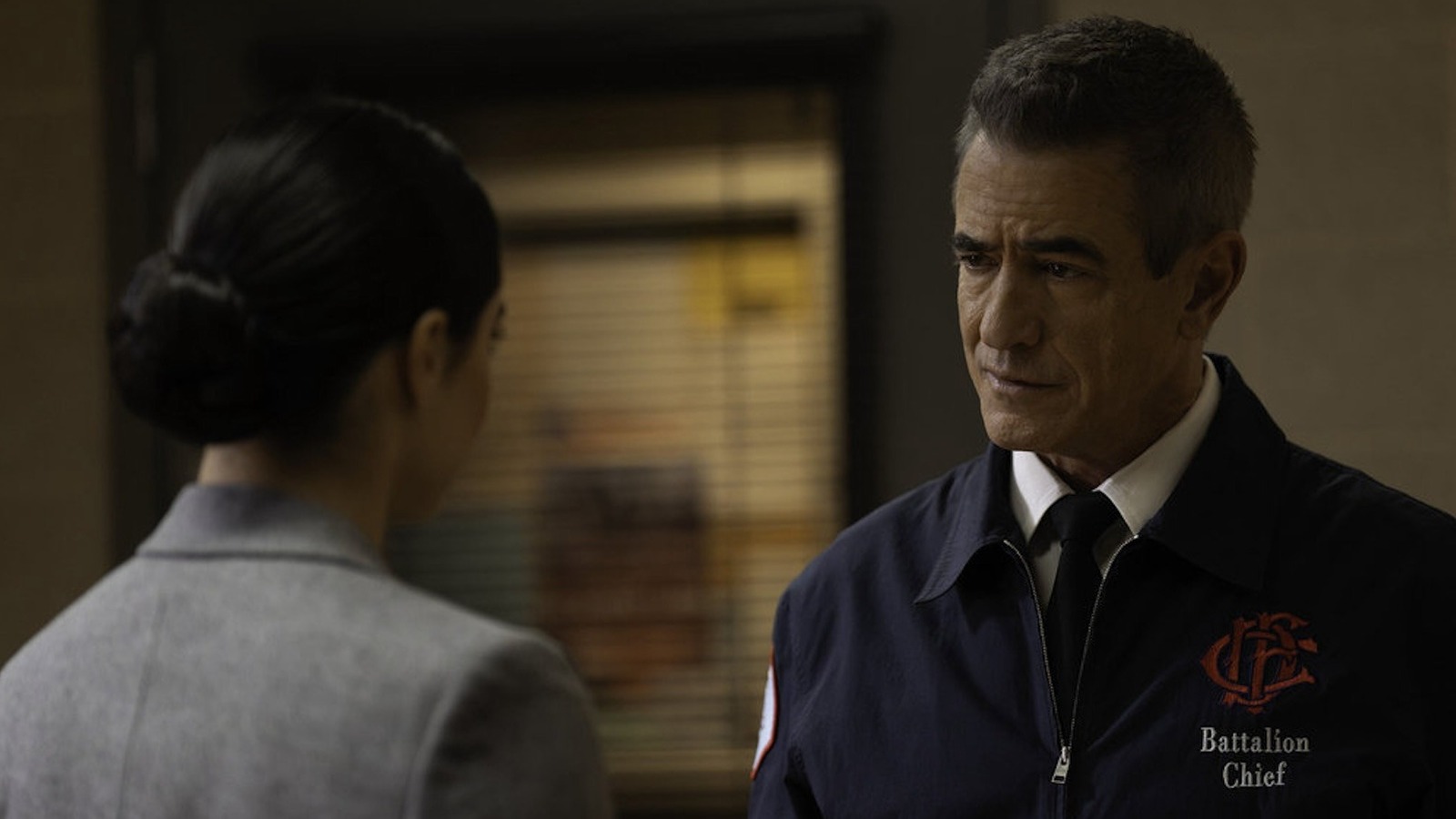
Chicago Fire just pulled one of its classic mid-season power moves: Chief Pascal is out, Firehouse 51 is suddenly without a battalion chief, and the show has quietly set up a whole new chapter in its long-running workplace drama. Between flying debris at a dangerously neglected building and a leadership scramble back at the house, the episode blends action with a very on-brand bit of political maneuvering inside the CFD.
Where We Are in Chicago Fire and Why This Shake-Up Matters
Over more than a decade on NBC, Chicago Fire has turned Firehouse 51 into one of network TV’s most reliable comfort watches: high-stakes rescues, surprisingly tender character beats, and just enough bureaucracy drama to keep things spicy. Leadership turnover is practically a franchise tradition at this point — think of the ripples every time someone rotates out of the command office or a new chief brings in a different philosophy.
Chief Pascal’s tenure already felt tenuous. He arrived with a less personal, more numbers-driven approach that clashed with 51’s “family first” ethos. His firing isn’t just about one character’s exit; it’s about resetting the moral center of the firehouse and reasserting what the show thinks good leadership looks like in a system obsessed with liability, optics, and budget lines.
Chief Pascal Fired: How the Exit Plays and Why It Lands
Chief Pascal’s firing is less “shock twist” and more “inevitable collision.” His leadership style — cautious to the point of paralysis and highly sensitive to departmental optics — has been grinding against 51’s culture since his arrival. The episode pays that off by letting his own decisions box him in until there’s nowhere else for the brass to go but the door.
Dramatically, the show avoids turning Pascal into a cartoon villain. He’s not evil; he’s just the embodiment of a certain modern administrative mindset: risk-averse, PR-conscious, and deeply uncomfortable with the kind of seat-of-the-pants heroism that 51 views as a calling card.
“The chiefs we bring into 51 are always about more than the firehouse — they represent how the city sees our first responders at any given moment.” — Paraphrased sentiment echoed by Derek Haas in past interviews about leadership arcs on the show
By the time Pascal is pushed out, the audience has seen enough conflict to understand this isn’t just a clash of personalities, but a values issue. That’s why the exit lands: it feels like the system correcting itself — at least temporarily.
The Debris Call: Neglect, Risk, and a Very On-Brand Rescue
Running alongside the leadership drama is a call that feels ripped from local news: debris falling from a poorly maintained building, windows haphazardly boarded up, coverings barely attached, and the very real threat that one gust of wind could turn the block into a danger zone. When 51 arrives, it’s not a spectacular fireball set piece — it’s quieter, messier, and uncomfortably plausible.
This kind of call fits a long-running Chicago Fire pattern: the show loves to pit its firefighters against the consequences of neglect — landlords cutting corners, outdated infrastructure, safety codes ignored until it’s almost too late. It’s social commentary, but grounded enough that it never tips into lecture mode.

Thematically, the debris incident mirrors the leadership storyline: poorly secured boards on the outside, poorly secured power structures on the inside. The call forces 51 to improvise, trust each other, and operate with the kind of instinct that Pascal never quite respected. It’s a subtle but effective bit of parallel storytelling.
So Who’s in Charge of Battalion 51 Now?
With Pascal fired, Firehouse 51 finds itself in that awkward limbo: the department needs someone in the chief’s office, but everyone knows the political fallout is still settling. The episode leans into that discomfort, letting the team feel temporarily unmoored — a smart move for a show that’s usually so structured around chain of command.
Without diving into heavy spoilers beat-by-beat, the immediate aftermath plays out in three familiar moves:
- Interim leadership vibes: A senior figure naturally steps up in practice, even before anything is official on paper.
- Brass interference: City and CFD higher-ups treat the vacancy like a chess square — a chance to assert influence over a famously independent house.
- House loyalty test: The firefighters close ranks, quietly signaling who they’d actually follow if given the choice.
Whoever ends up with the title “Battalion Chief” on the office door will have to navigate more than calls and paperwork; they’re inheriting a unit that has repeatedly proven it will choose its conscience over comfortable politics.
How the Shake-Up Hits the 51 Crew Emotionally
One of the reasons Chicago Fire has lasted this long is its willingness to treat leadership changes as emotional events, not just plot logistics. Pascal’s firing doesn’t send anyone into melodrama, but the fallout is written into small character beats: exchanged looks in the common room, tense silences near the chief’s office, and gallows humor in the locker room.
- Veterans at 51 read the situation as another chapter in the never-ending struggle to protect the house from outside meddling.
- Newer members use the vacuum as a moment to re-evaluate who they want to model themselves after — the chief on paper, or the leaders in practice.
- The crew as a whole is reminded that their “family” identity is resilient but also vulnerable to bureaucracy.

Crucially, the episode doesn’t pretend that a bad-fit chief leaving fixes everything. The system that hired Pascal is still there. The power games that made his style attractive to the brass haven’t magically vanished. That lingering tension gives the ensemble cast something to play with in upcoming episodes.
TV Industry Context: Why Shows Love a Leadership Shake-Up
From a TV-writing perspective, firing a chief is a low-key goldmine. It lets the show:
- Refresh the stakes without killing anyone off.
- Test alliances among core characters in a way that feels organic.
- Introduce new faces or reposition veterans while justifying contract changes behind the scenes.
Network procedurals — think Grey’s Anatomy, NCIS, or Station 19 — have used similar playbooks for years. Authority figures rotate in and out, each representing a slightly different philosophy about the job, which keeps long-running formulas from going stale.
“When you change the boss, you don’t just change the rules — you change the lens the audience sees the workplace through.” — Common showrunner logic in discussions about procedural longevity
For Chicago Fire, Pascal’s exit comes at a time when legacy series are constantly renegotiating their relevance. Leadership shifts are one way to acknowledge a changing world — even if the show’s core promise of found family and dangerous rescues stays the same.
Visual Style and Atmosphere: Grit, Weather, and Chicago’s Personality
Visually, the episode leans into the city’s mood: grey skies, rough brick, and the unnerving look of half-secured boards barely clinging to a facade. The falling-debris call doesn’t rely on big-budget flames; instead, tension comes from the unpredictability of physics — something could come down at any second.
Inside 51, the familiar warm palette — soft lighting in the common room, stainless steel in the apparatus bay — contrasts with the cold rigidity of the administrative offices. As Pascal exits, that visual contrast doubles as a metaphor: the house wants to be a shelter from the storm, but the storm of city politics keeps seeping in.

Episode Review: Strengths and Weaknesses of the Pascal Exit
As an episode built around a leadership change, this hour of Chicago Fire mostly sticks the landing, even if it occasionally leans on familiar beats.
- Strength – Thematic cohesion: The parallel between a physically unstable building and an institutionally unstable firehouse gives the script a clean through line.
- Strength – Character nuance: Pascal isn’t written as pure dead weight; his exit feels like the natural consequence of a worldview the show has been quietly interrogating for years.
- Strength – Atmosphere: The debris call is tense without being flashy, and it fits the “this could be in your neighborhood” realism that anchors the franchise.
- Weakness – Predictability: Long-time viewers will likely see the firing coming several episodes away, blunting some of the surprise.
- Weakness – Limited fallout (for now): The immediate aftermath slightly underplays just how seismic a battalion chief change can be inside a department, though future episodes may deepen that impact.
Overall, it’s a solid entry that uses a necessary character exit to reposition Firehouse 51 for fresh drama rather than simply shuffling the org chart.
Reviewer: TV & streaming analyst — Rating: 3.8/5

Where to Watch, Read More, and Stay Updated
Chicago Fire airs on NBC in the U.S., with episodes typically available for next-day streaming on Peacock (availability may vary by region and date). For cast details, episode lists, and franchise crossovers, check the official and reference links:
- Official NBC page for the series: nbc.com/chicago-fire
- Chicago Fire on IMDb: IMDb Series Page
- Original coverage of the Pascal firing and leadership shake-up on TVLine: TVLine Entertainment News

Final Thoughts: A Power Vacuum with Storytelling Potential
Chief Pascal’s firing doesn’t reinvent Chicago Fire, but it doesn’t need to. What it does do is quietly reassert the show’s core thesis: institutions may bend toward bureaucracy, but the people on the ground still define what the job means day-to-day. With 51’s battalion chief seat suddenly open, the series has given itself a fresh lane for conflict, mentorship, and maybe even a few career curveballs for long-time fan favorites.
The fallout from this episode won’t be measured just in who gets the office keys next — it’ll be measured in how Firehouse 51 chooses to protect its identity as the city, the department, and the TV landscape around it keep changing. If the writers lean into that tension, this shake-up could be the start of one of the show’s most interesting late-era arcs.
