
Can You Still Trust Anything Online? Inside the New Era of AI-Generated Media and Deepfakes
The line between real and synthetic content is disappearing. Photorealistic AI images, cloned voices, and fully generated videos now circulate across TikTok, YouTube, and X at massive scale. These tools empower independent creators and businesses, yet they also enable deepfakes, impersonation, and misinformation that threaten trust in institutions, journalism, and even personal relationships.
In this article, we explore how AI-generated media works, why deepfakes are so convincing, how platforms and policymakers are responding, and what authenticity tools and social norms are emerging to defend truth online.
Mission Overview: AI-Generated Media and the Battle for Authenticity
Generative AI systems can now create images, audio, and video that rival professional production. Tools like OpenAI’s image and video models, Midjourney, Adobe Firefly, Runway, and open-source systems such as Stable Diffusion are widely accessible through web apps, mobile apps, and creative suites.
This rapid democratization has produced two intertwined missions for society:
- Harness the creative and economic potential of AI-generated media for art, education, accessibility, and productivity.
- Contain the harms from deepfakes, harassment, scams, and information warfare, preserving a reliable baseline of authenticity online.
“The crisis is less about what AI can synthesize and more about whether people can agree on what is real.” — Paraphrased from ongoing coverage in Wired’s AI and security reporting.
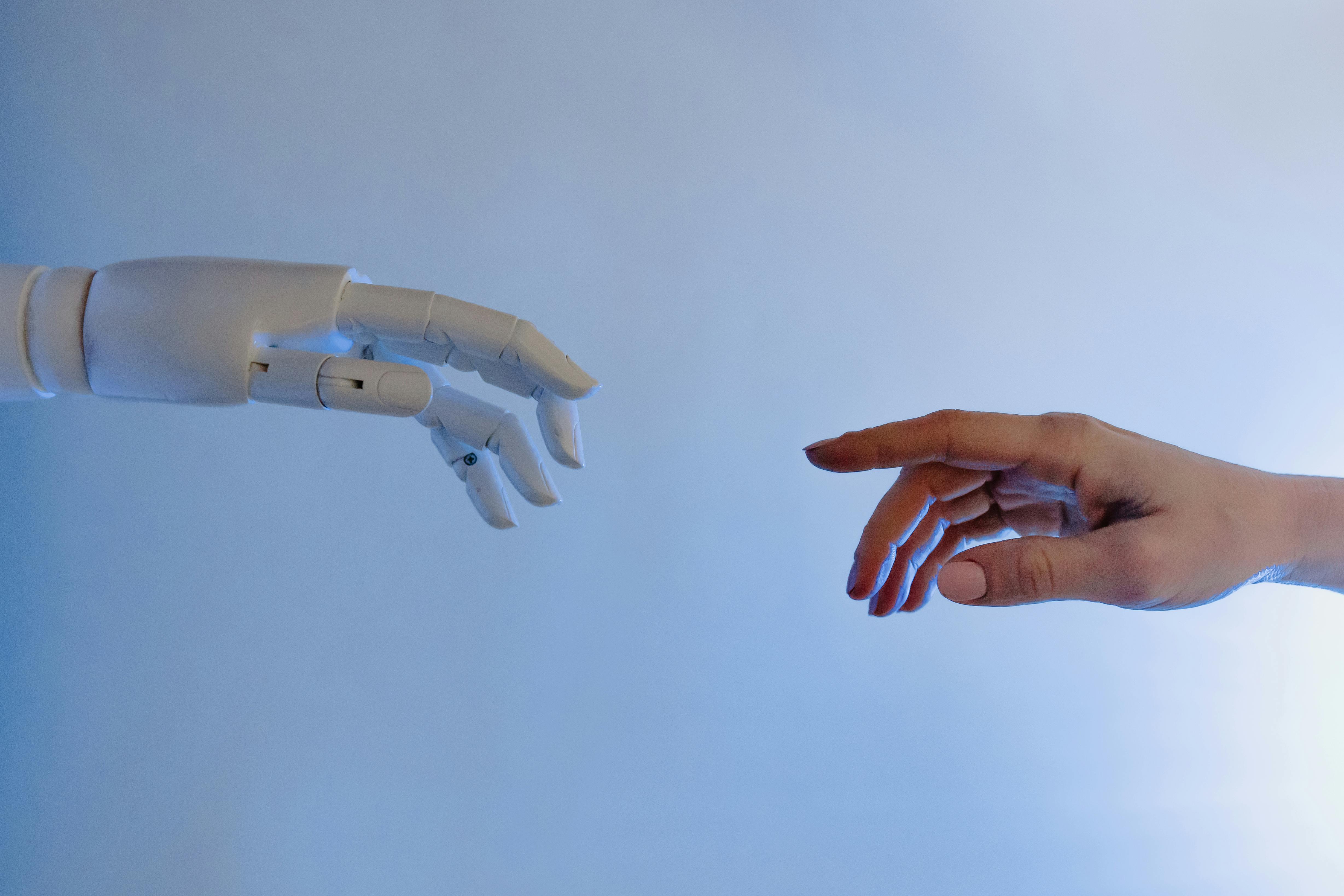
Technology: How AI-Generated Media and Deepfakes Work
Modern AI-generated media relies on large generative models trained on massive datasets of images, audio, video, and text. While architectures and training regimes evolve quickly, several core technologies dominate the field.
Diffusion Models for Images and Video
For images (and now video), diffusion models have become the de facto standard. They learn to progressively remove noise from a random signal until a coherent image emerges that matches a text prompt or reference style.
- The model is trained by repeatedly adding noise to images and learning how to reverse that corruption step by step.
- At generation time, it starts from pure noise and iteratively “denoises” toward an image that satisfies the prompt (e.g., “a satellite photo of Earth at night”).
- For video, similar processes are extended across time using temporal consistency models.
Transformers and Large Language Models as Media Orchestrators
Transformer-based large language models (LLMs) orchestrate media generation by understanding prompts, writing scripts, creating storyboards, and even generating structured control signals for other models. Increasingly, “multimodal” models can accept images, audio, and video frames as input and output multiple modalities as well.
Neural Voice Cloning and Speech Synthesis
Voice cloning systems use neural vocoders and sequence-to-sequence models to mimic a person’s voice from short audio samples:
- Text-to-speech (TTS): Model converts written text into natural-sounding speech.
- Voice conversion: Model transforms speech from a source speaker to match the timbre and style of a target speaker.
- Few-shot cloning: With only seconds of audio, modern models can produce convincing approximations of a voice—an ability at the center of recent scam and political deepfake incidents.
Generative Video and Face-Swapping Deepfakes
Deepfake videos often combine multiple techniques:
- Face-swapping: A neural network maps the facial expressions of a source actor onto the target person’s face.
- Lip-syncing: Models align mouth movements to a given audio track, enabling realistic speech in any language.
- Full-frame synthesis: Newer approaches synthesize entire frames or scenes, reducing the telltale artifacts of earlier deepfakes.
As of early 2026, research from leading labs and open-source communities continues to push toward higher resolution, better temporal consistency, and lower computational cost—all of which make synthetic media more accessible and more convincing.

Scientific and Societal Significance
AI-generated media is not just a technical curiosity—it reshapes how societies produce and evaluate information. Its significance spans creativity, economics, psychology, and democracy.
New Creative and Economic Possibilities
For designers, filmmakers, and educators, generative media expands what a single person or small team can accomplish:
- Pre-visualization and prototyping: Storyboards, concept art, and mood boards can be generated in minutes.
- Localized content: Automatically dubbed and visually adapted media make education and entertainment more accessible worldwide.
- Accessibility: Synthetic narrators and descriptive audio can help make more content usable for people with visual or reading impairments.
Analysts at outlets such as The Verge and Engadget note that AI-native creators on TikTok, YouTube, and Instagram already use these tools daily to differentiate their work and reduce production costs.
The “Liar’s Dividend” and Information Trust
When any audio or video can be, in principle, fabricated, a phenomenon known as the “liar’s dividend” emerges: bad actors can dismiss genuine evidence as “fake,” while fabricated media sows doubt and confusion.
- Victims of wrongdoing may struggle to prove authenticity.
- Journalists and fact-checkers must invest more time and expertise to validate material.
- Ordinary users experience “authenticity fatigue,” reducing engagement with legitimate civic information.
“As synthetic media improves, social trust no longer hinges on whether something could be fake, but on who vouches for it and how.” — Paraphrased from commentary in Nature on AI and misinformation.
Copyright, Training Data, and Creator Rights
A central debate concerns how generative models are trained. Many systems learn from web-scale datasets that include copyrighted images, music, film frames, and text. This raises questions of consent, compensation, and fair use.
Key Legal and Policy Questions
- Is training on copyrighted works fair use? Courts in the U.S., EU, and elsewhere are weighing whether training constitutes transformative use or unauthorized copying.
- Are AI outputs derivative works? If a model closely emulates an artist’s style or reproduces elements of specific works, rights holders may claim infringement.
- What about scraping? Lawsuits against AI companies challenge large-scale scraping of websites and platforms without explicit permission.
Since 2023, multiple lawsuits have been filed by authors, news organizations, visual artists, and music labels against AI firms. These cases, along with proposed regulations in the EU’s AI Act and U.S. state legislatures, are shaping emerging norms for training data transparency and opt-out mechanisms.
Industry Responses: Opt-Outs and Licensing
To reduce legal and reputational risk, some AI providers have:
- Implemented dataset opt-out tools for creators and website owners.
- Signed licensing deals with stock photo libraries, music catalogues, or news organizations.
- Experimented with training on public-domain, synthetic, or fully licensed corpora.
These approaches often trade off model quality and diversity against legal certainty. A narrower, fully licensed dataset may produce safer outputs but perform less well across edge cases and stylistic variety.
Content Authenticity Infrastructure and Watermarking
To address the authenticity crisis, researchers, standards bodies, and industry coalitions are building content authenticity infrastructure: systems that attach cryptographic and metadata-based proof to media at capture or creation time.
Content Credentials and Provenance
The Coalition for Content Provenance and Authenticity (C2PA), backed by organizations like Adobe, Microsoft, the BBC, and others, defines a standard for attaching tamper-evident metadata—sometimes called “content credentials”—to media.
- When a photo or video is captured, the device can cryptographically sign metadata including time, location (with user consent), and device identity.
- Editing tools that support C2PA preserve or update this provenance trail.
- Viewers on supporting platforms can inspect a “nutrition label” showing whether an asset is original, edited, or AI-generated.
Major newsrooms and photo agencies are piloting this to protect journalistic integrity, while some creative tools have begun to mark AI-generated images by default.
Watermarking and Detection
Watermarking and detection are complementary techniques:
- Watermarking: Embed a signal—visible or invisible—into AI-generated media so downstream systems can identify its origin.
- Detection: Use classifiers or forensic tools to distinguish real from synthetic content even without a watermark.
Governments, including the U.S. and several EU member states, have encouraged or required major AI providers to implement watermarking schemes. Yet perfect watermarking is elusive: watermarks can be removed or corrupted; detectors can be evaded by adversaries or degraded as models improve.
“Technical measures like watermarking are necessary but not sufficient; they must be paired with institutional and social safeguards.” — Adapted from U.S. government policy discussions on AI safety.
Platforms, Governance, and Policy Responses
Social networks, hosting providers, and regulators are under pressure to manage the risks of AI-generated media while respecting free expression and legitimate creative uses.
Platform Policies and Labelling
Major platforms (TikTok, YouTube, Meta, X, and others) have rolled out or updated policies that:
- Require users to label AI-generated or significantly edited content in certain contexts.
- Prohibit non-consensual sexual deepfakes and some types of political or election-related deepfakes.
- Deploy automated detection systems combined with human review for high-risk content.
Enforcement remains inconsistent and technically challenging, especially as models improve and adversaries adapt. Many platforms are experimenting with user-facing “synthetic content” badges and more granular reporting tools.
Regulatory and Industry Frameworks
Several overlapping regulatory efforts frame how AI-generated media is governed:
- EU AI Act: Introduces obligations for providers of generative AI, including transparency about AI-generated content and training data summaries.
- Data protection and privacy laws: Voice cloning and biometric deepfakes may trigger existing rules on biometric data and impersonation.
- Election-specific rules: Some jurisdictions have introduced or proposed bans or disclosure requirements for AI-generated political ads and deepfakes during campaign periods.
Industry groups, civil society organizations, and academic researchers continue to publish guidelines on responsible generative AI, many centered on consent, explainability, and red-team testing for abuse scenarios.
Tools, Workflows, and Amazon-Relevant Technology
For creators and professionals who want to use generative tools responsibly, the workflow increasingly combines hardware, software, and authenticity tools.
Hardware for Local and Hybrid AI Workflows
While many generative models run in the cloud, local experimentation can be faster and more private. In the U.S., creators commonly use powerful consumer GPUs such as the NVIDIA GeForce RTX 4070, which offers ample VRAM and performance for running many open-source diffusion models and video upscalers.
Software Ecosystem
Typical toolchains in 2025–2026 include:
- Generative engines: Cloud-hosted APIs and apps (OpenAI, Midjourney, Stability AI, Runway, etc.).
- Creative suites: Adobe Creative Cloud and similar tools, many now embedding generative “fill” or “extend” capabilities.
- Authenticity and rights management: C2PA-compatible apps, content credential plug-ins, and asset management systems that track provenance.
For an accessible introduction to deepfake concepts and detection, educators often rely on explainer videos such as deepfake explainers on YouTube, many produced by security researchers and digital forensics experts.
Milestones in AI-Generated Media and Deepfakes
The trajectory of AI-generated media over the past decade features several notable milestones:
- Early face-swap apps and research demos: Academic work and consumer apps showed that basic face replacement was possible, albeit with visible artifacts.
- GAN revolution: Generative adversarial networks (GANs) dramatically improved image realism, powering the first widely recognized deepfake videos.
- Diffusion and transformer era: Diffusion models and multimodal transformers enabled high-fidelity images and video clips from text, accelerating broader adoption.
- Voice cloning at scale: Consumer-grade apps and services could convincingly clone voices from very short samples, enabling both accessibility features and fraud risks.
- Authenticity standards and political attention: C2PA, watermarking initiatives, and global election cycles pushed synthetic media to the center of policy debate.
Each milestone brought both new opportunities—such as faster creative iteration—and new vulnerabilities, like highly personalized phishing or reputation attacks.
Challenges: Technical, Legal, and Human Factors
Addressing AI-generated media risks involves more than better algorithms. It requires governance, education, and cross-sector collaboration.
Technical Challenges
- Robust detection: As generative models improve, forensic signals become subtler, and adversarial techniques can fool detectors.
- Scalability: Platforms must scan enormous volumes of uploads with limited latency and resources.
- Interoperable standards: Watermarks and content credentials must work across devices, apps, and jurisdictions to be effective.
Legal and Ethical Challenges
- Consent and dignity: Non-consensual deepfakes—especially of private individuals—raise serious harm and privacy concerns.
- Attribution and compensation: Artists, musicians, and writers are pushing for mechanisms that recognize and reward contributions to training data.
- Global fragmentation: Differing national rules may encourage “policy arbitrage,” where bad actors route operations through more permissive jurisdictions.
Human and Social Challenges
Even with strong technology and laws, the human factor remains critical:
- Media literacy: Users need skills to recognize suspicious content and verify sources.
- Psychological impact: Being targeted by impersonation or intimate deepfakes can cause severe emotional distress and social damage.
- Norms for disclosure: Communities are still negotiating when and how to disclose AI involvement in art, commentary, or satire.
Practical Steps: How Individuals and Organizations Can Respond
While systemic solutions are still evolving, there are concrete measures that individuals, creators, and institutions can take today.
For Everyday Users
- Check provenance: Look for content credentials, reverse-image search results, and coverage from reputable outlets.
- Be skeptical of emotionally charged clips: Especially near elections or crises, treat sensational videos and audio with caution until verified.
- Protect your likeness: Be selective about posting high-quality voice and face data; understand platform privacy settings.
For Creators and Journalists
- Adopt content credential tools where available to sign original work.
- Clearly label AI-assisted content to maintain trust with audiences.
- Participate in industry dialogues and union negotiations to shape fair labor and IP standards for AI use.
For Organizations and Policymakers
- Integrate risk assessments for AI-generated media into cybersecurity and crisis communication plans.
- Support research and public-interest tools for detection, authenticity, and digital literacy.
- Ensure that any regulation is technology-informed, protecting rights while allowing beneficial innovation.
Conclusion: Building an Authenticity Layer for the Internet
AI-generated media and deepfakes are now a permanent feature of the digital landscape. The question is not whether we can stop synthetic content—it is how we adapt our institutions, technologies, and norms so that authenticity, consent, and accountability remain possible.
The emerging “authenticity layer” for the internet will likely combine:
- Cryptographic provenance and standardized content credentials.
- Robust but fallible watermarking and detection tools.
- Clear policies, legal protections, and enforcement mechanisms.
- Widespread media literacy and transparent disclosure practices.
Achieving this requires collaboration among AI developers, artists, journalists, policymakers, platforms, and end users. Done well, we can harness AI’s creative power while preserving a shared basis for truth online.
Additional Resources and Further Reading
To stay current on AI-generated media, consider following:
- Tech journalism: Ongoing coverage from Wired, The Verge, and Engadget.
- Research and policy: Reports from organizations like Stanford’s AI Index, Brookings Institution, and Partnership on AI.
- Standards and authenticity: The C2PA and Content Authenticity Initiative.
References / Sources
- Wired – Guide to Artificial Intelligence
- The Verge – AI / Artificial Intelligence Coverage
- Engadget – Artificial Intelligence Tag
- C2PA – Coalition for Content Provenance and Authenticity
- Content Authenticity Initiative
- Stanford AI Index
- Brookings – Artificial Intelligence Topic
- EU AI Act (Official Journal)
