
AI‑Designed Proteins: How Generative Models Are Rewriting the Rules of Synthetic Biology
Synthetic biology is entering a new phase: instead of merely reading and predicting biology, researchers are now writing it. Building on the success of DeepMind’s AlphaFold2 and a new generation of generative AI models, laboratories and startups are designing proteins and enzymes from scratch—molecules that have never existed in nature, yet fold and function as if evolution had discovered them over billions of years.
This article explains how AI‑driven protein design works, why it is trending now, what technologies power it, and how it could reshape medicine, materials science, climate technology, and more. It also examines the risks, regulatory challenges, and ethical questions that come with treating biology as a programmable substrate.

The convergence of high‑throughput DNA synthesis, cloud biology labs, and powerful AI models means that protein design now moves in tight experimental loops: design → build → test → learn. Each iteration feeds fresh data back into the models, accelerating discovery in a way that resembles rapid software development cycles.
Mission Overview: From Predicting Proteins to Programming Biology
The central “mission” of AI‑driven protein design is straightforward but profound: to make functional proteins designable on demand, the way engineers design circuits or software. Instead of waiting for evolution to discover a useful enzyme, scientists want to specify the desired activity, then let an AI model propose sequences that make it real.
AlphaFold2’s 2020–2021 breakthrough—achieving near‑atomic accuracy for many protein structures—solved a decades‑old problem in structural biology. But AlphaFold was largely a predictive tool: given a sequence, what structure does it adopt? The new frontier is the inverse problem:
- Design problem: Given a 3D shape or biochemical function, can we generate an amino acid sequence that will fold into that structure and perform that function?
- Optimization problem: Can we tune stability, solubility, specificity, and catalytic efficiency to meet engineering requirements?
“We are moving from a descriptive era of biology to a design‑led era, where we can increasingly ask for a function and get back a sequence.” — Paraphrased from comments by several protein design researchers in Nature and Science coverage.
This mission is transforming drug discovery, enzyme engineering, and metabolic pathway design—areas at the core of modern biotechnology and pharmaceutical innovation.
Technology: Generative Models for Protein Design
AI‑designed proteins rely on a toolbox of deep learning architectures that mirror advances in natural language processing and computer vision. Instead of words or pixels, these models learn the “grammar” and “geometry” of amino acid sequences and protein structures.
Key Model Families
- Transformer‑based sequence models: Treat protein sequences like text, learning context‑dependent relationships between amino acids. Examples include protein language models such as ESM, ProtBERT, and related architectures that power both prediction and design tasks.
- Diffusion models: Inspired by image generation tools, these models start from “noise” in 3D structure space and iteratively denoise to produce realistic protein backbones or full atomistic structures that satisfy user‑defined constraints.
- Structure‑aware graph neural networks (GNNs): Represent proteins as spatial graphs where nodes are residues or atoms and edges encode distances or contacts, enabling fine‑grained control over folding and interactions.
- Reinforcement learning and Bayesian optimization loops: Integrate experimental feedback (e.g., measured enzyme activity) to steer design toward higher‑performing variants over multiple rounds.
Data and Training Pipelines
These models are trained on massive datasets, including:
- Natural protein sequences from UniProt, metagenomic surveys, and pathogen databases.
- Structural databases such as the Protein Data Bank (PDB) and AlphaFold Protein Structure Database.
- Experimental design data from high‑throughput mutational scans and directed evolution campaigns.
A typical AI‑driven design workflow looks like this:
- Define a target function (e.g., catalyze a specific reaction, bind a receptor, or self‑assemble into a nanostructure).
- Condition a generative model on structural motifs, functional sites, or binding epitopes.
- Sample thousands to millions of candidate sequences in silico.
- Filter using secondary predictive models (stability, aggregation, immunogenicity).
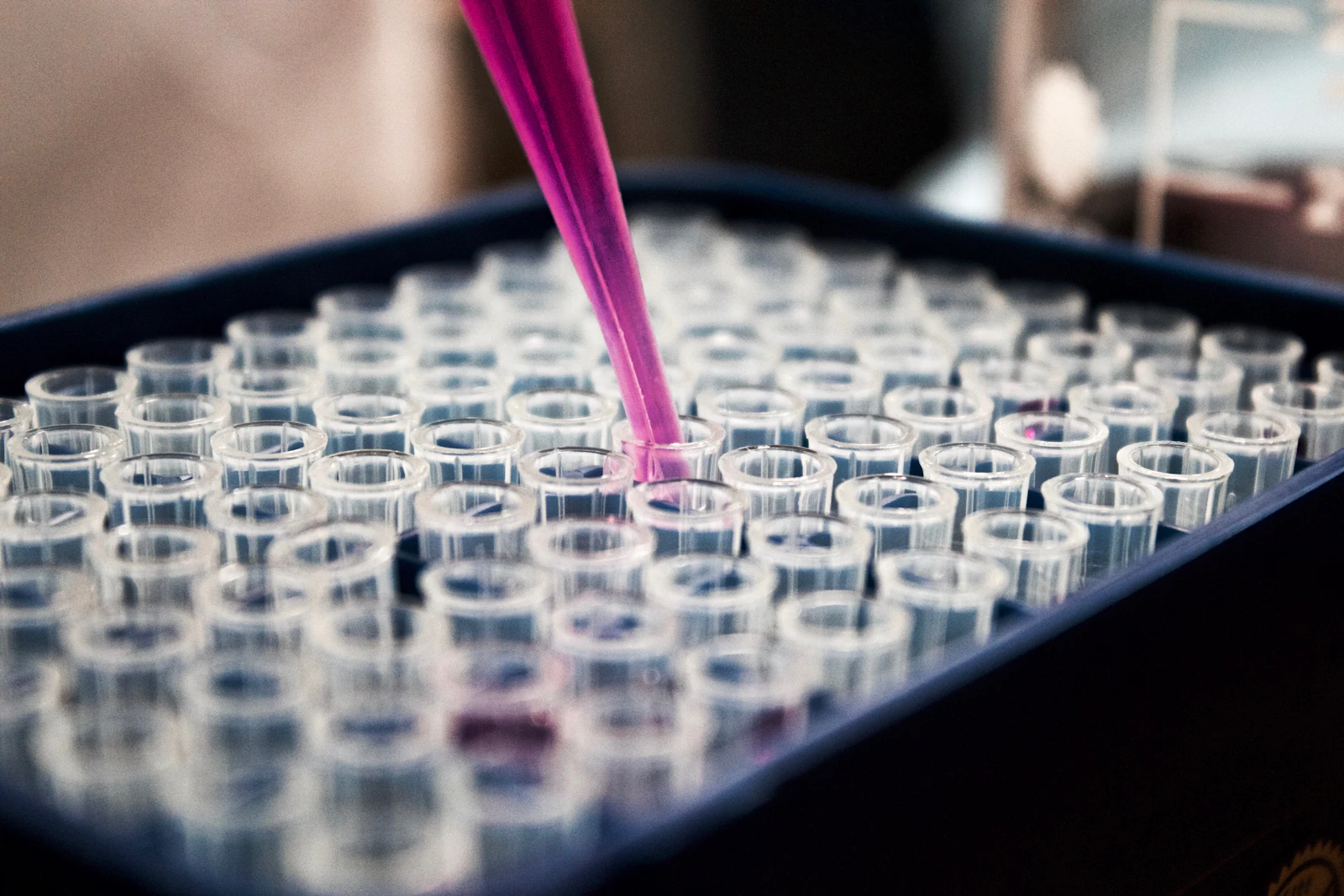
- Synthesize the top candidates as DNA, express them in cells or cell‑free systems, and measure performance.
- Feed back experimental data to retrain or fine‑tune the models, closing the loop.
Scientific Significance: New Enzymes, Pathways, and Molecular Machines
AI‑designed proteins are not just copies of nature; they increasingly perform tasks that natural evolution never explored or optimized. A wave of recent papers has showcased:
- De novo enzymes that catalyze synthetic chemistry reactions, including carbon–carbon bond formations or ring‑closing reactions valuable to pharmaceutical manufacturing.
- Hyper‑stable scaffolds that resist heat, pH extremes, or organic solvents, expanding where enzymes can operate.
- Custom binding proteins designed against difficult drug targets, such as GPCRs or cryptic epitopes.
- Self‑assembling nanostructures forming cages, filaments, or lattices for drug delivery and materials applications.
“We’re seeing enzymes do chemistry that we would normally rely on precious‑metal catalysts for, but under mild, aqueous conditions.” — Summarizing comments from enzymology experts in recent Science and Nature Chemistry articles.
Intersection with Biology, Genetics, and Chemistry
The impact of AI‑designed proteins spans multiple disciplines:
- Biology & genetics: Designed proteins can be encoded into DNA and integrated into cellular genomes or plasmids, enabling new metabolic pathways, synthetic organelles, or logic circuits in engineered cells.
- Chemistry: Tailor‑made enzymes offer greener alternatives to traditional catalysts—higher selectivity, lower energy input, and compatibility with aqueous systems, which reduces toxic waste.
- Synthetic biology & biotechnology: Modular design of binding domains, catalytic cores, and flexible linkers makes it possible to engineer multi‑component assemblies like biosensors, CAR‑T cell receptors, or CRISPR‑based gene editors with refined control.
As models improve, the line between “natural” and “engineered” biology becomes blurred. Many researchers now speak of “programmable cells” where AI‑designed proteins are key software components.
Mission in Practice: Therapeutics, Climate Tech, and Advanced Materials
The most visible drivers of this trend are high‑profile applications where AI‑designed proteins promise step‑change performance.
Next‑Generation Therapeutics
In drug discovery, AI‑designed binders and enzymes can:
- Target previously “undruggable” proteins by matching complex 3D surfaces.
- Act as precision cytokine modulators or immune checkpoint agonists/antagonists.
- Serve as safer, more specific gene‑editing tools with minimized off‑target activity.
For readers interested in foundational background on protein structure and drug design, accessible textbooks and guides such as “Introduction to Protein Structure” can provide a solid conceptual base for understanding these advances.
Green Chemistry and Industrial Biocatalysis
Industrial biotech companies are deploying AI‑designed enzymes to:
- Replace harsh chemical steps in pharmaceutical and agrochemical synthesis.
- Improve the breakdown of plastics and complex biomass.
- Enable continuous flow biocatalysis at scale.
Some startups are tackling carbon capture and utilization by designing enzymes that accelerate CO2 fixation or conversion into value‑added products, supplementing or outperforming naturally evolved pathways.
Programmable Materials and Nanotechnology
Self‑assembling protein nanostructures extend the mission of synthetic biology into materials science:
- Designing protein cages to encapsulate drugs, imaging agents, or catalysts.
- Engineering fibrous proteins that form strong, lightweight biomaterials.
- Constructing ordered arrays for quantum dots, metallic nanoparticles, or molecular electronics.
Milestones: From AlphaFold to Generative Design Startups
Several key milestones explain why AI‑designed proteins are trending so strongly now:
- 2020–2021: AlphaFold2 and structure revolution. DeepMind’s AlphaFold2, and similar models like RoseTTAFold, cracked many previously unsolved protein structures, rapidly expanding structural databases and validating deep learning’s power in molecular biology.
- 2021–2023: Open‑source diffusion and language models. Academic groups and open communities released code and pretrained models for protein language modeling and generative design, making experimentation accessible far beyond a handful of elite labs.
- 2022 onward: AI‑native biotech startups. Companies focusing purely on AI‑driven protein design for therapeutics, climate tech, and materials have raised large funding rounds, attracting mainstream media attention and pushing the field toward commercialization.
- High‑profile de novo enzyme papers. Publications in Nature, Science, and other top journals have showcased enzymes catalyzing non‑natural reactions, often matching or surpassing natural enzymes in stability or activity.
- Educational explosion on social media. YouTube channels, TikTok creators, and podcasts now regularly cover AI in protein design and synthetic biology, broadening public awareness and attracting new students to the field.
For an accessible overview of AlphaFold’s impact, DeepMind’s own blog posts and talks—such as their presentations at major conferences—are available via the DeepMind YouTube channel.
Challenges: Safety, Reliability, and Governance
Despite remarkable progress, AI‑driven protein design faces substantial scientific, engineering, and societal challenges.
Scientific and Technical Limitations
- Context dependence: Proteins behave differently in vitro versus inside living cells or organisms. AI models trained on simplified data may miss critical context such as post‑translational modifications, crowding, or membrane environments.
- Off‑target effects: Therapeutic proteins might inadvertently bind unintended targets, trigger immune responses, or misfold under physiological conditions.
- Model extrapolation: Generative models are strongest within the data regimes they have seen. Truly novel folds and functions push them into extrapolation, where reliability is less certain.
Dual‑Use and Biosecurity Risks
The same tools that design beneficial proteins could, in principle, help design harmful ones. This raises questions around:
- Designing toxins or virulence factors with enhanced properties.
- Automating parts of pathogen engineering workflows.
- Enabling misuse by users with limited biological expertise.
“We must ensure that AI for biology is developed and deployed with safeguards that match its transformative potential.” — A recurring theme in policy discussions in journals like Nature Biotechnology and Cell.
Ethics, Equity, and Regulation
Key questions for policymakers and ethicists include:
- Who will have access to cutting‑edge design tools and cloud lab resources?
- How should benefit‑sharing work when valuable enzymes or therapeutics emerge from datasets built on natural biodiversity?
- What regulatory frameworks can adapt quickly enough to govern AI‑assisted biological design without stifling innovation?
Organizations such as the World Health Organization’s synthetic biology initiatives and national academies are actively assessing guidelines to reduce misuse while supporting beneficial research.
Tooling and Education: From Notebooks to Cloud Labs
Another reason for the rapid spread of AI‑driven protein design is the increasing accessibility of tools and educational resources.
Open‑Source Software and Notebooks
Open‑source communities have released tools and example notebooks that let academic labs—and even motivated hobbyists—experiment with protein design. These often include:
- Interactive Jupyter or Colab notebooks for sequence and structure generation.
- Integration with public protein databases and visualization tools.
- Basic filters for stability, aggregation propensity, and other biophysical properties.
For visual learners, there are numerous explainer videos on AI in protein design on platforms like YouTube, where computational biologists walk through tools step by step.
Cloud Labs and Automation
Cloud‑based wet labs pair AI design with robotic execution. Users can submit designs via web interfaces, and automation handles DNA synthesis, expression, and characterization. This:
- Lowers the barrier to entry for groups without full wet‑lab infrastructure.
- Generates consistent, machine‑readable experimental datasets ideal for AI feedback loops.
- Supports parallel experimentation on hundreds to thousands of variants per cycle.

A Typical AI‑Driven Protein Design Workflow
To make the process concrete, consider a lab aiming to design an enzyme for a novel biocatalytic reaction:
- Define the goal: Specify the substrate, product, and reaction conditions (pH, temperature, solvent).
- Choose a design framework: Use a generative backbone model conditioned on active‑site geometry, or scaffold a known catalytic motif into new folds.
- Generate candidates: Sample thousands of sequences predicted to adopt the necessary active‑site geometry.
- In silico filtering: Run stability predictions, docking simulations, and heuristic checks for expression and solubility.
- Build and test: Synthesize the top N designs, express them, and measure reaction rate, turnover number, and selectivity.
- Iterative optimization: Feed back activity data, fine‑tune the model, and repeat design rounds to converge on a high‑performing enzyme.
Reproducing such workflows requires both computational skills and basic lab capabilities. For learners building a home or teaching lab, reliable equipment such as micropipettes, incubators, and centrifuges is essential. Carefully chosen gear like adjustable Eppendorf‑style micropipettes can support accurate small‑volume handling that protein engineering experiments demand.
The Future: Biology as a Programmable Substrate
Many researchers now describe a vision where we specify biological function in high‑level languages, compile those specifications down to protein designs, and deploy them in cells or cell‑free systems. In this vision:
- Domain experts define constraints (“bind receptor X with nanomolar affinity,” “fix Y grams of CO2 per liter per hour”).
- Compilers translate those specifications into architectures and conditioning for generative models.
- Automated platforms execute design–build–test cycles, updating models continuously.
This “biology as code” paradigm would make the design of enzymes, sensors, and metabolic circuits more like modern software engineering—modular, reusable, and version‑controlled, with standardized testing and documentation.
At the same time, biological systems are noisy, context‑dependent, and evolutionarily active. Unlike digital code, proteins operate within living, adapting systems, which means:
- Safety testing and long‑term monitoring must remain central.
- Designs must account for evolution, mutation, and ecological interactions.
- Regulation and ethics need to be treated as first‑class design constraints, not afterthoughts.
Conclusion: Promise, Responsibility, and How to Engage
AI‑designed proteins and de novo enzymes represent one of the most exciting frontiers at the intersection of AI and the life sciences. The same generative techniques that revolutionized images and language are now being harnessed to propose entirely new molecules, with implications for health, climate, and industry.
For scientists and engineers, this is an invitation to learn both computational and experimental skills. For policymakers, ethicists, and the public, it is a call to proactively shape governance frameworks that encourage beneficial innovation while managing risks.
If you want to go deeper:
- Follow researchers and practitioners on professional networks such as LinkedIn who regularly share advances in protein engineering and synthetic biology.
- Explore long‑form discussions on podcasts and YouTube channels devoted to computational biology, biotech entrepreneurship, and AI safety.
- Engage with open‑source communities that are building the next generation of design tools, and contribute data, code, or critical perspectives.
References / Sources
Selected resources for further reading on AI‑driven protein design and synthetic biology:
- Jumper et al., “Highly accurate protein structure prediction with AlphaFold,” Nature (2021). https://www.nature.com/articles/s41586-021-03819-2
- DeepMind, AlphaFold Protein Structure Database. https://alphafold.ebi.ac.uk
- Recent reviews on AI in protein design in Nature Reviews Molecular Cell Biology and Nature Biotechnology. https://www.nature.com/subjects/protein-engineering
- World Health Organization, Synthetic Biology and Public Health. https://www.who.int/health-topics/synthetic-biology
- Educational content and conference talks on AI for biology from DeepMind and related groups. https://www.youtube.com/c/DeepMind
As with any rapidly evolving area, new results appear frequently. Checking preprint servers like bioRxiv and arXiv under categories such as quantitative biology and machine learning is a good way to stay current on the latest breakthroughs in AI‑designed proteins and synthetic biology.
