
AI-Designed Proteins: How Generative Models Are Re‑Engineering Life Itself
Mission Overview: From Protein Prediction to Protein Creation
Over just a few years, artificial intelligence has revolutionized how scientists understand and engineer proteins. Breakthroughs like DeepMind’s AlphaFold and Meta’s ESMFold demonstrated that neural networks can predict the 3D structure of natural proteins directly from their amino‑acid sequences with near‑atomic accuracy. That solved a 50‑year‑old grand challenge in structural biology.
The frontier has now shifted from predicting how nature’s proteins fold to designing completely new proteins that have never existed before. This “inverse problem” of protein design—going from desired function or shape back to an amino‑acid sequence—is being tackled with generative AI: diffusion models, transformers, and variational autoencoders trained on massive protein databases like UniProt, PDB, and metagenomic datasets.
In this new paradigm, researchers specify a functional goal—such as catalyzing a green chemical reaction, neutralizing a virus, or assembling into a nanoscale cage—and AI proposes candidate sequences. Those sequences are synthesized, expressed in cells or cell‑free systems, and tested in high‑throughput assays. Iterative cycles of design → build → test → learn are compressing timelines that once took years down to weeks or even days.
“We are entering an era where we can generate proteins for almost any purpose on demand,” notes David Baker, a leading protein design researcher at the University of Washington’s Institute for Protein Design. “That fundamentally changes what is possible in biology.”
Visualizing the New World of AI‑Designed Proteins
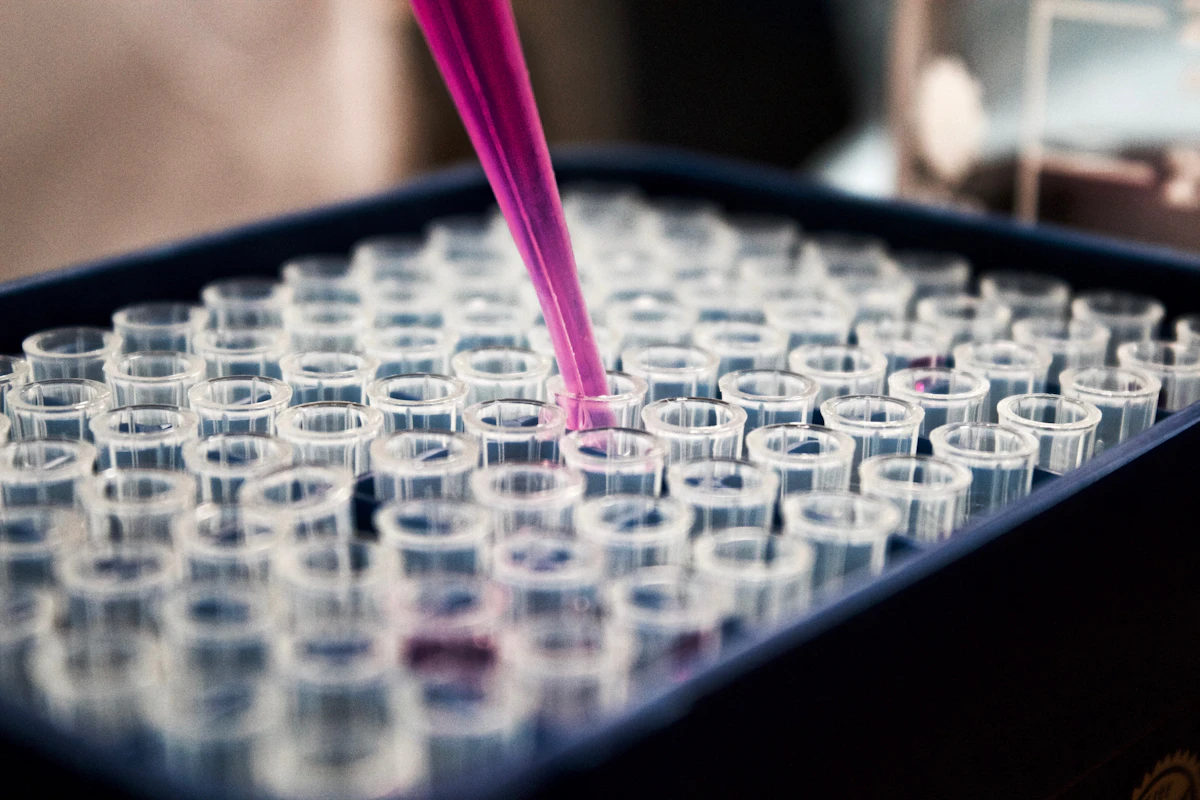
High‑performance GPUs, cloud platforms, and open‑source software have democratized access to advanced protein modeling. A growing ecosystem of tools—such as OpenFold, RFdiffusion, ProteinMPNN, and ESM‑based models—allow academic labs, biotech startups, and even advanced hobbyists to participate in this transformation.
Technology: How Generative Models Learn to Design Proteins
AI‑assisted protein design builds on several core machine‑learning architectures, each targeting different aspects of the problem: sequence generation, structure prediction, and property optimization.
Generative Model Families
- Transformer language models on protein sequences Protein LLMs such as Meta’s ESM‑2 and Salesforce’s ProGen treat amino‑acid sequences like “sentences” and learn grammar‑like rules of protein folding and function from billions of natural sequences.
- Enable masked‑token prediction (fill‑in‑the‑blank for residues)
- Support conditional generation (e.g., specific motifs or domains)
- Provide embeddings that correlate with stability and function
- Diffusion models for protein backbones Diffusion models, as seen in RFdiffusion from the Baker lab, learn to generate 3D protein backbones by gradually denoising random coordinates into realistic folds.
- Can be conditioned on binding interfaces, symmetry, or topology
- Naturally handle multimodal distributions of shapes
- Variational autoencoders (VAEs) VAEs compress protein sequences or structures into a smooth latent space where interpolation yields novel yet plausible designs.
- Useful for exploring families of related proteins
- Enable property‑guided latent space optimization
- Sequence–structure co‑design models Newer architectures jointly generate sequence and 3D structure, often using graph neural networks to respect spatial relationships between residues.
Design–Build–Test–Learn (DBTL) Loop
Successful AI‑driven protein engineering depends on tight integration between in silico models and wet‑lab validation. A typical DBTL loop looks like this:
- Design: Use generative models to propose hundreds to millions of candidate sequences conditioned on desired attributes (e.g., catalytic site geometry, pH stability).
- Build: Synthesize DNA encoding the sequences and express proteins in host systems such as E. coli, yeast, CHO cells, or cell‑free systems.
- Test: Run high‑throughput assays for activity, binding, stability, solubility, and off‑target effects; use robotics and microfluidics to scale.
- Learn: Feed the experimental results back into the models via fine‑tuning, active learning, or Bayesian optimization to design improved generations.
Cloud‑native lab platforms and contract research organizations (CROs) now offer “AI to assay” pipelines, where a computational biologist can submit designs and receive experimental data in standardized formats, further accelerating the feedback loop.
Scientific Significance and Key Application Domains
AI‑designed proteins are reshaping multiple industries at once. Three domains in particular—enzyme engineering, therapeutic proteins, and biomaterials—illustrate the breadth of impact.
1. Enzyme Engineering for a Greener Chemical Economy
Industrial enzymes already underpin detergents, food processing, paper bleaching, and biofuel production. AI is helping design next‑generation biocatalysts that are more active, selective, and tolerant to temperature, solvents, or pH extremes.
- Plastic degradation: Models propose variants of PETases and other hydrolases with improved activity at ambient temperatures, aiding recycling of PET and polyester waste.
- Carbon capture and utilization: Engineered carbonic anhydrases, RuBisCO analogs, and CO2-fixing enzymes aim to make direct air capture and biological carbon utilization more energy‑efficient.
- Green synthesis: Custom enzymes promise to replace harsh chemical catalysts in pharmaceutical and fine‑chemical manufacturing, reducing solvents, heavy metals, and waste.
“The dream is a biocatalyst for every major industrial reaction,” explains Frances Arnold, Nobel laureate in Chemistry. “AI‑guided design is dramatically narrowing the search space.”
2. Therapeutic Proteins and Next‑Generation Biologics
Antibodies, cytokines, and recombinant proteins already dominate the drug pipeline. AI is now enabling:
- De novo antibodies and binders optimized for affinity, specificity, and reduced immunogenicity against targets from cancer neoantigens to viral epitopes.
- Multispecific and modular scaffolds such as bi‑ or tri‑specific antibodies and synthetic binding scaffolds designed to engage multiple receptors simultaneously.
- Protein‑based delivery vehicles including self‑assembling nanocages, nanoparticle coatings, and engineered viral capsids tailored to specific tissues.
Several AI‑designed protein therapeutics entered preclinical or early clinical evaluation by 2025, targeting oncology, autoimmunity, and infectious diseases. While it is still early, the pace of design cycles suggests a coming wave of AI‑originated biologics.
3. Novel Biomaterials and Self‑Assembling Nanostructures
Proteins make outstanding building blocks for materials: they can be strong yet lightweight, self‑healing, environmentally degradable, and programmable via sequence. Generative models are now used to design:
- Fibers and films with spider‑silk‑like toughness and tunable elasticity.
- Hydrogels that respond to temperature, pH, or metabolites for drug delivery, tissue engineering, and soft robotics.
- Symmetric nanocages that precisely position functional groups for catalysis, sensing, or vaccine display.
Open Tools, Cloud Platforms, and the New Innovation Stack
A defining feature of AI‑assisted protein design is the rapid spread of open‑source tools and cloud‑based workflows. What once required a major pharmaceutical company’s infrastructure is increasingly available to small labs and startups.
Accessible Software Ecosystem
Popular tools include:
- OpenFold and ColabFold for structure prediction on modest GPU resources.
- RFdiffusion, ProteinMPNN, and Chroma-like platforms for de novo backbone generation and sequence design.
- ESMFold for fast structure inference directly from protein language models.
- Interactive notebooks shared via GitHub, Google Colab, and community platforms that walk users through design workflows.
Educational content on YouTube, X (Twitter), TikTok, and LinkedIn further amplifies accessibility. Computational biologists regularly post end‑to‑end demos: specifying a target pocket, running a design job, and sending top candidates to a partner lab for testing.
Cloud Labs and DNA Synthesis
AI alone cannot create functional proteins; it must be coupled with the physical ability to synthesize DNA and run experiments. Over the last few years, several trends have converged:
- Falling DNA synthesis costs and rapid‑turnaround gene synthesis services.
- Cloud labs offering programmable robotics for standardized workflows.
- APIs that integrate directly from design software to synthesis and assay ordering.
This “stack”—AI design, programmatic synthesis, automated experimentation—underpins a new wave of synthetic biology startups focused on enzymes, therapeutics, materials, and more.
Milestones and Breakthroughs in AI‑Driven Protein Design
Several key milestones between 2020 and early 2026 illustrate the rapid maturation of the field.
Key Scientific Milestones
- AlphaFold and ESMFold: High‑accuracy structure prediction for nearly all known proteins, releasing extensive structural atlases and enabling structure‑informed design on a vast scale.
- De novo symmetric assemblies: Design of protein cages, rings, and lattices with Angstrom‑level precision, validated by cryo‑EM and X‑ray crystallography.
- AI‑first enzymes: Demonstrations of enzymes whose sequences are largely de novo, yet show meaningful catalytic activity and stability in real‑world conditions.
- AI‑originated therapeutic candidates: Protein binders and biologics entering animal studies and early‑phase human trials, with some specifically optimized via AI for better pharmacokinetics and reduced immunogenicity.
Commercial and Ecosystem Milestones
- Major pharma and industrial players forming deep partnerships with AI protein design startups.
- Cloud vendors offering specialized hardware and managed services for large‑scale structure prediction and generative design.
- Open challenges and benchmarks (e.g., protein design competitions) that spur innovation and create standardized evaluation metrics.

Challenges, Limitations, and Safety Considerations
Despite spectacular progress, AI‑assisted protein design faces significant scientific, engineering, and ethical challenges.
Scientific and Technical Constraints
- Complex fitness landscapes: Real protein fitness depends on multiple interacting properties—activity, expression, folding kinetics, solubility, aggregation, in vivo stability—that are hard to capture in a single objective.
- Generalization limits: Models are trained predominantly on natural proteins; designs that stray too far from this manifold risk misfolding, poor expression, or unforeseen toxicity.
- Environment dependence: A protein that behaves well in vitro may fail in the crowded, dynamic environment of a human cell or industrial bioreactor.
- Data quality and bias: Experimental datasets used to fine‑tune models can be noisy or biased toward particular protein families or assay conditions, skewing design outcomes.
Biosecurity and Dual‑Use Concerns
The same tools that can design life‑saving therapeutics or carbon‑fixing enzymes could, in principle, be misused to design harmful biological agents. Even though practical barriers remain substantial—wet‑lab expertise, tacit knowledge, and physical infrastructure—policymakers and biosecurity experts are paying close attention.
“We must assume that powerful biological design tools will diffuse widely,” argues biosecurity researcher Filippa Lentzos. “The challenge is building guardrails that preserve innovation while mitigating misuse.”
Evolving Governance and Best Practices
Several strategies are emerging internationally:
- Access controls on the most capable models and high‑risk design workflows, especially those oriented toward pathogens or toxins.
- DNA synthesis screening to detect and block orders containing sequences of concern, building on the International Gene Synthesis Consortium guidelines.
- Responsible publication norms that avoid releasing turnkey protocols or recipes that could lower the barrier to misuse.
- Model alignment and red‑teaming, where AI systems are stress‑tested to identify and mitigate risky capabilities or outputs.
International organizations, national regulators, and scientific societies are actively discussing how WCAG‑style principles of accessibility and safety in the digital realm might parallel new norms for responsible biological AI tools.
Practical Tools and Resources for Learners and Practitioners
For scientists and engineers entering this field, a combination of conceptual understanding and hands‑on practice is essential.
Core Skills to Develop
- Foundations of biochemistry and structural biology: protein folding, thermodynamics, binding, and catalysis.
- Competence in Python and machine learning, especially working with PyTorch or JAX.
- Familiarity with molecular modeling tools like PyMOL, ChimeraX, and Rosetta‑based workflows.
- Basic knowledge of wet‑lab methods: cloning, expression systems, purification, and functional assays.
Helpful Learning Resources
- Online courses in computational biology and deep learning for proteins from platforms like Coursera and edX.
- Tutorials and code repositories from labs such as the Institute for Protein Design and EMBL‑EBI, many of which are linked from their official websites and GitHub organizations.
- YouTube channels and recorded conference talks that walk through real‑world design case studies, including workshops from NeurIPS, ICML, and ISMB.
- Professional communities on LinkedIn and specialized Slack/Discord groups where practitioners share notebooks, datasets, and troubleshooting tips.
Relevant Hardware and Lab Gear (Affiliate Suggestions)
For researchers setting up a small computational or benchtop lab, basic but reliable equipment can make a substantial difference:
- A powerful yet compact workstation or laptop with a modern NVIDIA GPU helps run tools like ColabFold locally. For those who need portable computing, consider devices in the class of the MSI Creator‑series laptops with RTX graphics that support CUDA‑accelerated protein modeling workloads.
- For basic molecular biology work, adjustable single‑channel pipettes such as the Eppendorf Research plus adjustable pipette set offer the precision and durability suited to repeated protein expression and assay workflows.
- For visualization and quick structural inspection, a high‑resolution monitor like the LG 27UK850‑W 4K UHD IPS display can make it easier to inspect protein models and assess subtle structural differences.
The Future of AI‑Designed Proteins and Synthetic Biology
Over the next decade, AI‑designed proteins are poised to become foundational infrastructure for synthetic biology and biotechnology at large.
Convergence with Other Technologies
- Cell and gene therapy: Custom receptors, engineered capsids, and regulatory proteins designed by AI will tailor therapies to specific tissues and patient populations.
- Metabolic engineering: Whole pathways of AI‑designed enzymes will enable microbial factories to produce fuels, materials, and therapeutics from renewable feedstocks.
- Embedded sensing: Protein‑based biosensors integrated into wearables or environmental monitors will continuously detect biomarkers, pathogens, or pollutants.
- Human‑AI co‑design: Interactive systems will allow human experts to guide generative models in real time, blending domain intuition with algorithmic search.
Ethical and Societal Imperatives
As with any powerful technology, social choices will shape whether AI‑designed proteins primarily advance health, sustainability, and economic opportunity—or exacerbate inequality and risk. Inclusive governance, equitable access, and robust monitoring will be essential.
Ultimately, AI‑designed proteins exemplify a broader shift: biology is becoming an information science and an engineering discipline. The ability to write new proteins as easily as we now write code could unlock solutions to some of humanity’s most pressing challenges—if we steward the technology wisely.
Additional Tips for Staying Current in AI Protein Design
The field moves quickly, but a few practical habits can help you stay up to date:
- Follow leading researchers on platforms like X (Twitter) and LinkedIn—labs such as the Institute for Protein Design, DeepMind’s protein team, and EMBL‑EBI frequently share preprints and tutorials.
- Subscribe to newsletters that track AI in biology and synthetic biology, which often summarize major papers and funding announcements.
- Regularly browse preprint servers such as bioRxiv and arXiv (q‑bio, cs.LG) for emerging work in protein language models and generative design.
- Join workshops or hackathons focused on protein design; many conferences now host hands‑on sessions with open‑source tools and datasets.
By combining these information streams with deliberate practice on real design problems, you can quickly build a robust intuition for what today’s tools can (and cannot) do—and position yourself at the forefront of the next wave of synthetic biology.
Conclusion
AI‑designed proteins mark a pivotal moment in the history of life sciences. Generative models are no longer just predicting what nature has already built; they are venturing into vast uncharted regions of protein sequence space, proposing molecules that may surpass natural counterparts in stability, specificity, and tailor‑made function.
Realizing the full promise of this technology will require deep collaboration between AI researchers, experimental biologists, chemists, engineers, ethicists, and policymakers. With thoughtful guardrails and inclusive governance, AI‑assisted protein design can become one of the most powerful tools we have for medicine, climate mitigation, and sustainable industry.
References / Sources
The following resources provide deeper technical and ethical context:
- Jumper et al., “Highly accurate protein structure prediction with AlphaFold,” Nature
- Watson et al., “De novo design of protein structure and function with RFdiffusion,” Science
- Lin et al., “Evolutionary-scale prediction of atomic-level protein structure with a language model,” Nature
- Huang et al., “De novo design of protein binders to precise targets,” Cell
- Popova et al., reviews on deep generative models for protein design, Nature
- bioRxiv – Preprints in bioinformatics and protein engineering
- arXiv – Quantitative biology and machine learning sections
- Johns Hopkins Center for Health Security – Reports on AI, biosecurity, and DNA synthesis screening
