
AI-Designed Proteins: How Generative Models Are Rewiring Modern Biology
Artificial intelligence has reshaped molecular biology in just a few years. After AlphaFold and related systems solved the decades‑old problem of predicting protein structures from amino‑acid sequences, the field pivoted toward an even more ambitious goal: using AI to design proteins and enzymes from scratch. This shift—from passive prediction to active creation—is redefining how we approach drug discovery, industrial biocatalysis, and synthetic biology.
Today’s AI models do not just “guess” shapes; they generate entirely new sequences that fold into stable, functional 3D structures, sometimes catalyzing reactions not known in nature. At the same time, rapid advances have sparked serious discussion about biosecurity and governance, as the same tools that design therapeutics could, in principle, be misused. This article explores the mission, technologies, scientific significance, milestones, challenges, and future directions of AI‑designed proteins and enzymes.
Mission Overview: Why Design Proteins with AI?
Proteins are the molecular machines of life. Their function is determined by their 3D structure, which in turn arises from the sequence of amino acids. Traditional structure determination—using X‑ray crystallography, NMR spectroscopy, or cryo‑electron microscopy—is resource‑intensive and slow, often taking months to years per protein. AI‑based prediction compressed this timeline dramatically, but it did not inherently tell scientists how to invent new proteins.
The mission of AI‑driven protein design is to treat proteins more like programmable objects, analogous to software. Instead of randomly mutating natural proteins and screening millions of variants, researchers aim to:
- Specify a desired function (e.g., catalyze a particular reaction, bind a given receptor, fluoresce at a chosen wavelength).
- Use AI models to generate sequences predicted to achieve that function while remaining stable and manufacturable.
- Experimentally test and iteratively refine the best candidates.
The long‑term vision is a design pipeline where biology becomes “compilable,” allowing scientists and engineers to move from a high‑level specification (“destroy this pollutant,” “block this viral protein”) to a working protein tool in weeks instead of years.
Visualizing AI‑Designed Proteins
High‑resolution structural models help researchers understand how AI‑designed proteins might fold, bind, and catalyze reactions before they ever touch a pipette.
Technology: From Structure Prediction to Generative Protein Design
Modern AI‑driven protein design integrates several technological pillars: structure prediction, generative modeling, differentiable design, and high‑throughput experimental feedback. Together, they create a closed loop between computation and the wet lab.
1. Structure Prediction Foundations (AlphaFold, RoseTTAFold, and Beyond)
The revolution began with deep neural networks like DeepMind’s AlphaFold2 and the University of Washington’s RoseTTAFold. These systems treat protein structure prediction as a complex geometric problem, using attention mechanisms and equivariant neural networks that respect 3D rotations and translations.
- AlphaFold and its successors can now predict structures for hundreds of millions of natural proteins.
- Databases such as the AlphaFold Protein Structure Database provide open access models covering most proteins known to science.
- These predictions guide mutagenesis, docking studies, and rational design of binding interfaces.
2. Generative Models: “Protein Language Models” and Diffusion Networks
To move from prediction to design, researchers turned to generative architectures inspired by large language models (LLMs) and image diffusion models. Protein sequences, like sentences, follow grammatical regularities—only certain combinations yield properly folded, functional proteins.
Key approaches include:
- Protein language models (PLMs) such as ESM‑2 (Meta), ProtT5, and others trained on hundreds of millions of sequences to learn “syntax” and “semantics” of proteins.
- Diffusion models that iteratively refine random structures or sequences into realistic protein designs, analogous to how DALL·E or Stable Diffusion generate images.
- Generative graph and 3D models (e.g., RFdiffusion) that directly manipulate protein backbones and side chains in 3D space.
“We are beginning to design proteins as easily as we used to design DNA sequences, opening a completely new realm of molecular functionality.” — David Baker, protein design pioneer, University of Washington
3. Differentiable Design and Inverse Folding
Inverse folding models ask the question: given a desired 3D shape or binding interface, which amino‑acid sequence will adopt it? These models work in tandem with differentiable scoring functions—such as predicted stability, binding affinity, or solubility—allowing gradient‑based optimization similar to training a neural network.
- Specify a target geometry (e.g., a pocket that binds a small‑molecule drug).
- Use an inverse folding model to propose sequences compatible with that geometry.
- Optimize sequences to maximize AI‑predicted properties while minimizing liabilities like aggregation.
4. High‑Throughput Experimental Feedback
AI alone cannot guarantee success; wet‑lab validation is essential. Modern labs employ:
- Deep mutational scanning to test thousands to millions of variants and map sequence‑function relationships.
- Next‑generation sequencing to read out which variants perform best.
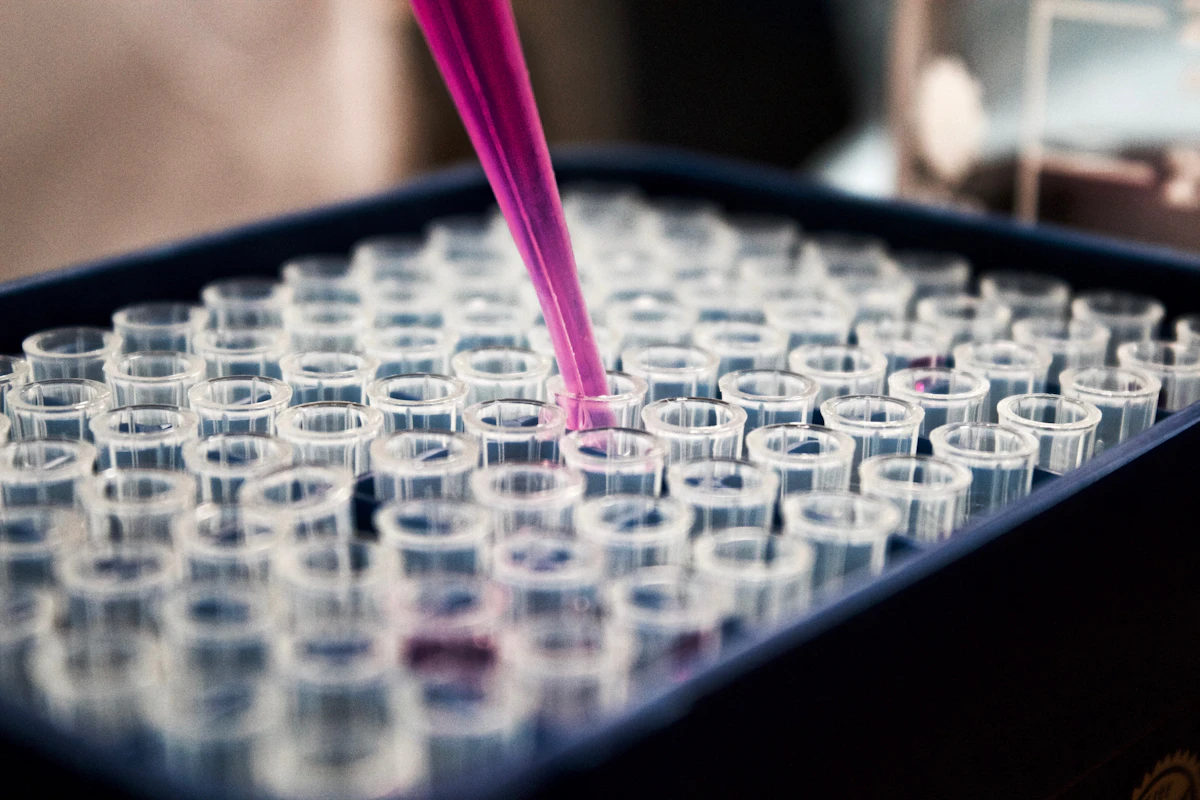
- Automated liquid‑handling robots and microfluidic systems to accelerate testing cycles.
Data from these experiments are fed back into AI models, continually improving their accuracy and expanding the space of viable designs.
Scientific and Industrial Applications: Enzymes, Drugs, and Biosensors
AI‑designed proteins are beginning to impact multiple domains—from pharmaceuticals to sustainable manufacturing and environmental monitoring.
Drug Discovery and Therapeutic Design
In therapeutics, AI design focuses on binding proteins (including antibodies, nanobodies, and de novo scaffolds) that recognize disease‑relevant targets with high affinity and specificity. Companies such as Insilico Medicine, Generate:Biomedicines, and Absci are integrating generative protein design into their discovery pipelines.
- Designing novel binders against viral proteins (e.g., SARS‑CoV‑2 spike variants or influenza hemagglutinin).
- Engineering cytokines and immune modulators with improved safety profiles.
- Optimizing antibody frameworks for stability, manufacturability, and reduced immunogenicity.
For readers interested in practical tools used in structural biology, resources like the widely adopted “Molecular Biology of the Cell” textbook provide foundational understanding of protein function and cell biology that underpins AI‑driven design strategies.
Industrial Biocatalysis and Green Chemistry
Enzymes designed or optimized by AI can replace harsh chemical catalysts in manufacturing, improving energy efficiency and reducing toxic by‑products. Applications include:
- Fine chemical and pharmaceutical synthesis under milder, water‑based conditions.
- Enzymes that function at high temperatures or extreme pH, suitable for industrial reactors.
- Biocatalysts tuned to work in organic solvents for challenging transformations.
As an example, AI‑guided enzyme design has boosted yields in key steps of small‑molecule drug synthesis, cutting both cost and environmental footprint.
Biosensors and Real‑Time Biological Monitoring
AI‑designed biosensors are proteins that change fluorescence or activity when they encounter a specific molecule—such as a metabolite, hormone, neurotransmitter, or environmental toxin. They enable:
- Live‑cell imaging of metabolic states (e.g., glucose, ATP, or calcium levels).
- Environmental monitoring for pollutants like heavy metals or pesticides.
- Smart fermentation tanks that monitor and adjust conditions in real time.
Synthetic Biology and Programmable Cells
Synthetic biologists envision using AI‑designed proteins as modular components—switches, logic gates, sensors, and actuators—within engineered cells. Potential applications include:
- Microbes that selectively degrade plastic waste or industrial pollutants.
- Immune cells armed with custom receptors that recognize and attack tumor cells while sparing healthy tissue.
- Yeast strains with optimized enzymes for biofuel or high‑value metabolite production.

Scientific Significance: Exploring Protein Sequence Space
The potential diversity of proteins is astronomical: with 20 amino acids, a modest 300‑residue protein has 20300 possible sequences—far more than the number of atoms in the universe. Natural evolution samples only a vanishingly small subset of this landscape. AI‑driven design lets us chart new territories that biology has never visited.
By learning statistical regularities from massive sequence and structure databases, AI models infer where functional, stable proteins are likely to reside in sequence space. This yields several scientific benefits:
- New folds and architectures: De novo proteins that adopt shapes not seen in nature, expanding our understanding of what is physically and biologically possible.
- Mechanistic insight: Designed proteins with specific features (e.g., cavities, charge distributions) can test hypotheses about structure‑function relationships.
- Evolutionary reconstruction: Models can suggest plausible ancestral proteins or explore alternate evolutionary trajectories.
“For the first time, we can seriously contemplate designing proteins that perform almost any task we can specify, limited more by our imagination than by the tools.” — Paraphrasing contemporary commentary in Nature on AI‑based protein design
Milestones: From AlphaFold to AI‑Designed Nanostructures
Several high‑profile demonstrations have captured the scientific community’s and the public’s imagination, frequently trending in preprints, conferences, and social media.
Key Milestones and Demonstrations
- AlphaFold2 (2020–2021): Achieved near‑experimental accuracy on many proteins, effectively “solving” the structure prediction problem for numerous cases.
- RoseTTAFold and RFdiffusion: Open‑source tools that democratized advanced prediction and generative design, enabling labs worldwide to experiment with de novo proteins.
- Self‑assembling nanostructures: AI‑designed proteins that form cages, lattices, and other nanomaterials with atomic‑scale precision, showcased in high‑impact papers and conference talks.
- Enzymes with non‑natural functions: Designer enzymes that catalyze abiotic reactions or work under extreme conditions, improving industrial processes.
Media and Community Engagement
YouTube channels and TikTok explainers have popularized stories of AI‑generated proteins, often comparing them to “biological Legos” or “programmable nanobots.” Professional forums like LinkedIn and ResearchGate host active discussions among bioinformaticians, structural biologists, and data scientists about new tools and benchmarks.
For an accessible video overview of how AlphaFold changed structural biology, see this explainer from DeepMind on YouTube, which continues to be widely referenced in outreach and teaching.
Methods and Tools: A Typical AI Protein Design Workflow
While specific pipelines vary, many AI‑driven projects follow a common recipe that combines in silico design with iterative experimentation.
- Define the design objective.
Clarify what the protein should do: bind a target, catalyze a reaction, emit a specific fluorescence, or assemble into a particular nanostructure.
- Choose the modeling framework.
- Use PLMs for sequence‑level generation and optimization.
- Employ diffusion or inverse folding models for 3D backbone and sequence co‑design.
- Integrate docking or molecular dynamics if fine‑grained interaction details matter.
- Generate candidate sequences.
Produce hundreds to tens of thousands of candidate sequences that satisfy structural and basic physicochemical constraints.
- In silico filtering.
- Predict stability, solubility, expression level, and potential off‑target interactions.
- Remove sequences predicted to aggregate or misfold.
- Experimental screening.
Express top candidates in cells or cell‑free systems; measure activity, binding, or fluorescence. Use deep sequencing to quantify which variants succeed.
- Model refinement.
Feed experimental outcomes back into the models to improve future design rounds—an AI‑guided directed evolution loop.
Challenges and Risks: From Model Limitations to Biosecurity
Despite impressive progress, AI‑driven protein design faces substantial scientific, technical, and ethical challenges. Recognizing these limitations is crucial for responsible deployment.
1. Model Reliability and Generalization
- AI predictions can be overconfident, especially in regions of sequence space far from natural proteins.
- Stability and function in vitro do not always translate to performance in living organisms.
- Epistatic interactions—where mutations have context‑dependent effects—are difficult to fully capture.
2. Data Bias and Coverage
Training data are biased toward well‑studied organisms and protein families. As a result:
- Certain classes of membrane proteins, intrinsically disordered proteins, or large complexes remain challenging.
- Non‑canonical amino acids and post‑translational modifications are poorly represented, limiting design space.
3. Experimental Bottlenecks
While AI can generate designs quickly, wet‑lab validation is still a gating factor:
- Expression, purification, and assay development can be time‑consuming.
- Specialized equipment and expertise are needed for many functional readouts.
4. Ethical and Biosecurity Concerns
Because the same techniques used to design therapeutics could, in principle, be misapplied, policy discussions have intensified. Potential risks include:
- Designing more stable variants of known toxins.
- Engineering proteins that help pathogens evade immunity.
Research organizations and policy groups are actively proposing governance frameworks, including:
- Access controls and tiered permissions for the most capable design tools.
- Screening of designed sequences against databases of harmful agents.
- Guidelines for publishing potentially dual‑use results.
“We need a biosecurity mindset that evolves as quickly as our design capabilities do, with cooperation between scientists, policymakers, and civil society.” — Adapted from contemporary biosecurity commentary in Cell and related forums
Practical Tools and Learning Resources
For students and practitioners wanting to get hands‑on with AI‑powered protein work, a mix of computational and wet‑lab skills is essential.
Recommended Skill Areas
- Foundations: Biochemistry, structural biology, thermodynamics of folding and binding.
- Computation: Python, PyTorch or TensorFlow, Unix workflows, and basic statistics.
- Bioinformatics: Multiple sequence alignment, homology search, and structural visualization with tools like PyMOL or ChimeraX.
Example Learning and Reference Materials
- “Introduction to Protein Structure” by Branden & Tooze – A classic text for understanding protein architecture.
- “Bioinformatics Data Skills” by Vince Buffalo – Practical guide to handling biological data programmatically.
- The AlphaFold GitHub repository and RFdiffusion – Widely used open‑source frameworks for structure prediction and generative design.
- Online courses in AI for biology offered via platforms such as Coursera and edX.
Looking Ahead: Toward Programmable Molecular Systems
Over the next several years, we can expect AI‑designed proteins and enzymes to move from headline‑grabbing demonstrations into routine tools in biotech, pharma, and academic labs. Several trends are particularly promising:
- Multimodal models that jointly reason over sequence, structure, function assays, and even imaging data.
- Integration with cellular models to predict how designed proteins behave in complex pathways and tissues, not just in isolation.
- Design of protein‑DNA‑RNA hybrid systems for advanced gene regulation and molecular computing.
- Standardized design languages for biology, enabling more reproducible and shareable “biological software.”
If successful governance frameworks keep pace with technical innovation, AI‑driven protein design could underpin a new era of sustainable manufacturing, precision medicine, and environmental stewardship.
Conclusion
AI‑designed proteins and enzymes mark a profound shift in how we work with biology. Rather than merely observing and tweaking nature’s existing repertoire, scientists can now propose entirely new molecular solutions to pressing problems in health, industry, and the environment. Generative models, structure predictors, and high‑throughput experimentation form a virtuous cycle that accelerates discovery and expands the space of feasible designs.
Yet the power to design at this level comes with responsibility. Ensuring safety, equity of access, and ethical use will require close collaboration among technologists, biologists, ethicists, policymakers, and the public. Done well, AI‑driven protein design could become a cornerstone of a more sustainable and resilient bio‑based economy.
Additional Considerations for Practitioners and Policy Makers
For Practitioners
- Invest in robust data management and version control for designs, models, and experimental results.
- Adopt reproducible pipelines using containers and workflow managers (e.g., Snakemake, Nextflow).
- Collaborate across disciplines—combining domain expertise in chemistry, biology, and machine learning yields better designs.
For Policy Makers and Institutions
- Engage technical experts early when drafting regulations for AI in biotechnology.
- Support open, responsible research while establishing safeguards against dual‑use applications.
- Encourage international coordination to avoid fragmented or inconsistent oversight.
Following discussions from organizations such as the WHO, the National Academies (US), and international biosecurity working groups can help align local policies with global best practices as the field evolves.
References / Sources
Selected references for further reading:
- Jumper et al., “Highly accurate protein structure prediction with AlphaFold,” Nature (2021).
- Baek et al., “Accurate prediction of protein structures and interactions using a three-track neural network,” Science (2021).
- Watson et al., “De novo design of protein architectures with fragment‑based diffusion models,” Nature (2023).
- AlphaFold Protein Structure Database (EMBL‑EBI).
- RFdiffusion GitHub repository.
- Cell articles on AI‑enabled biology and biosecurity considerations.
- Science Magazine topic collection on protein design.
