
AI-Designed Proteins: How Deep Learning Is Rewiring the Future of Drug Discovery and Synthetic Biology
Over just a few years, deep learning has turned protein structure prediction and design from a painstaking art into a routinely accessible engineering discipline. With tools like AlphaFold, RoseTTAFold, ESMFold, and newer generative protein models, researchers can often move from an amino‑acid sequence to a highly accurate 3D structure—and increasingly, from a desired structure or function back to candidate sequences. This shift is fueling a new era of computational biology that touches medicine, materials, climate tech, and synthetic biology.
At the same time, this power comes with responsibilities: as AI systems make it easier to design potent biological molecules, the scientific community is grappling with governance, transparency, and dual‑use risks. The result is one of the most exciting and consequential intersections of AI and life sciences to date.
Mission Overview: What Are AI‑Designed Proteins?
Proteins are the molecular machines of life. Their function is determined largely by their 3D structure, which in turn is encoded by the linear sequence of amino acids. For decades, determining structures required experimental techniques such as X‑ray crystallography, nuclear magnetic resonance (NMR), and cryo‑electron microscopy (cryo‑EM)—methods that can take months to years per protein.
AI‑designed proteins sit at the interface of:
- Structure prediction – inferring a protein’s 3D shape from its sequence.
- Inverse design – proposing sequences that will fold into a desired structure or perform a target function.
- Generative modeling – sampling entirely new protein sequences and folds guided by large datasets and physics‑inspired constraints.
“We’re no longer just reading the language of proteins; we’re starting to write it.” — paraphrasing David Baker, Institute for Protein Design
The core mission of this field is straightforward but revolutionary: to turn proteins into designable software‑like objects, such that we can debug disease mechanisms, build new therapies, and engineer sustainable biotechnologies with far greater speed and precision.
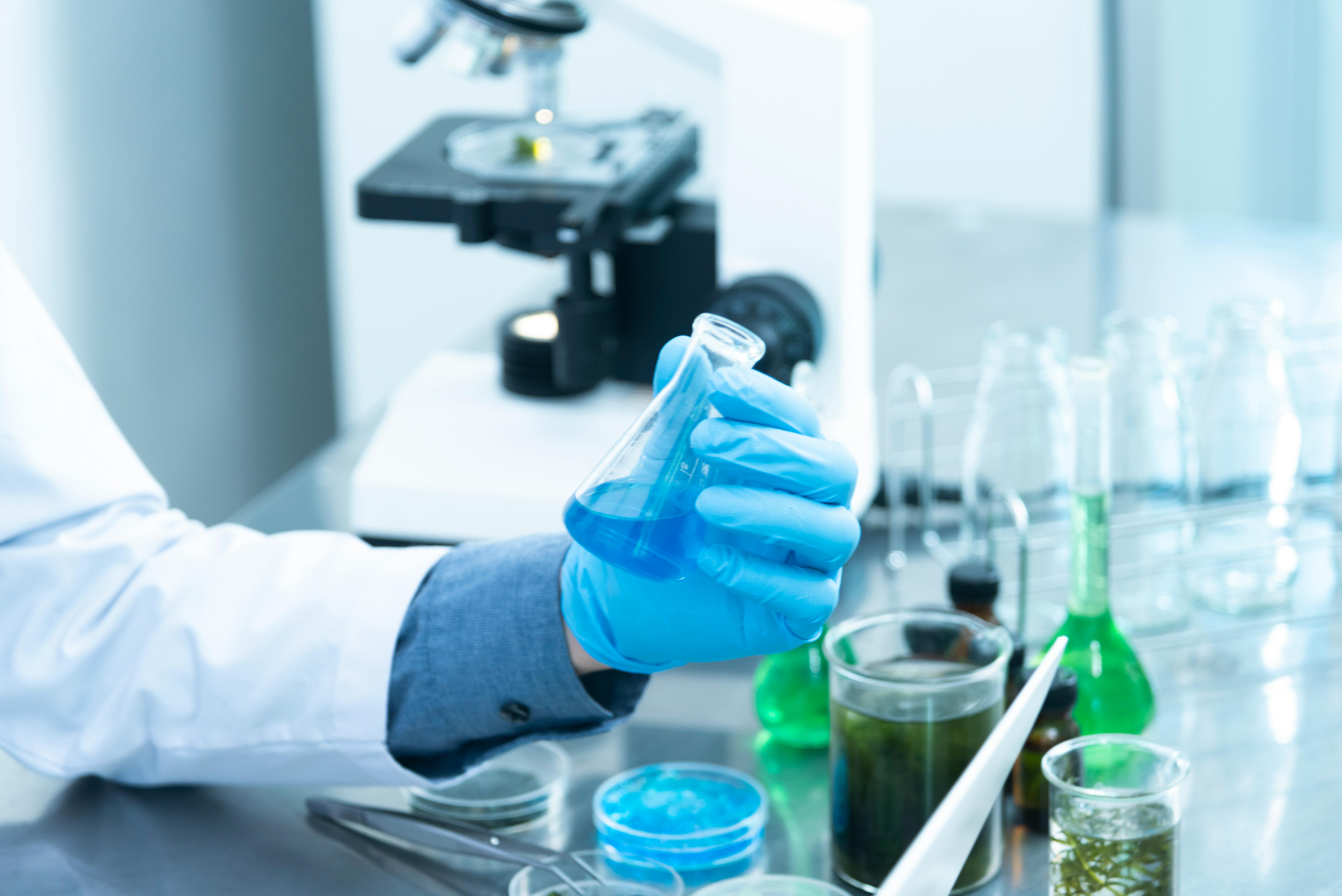
Technology: From AlphaFold to Generative Protein Models
Modern AI protein tools combine ideas from deep learning, statistical physics, and evolutionary biology. Several major classes of models now define the landscape.
AlphaFold, RoseTTAFold, and ESMFold: Structure Prediction at Scale
The breakthrough came when AlphaFold2, developed by DeepMind, demonstrated near‑experimental accuracy on the CASP14 structure prediction benchmark in 2020. AlphaFold2 introduced a transformer‑like architecture that jointly reasons over sequences and pairwise residue interactions, effectively learning the geometry of protein folding.
- AlphaFold / AlphaFold DB – Google DeepMind and EMBL‑EBI have released structures for hundreds of millions of proteins, providing a global reference for structural biology.
- RoseTTAFold – Developed by David Baker’s group at the University of Washington, it uses a three‑track network to simultaneously process sequences, 2D distance maps, and 3D coordinates.
- ESMFold – From Meta AI, built on large protein language models trained on hundreds of millions of sequences, it can predict structures quickly without requiring multiple‑sequence alignments.
These tools underpin many public resources, allowing biologists to obtain structural hypotheses as a routine step in a project. They also help interpret variants of unknown significance and guide targeted mutagenesis experiments.
Generative Models for De Novo Protein Design
By 2025–2026, the focus has shifted from “What is the structure?” to “What sequence should we write?”. Generative models—diffusion models, variational autoencoders (VAEs), generative adversarial networks (GANs), and large autoregressive language models—are now being applied directly in protein sequence space.
- Protein language models (PLMs) learn statistical patterns across millions of natural sequences, capturing evolutionary constraints and co‑variation signals.
- Structure‑conditioned generators propose sequences that are predicted to fold into a specified backbone topology.
- Function‑guided design loops integrate fitness predictors (e.g., enzyme activity, binding affinity) to bias the generation toward high‑performing candidates.
In practice, researchers now iterate between in silico generation and wet‑lab testing, gradually refining models with experimental feedback—a virtuous cycle sometimes referred to as “AI‑driven directed evolution.”
Scientific Significance and Real‑World Applications
The ability to design and evaluate proteins with high fidelity has deep consequences across many fields. Several domains are already seeing substantial impact.
1. Drug Discovery and Biologics
Protein‑based drugs—antibodies, enzymes, cytokines, and other biologics—are among the most successful therapeutics on the market. AI accelerates multiple steps:
- Target characterization – Predicting 3D structures of receptors, enzymes, and protein complexes relevant to disease.
- Hit discovery – Designing small binding proteins, miniproteins, or antibodies that recognize a target epitope.
- Optimization – In silico affinity maturation, stability tuning, and de‑immunization of candidate sequences.
Many biotech startups and pharma groups now run AI‑first discovery pipelines, where candidate binders are designed computationally, synthesized, and tested at scale, often with automated lab platforms.
For readers who want a practical, accessible overview of how AI is transforming pharmaceutical R&D, “Deep Medicine” by Eric Topol offers a widely cited introduction to AI in healthcare, including implications for drug discovery.
2. Enzyme Engineering for Industry and Sustainability
Enzymes underpin green chemistry, biofuels, food processing, and advanced materials. AI tools are used to:
- Increase catalytic efficiency at industrial temperatures, pH levels, and solvent conditions.
- Redesign substrate specificity for new feedstocks or reaction pathways.
- Create enzymes that break down plastics or capture and convert CO2.
For example, researchers have engineered PET‑degrading enzymes with improved thermostability and activity, guiding mutations using structure prediction and generative design rather than purely random mutagenesis.
3. Vaccinology and Immunology
Vaccine design is moving from whole‑pathogen or crude protein mixtures to structure‑guided antigens. AI‑assisted protein design helps:
- Stabilize metastable viral proteins (e.g., prefusion conformations of RSV or coronaviruses).
- Display key epitopes on designed nanoparticle scaffolds.
- Optimize immunogenicity while reducing off‑target or undesirable immune responses.
“Computational design is giving us a level of control over vaccine antigens that simply did not exist a decade ago.” — paraphrasing Neil King, Institute for Protein Design
4. Synthetic Biology and New‑to‑Nature Functions
Synthetic biologists now design proteins that act as:
- Biosensors that fluoresce, change conformation, or alter signaling in response to specific metabolites or environmental cues.
- Molecular logic gates implementing basic computation inside cells.
- Novel folds and scaffolds not observed in nature but stable and expressible.
These capabilities move biology closer to a true engineering discipline where modular, well‑characterized parts can be assembled into complex circuits and pathways.

Milestones: From AlphaFold2 to Open Protein Databases
Several key milestones have defined the trajectory of AI‑driven protein science:
- CASP14 (2020) – AlphaFold2 achieves near‑experimental accuracy on blind structure predictions, shocking the structural biology community.
- AlphaFold DB (2021–2022) – DeepMind and EMBL‑EBI release predicted structures for essentially all known proteins from major model organisms, followed by hundreds of millions of sequences from UniProt and beyond.
- Open‑source models – RoseTTAFold, ESMFold, and multiple community implementations democratize access via GitHub and open APIs.
- Generative design in practice – Peer‑reviewed publications and preprints demonstrate de novo designed enzymes, binders, and nanoparticle vaccines validated experimentally.
- Integration with wet‑lab automation – AI design loops connect directly to DNA synthesis, high‑throughput screening, and automated analysis, shortening the design‑build‑test cycle from months to days or weeks.
Social‑media platforms such as Twitter/X and LinkedIn amplify each advance, with threads explaining new models, Colab notebooks, and GitHub repositories reaching tens of thousands of researchers and enthusiasts.
To follow expert commentary, many scientists share insights on platforms like LinkedIn and X (Twitter), often linking to preprints on bioRxiv and medRxiv.
Challenges: Limitations, Safety, and Governance
Despite its promise, AI‑driven protein design faces significant scientific, technical, and ethical challenges.
Scientific and Technical Limitations
- Dynamic and disordered proteins – Many proteins have intrinsically disordered regions or multiple conformational states. Static structure predictions may miss functionally relevant motions.
- Complex assemblies – Large multi‑protein complexes, membrane proteins, and transient interactions remain difficult cases, though progress is rapid.
- Biophysical realism – High confidence in a model does not guarantee correct folding in vivo, proper post‑translational modifications, or correct cellular localization.
- Data biases – Models trained on natural proteins may not generalize perfectly to highly non‑natural sequences or extreme environments.
Experimental Validation Remains Essential
AI predictions are hypotheses, not final answers. High‑quality validation still relies on:
- Biochemical assays (activity, binding, kinetics).
- Biophysical characterization (DSC, CD, stability measurements).
- Structural methods (cryo‑EM, X‑ray, NMR) for key constructs.
As a result, successful programs invest heavily in integrated computational–experimental teams, rather than treating AI as a replacement for the lab.
Ethical and Dual‑Use Concerns
The same capabilities that enable rapid design of beneficial proteins could, in principle, be misused. Concerns include:
- Designing toxins or virulence factors with enhanced properties.
- Lowering barriers for less‑skilled actors to engineer harmful agents.
- Unintended ecological effects of releasing engineered organisms or enzymes into the environment.
“Responsible innovation in AI‑driven biology requires proactive governance, not reactive regulation after harms occur.” — adapted from contemporary biosecurity discussions in Nature and Science
Many experts advocate for:
- Access control for the most powerful design tools and datasets.
- Robust oversight of DNA synthesis orders and screening for hazardous sequences.
- International norms and agreements on dual‑use research.
- Transparent risk–benefit assessments for high‑impact projects.

Practical Tools and How Researchers Get Started
For students and scientists entering the field, a growing set of open tools and educational resources lowers the barrier to entry.
- Online notebooks and servers – Colab notebooks for AlphaFold, ColabFold, and RoseTTAFold allow interactive prediction without installing complex software.
- Open datasets – AlphaFold DB, the Protein Data Bank (PDB), UniProt, and metagenomic sequence databases provide training and benchmarking data.
- Tutorials and MOOCs – Courses on Coursera, edX, and YouTube channels like Two Minute Papers and specialized computational biology lectures explain core concepts.
- Community repositories – GitHub organizations associated with labs such as the Baker Lab, DeepMind, and Meta AI host reference implementations and utilities.
For a compact technical primer on protein structure and design, many researchers still recommend classic texts such as “Introduction to Protein Structure” and more modern treatments of computational structural biology, which can be complemented by freely available review articles in journals like Nature Reviews Molecular Cell Biology and Annual Review of Biophysics.
Conclusion: AI as a Design Partner in Biology
AI‑designed proteins crystallize a broader trend: artificial intelligence is moving from analysis to creative design in the natural sciences. Rather than merely classifying images or predicting labels, models now propose new molecules, materials, and biological components that never existed before.
Over the next decade, we can expect:
- Tighter integration between generative models and high‑throughput experimental platforms.
- Better modeling of protein dynamics, complexes, and cellular context.
- Expansion into nucleic acids, glycans, and multi‑component biomolecular machines.
- Evolving governance frameworks to responsibly manage dual‑use risks.
For researchers, the message is clear: AI tools are becoming indispensable collaborators. For society, the opportunity is to harness this new design capability to address disease, climate change, and resource constraints—while thoughtfully navigating the ethical landscape that comes with redesigning life’s fundamental components.
References / Sources and Further Reading
Selected accessible and technical resources for deeper exploration:
- Jumper, J. et al. “Highly accurate protein structure prediction with AlphaFold.” Nature (2021). https://www.nature.com/articles/s41586-021-03819-2
- Baek, M. et al. “Accurate prediction of protein structures and interactions using a three-track neural network.” Science (RoseTTAFold, 2021). https://www.science.org/doi/10.1126/science.abj8754
- Lin, Z. et al. “Evolutionary-scale prediction of atomic-level protein structure with a language model.” (ESMFold preprint). https://www.biorxiv.org/content/10.1101/2022.07.20.500902v1
- DeepMind AlphaFold protein structure database. https://alphafold.ebi.ac.uk
- Protein Data Bank (PDB). https://www.rcsb.org
- Institute for Protein Design, University of Washington. https://www.ipd.uw.edu
- Nature collection on AI for protein science. https://www.nature.com/collections/ai-protein-folding
For ongoing updates, podcasts like The Bioinformatics Chat and Synthetic Biology on common podcast platforms, as well as YouTube channels run by computational biology groups, provide timely commentary on new models, benchmarks, and applications.
Extra: Skills and Background Knowledge for the New Era
For students and professionals who want to contribute to AI‑driven protein science, a cross‑disciplinary skill set is particularly valuable:
- Core biology and biochemistry – protein structure, enzymology, molecular biology.
- Mathematics and statistics – linear algebra, probability, optimization.
- Machine learning and deep learning – neural network fundamentals, transformers, generative models.
- Computational tools – Python, PyTorch or TensorFlow, structural visualization (PyMOL, UCSF ChimeraX).
- Wet‑lab literacy – understanding how constructs are cloned, expressed, and assayed, even if you work primarily on the computational side.
Blending these skills positions you to work effectively in interdisciplinary teams where AI models, experimental pipelines, and domain expertise are tightly integrated—a pattern that is likely to define not just protein design, but the broader landscape of computational life sciences in the years ahead.
