
AI Assistants Everywhere: How Copilots Are Quietly Rewiring Your Devices
The past two years have turned “AI assistant” from a novelty into a default expectation of modern software. What began as web‑based chatbots is now woven deep into operating systems, productivity suites, development tools, and even laptop keyboards. Microsoft’s Copilot is embedded into Windows and Office, Google’s Gemini powers Search and Android features, Apple Intelligence is shipping across iOS, iPadOS, and macOS, and companies like OpenAI and Anthropic are racing to be the intelligence layer plugged into everything.
This wave of OS‑level copilots and embedded assistants is not just a UX trend; it reflects a structural change in how we interact with computers. Instead of clicking through menus and forms, users increasingly describe their intent in natural language and let AI orchestrate the steps. That shift raises hard questions about reliability, privacy, labor, and control—even as early data suggests meaningful productivity gains in many domains.
Mission Overview: From Chatbots to Ambient Copilots
The “mission” behind AI assistants everywhere is straightforward: turn every digital environment into a space where users can express intent in natural language and get competent, context‑aware help. Instead of siloed apps, we move toward a coherent digital concierge that spans files, emails, code, web, and even physical devices.
Industry leaders have articulated this vision clearly. Microsoft calls Copilot the “everyday AI companion” integrated into Windows, Office, and GitHub. Google has framed Gemini as an “AI assistant for everything,” from search to workspace to Android. Apple pitches Apple Intelligence as “AI for the rest of us,” tightly coupled with on‑device privacy and system‑level understanding of your content.
“We believe every person will have a copilot: an AI that helps them do more at work and in life.”
- Scope: Move beyond text chat to full interaction with documents, apps, and devices.
- Continuity: Maintain context across sessions and surfaces (phone, desktop, web).
- Safety: Reduce hallucinations and protect user data while retaining utility.
- Economics: Make inference cheap enough for billions of daily interactions.
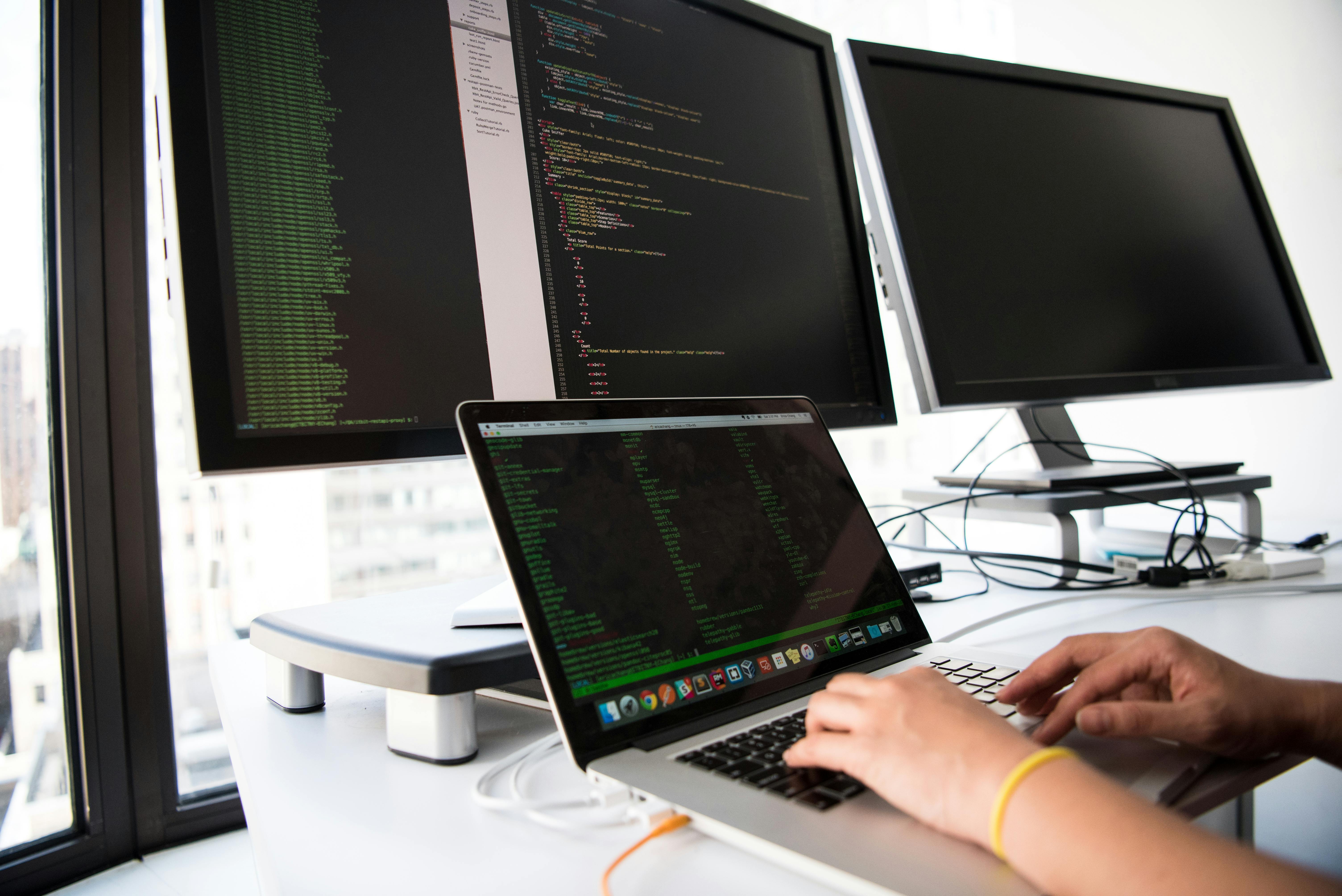
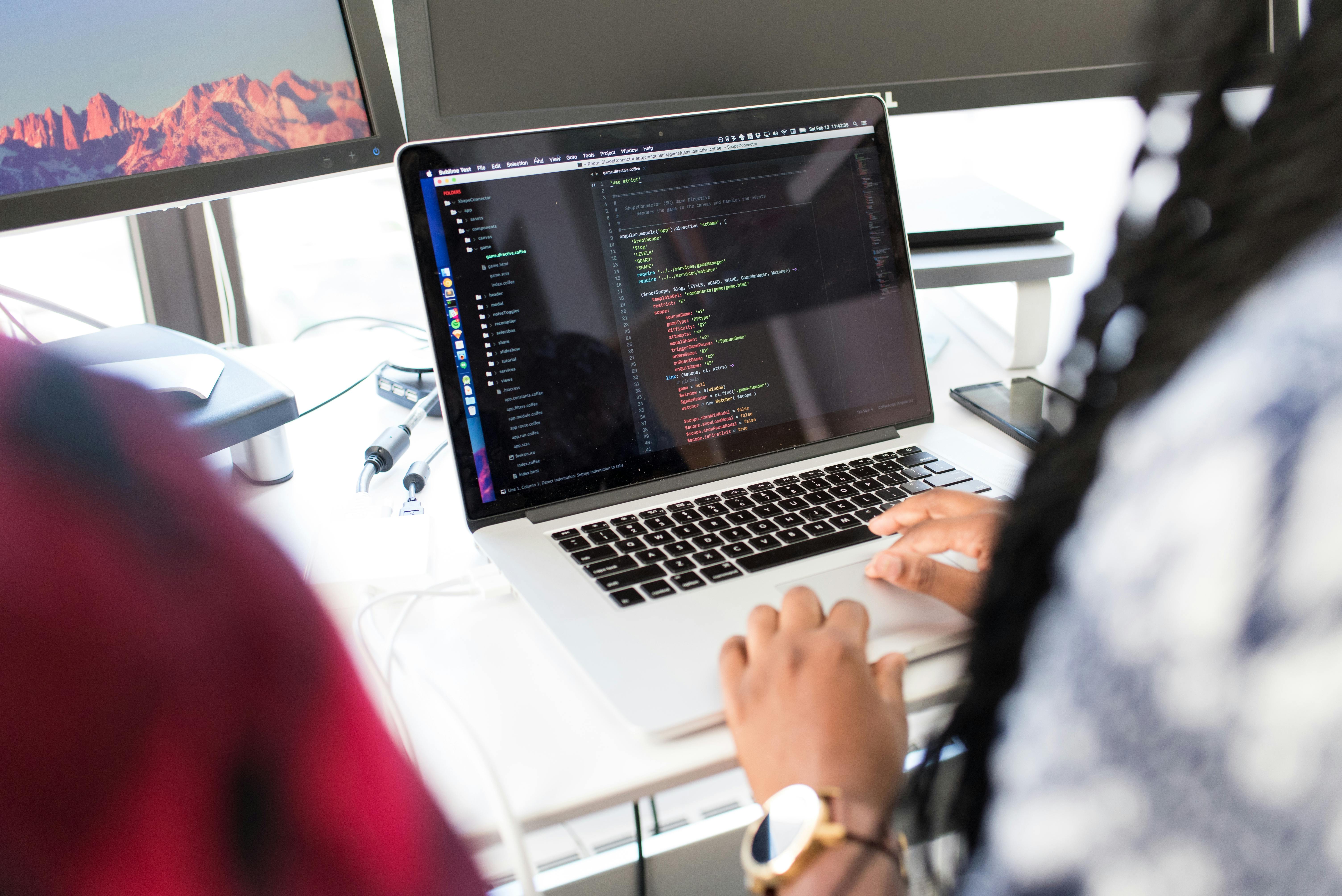
Visualizing the New AI Assistant Landscape

Technology: How Modern AI Assistants Actually Work
Today’s AI assistants are built on large language models (LLMs) such as GPT‑4, Claude 3, Gemini 1.5, and Llama‑based variants. But the visible “chat” interface is the tip of a deeper stack that includes retrieval, tool use, and tight OS or app integration.
Core Model Architecture
Most copilots rely on transformer‑based LLMs trained on web‑scale text, code, and curated datasets. Key technical characteristics include:
- Large parameter counts: From billions to trillions of parameters, enabling rich pattern recognition.
- Long context windows: Cutting‑edge models now accept hundreds of thousands of tokens, allowing assistants to read entire codebases, research papers, or email threads.
- Multimodality: Many assistants accept text, images, screenshots, and in some cases audio or video, enabling features like screenshot‑based troubleshooting or slide deck generation.
Retrieval‑Augmented Generation (RAG)
To ground responses in fresh or proprietary data, OS‑level and enterprise copilots use retrieval‑augmented generation:
- Documents, emails, wiki pages, and code are embedded into vector representations.
- At query time, the assistant retrieves the most relevant snippets using similarity search.
- The LLM then conditions its answer on those snippets, reducing hallucinations and improving relevance.
This pattern is now standard in products like Microsoft 365 Copilot, enterprise search tools, and custom AI knowledge bases.
Tool Use and OS Integration
Beyond text generation, AI assistants call tools and system APIs:
- File APIs: Open, summarize, or modify documents on disk or in the cloud.
- Application automation: Trigger actions in email clients, calendars, IDEs, or note‑taking apps.
- Web browsing: Fetch and reason over live web content under constrained browsing policies.
Technically, this is implemented via function‑calling or tool‑calling interfaces, where the LLM outputs a structured JSON schema selecting tools and parameters. The surrounding orchestration layer validates, executes, and feeds results back into the model.
Local vs. Cloud Inference
A major debate on platforms like Hacker News centers on where inference runs:
- Cloud models: Offer state‑of‑the‑art quality and large context windows but require network connectivity and tight data‑governance controls.
- On‑device models: Smaller, more private, and lower‑latency, but with limited capability and context compared to frontier models.
Emerging OS‑level assistants often use hybrid strategies: small models on‑device for quick or privacy‑sensitive tasks, and cloud models for heavy reasoning or multimodal workloads.
Scientific Significance and Human–Computer Interaction Shift
The ubiquity of AI assistants is reshaping both computer science research and human–computer interaction (HCI). Rather than designing fixed interfaces for specific tasks, researchers explore systems where models translate messy human intent into precise API calls and structured plans.
Productivity and Cognitive Offloading
Early controlled studies and field experiments suggest:
- Developer coding speed improvements in the 20–50% range for certain tasks when using tools like GitHub Copilot.
- Higher output for writing and summarization tasks, particularly for non‑native speakers and junior professionals.
- Increased willingness to experiment and prototype, because the “cost of trying something” drops dramatically.
“Generative AI tools appear to act as skill levelers, helping less‑experienced workers catch up to more‑experienced peers on specific tasks.”
Epistemic and Ethical Questions
The scientific community is also probing deeper questions:
- Reliability: How do we quantify and mitigate hallucinations in complex, real‑world workflows?
- Attribution: How should models treat and cite training data derived from the open web or copyrighted sources?
- Bias and fairness: How do embedded assistants avoid amplifying social and demographic biases when they are mediating everyday tasks?
Journals, conferences, and venues like PACM HCI and arXiv’s AI ethics categories now regularly publish work analyzing these impacts.
Milestones: Key Moments in the Rise of Copilots
The shift from chatbots to OS‑level copilots has unfolded in rapid, visible milestones that tech media and social platforms track closely.
Notable Product Launches and Shifts
- ChatGPT’s breakout (late 2022): Demonstrated broad consumer appetite for conversational AI and catalyzed a wave of experimentation and funding.
- GitHub Copilot’s mainstreaming: Put LLMs directly into IDEs, making “AI suggestions while you type” a new normal for developers.
- Microsoft Copilot in Windows and 365: Marked the transition from AI as a website to AI as a system‑level feature for documents, emails, and meetings.
- Google Gemini and Workspace integration: Brought generative AI into Docs, Sheets, and Gmail—auto‑drafting emails and summarizing documents at scale.
- Apple Intelligence announcements: Signaled a strong on‑device, privacy‑centric approach to AI assistance tightly coupled to OS internals.
Media and Community Catalysts
Coverage by outlets such as TechCrunch, Wired, The Next Web, and Ars Technica creates steady awareness. Meanwhile, long, technical discussions on Hacker News about model architectures, context tricks, and local inference help refine best practices and surface emerging issues.
Social platforms like YouTube, X (Twitter), and TikTok further accelerate adoption by:
- Providing thousands of tutorials and “AI workflow” breakdowns.
- Showcasing prompt strategies, automation recipes, and indie projects.
- Turning AI experimentation into a form of content, which in turn brings new users into the ecosystem.
Challenges: Reliability, Privacy, and Over‑Automation
The march toward AI “everywhere” is far from frictionless. Critics and researchers consistently highlight serious hazards alongside the benefits.
Hallucinations and Over‑Trust
Even the most advanced models can confidently produce incorrect information—hallucinations—especially outside their training distribution or when retrieval fails. When assistants are embedded inside IDEs, spreadsheets, or email clients, the line between suggestion and ground truth can blur.
- Code assistants might generate insecure or subtly incorrect logic.
- Research assistants can misquote or invent references if checks are weak.
- Business users may over‑rely on AI‑generated analyses without validation.
“The issue is not that AI makes mistakes—it’s that it makes mistakes with absolute confidence and a perfectly straight face.”
Data Protection and Regulatory Scrutiny
With assistants reading emails, internal documents, and source code, data governance is central. Key concerns include:
- Training use: Whether user data is ever used to train or fine‑tune models.
- Access boundaries: Ensuring assistants respect organization‑level permissions and legal constraints.
- Jurisdictional control: Compliance with EU’s AI Act, GDPR, and emerging AI regulations worldwide.
Enterprises increasingly demand explicit data‑handling guarantees and auditability before deploying copilots at scale.
Labor and Skill Dynamics
For writers, designers, junior developers, and operations teams, AI assistants can both enhance capabilities and threaten traditional entry‑level roles. The net impact on employment remains contested, but several patterns are emerging:
- Routine and boilerplate tasks are increasingly automated.
- Demand grows for roles that supervise, critique, and integrate AI outputs.
- Skill emphasis shifts toward judgment, domain expertise, and system thinking.
Practical Tools and Devices for Working with AI Assistants
To get the most out of OS‑level copilots and heavy AI workflows, hardware and accessories matter. Generative models are resource‑intensive, and modern workflows often involve juggling multiple apps, prompts, and documents.
Hardware for AI‑Heavy Workflows
- AI‑capable laptops: Devices with strong CPUs, sufficient RAM, and growing support for on‑device NPU (neural processing units) can handle local models and AI effects more smoothly. For example, premium ultrabooks like the ASUS Zenbook 14 OLED are frequently recommended for AI‑enhanced productivity thanks to fast processors and excellent displays.
- External SSDs: Large local datasets (code, docs, media) pair well with retrieval‑based assistants. A reliable, fast drive such as the Samsung T7 Portable SSD helps keep local corpora snappy for search and indexing.
- Quality microphones and headsets: For voice‑driven assistants, clear audio improves recognition accuracy. Popular choices like the HyperX Cloud II Wireless Gaming Headset double as comfortable, long‑session audio gear for calls and dictation.
Software Practices for Safer AI Use
- Enable activity logs where possible to audit what your assistant accessed and generated.
- Create separate workspaces or profiles for sensitive and non‑sensitive tasks.
- Use version control (e.g., Git) aggressively when letting coding copilots refactor or generate large code changes.
- Adopt internal style guides for AI usage—when it’s acceptable, what must be manually checked, and how to attribute assistance.
Learning to Work with Copilots: Skills and Strategies
As AI assistants become standard, a new literacy is emerging: the ability to collaborate effectively with models, not just query them.
Prompting as a Practical Skill
While “prompt engineering” can be overhyped, certain habits reliably improve outcomes:
- Provide role and context: “You are a senior backend engineer reviewing this Django code…”
- Specify constraints: word count, tone, target audience, performance limits.
- Ask for reasoning or checks: “Explain step‑by‑step and list failure cases.”
- Iterate: refine prompts based on results instead of expecting perfection in one shot.
Building AI‑First Workflows
Power users on YouTube and LinkedIn demonstrate AI‑first workflows, where assistants are part of the core loop rather than an afterthought. Typical patterns include:
- Using assistants as research triage tools, then validating sources independently.
- Letting coding copilots draft boilerplate while humans handle architecture and critical logic.
- Leveraging AI to convert the same content across modalities—article to slides, meeting transcript to action list, code to documentation.
Channels like Two Minute Papers and AI‑focused educators on LinkedIn and X offer accessible breakdowns of emerging tools and techniques.
What’s Next: Toward Truly Ambient, Multi‑Agent Systems
Looking ahead, several technical and product trends are converging to make AI assistance even more pervasive and autonomous.
Agentic Workflows
Researchers and companies are experimenting with “agents” that can:
- Break high‑level goals into multi‑step plans.
- Call tools and external services autonomously.
- Collaborate with other specialized agents (e.g., one for browsing, one for coding, one for data analysis).
In this paradigm, you might tell your assistant: “Take this product spec, generate a proof‑of‑concept implementation, write tests, and prepare a short slide deck.” The system then coordinates multiple tools and sub‑agents behind the scenes.
Richer Multimodality and Hardware Tie‑Ins
Future OS‑level copilots are likely to:
- Understand your screen, camera, and environment in near real‑time.
- Offer inline guidance for tasks—from debugging circuits to cooking recipes—via AR overlays or voice prompts.
- Leverage dedicated NPUs and optimized local models for low‑latency, privacy‑preserving inference.
This is already visible in AI‑enhanced photo editing, live translation, and accessibility features on modern smartphones and laptops.
Conclusion: Convenience, Control, and the New Default Interface
AI assistants have moved from the margins of our computing experience to its center. They now help write emails, summarize meetings, refactor code, search across files, and answer questions directly inside the environments where work happens. That ubiquity is precisely what keeps them in the news cycle and at the center of public debate.
For individuals and organizations, the strategic questions are shifting from “Should we use AI?” to “Where do we trust AI, how do we govern it, and how do we redesign work around it?” The emerging best practice is not blind adoption or outright rejection, but disciplined collaboration: exploit AI’s strengths—speed, breadth, pattern recognition—while doubling down on human judgment, ethics, and accountability.
As OS‑level copilots evolve into richer, more autonomous agents, the balance between convenience and control will only grow more important. Understanding the underlying technology, its limits, and its social implications is essential preparation for a future where “open the AI assistant” is as routine as “open the browser” once was.
Additional Resources and Practical Next Steps
To go deeper and stay current as AI assistants evolve, consider the following:
For Technical Readers
- Follow research on arXiv in categories like Computation and Language (cs.CL) and Machine Learning (cs.LG).
- Track open‑source projects such as Llama, mistral‑based models, and retrieval frameworks like LangChain or LlamaIndex.
- Experiment with local models via tools like Ollama or LM Studio to understand trade‑offs firsthand.
For Teams and Organizations
- Run limited pilots with clear metrics: time saved, error rates, user satisfaction.
- Create internal AI usage policies covering data sensitivity, attribution, and review processes.
- Invest in training so employees understand both the strengths and the boundaries of AI assistance.
AI assistants everywhere are not a passing fad—they are a structural evolution in how we compute. The more deliberately we engage with them now, the more likely we are to shape a future in which they augment, rather than erode, human capability and agency.
References / Sources
- TechCrunch – AI and Copilot Coverage
- Wired – Artificial Intelligence Coverage
- The Next Web – AI and Technology
- Ars Technica – IT and AI Reporting
- Hacker News – Community Discussions on AI Assistants
- Microsoft 365 Copilot Official Page
- Google AI – Gemini and Workspace Integrations
- Apple – Apple Intelligence Overview
- NBER – Studies on Generative AI and Productivity
- OpenAI Research Publications
- Anthropic – Research on Constitutional AI and Safety
