
Why Spatial Computing Is Finally Ready to Escape the Niche Headset Bubble
Augmented reality (AR), virtual reality (VR), and mixed reality—now often bundled under the term spatial computing—are in the middle of a strategic reset. Instead of chasing sci‑fi visions, the industry is focusing on comfort, usability, and concrete value: virtual monitors that replace multi‑screen desks, 3D design tools for engineers, medical training simulations, and shared mixed‑reality workspaces. Major tech outlets such as TechRadar, Engadget, The Verge, Ars Technica, Wired, and The Next Web increasingly frame headsets as the possible successor—or at least complement—to smartphones and laptops.
This grounded momentum is powered by new flagship devices, aggressive platform bets by Apple, Meta, Microsoft, and others, plus a dense ecosystem of developers working with engines like Unity and Unreal. At the same time, debates about privacy, app‑store policies, long‑term health implications, and social acceptance have become more sophisticated. The result is a more realistic conversation: not if spatial computing will replace everything, but where it truly makes sense.
Mission Overview: From Headsets to a Mainstream Platform Bet
The current wave of AR/VR is distinct from earlier hype cycles. Around 2016–2019, consumer VR was dominated by gaming and spectacular demos. Today, the “mission” is broader and more ambitious: establish spatial computing as a general‑purpose computing platform with its own app ecosystems, monetization models, and daily‑use workflows.
Tech coverage reflects this shift. Product reviews still rate lenses, displays, and controllers, but they increasingly ask:
- Can a headset realistically replace a laptop for focused knowledge work?
- Does mixed reality add value to design, training, engineering, medicine, logistics, and field service?
- Is the software ecosystem compelling enough for developers to invest long‑term?
- How will platform owners monetize spatial apps without alienating developers?
“The headsets that matter now are less about escaping reality and more about rearranging it in useful ways.”
Technology: New Flagship Headsets and Spatial Platforms
Flagship devices from major vendors are the visible tip of the spatial computing iceberg. Each launch is dissected by TechRadar, Engadget, The Verge, and Ars Technica, with attention to optics, displays, tracking, ergonomics, and compute. Beneath the surface, these devices signal much larger platform strategies.

Display and Optics
Headset reviews now devote significant space to:
- Resolution and pixel density to reduce the “screen door” effect.
- High dynamic range (HDR) and color accuracy to support both entertainment and professional visualization.
- Pancake lenses and other compact optics that shrink device bulk and improve weight distribution.
- Eye‑tracking that enables foveated rendering—saving GPU resources by rendering only the gaze area at full resolution.
Tracking, Controllers, and Interaction
Ars Technica and Wired frequently analyze tracking stacks and latency budgets, since comfort and immersion hinge on precise, low‑latency sensing. Current systems typically blend:
- Inside‑out tracking via cameras on the headset, eliminating external base stations.
- 6DoF (six‑degree‑of‑freedom) tracking for both head and controllers, enabling natural movement.
- Hand and gesture tracking for controller‑free interaction in productivity and collaboration apps.
- Voice and eye‑gaze input, particularly for UI selection and shortcuts in mixed‑reality workspaces.
Compute, Connectivity, and Cloud Offload
Premium headsets now pack mobile‑class SoCs with dedicated NPUs for AI workloads, but there is a clear shift toward hybrid local–cloud architectures:
- Local compute handles pose tracking, reprojection, and time‑critical rendering.
- Cloud rendering and edge servers stream complex scenes and AI inference when latency and bandwidth allow.
- Wi‑Fi 6/6E and Wi‑Fi 7 reduce wireless latency for tether‑free PC‑quality VR experiences.
“Modern headsets are edge devices first, AI clients second, and displays third.”
Productivity and Enterprise Use Cases
A defining characteristic of the current AR/VR wave is the pivot from pure entertainment to productivity and enterprise workflows. Business‑focused outlets and podcasts routinely highlight pilots and deployments in design, training, and operations.
Spatial Workstations and Virtual Monitors
Mixed‑reality “desktops” let users pin multiple virtual monitors around their physical space. For knowledge workers, this offers:
- Infinite screen real estate without bulky multi‑monitor setups.
- Portable, privacy‑preserving workspaces for travel or open offices.
- Immersive focus modes that reduce distractions.
YouTube reviewers often demonstrate how they replace triple‑monitor rigs with a single headset. The Verge and TechRadar assess not just the visuals but text legibility, keyboard passthrough, and window management—all critical for real work.
Training, Simulation, and Field Service
TechCrunch and Wired profile startups that build vertical spatial solutions. Common enterprise scenarios include:
- Medical and surgical training with realistic 3D anatomy and procedure simulations.
- Manufacturing and logistics training, where workers practice complex procedures safely.
- Architecture and construction, using life‑scale walkthroughs to validate designs.
- Field service overlays, where technicians see step‑by‑step AR instructions on top of equipment.
“Immersive simulation significantly improves procedural retention compared with traditional didactic training.”
For enterprises exploring VR development or prototyping, hardware such as the Meta Quest 3 128GB Advanced All‑In‑One VR Headset offers a relatively low‑cost, stand‑alone platform with strong developer support and a large user base in the US.
Integration with AI and Cloud Services
One of the most strategically significant trends is the fusion of spatial computing with AI assistants and cloud intelligence. Headsets increasingly act as rich sensor hubs: they see the room, track your hands, estimate depth, and understand surfaces. When combined with modern vision‑language models, this enables context‑aware digital assistants.
Context‑Aware AI in Mixed Reality
Imagine wearing a headset that:
- Recognizes tools and components on your desk.
- Understands spatial layout—walls, tables, equipment.
- Listens to your voice and tracks your gaze.
An AI agent can then:
- Overlay step‑by‑step repair instructions on machinery.
- Provide contextual documentation next to code in a virtual IDE.
- Act as a 3D co‑pilot for designers, suggesting alternatives or checking constraints.
On‑Device vs. Cloud Inference
Discussions on platforms like Hacker News and in Ars Technica comment threads often center on privacy and latency:
- On‑device AI preserves privacy and minimizes round‑trip delay but is limited by mobile hardware.
- Cloud‑based inference enables larger models and more advanced reasoning but raises data‑protection concerns.
- Hybrid approaches keep raw sensor data local, sending only compressed representations or embeddings to the cloud.
“Spatial computing will be the first mass‑market interface where embodied AI agents share our physical space, not just our screens.”
Content Ecosystems, Engines, and Monetization
Beyond hardware, the battle for spatial computing is a battle for ecosystems. The Next Web, TechCrunch, and The Verge frequently analyze:
- App‑store policies and revenue splits.
- Cross‑platform engines such as Unity and Unreal Engine.
- Developer‑friendly tooling, documentation, and sample projects.
- Subscription vs. one‑time purchase models for spatial applications.
Lock‑In Fears and Cross‑Platform Strategies
Developers are wary of being locked into a single vendor’s SDK. Many studios therefore:
- Target OpenXR and engine abstractions first, native SDKs second.
- Build modular rendering and input layers that can adapt to different devices.
- Use cloud backends for persistent worlds and identity to remain platform‑agnostic.
Creator Economies and UGC
User‑generated content (UGC) is likely to be as important in spatial computing as it is on the web. Platforms that enable easy creation of:
- Custom 3D spaces and avatars.
- Interactive scenes with low‑code scripting.
- Interoperable assets, such as USDZ or glTF models.
will attract not only developers but also designers, educators, and hobbyists.
Health, Comfort, and Social Acceptance
For spatial computing to move beyond niche enthusiasts, it must become physically comfortable and socially acceptable. Long‑form reports in Wired and The Verge analyze motion sickness, eye strain, psychological effects, and social norms around head‑worn displays.
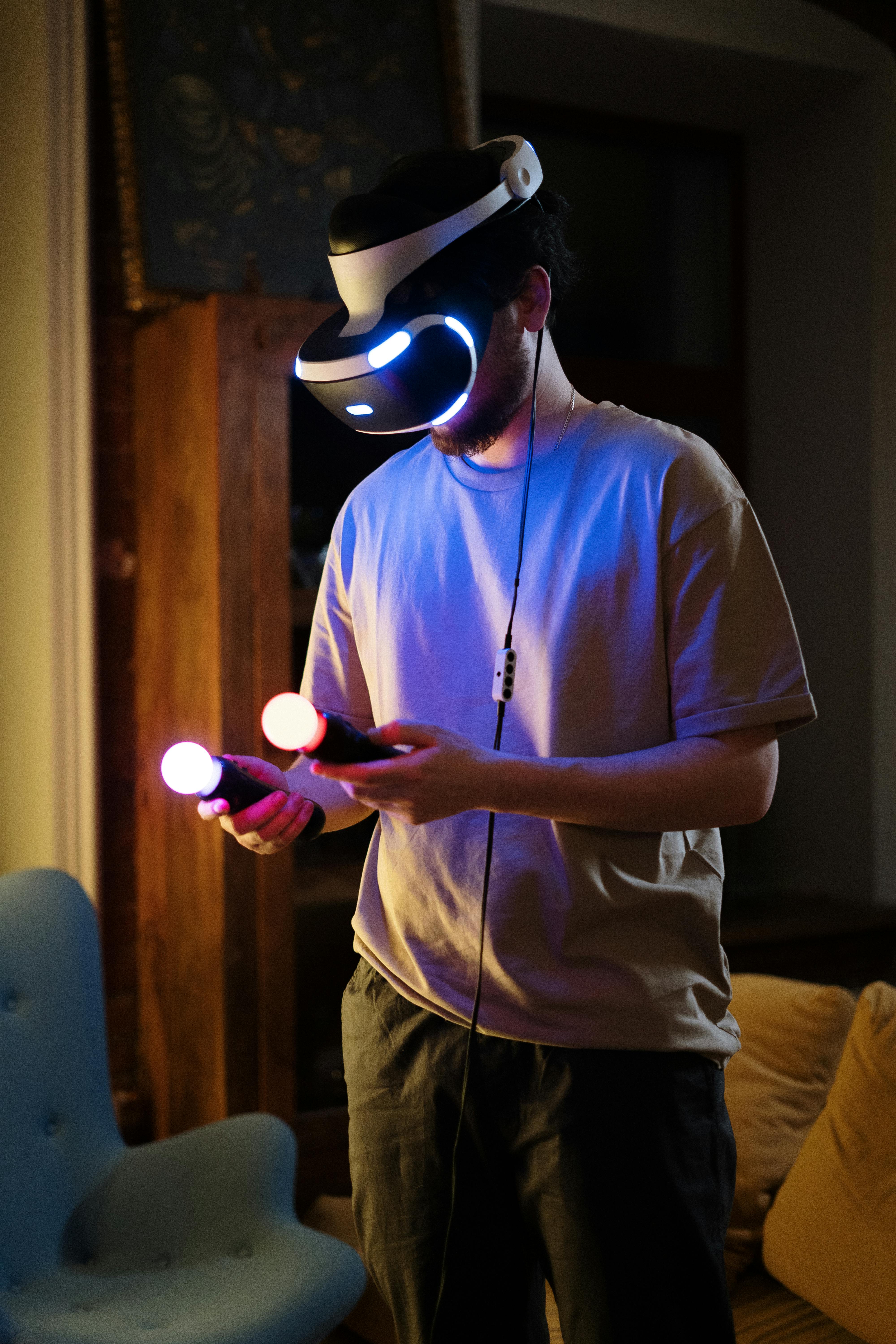
Motion Sickness and Visual Comfort
Major improvements in:
- Low‑latency head tracking and reprojection.
- Higher refresh rates (90–120 Hz and beyond).
- Accurate IPD (interpupillary distance) adjustment.
have significantly reduced motion sickness for many users, though individual sensitivity varies. Reviews now routinely evaluate comfort over multi‑hour sessions, not just short demos.
Psychological and Social Factors
Beyond the physical, there are subtle psychological questions:
- How does spending hours behind a headset affect social presence with people physically nearby?
- Will mixed‑reality glasses evolve into socially acceptable wearables, or remain mostly home/office tools?
- What norms emerge around recording and spatial data capture in public spaces?
“The real test isn’t whether a headset can wow you in a demo—it’s whether your friends roll their eyes when you put it on in the living room.”
Milestones: Key Developments in the Latest Wave
While specific product names evolve quickly, several milestone patterns are clear in coverage up through early 2026:
- Shift to mixed reality: Passthrough video and spatial anchors made headsets useful with the real world, not just in isolation.
- Enterprise validation: Successful pilots in training, design, and remote assistance demonstrated ROI, especially in manufacturing, healthcare, and logistics.
- AI co‑pilots: Early integrations of generative AI for coding, documentation, and spatial guidance signaled a new interaction paradigm.
- Stronger cross‑platform tools: Engines and frameworks matured, reducing friction for multi‑device development.
- Health‑first design: Comfort, weight distribution, and long‑term wearability became core product differentiators.

Challenges on the Road to Mainstream Spatial Computing
Despite visible progress, spatial computing still faces substantial hurdles. Tech media, academic research, and developer communities converge on several core challenges.
1. Hardware Constraints
Headsets must become:
- Lighter and more comfortable for all‑day wear.
- More power‑efficient to extend battery life without bulky packs.
- More affordable without sacrificing high‑quality optics.
Engineers continue to explore micro‑OLED displays, advanced lenses, and novel materials to hit these targets.
2. Privacy, Security, and Ethics
Spatial devices capture continuous video, audio, and depth data of homes and workplaces. This raises unique concerns:
- How is raw sensor data stored, processed, or shared?
- Can bystanders consent to being recorded by mixed‑reality devices?
- What safeguards exist to prevent misuse of 3D maps of private spaces?
Regulatory bodies and standards organizations are only beginning to articulate best practices for spatial data governance.
3. Fragmentation and Standards
While OpenXR and related efforts have reduced fragmentation, developers still grapple with:
- Differing interaction models (controllers vs. hands vs. gaze).
- Vendor‑specific store policies and billing rules.
- Varied performance envelopes, from mobile stand‑alone devices to tethered PC VR.
4. Proving Everyday Value
Ultimately, spatial computing must answer a simple question: What can I do here that is meaningfully better than on a phone or laptop? The most promising answers so far include:
- Immersive training that reduces cost and risk.
- Spatial collaboration that provides a stronger sense of presence.
- 3D design and visualization that is more natural in full scale.
- Portable multi‑monitor setups for professionals.
Getting Started: Practical Paths into AR/VR and Spatial Computing
For developers, designers, or technically curious professionals, entering the spatial computing space is now more accessible than ever.
For Developers
- Experiment with Unity or Unreal’s XR templates and follow tutorials from official channels on YouTube.
- Use OpenXR where possible to keep your projects portable.
- Prototype small, high‑value scenarios: spatial dashboards, training modules, or visualization tools.
For Designers and Product Managers
- Study interaction patterns from leading apps reviewed on The Verge’s AR/VR coverage.
- Learn basic 3D concepts (scale, lighting, occlusion) and how they affect usability.
- Run pilots with specific measurable goals—for example, reduced training time or fewer errors.
For hobbyists and early adopters, tried‑and‑tested headsets like the Meta Quest 2 Advanced All‑In‑One VR Headset remain popular due to their extensive content libraries and active communities, making them strong entry points into VR gaming and experimentation with productivity apps.
Conclusion: A Nuanced Path Beyond the Smartphone
AR, VR, and spatial computing are no longer treated as inevitable, all‑replacing futures. Instead, media and industry discourse focus on specific niches where spatial interaction is inherently better than flat screens: real‑time 3D, embodied training, immersive collaboration, and context‑aware assistance.
Whether spatial computing becomes the “next smartphone” or a powerful adjunct depends on how rapidly hardware shrinks, ecosystems mature, and everyday users find repeatable value. The current trajectory—with mixed reality, AI integration, and enterprise validation—suggests that even if headsets never replace phones, they are likely to become a foundational layer of the broader computing landscape.

Further Exploration and Helpful Resources
To dive deeper into AR/VR and spatial computing, consider exploring:
- Technical deep dives on Road to VR and UploadVR.
- Academic papers from conferences like IEEE VR and ACM CHI, often available via arXiv.
- Professional discussions on LinkedIn, where engineers and designers share case studies of enterprise deployments.
- YouTube channels such as Tested, MRTV, and Thrillseeker for practical headset reviews and app showcases.
As the field evolves, following reputable journalists and researchers—many of whom write for Wired, Ars Technica, and The Verge—can help you separate durable trends from short‑lived fads and make informed decisions about where to invest your time, budget, or career.
References / Sources
The analysis in this article is informed by ongoing coverage, reviews, and research from:
