
Why Spatial Computing Headsets May Finally Push AR/VR Into the Mainstream
Consumer augmented reality (AR), virtual reality (VR), and mixed reality (MR) have re‑entered the spotlight in 2026, driven by a new generation of high‑fidelity headsets from major players and an industry‑wide push toward “spatial computing.” Unlike earlier hype cycles focused almost entirely on gaming, today’s devices are pitched as full computing platforms that can handle productivity, collaboration, entertainment, and learning in equal measure.
Tech publications such as The Verge, Engadget, and TechRadar are closely tracking this shift, reviewing hardware, app ecosystems, and early productivity workflows. At the same time, developer communities on GitHub, Reddit, and specialized forums are exploring how spatial apps should be designed when screens are no longer bound to a flat rectangle.
Mission Overview: What Makes This AR/VR Wave Different?
The current AR/VR cycle is characterized by five intertwined trends:
- Rapidly improving optics and displays, with higher resolution, wider fields of view, and better color reproduction.
- “Spatial computing” operating systems that treat space itself as the desktop, rather than a single 2D screen.
- Maturing content ecosystems spanning games, fitness, design, productivity, and education.
- Renewed focus on social and collaborative use cases, from virtual offices to hybrid events.
- Persistent barriers around price, comfort, motion sickness, and social acceptability.
“We are moving from devices that show us virtual worlds to devices that understand and augment the real world around us. That’s the core shift from VR to spatial computing.”
— A paraphrased view common among human–computer interaction researchers at MIT and Stanford
Mixed Reality in Action
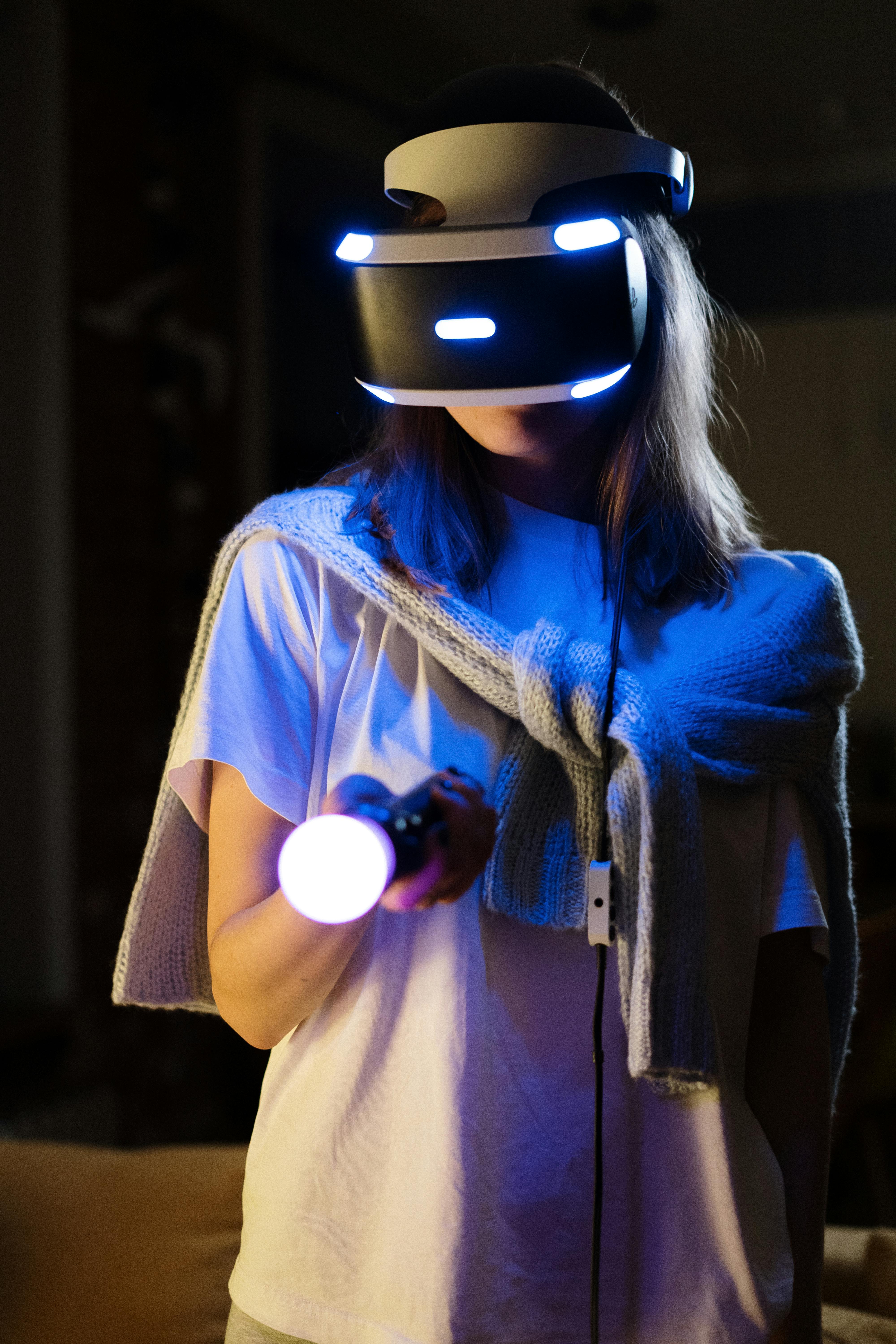
Mixed reality headsets now combine high‑quality passthrough video with real‑time spatial mapping, allowing digital windows, 3D models, and holographic colleagues to coexist with physical desks and living rooms. This blend of real and virtual is central to the narrative that headsets can become general‑purpose computers rather than niche gaming consoles.

Technology: Hardware Advances Powering Spatial Computing
The hardware landscape has evolved dramatically from the early days of low‑resolution, tethered head‑mounted displays. Today’s mixed reality headsets combine sophisticated optics, dedicated compute, and advanced sensors into relatively compact devices.
Displays and Optics
Modern headsets adopt high‑resolution OLED or fast‑switching LCD panels, often exceeding 4K total resolution with refresh rates of 90–120 Hz or higher. This reduces the “screen‑door effect” and motion blur that previously made VR uncomfortable for extended use.
- Pancake lenses reduce optical path length and enable thinner, lighter headsets.
- Wide field‑of‑view optics (typically 90–120 degrees) create more natural immersion.
- Emerging micro‑OLED displays promise higher brightness and contrast for AR‑style overlays.
Passthrough and Mixed Reality Sensing
A defining feature of mixed reality devices is full‑color, low‑latency video passthrough. High‑resolution cameras reconstruct the real world inside the headset, allowing digital content to be overlaid seamlessly.
- Depth sensors (time‑of‑flight or structured light) map room geometry for occlusion and physics.
- Inside‑out tracking uses onboard cameras to locate the headset in 3D space, eliminating external base stations.
- Environment meshing lets apps “understand” walls, desks, and objects as surfaces where digital content can attach.
Eye‑Tracking, Hand‑Tracking, and Foveated Rendering
Eye‑tracking is rapidly becoming standard, unlocking:
- Foveated rendering – only the area you’re directly looking at is rendered at full resolution, saving GPU power.
- Natural interaction – gaze‑based selection replaces slow ray‑casting with controllers.
- Human‑computer interaction research – precise attention mapping for interface optimization.
Hand‑tracking similarly reduces dependence on controllers by recognizing hand poses and gestures. Combined with high‑precision spatial mapping, this enables intuitive actions like grabbing, pinching, and swiping floating windows in mid‑air.

On‑Device Compute and Connectivity
Standalone headsets are now powered by mobile SoCs customized for XR workloads, with neural processing units (NPUs) accelerating hand‑tracking, eye‑tracking, and scene understanding. Wi‑Fi 6/6E and upcoming Wi‑Fi 7 enable low‑latency streaming from PCs or cloud GPUs, supporting:
- Wireless PC VR gaming with high‑end graphics.
- Cloud‑rendered experiences for photorealistic scenes.
- Multi‑user collaboration with real‑time positional audio and shared 3D environments.
Spatial Computing Platforms: Beyond Gaming Consoles
The most consequential shift is conceptual: major vendors now describe headsets as spatial computers, not just gaming devices. Instead of a desktop filled with overlapping windows, users arrange 2D and 3D content throughout their physical environments.
Operating Systems for Space
Spatial operating systems extend traditional concepts like windows, focus, and multi‑tasking into 3D:
- Infinite canvases – place as many screens as you want at any distance.
- Spatial anchors – pin apps to real‑world positions so virtual monitors stay above your desk or beside your TV.
- Context‑aware layouts – automatically arrange windows for sitting, standing, or walking scenarios.
“Spatial computing treats the world as your canvas and the room as your desktop. Your apps live around you, not inside a frame.”
— Conceptual description echoed by multiple XR platform architects across the industry
Productivity and Creative Workflows
Tech reporters at outlets like TechCrunch and The Verge have been stress‑testing productivity workflows in mixed reality, including:
- Coding and writing with multiple virtual monitors and distraction‑reduced environments.
- 3D modeling and CAD where architects and designers manipulate full‑scale models.
- Remote collaboration using shared whiteboards, sticky notes, and spatial audio.
Early adopters report that focus‑oriented setups—such as a quiet virtual study with a few pinned windows—can increase concentration, though prolonged headset wear is still a challenge. For creative professionals, being able to walk around a design or data visualization in full 3D is particularly compelling.
Content Ecosystems and Monetization
No matter how advanced the hardware, consumer adoption depends on what you can actually do with these devices. The content ecosystem spans games, fitness, narrative media, productivity, design tools, and education, all powered by app stores and subscription models.
Games and Immersive Entertainment
Gaming remains the primary entry point for many consumers. Popular titles leverage:
- Room‑scale movement for physically active experiences.
- Haptic feedback through controllers and accessories.
- Mixed reality passthrough so virtual elements interact with real furniture and objects.
YouTube and TikTok creators amplify these experiences with mixed‑reality capture, compositing the player into the virtual scene. Channels such as VR gameplay creators on YouTube have become de facto marketing arms for new titles.
Fitness, Wellness, and Daily Habits
Fitness apps are one of the most consistently sticky categories in VR because they turn workouts into engaging games. For users who prefer an accessory‑based setup, pairing a headset with a heart‑rate‑monitoring smartwatch like the Apple Watch Ultra 2 or a fitness‑focused tracker such as the Fitbit Charge 5 can provide more precise metrics while playing VR rhythm or boxing games.
Design, Education, and Professional Tools
Prosumer and professional content is increasingly important for long‑term platform health:
- 3D design suites allow teams to co‑edit prototypes at scale.
- STEM education apps let students explore molecules, anatomy, or planetary systems in immersive 3D.
- Simulation training provides realistic practice scenarios in medicine, aviation, and manufacturing.
Academic work from conferences such as IEEE VR and ACM CHI shows measurable gains in spatial understanding and retention when learners interact with 3D content compared with traditional materials.
Social and Collaboration Use Cases
Earlier “metaverse” hype promised vast open‑ended virtual worlds but often failed to deliver clear, everyday value. The new emphasis is on practical, focused scenarios where mixed reality clearly beats a 2D video call.
Virtual Offices and Hybrid Collaboration
Mixed reality enables:
- Persistent project rooms where documents, whiteboards, and 3D models stay exactly where collaborators left them.
- Telepresence with spatial audio and avatars that embody body language more effectively than static profile pictures.
- Hybrid events where in‑person attendees share a space with virtual participants through digital overlays and interactive 3D content.
“The real promise of mixed reality isn’t escapism; it’s presence—feeling like you share a space with colleagues no matter where you are.”
— A viewpoint frequently echoed in XR‑focused discussions on LinkedIn and professional forums
Social Platforms and Avatars
Social XR platforms are evolving past novelty into interest‑based communities: design crit sessions, language exchange groups, live concerts, and watch‑parties for sports or films. Avatars range from realistic photogrammetry to stylized characters that preserve anonymity while conveying facial expressions through eye‑tracking and facial sensors.
Challenges: Price, Comfort, Motion Sickness, and Social Friction
Despite progress, mixed reality is not yet truly mainstream. Reviews and community discussions on sites like Hacker News and specialized subreddits highlight several persistent issues.
Cost and Value Perception
High‑end mixed reality headsets remain priced closer to premium laptops than game consoles. Even mid‑range devices represent a significant discretionary purchase, especially when factoring in accessories and paid apps or subscriptions.
- Hardware subsidies tied to app store ecosystems may eventually lower entry prices.
- Enterprise deployments can justify costs via productivity gains and training efficiency.
Ergonomics and Long‑Session Comfort
Weight distribution, heat, and facial pressure are critical factors in whether users can comfortably wear a headset for more than 30–60 minutes. Manufacturers are experimenting with:
- Rear battery packs to balance front‑loaded optics.
- Softer face gaskets and more flexible strap designs.
- Prescription lens inserts to support glasses‑free use.
Motion Sickness and Human Factors
Motion sickness remains a barrier for a subset of users, typically caused by mismatched visual and vestibular cues. Advances that help include:
- Higher refresh rates and lower motion‑to‑photon latency.
- Improved content design with teleport locomotion, vignetting, and stable reference frames.
- Personalized comfort settings that adapt locomotion and camera behavior to individual tolerance.
Social Acceptability and Privacy
Wearing an enclosed headset still feels socially isolating in shared spaces. There are also legitimate concerns about:
- Eye‑tracking data and what it reveals about attention and emotions.
- Environment capture via passthrough cameras that see everything in a room.
- Biometric signals such as pupil dilation or micro‑movements used for analytics or advertising.
Policymakers, standards bodies, and civil‑society organizations are beginning to publish guidelines and position papers on XR privacy. For instance, researchers at institutions highlighted on XR Safety Initiative discuss frameworks for responsible XR data practices.
Key Milestones and Emerging Industry Patterns
Since the early 2020s, several milestones have shaped the trajectory of consumer AR/VR and spatial computing:
Hardware Iterations and Flagship Launches
Major manufacturers have released successive generations of standalone and mixed reality headsets, each iteration improving resolution, comfort, and software capabilities. Reviewers on Engadget, TechRadar, and The Next Web consistently note that even “incremental” upgrades—better lenses, more accurate tracking, or refined hand‑tracking—can dramatically change day‑to‑day usability.
Developer Ecosystem Growth
Developer interest is visible in:
- Rising numbers of XR‑tagged repositories on GitHub.
- Increased attendance at XR‑focused conferences and game jams.
- Specialized Unity and Unreal Engine toolkits designed for spatial UX patterns.
Online courses and bootcamps now regularly include XR modules, and tutorials on YouTube (for example, channels focused on “Unity VR tutorial” and “ARKit/ARCore development”) attract millions of views.
Interoperability and Open Standards
One of the most important technical developments is the spread of open or semi‑open standards:
- OpenXR as a common API layer for VR/AR runtimes.
- glTF as a “JPEG for 3D” for efficient model interchange.
- Emerging WebXR support in major browsers, enabling headset‑ready experiences accessible via standard URLs.
These efforts reduce fragmentation and lower the cost of supporting multiple headsets, increasing the odds that content libraries will continue to deepen over time.
The Consumer Journey: From Curiosity to Daily Use
For many people, their first experience with VR or MR comes through a friend’s device, a retail demo station, or short‑form videos that showcase immersive moments. The path from novelty to daily‑use tool typically involves four stages:
- Wow factor – first immersive game, virtual world, or mixed reality scene.
- Experimentation – trying fitness, media viewing, creative tools, and light productivity.
- Routine building – adding regular VR workouts, language practice, or focused work sessions.
- Replacement – using spatial computing as a partial substitute for traditional monitors or TVs.
Whether the current wave will cross into the final stage for a significant share of users depends on several factors: lighter hardware, more “must‑have” applications, better multi‑user experiences, and clear answers to privacy concerns.

Practical Considerations for Early Adopters
For readers considering a mixed reality headset in 2026, it is useful to evaluate devices through three lenses: comfort, content, and integration with your existing workflow.
Comfort and Fit
- Check weight and balance; try a demo unit if possible.
- Consider IPD (interpupillary distance) adjustment support for optimal clarity.
- If you wear glasses, verify compatibility or availability of prescription inserts.
Content Library and Use Cases
Identify your primary intended uses and ensure the app ecosystem supports them:
- Gaming‑focused: Are flagship titles and genres you enjoy well‑represented?
- Fitness: Are there rhythm, boxing, and guided workout apps with good accessibility options?
- Productivity: Does the headset support external keyboards, mice, and remote desktop clients?
Accessories and Add‑Ons
Depending on your goals, you may want:
- A high‑quality over‑ear headphone such as the Sony WH‑1000XM5 for better immersion and noise isolation.
- A Bluetooth keyboard like the Logitech MX Keys for productivity scenarios.
- Protective cases and lens covers to prevent damage and extend device lifespan.
Scientific and Societal Significance
Mixed reality sits at the intersection of computer graphics, human–computer interaction, perceptual psychology, and networked computing. Its widespread adoption could influence everything from how we learn and collaborate to how cities are designed.
Cognitive and Educational Impact
Studies summarized by organizations like the International Society for Technology in Education suggest that well‑designed AR/VR experiences can improve:
- Spatial reasoning in STEM fields.
- Empathy and perspective‑taking through first‑person narrative experiences.
- Retention of complex information, especially when users actively manipulate 3D objects.
Research and Innovation
Laboratories worldwide use VR and AR for:
- Data visualization in genomics, climate modeling, and astrophysics.
- Human behavior experiments in controlled yet flexible virtual environments.
- Robotics teleoperation and digital twins for industrial systems.
Prominent XR researchers—such as those featured in talks from academic YouTube lecture series—highlight spatial computing as a core interface paradigm for the next decade.
Conclusion: Is AR/VR Finally Ready for the Mainstream?
The latest wave of mixed reality and spatial computing is substantively different from earlier booms. Hardware is more capable, content libraries are broader, and the narrative has shifted from escapist gaming to everyday computing and collaboration.
Yet mainstream adoption is not guaranteed. Price, comfort, motion sickness, privacy, and social norms all stand between today’s early adopters and tomorrow’s ubiquitous spatial computers. The most likely scenario is gradual integration: headsets become one of several key devices—alongside phones, laptops, and TVs—used for specific tasks where immersion or spatial reasoning provides clear advantages.
For technologists, designers, educators, and business leaders, the strategic question is no longer whether AR/VR will matter, but how to design humane, privacy‑respecting spatial experiences that deliver real value. The organizations that experiment thoughtfully now will be best positioned if and when spatial computing becomes a default way we interact with digital information.
Additional Resources and Next Steps for Readers
To dive deeper into the next wave of consumer AR/VR and spatial computing, consider:
- Following XR coverage on The Verge’s VR/AR section and Engadget’s VR tag.
- Exploring developer documentation from leading engines such as Unity for XR and Unreal Engine for immersive experiences.
- Watching curated XR talks and tutorials on YouTube and professional breakdowns on LinkedIn Learning.
For organizations, the most effective starting point is a small pilot: identify one clear business problem—such as remote collaboration, training, or visualization—and prototype a spatial solution. Measure outcomes carefully, share results with stakeholders, and iterate with user feedback. This evidence‑driven approach will help separate durable value from passing hype.
References / Sources
Further reading and sources referenced throughout this article:
