
Why Right‑to‑Repair Is Redefining Tech Ownership and the Future of Your Devices
The backlash against disposable tech is no longer a niche concern. From US state legislatures to the European Union, regulators are questioning why expensive devices fail early, cannot be easily fixed, and often lose software support long before their hardware is obsolete. At the same time, teardown communities, YouTube repair channels, and independent shops are turning internal device design into a public accountability mechanism.
This article explores how right-to-repair, device longevity, and the resistance to throwaway technology are converging into a global movement—one that affects how your next phone is built, how long your laptop receives updates, and whether you truly “own” the tech you buy.

Mission Overview: From Disposable Gadgets to Durable, Repairable Tech
At its core, the right-to-repair movement is about shifting the tech industry’s implicit mission:
- From maximizing short-term hardware sales and service revenue
- To maximizing device lifespan, repairability, and user autonomy
What started as a campaign by farmers frustrated with locked-down tractors and hobbyists hacking game consoles has expanded into a global debate on:
- Who controls a device after purchase—the owner or the manufacturer.
- How long hardware should remain functional and secure through repair and updates.
- How much environmental damage is embedded in rapid upgrade cycles and sealed designs.
“If you bought it, you should own it—every last screw.” — iFixit co-founder Kyle Wiens
Legislation and Regulation: The Legal Architecture of Right‑to‑Repair
Over the last few years, right-to-repair has moved decisively into law and policy. Multiple US states and the EU have enacted or proposed rules to compel manufacturers to support repair and extend product lifespans.
Key Legal Developments (US, EU, and Beyond)
- US State Laws: States like New York, Minnesota, and Colorado have passed or advanced consumer or sector-specific right-to-repair laws, requiring manufacturers to provide parts, tools, and documentation to owners and independent shops.
- EU Ecodesign and Right‑to‑Repair Rules: The European Union has pushed requirements for user-replaceable batteries in phones and laptops, availability of spare parts for years after sale, and standardized information on repairability indexes.
- Sector-Specific Rules: Agricultural equipment, medical devices, and home appliances are increasingly covered by tailored frameworks balancing safety, IP, and owner rights.
Policy analyses from outlets like Ars Technica and Wired examine how enforcement will work in practice: Which devices are covered? How are prices for parts regulated? What penalties exist for non-compliance?
“Right-to-repair is as much about power as it is about broken screens—it’s about who gets to decide when a product’s life is over.” — Recode/Vox commentary
Technology and Manufacturer Policy Shifts: Self‑Service Repair and Design Changes
Under pressure from regulators, activists, and consumers, major tech companies have begun to adjust both their hardware designs and support policies. The practical impact of these shifts, however, remains contested.
Self‑Service Repair Programs
Several high-profile vendors now offer:
- Official online portals for ordering genuine parts and specialized tools
- Downloadable repair guides or service manuals
- Calibration software or “pairing” tools required after hardware replacement
Tech journalism from The Verge and Engadget scrutinizes whether these programs truly empower users or simply pre-empt stricter regulations by offering expensive, tightly controlled options.
Design Trends: From Glue and Glass to Screws and Modules
Teardowns by groups like iFixit have turned internal design into public scorecards:
- Praised: Modular laptops, standardized screws, pull tabs for batteries, and separate replacement of individual components (e.g., USB ports, speakers, fans).
- Criticized: Glued-in batteries, fused glass-and-display assemblies, serialized parts that require vendor authorization, and hidden fasteners that complicate repair.
Repairability scores now feature prominently in product reviews on TechRadar and other outlets, influencing purchasing decisions among technically informed consumers.
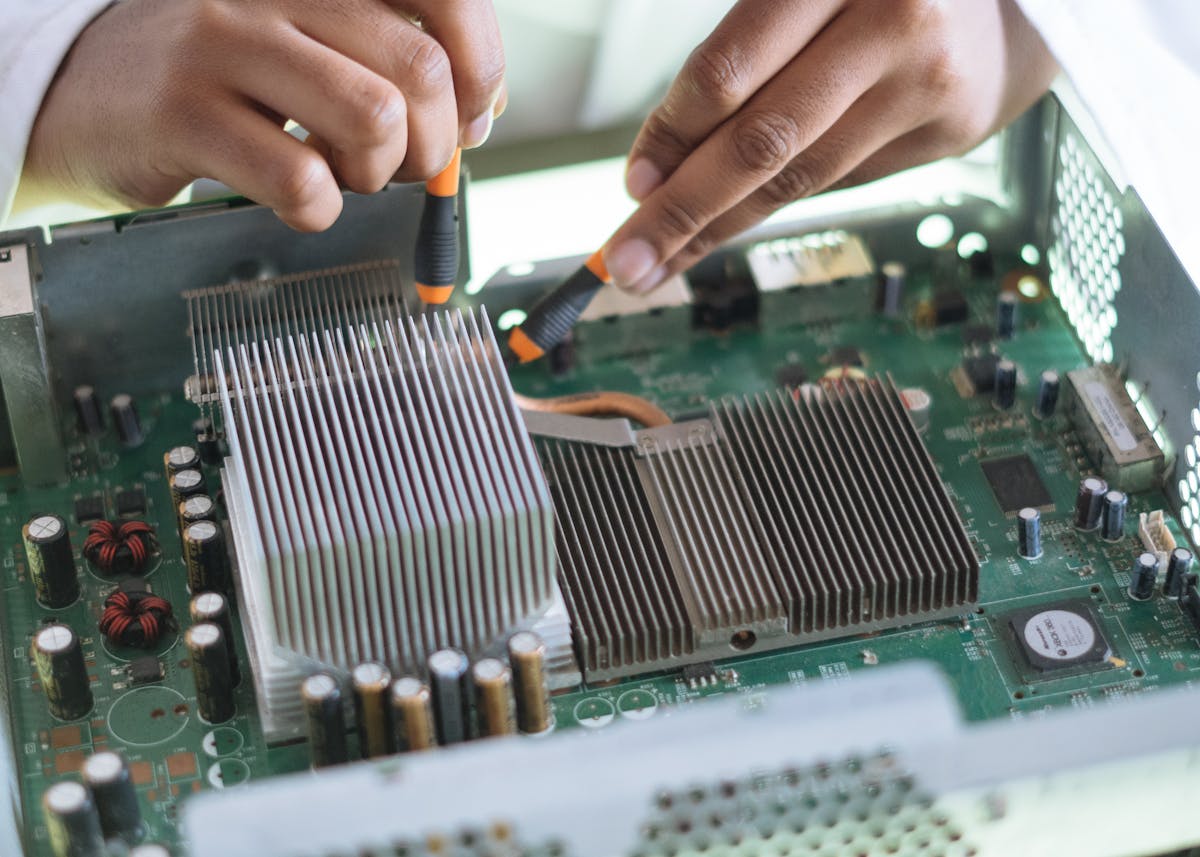
Design Trends and Teardown Culture: Opening the Black Box
Once upon a time, the internal layout of a device was a black box to most buyers. Today, teardown videos and photo essays go viral within hours of a flagship phone release, turning engineering decisions into talking points.
How Teardown Culture Works
- New device launches.
- Repair groups and YouTubers purchase and immediately disassemble it.
- They document every step, grade repairability, and highlight pain points.
- Media outlets amplify key findings (“Battery glued to frame,” “Display replacement requires full teardown”).
This cycle has measurable impact:
- Engineers face public scrutiny when choosing glue over screws or integrating multiple parts into one expensive module.
- Brands gain reputational dividends when they improve repairability scores across product generations.
- Consumers gain transparency on long-term ownership costs beyond the sticker price.
“Repairability is the missing spec sheet metric.” — iFixit commentary on teardown scores
Scientific Significance: Environmental, Social, and Economic Impacts
Right-to-repair is closely tied to scientific assessments of environmental impact, lifecycle analysis, and circular economy models. Empirical studies consistently find that extending device lifetimes often delivers larger emission reductions than marginal hardware efficiency gains.
Environmental Dimensions
- Embodied Carbon: A significant portion of a device’s carbon footprint comes from manufacturing and logistics. Prolonging use from, say, 3 to 5–7 years spreads that footprint over more years of service.
- E‑Waste Reduction: Longer lifespans and repairability decrease waste streams and reduce pressure on recycling systems, which often recover only a fraction of materials.
- Resource Intensity: Mining rare earths and metals for electronics carries human and ecological costs, particularly in regions with weaker protections.
Organizations such as the European Environment Agency and independent researchers have published lifecycle analyses showing that repair and refurbishment are key levers in a circular electronics economy.
Social and Economic Dimensions
- Digital Inclusion: Keeping older devices viable through repair and lightweight software enables access in schools, low-income communities, and emerging markets.
- Local Jobs: Independent repair shops and community repair cafés contribute to local economies and skills development.
- Consumer Surplus: Stretching the effective life of a $1000 phone beyond the typical upgrade cycle yields substantial economic value for households.
“The greenest smartphone is the one you already own.” — Common refrain in sustainability research and reporting
Device Longevity: Hardware Meets Software Support
Physical repair is only half the story. Modern devices depend on long-term software support—security patches, OS upgrades, and compatibility with evolving web and app standards.
Why Software Support Is Central to Longevity
- Security: Unpatched devices become vulnerable to exploits, effectively shortening safe lifespans.
- Compatibility: Browsers, apps, and services drop support for old OS versions, degrading user experience.
- Regulation: Some proposed rules in the EU and elsewhere explicitly mandate minimum software support durations for certain categories of devices.
In response, several manufacturers now publish update guarantees—for example, multi-year commitments to OS upgrades and security patches for smartphones or Chromebooks. Analysts track these promises and compare them to actual delivery, noting gaps and best-in-class practices.
From a user perspective, the ideal is clear: a device that can be physically repaired and kept secure and functional via software for most of a decade, not just a single carrier contract cycle.
Security, IP, and Safety: The Counterarguments
Manufacturers often resist broad right-to-repair mandates by emphasizing security, intellectual property (IP), and safety concerns. Some of these concerns are legitimate; others are contested as overreach.
Common Concerns Raised by Manufacturers
- Security: Opening repair interfaces or firmware tools, they argue, could enable malicious modifications, weaken secure boot chains, or facilitate device cloning.
- IP Protection: Full service manuals and diagnostic software might reveal trade secrets or proprietary calibration routines.
- Safety: Incorrect battery, display, or high-voltage repairs may pose fire or electric shock risks.
Debates on Ars Technica and Hacker News frequently examine whether solutions like cryptographically signed firmware, component authentication, and tamper logs can coexist with user repair rights.
“Security should protect users from attackers, not protect business models from competition.” — Electronic Frontier Foundation perspective on right-to-repair
Milestones in Public Awareness: Social Media, Teardowns, and Viral Repairs
Social platforms have transformed right-to-repair from an abstract policy topic into a highly visible cultural phenomenon.
How Social Media Drives the Conversation
- TikTok & YouTube: Short repair tutorials, spectacular fixes, and teardown walkthroughs reach millions of viewers.
- Twitter/X: Real-time updates on legislative votes, corporate announcements, and investigative reporting.
- Reddit & Facebook Groups: Crowdsourced troubleshooting, parts sourcing advice, and success/failure stories.
Viral examples of both successful DIY fixes and devices “bricked” after unauthorized repairs—sometimes due to software locks—shape perceptions of which brands respect their users and which prioritize lock-in.

Beyond Repair: Ownership, Firmware, and Subscription‑Locked Hardware
Right-to-repair is intertwined with broader digital rights concerns: when software controls hardware, what does “ownership” actually mean?
Issues at the Intersection of Repair and Digital Rights
- Firmware Lock‑In: Devices that refuse to boot with non‑authorized components or third‑party batteries limit genuine ownership and competition.
- Subscription‑Locked Devices: Hardware that becomes functionally useless when a cloud or subscription service is canceled raises concerns about long-term sustainability.
- Modding and Custom ROMs: Communities that install alternative operating systems extend device lifespans but face increasingly locked bootloaders and legal gray areas.
Outlets like Wired and organizations such as the Electronic Frontier Foundation (EFF) argue that genuine ownership should include the right to modify the software that runs on devices, within reasonable legal and safety bounds.
Practical Guidance: What Consumers Can Do Today
While policy fights continue, you can already make more repair-friendly, long-lived tech choices.
Before You Buy
- Check independent repairability scores (e.g., from iFixit).
- Look up the manufacturer’s software support timeline for that device.
- Prefer products with user-replaceable batteries and standardized screws.
- Research whether parts and manuals are realistically obtainable.
After You Buy
- Use protective cases and screen protectors to prevent common damage.
- Keep software updated to reduce security-driven obsolescence.
- When problems occur, consider diagnostic communities (forums, subreddits) before replacement.
- Donate or sell functional devices rather than discarding them.
For hands-on learners, high-quality toolkits—such as the popular iFixit electronics repair kit—provide precision screwdrivers and spudgers designed exactly for modern devices.

Challenges and Open Questions
Despite momentum, several unresolved challenges remain.
Technical and Regulatory Challenges
- Balancing Security and Openness: Designing systems that are repairable yet resistant to tampering and malware.
- Global Consistency: Harmonizing rules across jurisdictions to avoid fragmented, region-specific device variants.
- Enforcement: Ensuring that legal requirements around parts, documentation, and software tools are met in practice, not just on paper.
Economic and Cultural Challenges
- Business Models: Transitioning from rapid replacement cycles to revenue from services, upgrades, and long-term support.
- Consumer Habits: Encouraging repair and reuse in cultures accustomed to annual upgrade rituals.
- Design Trade-Offs: Balancing thinness, water resistance, and aesthetics against modularity and ease of disassembly.
The next decade will likely determine whether right-to-repair becomes a core design principle or remains a compliance checkbox.
Conclusion: Redefining the Lifespan—and Ownership—of Tech
Right-to-repair is fundamentally about recalibrating the relationship between people and the tools they rely on every day. When devices are designed to be fixed, supported, and upgraded over time, we:
- Reduce environmental impact and conserve critical materials.
- Protect consumer autonomy and genuine ownership rights.
- Foster local skills, jobs, and innovation in repair ecosystems.
- Align tech development with long-term societal and climate goals.
As legislative frameworks mature, corporate policies evolve, and teardown culture keeps shining light inside sealed cases, the era of disposable, locked-down devices is facing sustained, informed resistance. For consumers, the most powerful signal remains clear: reward products and companies that respect your right to keep great hardware in service for as long as possible.
Additional Resources and Next Steps
To dive deeper into the technical, legal, and ethical dimensions of right‑to‑repair and device longevity, explore:
- iFixit – Right to Repair hub for campaigns, guides, and repairability scores.
- EFF – Right to Repair for digital rights and security perspectives.
- Right to Repair Europe for EU policy updates and advocacy materials.
- YouTube channels such as Louis Rossmann for in-depth repair commentary and live board-level diagnostics.
If you’re interested in starting your own repairs, begin with low-risk projects—like replacing a laptop battery or upgrading RAM—before tackling complex smartphone microsoldering. Building skills incrementally reduces e‑waste, saves money, and strengthens your practical understanding of the technology you use every day.
References / Sources
- Ars Technica – Right to Repair coverage
- Wired – Right to Repair articles
- The Verge – Right to Repair topic
- iFixit – Teardowns and repair guides
- Electronic Frontier Foundation – Right to Repair
- Right to Repair Europe – Campaign information
- European Environment Agency – Circular economy and electronics reports
- Vox / Recode – Technology and policy analysis
