
Why People Who Exercise Handle Stress So Differently (Backed by New Science)
Ever notice how some people scroll through grim headlines, shrug, and get on with their day—while others feel rattled for hours by a single stressful email? Emerging research highlighted by Futurism suggests that one powerful difference between these groups may be surprisingly simple: how often they move their bodies.
Scientists looking at people who exercise regularly are finding intense psychological differences in how they manage stress, regulate emotions, and bounce back from everyday hassles compared to those who are mostly sedentary. This doesn’t mean exercise is a magic cure for anxiety or that people who struggle are “doing it wrong.” It does mean your workouts might be quietly rewiring how your brain responds to a stressful world.
In this guide, we’ll unpack what this new research is showing, explain why exercise changes stress responses at a brain level, and walk through practical, realistic ways to use movement to build resilience—even if you’re starting from zero or feel exhausted already.

The Problem: A World on Fire, Nervous Systems on Overload
Constant notifications, frightening news, and financial uncertainty all compete for our attention. For many people, this leads to:
- Racing thoughts or “doomscrolling” spiral
- Difficulty relaxing even when nothing urgent is happening
- Trouble sleeping or waking up wired and tired
- Feeling emotionally flooded by relatively small problems
Interestingly, when researchers compare people who exercise regularly to those who rarely move, they see a major split in how these stressors are experienced and processed. It’s not that exercisers live easier lives; it’s that their nervous systems seem to recover faster and stay more flexible under pressure.
“What we’re seeing is not just better mood on workout days, but a fundamentally different way the brain and body respond to stress in people who are consistently active.” — Summary of recent exercise–stress findings reported in 2026 coverage
What the New Research Actually Shows About Stress and Exercisers
The study highlighted by Futurism, along with similar work in recent years, points to several psychological and neurological differences between people who exercise regularly and those who don’t.
- Faster “stress recovery curve.” People who exercise tend to show:
- Lower baseline stress markers (like heart rate and perceived tension)
- Quicker return to baseline after a stressful event
- Better emotional regulation. Regular exercisers often report:
- More ability to “step back” from worries
- Less rumination after something goes wrong
- Different brain activation patterns. Other imaging research (e.g., studies in Translational Psychiatry and NeuroImage) suggests:
- More engagement of the prefrontal cortex (planning, control) during emotional tasks
- More efficient regulation of the amygdala (threat detection center)
- Higher perceived coping ability. Exercisers report greater confidence in their ability to handle stress—even when overall stress levels are similar.
In plain language: people who move more tend to have brains that can detect stress, respond to it, and then let it go more efficiently.
How Exercise Changes Your Stress Response: The Science in Simple Terms
Researchers propose a few overlapping mechanisms to explain why exercise changes how we handle stress:
- “Practice runs” for your stress system. Cardio temporarily raises heart rate, blood pressure, and stress hormones like adrenaline—but in a safe, time-limited way. Over time, your system gets better at:
- Activating quickly when needed
- Shutting off once the challenge is over
- Neurochemical shifts. Regular movement can:
- Increase brain-derived neurotrophic factor (BDNF), which supports brain plasticity
- Modulate serotonin, dopamine, and endocannabinoids linked to mood and motivation
- Structural brain changes. Studies have linked ongoing aerobic exercise to:
- Greater hippocampal volume (important for memory and stress regulation)
- Improved connectivity in networks involved in attention and self-control
- Psychological mastery. Showing up for repeated, manageable physical challenges sends a steady message: “I can do hard things,” which may generalize to psychological stress.
“Exercise is the single best thing you can do for your brain in terms of mood, memory, and learning.” — Dr. Wendy Suzuki, Neuroscientist (NYU), summarizing decades of exercise research
None of this means you need to become a marathoner. Most of these benefits begin to appear with modest, consistent movement—often in the range of 90–150 minutes of moderate activity per week, according to large public health studies.
A Real-World Example: Two Weeks That Changed a Workday
A client I’ll call “Sam” worked in a high-pressure support role, constantly fielding urgent messages. By 10 a.m. most days, their shoulders were tight, breathing was shallow, and they felt one minor glitch away from snapping. They didn’t consider themselves “an exercise person” and were skeptical that moving more could matter in a life this stressful.
Instead of a full workout plan, we tried a very small experiment:
- 10 minutes of brisk walking right after logging on for work
- 5-minute walk breaks at lunch and midafternoon
- No change to evenings, diet, or workload
After two weeks, Sam reported:
- “I still get stressed, but I don’t stay there as long.”
- “One bad email doesn’t ruin the whole morning like it used to.”
- “I notice I can catch myself and breathe before spiraling.”
This is exactly the kind of “stress processing” difference researchers are observing in regular exercisers: not a life free from stress, but a nervous system that can move through it more fluidly.
Turning Science into Action: How to Use Exercise for Stress Resilience
If your goal is better stress management rather than peak athletic performance, you don’t need complicated programming. You need consistency, enjoyment, and a bit of challenge. Here’s a practical, evidence-informed roadmap.
1. Start with “minimum effective doses”
- Aim for 10–15 minutes of movement most days, not an hour once in a while.
- Use a pace that leaves you slightly breathless but still able to talk in short sentences.
- Common options: brisk walking, comfortable cycling, light jogging, dancing, or low-impact aerobics.
2. Anchor exercise to your stress patterns
Notice when you typically feel most wound up and use movement as a pressure valve:
- Morning anxiety: 5–10 minutes of light cardio after waking.
- Midday crash: a short walk outside instead of scrolling.
- Evening tension: gentle cycling, yoga, or walking after dinner.
3. Mix in strength training for extra benefits
Research increasingly links resistance training with improved mood and anxiety reduction.
- 2 days per week is a strong starting point.
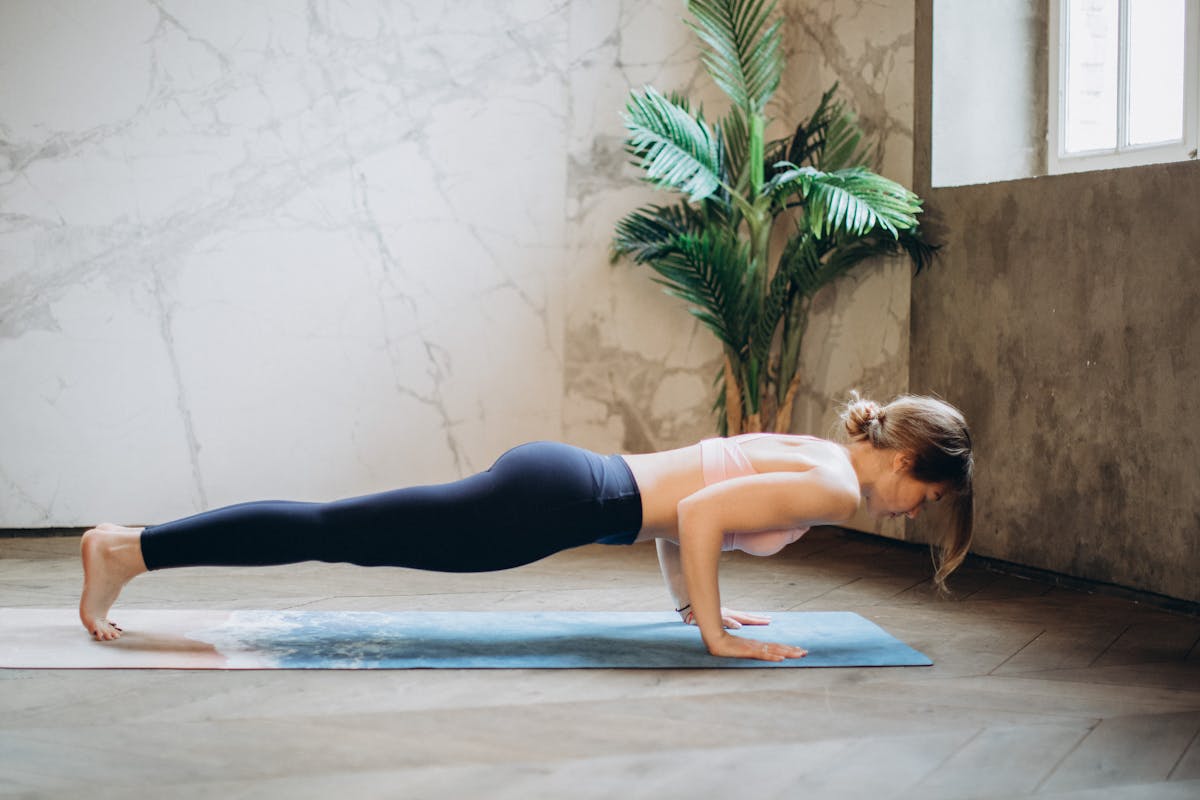
- Focus on simple moves: squats or sit-to-stand, wall push-ups, rows with bands, hip hinges.
- Use a weight or resistance that feels challenging by the last 2–3 reps but doesn’t cause joint pain.
4. Pair movement with mindful attention
To specifically target the stress system, use exercise as a chance to practice emotional regulation:
- Notice physical sensations (heart rate, breathing, warmth).
- Label them as “exercise stress,” not danger.
- Practice slow exhales or relaxed shoulders while you move.
This teaches your brain that elevated arousal doesn’t always mean threat, a key component of being less reactive to everyday stressors.
Common Obstacles (and How to Gently Work Around Them)
“I’m too exhausted and stressed to exercise.”
This is real. Chronic stress can make any extra effort feel impossible. Instead of fighting that reality, shrink the goal:
- Try 3–5 minutes of movement: marching in place, a short hallway walk, or gentle stretching.
- Count it. Your nervous system doesn’t require long sessions to start learning.
“Exercise makes me more anxious.”
For some, increased heart rate and breathing feel similar to panic. If that’s you:
- Start with very low-intensity movement and gradually build.
- Use slow, nasal breathing where comfortable to keep arousal lower.
- Try rhythmic activities like walking or swimming, which many find soothing.
“I don’t have time.”
Time is a real constraint, but many people imagine they need far more than research actually suggests.
- Break your goal into movement snacks: 5 minutes, 3 times a day.
- Stack it with existing habits: walk while on a call, do a few squats after bathroom breaks, take the stairs when possible.
Before and After: How Stress Feels with and without Regular Movement

Typical day with little movement
- Wake up already tense
- News or notifications trigger immediate anxiety
- Heart rate and worry stay elevated for hours
- Small inconveniences feel catastrophic
Typical day with consistent movement
- Wake up feeling slightly more grounded
- Stress still appears—but feels more manageable
- Body returns to calm more quickly after spikes
- Greater sense of “space” between trigger and reaction
These shifts are usually subtle day to day, but over months and years they can add up to a very different lived experience of the same external world.
What the Broader Evidence Says About Exercise, Stress, and Mental Health
The study covered by Futurism fits into a much larger body of work showing that physical activity is strongly linked with mental well-being. A few highlights:
- Large observational studies find that people who meet physical-activity guidelines show lower rates of depression and anxiety on average.
- Randomized controlled trials—where people are assigned to exercise programs or control conditions—often show modest to moderate improvements in mood and perceived stress.
- Meta-analyses (studies of studies) suggest that exercise can be as effective as some first-line treatments for mild to moderate depression for certain individuals, though it shouldn’t replace professional care when needed.
For deeper reading, see:
A Simple 2-Week Experiment to Feel the Difference Yourself
If you’d like to test these ideas without overhauling your life, try this gentle, 2-week stress-resilience experiment.
- Choose your movement: brisk walking, cycling, light jogging, dancing, or a mix.
- Commit to 10–15 minutes a day, 5 days per week. Use a pace that feels like a 6 out of 10 in effort.
- Log your stress. Each evening, rate:
- Your overall stress (0–10 scale)
- How quickly you bounced back from at least one stressful moment
- Notice patterns. At the end of two weeks, look for:
- Any change in your average stress rating
- Differences in how “sticky” stress feels

Bringing It All Together: Your Body as an Ally in a Stressful World
The world is not likely to get less chaotic anytime soon. What can change, profoundly, is how your body and brain experience that chaos. The latest research—echoing decades of earlier work—suggests that regular exercise doesn’t just build stronger muscles or a healthier heart. It appears to shape the very way your nervous system responds to stress.
You don’t have to become obsessed with fitness or hit some perfect target to benefit. Even small, consistent bouts of movement can start to tilt your stress response toward more flexibility, faster recovery, and a deeper sense that you can handle what comes.
If you’re feeling overwhelmed, consider this your invitation to experiment with the most accessible tool you have: your own body in motion. Start tiny, stay kind to yourself, and watch—over weeks and months—how the way you relate to stress begins to shift.
Call to action: Choose one 5–10 minute movement break you can realistically add tomorrow. Put it on your calendar, treat it as a stress experiment, and notice how you feel afterward. That’s the first step toward building the resilient, unflappable nervous system the research is pointing to.
