
Why Emerald Fennell’s Wuthering Heights Is 2026’s Most Chaotic Movie Debate
Emerald Fennell’s torrid take on Wuthering Heights hasn’t just arrived in cinemas; it’s arrived in the culture war. In a year crowded with safe IP recycling, her unapologetically sensual, stylised version of the Brontë classic has become 2026’s most divisive literary adaptation—long before many people have even seen it.
The relentless hostility around a Brontë reboot
Ever since the project was announced, the online discourse has been ferocious. From the moment casting leaks hit social media, through to costume reveals and that now-infamous trailer featuring “suggestive breadmaking” and a very present naked torso in memory, Fennell’s film has been treated less like a period romance and more like a referendum on what we want adaptations to be.
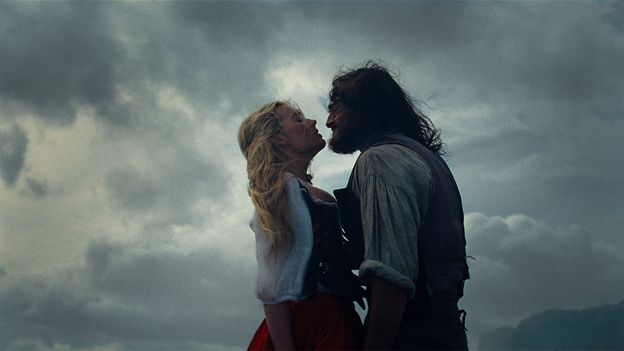
The BBC has framed it bluntly: “The hostility has been relentless.” But underneath the memes and moral panic, something more interesting is going on—about desire, authorship, and who gets to play with the classics.
From Brontë to breadmaking: How we got here
Emily Brontë’s 1847 novel has always been a paradox: a canonical love story that is, in truth, about obsession, cruelty, and emotional self-destruction. Film and television have spent decades trying to domesticate that energy into palatable Gothic romance. Emerald Fennell, known for Promising Young Woman and Saltburn, was never going to play it safe.
Her version leans into heightened sensuality, class resentment, and the grotesque—a mash-up of prestige literary heritage and knowingly lurid melodrama. In the trailer, Robbie’s Cathy kneads dough with almost absurd intensity, flushed and breathless as she flashes back to Elordi’s Heathcliff, all bare skin and wounded pride. It’s Brontë by way of Tumblr fanfic: maximalist, horny, and fully aware of its own excess.
“The hostility has been relentless,” notes the BBC, describing the reaction to everything from casting to corsets long before critics saw a finished cut.
That hostility didn’t come out of nowhere. Fennell has become a lightning rod: praised for unapologetic stylisation, criticised for what some see as superficial shock tactics. Her name on Wuthering Heights virtually guaranteed that this adaptation would be treated as a battleground.
Visual language: Mud, velvet, and Instagram Gothic
Production stills and the official marketing campaign reveal a look that’s equal parts windswept moorland and fashion editorial. The costuming choices—particularly the corsets and loosened bodices—have been singled out for allegedly prioritising sex appeal over historical accuracy, though period dramas have taken such liberties for decades.
Fennell’s Yorkshire is filtered through a modern visual sensibility: shallow focus, saturated interiors, and a camera that lingers on bodies as much as on vistas. The infamous corset shot—laces yanked tight as Cathy prepares herself for a socially advantageous marriage—doubles as a metaphor for the film’s whole project: desire constrained, then weaponised.
Critics who like the film praise its unified aesthetic: muddy boots on polished floors, candlelit rooms that feel suffocating rather than cosy, and a recurring visual motif of domestic tasks—breadmaking, dressing, washing—as surrogates for repressed longing and rage.
Casting controversies: Heathcliff, Cathy, and the fandom gaze
Casting for Wuthering Heights is always loaded. Heathcliff, written as an outsider with ambiguous ethnic origins and a lifetime of abuse, has been flattened in many adaptations into a generically brooding romantic lead. Fennell’s choice of a tall, charismatic star like Jacob Elordi inevitably triggered debate: is this another sanding-down of Brontë’s most troubling creation, or a deliberate weaponisation of star power?
Robbie’s Cathy, meanwhile, has prompted its own wave of discourse. Some viewers accuse the film of treating her as a pure object of male desire, while others argue Fennell has smuggled in a jagged, self-aware cruelty that lines up with the novel’s emotionally destructive heroine. What’s not in dispute is that both leads are deployed knowingly as “hot media objects” in an age of stan culture, edits, and Out-Of-Context TikTok clips.
“People seem more upset that we’re admitting the book is erotic than that we’re showing it,” Fennell reportedly quipped in a festival Q&A, leaning into the outrage as part of the text.
The backlash, in other words, isn’t just about who was cast, but about the kind of desire the film centres—and whose fantasies it appears to cater to.
Desire, power, and respectability: What the film is really poking at
Strip away the memes and the pearl-clutching about heaving bodices, and Wuthering Heights (2026) is engaging with big, chewy themes:
- Class rage: Heathcliff’s humiliation and revenge are rendered with a focus on money, land, and social climbing that feels pointed in an era of widening inequality.
- Female desire: Cathy’s conflicting impulses—security vs. passion—are staged less as innocent confusion and more as a ruthless cost-benefit analysis of her options under patriarchy.
- Violence of romance tropes: The film refuses to sentimentalise Heathcliff’s cruelty, even as it revels in his magnetism.
Where some viewers see only surface-level provocation—sexed-up costumes, slow pans across torsos—others argue that Fennell is simply making visible what was always there in Brontë: a story about people who would rather destroy each other than admit the power they hold over one another.
Why the discourse is so loud: Fandom, morality, and online performance
The “relentless hostility” around this film says as much about contemporary internet culture as it does about Fennell’s artistic choices. Several forces collide here:
- Moralised media consumption: Viewers increasingly frame watching (or boycotting) a film as a moral stance, especially when sexuality and classic literature are involved.
- Algorithmic outrage: Clips of the breadmaking scene and corset shots are tailor-made for social platforms that reward strong reactions over nuanced discussion.
- Ownership of the canon: Long-time Brontë fans feel protective; younger audiences raised on remix culture feel that reinterpretation is the point.
What emerges is a kind of cultural Rorschach test. For some, the film represents a debasement of “serious” literature into thirsty TikTok fodder. For others, it’s a welcome acknowledgement that Victorian fiction was already about bodies, longing, and socially dangerous emotions.
One prominent critic put it this way: “If you want your Brontë sanitized and sexless, you’re asking for a different book.”
A balanced verdict: Is Emerald Fennell’s Wuthering Heights actually good?
As cinema rather than discourse engine, the film is uneven but rarely dull. Its strengths are clear:
- Bold directorial vision: Fennell commits to a specific tone—decadent, uncomfortable, darkly funny—that sets it apart from safer costume dramas.
- Committed performances: The leads sell both the grand passion and the pettiness; supporting players add texture rather than just filling archetypes.
- Strong craft: From sound design that makes every slammed door feel like a threat to sharp, quotable dialogue, this feels like authored cinema.
Its weaknesses are just as evident:
- Tonally risky: Some viewers will find the blend of sincerity and camp jarring, especially in scenes that flirt with parody.
- Emotional distance: The film’s self-consciousness can make it hard to fully surrender to the tragedy; we’re always aware of the director’s hand.
- Overemphasis on shock imagery: A few moments feel engineered purely for clip-ability rather than narrative necessity.
On balance, though, it’s more interesting and alive than many reverent page-to-screen translations. It may not be the definitive Wuthering Heights, but it’s a sharp, provocative entry in the long tradition of arguing with Brontë rather than simply illustrating her.
Rating: 3.5 out of 5 – divisive, deliberate, and worth arguing about.
What this divisive Wuthering Heights means for future literary adaptations
The ferocity of the reaction to Emerald Fennell’s Wuthering Heights almost guarantees studios will keep chasing “prestige but horny” book adaptations, for better and worse. The commercial lesson is simple: controversy sells; social media does the marketing for you.
The artistic lesson is more nuanced. This film demonstrates that there is still room in mainstream cinema for adaptations that pick fights with their source material, foreground uncomfortable desires, and reject tasteful middlebrow respectability. Whether you love or hate this particular version, it’s a sign the classics aren’t museum pieces yet.
In a landscape where many period dramas feel algorithmically generated, it’s almost refreshing that this one has people genuinely arguing—in group chats, in review columns, and very loudly online—about what Wuthering Heights is supposed to be. The hostility may be relentless, but so, evidently, is our fascination with Brontë’s storm-tossed lovers.
