
Why Bad Bunny’s All-Spanish Super Bowl Halftime Show Just Became a First Amendment Flashpoint
Bad Bunny’s history-making Super Bowl halftime show was always going to be a cultural milestone; what nobody quite expected was that it would also become a potential case study in free speech and language politics. Days after the Puerto Rican superstar delivered the first halftime performance sung entirely in Spanish, a US agency reportedly requested full transcripts of the show, turning a glittering pop spectacle into a surprisingly serious conversation about regulation, representation, and who gets to speak on America’s biggest TV stage.
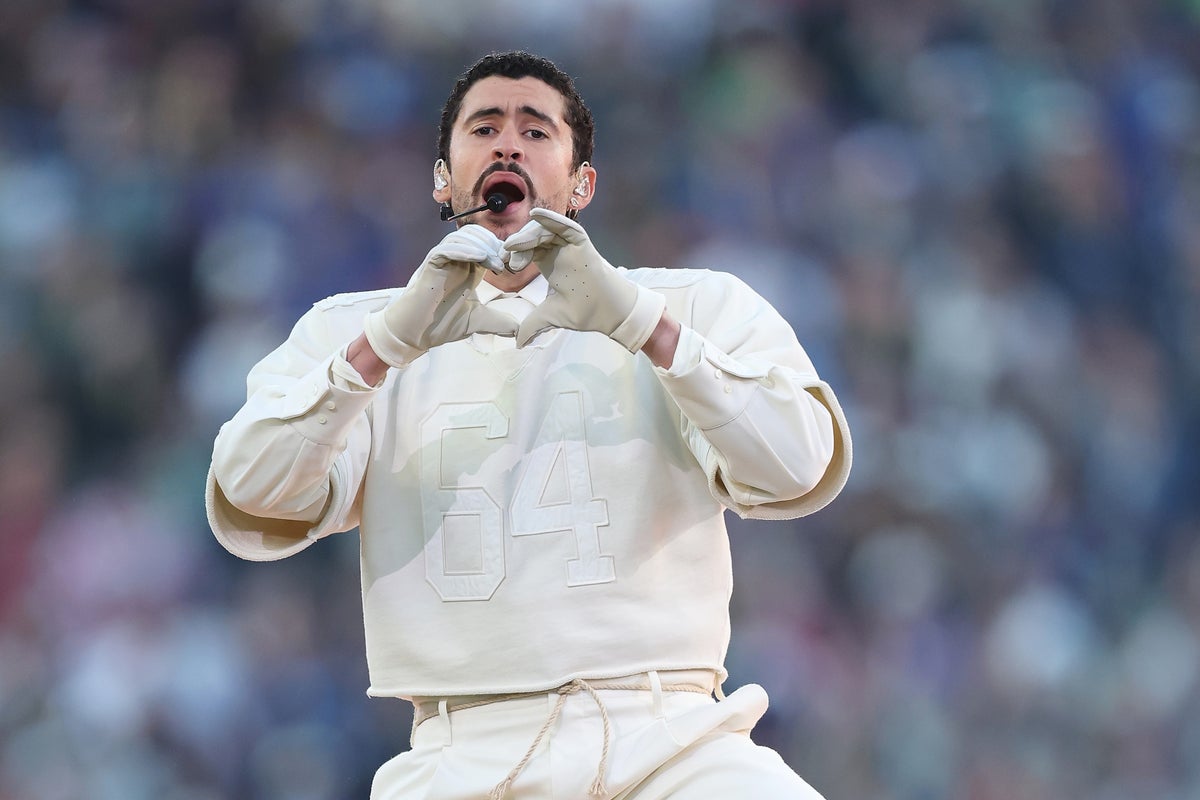
A Halftime Show That Refused to Switch Languages
The Independent reports that a US agency has formally requested transcripts of Bad Bunny’s Super Bowl performance, a move that underlines just how scrutinized the halftime show has become since the infamous Janet Jackson–Justin Timberlake “wardrobe malfunction” in 2004. But this time, the flashpoint isn’t a costume; it’s language. By keeping his entire set in Spanish, Bad Bunny didn’t just entertain—he challenged long‑standing assumptions about what “mainstream” American entertainment looks and sounds like.
Why Bad Bunny at the Super Bowl Matters Culturally
By the time he hit the Super Bowl stage at 31, Bad Bunny (Benito Antonio Martínez Ocasio) was already the de facto face of global Spanish‑language pop. He topped the Billboard 200 with albums sung almost entirely in Spanish, became Spotify’s most-streamed artist multiple years in a row, and blurred genre lines between reggaeton, Latin trap, rock, and alt-pop. In other words, the halftime booking wasn’t a gamble; it was the NFL finally catching up to the numbers.

His Super Bowl appearance slots into a clear lineage of Latin artists reshaping what American pop looks like on that stage:
- Shakira & Jennifer Lopez (2020): spotlighted Latin identity, bilingual hits, and political symbolism (remember the kids in cages imagery).
- Shakira, J Balvin, Bad Bunny (guest spots in 2020): eased Latin trap and reggaeton into the halftime mix.
- Bad Bunny as solo headliner: moves Spanish lyrics from “guest flavor” to the main event.
“Bad Bunny is not crossing over; the industry is crossing over to him.”
That inversion—America adapting to a Spanish-speaking headliner rather than the other way around—is exactly what makes this particular halftime show such a flashpoint once officials start asking for transcripts.
What Does a US Agency Want with Halftime Transcripts?
The Independent’s report that a US agency has requested transcripts immediately invites speculation. In the post-Janet Jackson era, the Federal Communications Commission (FCC) has heavily monitored live broadcasts for indecency, profanity, and content standards. For a live show performed entirely in Spanish, it’s not exactly shocking that regulators—or network lawyers—would want an official translation.
While specifics of the request are still emerging, there are a few likely motivations:
- Compliance & liability: Ensuring no lyrics violated broadcast standards (explicit content, profanity, or slurs).
- Political content checks: Watching for overtly political statements that might rile viewers or legislators, especially in an election-adjacent era.
- Documentation: Keeping a paper trail as live events grow ever more scrutinized by advertisers, advocacy groups, and regulators.

On one level, this is dry bureaucracy: lawyers love transcripts. On another, it lands differently when the show is in a language historically sidelined on US network TV outside telenovelas and niche channels. Suddenly, what might be standard compliance reads to many viewers as cultural gatekeeping—especially in a climate of renewed debates over immigration, identity, and who counts as “American media.”
“If they didn’t understand him, maybe that’s the point. The Super Bowl isn’t just theirs anymore.” — Commentator on social media
The Performance Itself: Setlist, Staging, and Statement
Musically, Bad Bunny treated the halftime slot less like a classic-rock legacy victory lap and more like a compressed festival headlining set: high BPM, fluid genre shifts, and virtually no downtime. While the exact song order is still being parsed and debated online in fan communities, it leaned on the backbone of his biggest global hits—tracks familiar enough to non-Spanish speakers through hooks, TikTok, and sheer repetition in public spaces.
- High-energy reggaeton and Latin trap anchors, engineered for stadium-scale call-and-response.
- Visual callbacks to Puerto Rican culture and Caribbean street aesthetics.
- Camera work designed to feel like both a global broadcast and a sweaty arena show.

What stood out was how little he pandered linguistically. There was no token English hook, no quick switch into a safe bilingual crossover single strictly for the US broadcast. That choice alone essentially turned the Super Bowl into a Spanish-language event for several minutes, flipping the old model where Latin artists were expected to “translate themselves” into English to be considered mainstream.
“I always said I wasn’t going to change my music to fit into a market. The market is going to change for me.” — Bad Bunny, in a previous interview with Billboard
Language, Power, and the Politics of Being Understood
The transcript request arrives in a US context where Spanish is both the country’s de facto second language and a perennial political football. Over 40 million people speak Spanish at home in the United States, yet Spanish-language content on major English-language networks still tends to be treated as “special programming” rather than a default option.
That’s what makes this moment bigger than a routine regulatory check. When a government-linked body needs an official document just to understand what the headliner said on the most mainstream stage in America, it crystallizes a tension:
- Representation: Millions finally see their language centered, not sidelined.
- Suspicion: The impulse to “translate and verify” implies that what’s not in English is potentially risky.
- Globalization: The NFL wants global reach; global stars like Bad Bunny bring non-English realities with them.

From a media-analysis angle, the transcripts request becomes symbolically loaded. It raises questions like:
- Would there be similar scrutiny if the lyrics were incomprehensible because of mumbling or distortion, rather than language?
- Does performing in Spanish automatically shift a pop show into a perceived “political” act?
- How will future halftime performers navigate language choice after seeing this reaction?
Reviewing the Show: Spectacle, Risks, and Rough Edges
As a piece of entertainment, Bad Bunny’s halftime set largely delivered what you’d expect from the world’s dominant streaming-era artist: a hit-stacked, tightly choreographed burst of energy that played more like a highlight reel than a narrative arc. That’s both its strength and its limitation.
What worked especially well:
- Unapologetic Spanish-only vocals: Artistically coherent, culturally bold, and instantly historic.
- Visual branding: Stage design, wardrobe, and lighting amplified his now-iconic aesthetic rather than diluting it for “middle America.”
- Rhythmic momentum: Minimal balladry, maximum movement—ideal for a restless TV audience checking their phones between plays.
Where it fell short for some viewers:
- Limited emotional arc: Less narrative or surprise compared to, say, Beyoncé’s 2013 set or Prince’s legendary rain-soaked performance.
- Accessibility of meaning: Non-Spanish speakers relying solely on vibe might have felt at a distance, even if the beats connected.
- Overly dense medley: So many truncated songs that casual listeners couldn’t always find a single “defining moment.”

As a reviewable work, the set earns high marks for coherence and cultural impact, even if it doesn’t quite dethrone the most theatrically ambitious halftime shows of the past two decades. Where it truly excels is as a statement of intent: Bad Bunny will not shrink himself to fit the Super Bowl; the Super Bowl can expand to fit Bad Bunny.
4/5 stars — ambitious, culturally seismic, and slightly uneven in pure showmanship terms.
What This Means for Future Halftime Shows
The transcript episode will likely reverberate far beyond this one performance. Future artists, especially non-English or multilingual acts, will be watching closely to see whether regulators treat this as a routine archival measure or as pretext for heightened scrutiny of non-English content.
A few likely ripple effects:
- More multilingual sets: Networks and brands now have proof that an all-Spanish show won’t tank ratings—and might even expand them.
- Pre-cleared translations: Labels and artist teams may prepare vetted lyric sheets and translations for broadcasters in advance.
- Sharper fan activism: Any perceived double standard in how English vs. Spanish content is policed will be loudly called out online.
For the NFL and its broadcasting partners, the calculus is simple but uncomfortable: if they want the global stars who define streaming culture, they’ll also have to accept languages, politics, and aesthetics that don’t automatically center a traditional US audience.
Conclusion: From Spectacle to Case Study
In one sense, Bad Bunny’s Super Bowl halftime show was exactly what the NFL ordered: a slick, high-energy, advertiser-friendly spectacle led by one of the most bankable artists on the planet. In another, it quietly redrew the boundaries of who the Super Bowl is for—and in what language that audience gets to experience it.
The postgame request for transcripts won’t undo the fact that, for millions of Spanish speakers across the Americas, this halftime show felt less like a targeted “diversity initiative” and more like a simple recognition of reality. Whether regulators see the performance as a routine broadcast event or a potential problem to be documented will tell us a lot about where American media is headed in the age of global pop.
Either way, the message coming from the stage was clear, even if some viewers needed subtitles: the center of gravity in pop culture is shifting, and the Super Bowl—along with the agencies that oversee it—will have to decide whether to chase it, resist it, or finally catch up.
