
Why “AI PCs” Are Becoming the Next Big Battleground in Personal Computing
Mission Overview: What Exactly Is an “AI PC”?
The term “AI PC” has rapidly become a centerpiece of laptop marketing, but behind the buzzword is a concrete architectural shift: PCs are being designed around a neural‑first philosophy, with neural processing units (NPUs) elevated to the same importance as CPUs and GPUs. Intel, AMD, Qualcomm, and Apple now treat on‑device AI performance as a flagship metric, not a side feature.
In practical terms, an AI PC is a notebook or desktop that combines:
- A modern CPU optimized for mixed workloads
- A GPU capable of parallel math, often with AI‑oriented tensor cores
- A dedicated NPU for low‑power, always‑on AI inference
- OS‑level support for AI features like copilots, transcription, and real‑time enhancement
These systems are pitched as ideal for tasks such as local language models, real‑time translation, privacy‑preserving assistants, and AI‑enhanced creativity tools— all running on your machine rather than in a remote cloud.
AI PCs in the Modern Computing Landscape
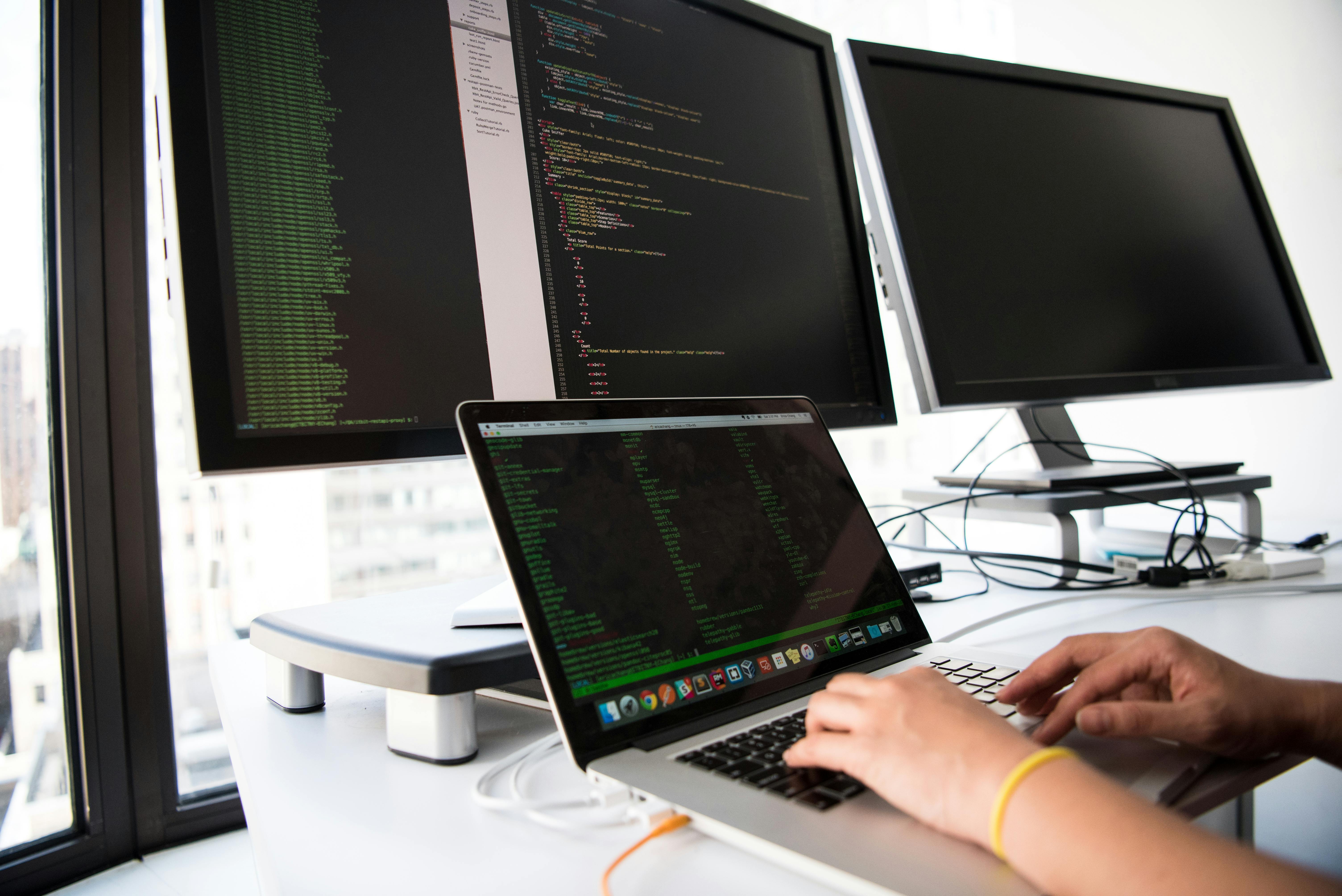
As reviewers on platforms like YouTube and publications like Ars Technica and The Verge test these systems, they focus less on synthetic benchmarks and more on lived experience: how quickly can you transcribe a meeting, generate images, or run a local chatbot without fans ramping up or the battery collapsing.
Technology: Inside the Neural‑First Hardware Stack
At the heart of the AI PC narrative is the NPU. While CPUs and GPUs can both run AI workloads, NPUs are specialized accelerators tuned for dense linear algebra—matrix multiplications, convolutions, and tensor operations— executed at high energy efficiency.
How NPUs Differ from CPUs and GPUs
- CPUs excel at low‑latency, sequential tasks and control logic but are relatively power‑hungry for large AI models.
- GPUs offer massive parallelism, ideal for training and heavy inference, but often consume significant power and generate heat.
- NPUs implement streamlined, fixed‑function or semi‑programmable data paths for common AI kernels, achieving far better performance per watt on inference workloads.
Vendor Approaches (Intel, AMD, Qualcomm, Apple)
Recent generations of major chip vendors illustrate the convergence on neural‑first designs:
- Intel: Its Core Ultra / “AI‑PC” platforms integrate an NPU alongside CPU and Xe graphics, and Microsoft’s new AI features in Windows highlight Intel’s “AI Boost” branding in marketing materials.
- AMD: Ryzen AI processors combine Zen CPU cores, RDNA graphics, and an XDNA‑based NPU, emphasizing “TOPS” (tera operations per second) for generative AI and video effects.
- Qualcomm: Snapdragon X‑series chips for Windows on Arm laptops focus heavily on NPU performance and multi‑day battery life, positioning themselves as ideal for always‑on AI assistants.
- Apple: Apple’s M‑series SoCs include a Neural Engine tightly integrated with CPU and GPU, powering features like on‑device dictation, vision, and media understanding in macOS and iPadOS.
“We’re entering an era where the NPU is as fundamental to the PC as the GPU became a decade ago.”
— Paraphrased from comments by Microsoft and silicon partners during recent AI PC launch events
Software Ecosystem: From Operating Systems to Apps
A powerful NPU is only as useful as the software stack above it. This is where the AI PC race intensifies: operating systems, frameworks, and independent software vendors (ISVs) must align to expose AI capabilities in a consistent, developer‑friendly way.
OS‑Level AI Features
- Integrated copilots and assistants that can summarize documents, draft emails, or surface context from local files.
- Real‑time transcription and translation running locally during calls or meetings.
- AI‑augmented UI features such as smart window management, visual search, or accessibility enhancements.
- Background indexing and semantic search across local documents, email, and chat logs.
Frameworks and Toolchains
To avoid fragmentation, industry groups and big vendors are converging on cross‑platform deployment formats and APIs such as:
- ONNX for model interchange, enabling one export to run across NPUs from different vendors.
- DirectML on Windows for hardware‑accelerated inference across GPU and NPU.
- Vendor SDKs (e.g., Intel OpenVINO, AMD ROCm‑based tools, Qualcomm AI Stack, Apple Core ML) for fine‑tuned optimization.
Startups and established developers highlighted by TechCrunch and The Next Web are racing to exploit these capabilities: note‑taking suites that automatically summarize meetings, local code assistants inside IDEs, and creative tools that apply AI filters in real time without uploading content to the cloud.

Scientific Significance: Why On‑Device AI Matters
From a scientific and engineering standpoint, AI PCs are an experiment in distributed intelligence. Instead of centralized, hyperscale inference in the cloud, capabilities are pushed to the network edge—your laptop.
Latency, Privacy, and Energy
- Latency: On‑device models avoid network round‑trips, enabling near‑instant interactions crucial for real‑time translation, AR, and assistive tech.
- Privacy: Sensitive data—legal documents, medical notes, proprietary code—never leaves the device, reducing exposure to third‑party breaches.
- Energy & Sustainability: Running inference locally can be more energy‑efficient than transmitting vast streams of raw data to energy‑intensive data centers.
“Edge AI is not just about convenience; it’s a structural shift in where intelligence resides in our information systems.”
— Summarizing themes from recent edge‑AI studies in journals such as Nature Electronics
Impact on Research and Applied Fields
Neural‑first laptops can accelerate:
- Field research: Scientists can process vision, language, or sensor data on‑site without reliable connectivity.
- Healthcare workflows: Clinicians can use on‑device transcription and summarization for consultations while keeping data local.
- Secure enterprises: Regulated industries gain AI‑enhanced productivity without violating data residency constraints.
Battery Life and Thermals: Do AI PCs Really Run Cooler and Longer?
A central promise of NPUs is efficiency: offloading AI workloads from CPU/GPU to dedicated logic should reduce power draw and heat. Reviewers test this by running continuous AI workloads—local LLMs, background indexing, live translation—and measuring:
- Battery life under sustained AI load
- Surface temperature and fan noise
- Performance stability over time (thermal throttling)
Early independent reviews commonly observe:
- Noticeable gains for specific tasks: Always‑on tasks such as live captions or presence detection consume far less power on an NPU versus CPU.
- Mixed results for heavy generative workloads: Larger local language models may still rely on the GPU, limiting NPU benefits unless models are carefully quantized and optimized.
- Thermal headroom for other tasks: Offloading inference leaves CPU/GPU available for browsing, compiling, and rendering, improving responsiveness.
Privacy and Security: Does On‑Device AI Actually Protect You?
A major selling point of AI PCs is that processing stays local. Publications like Wired and security researchers highlight both the strengths and caveats of this model.
Advantages of Local Inference
- No need to upload entire documents, source code, or media files to third‑party servers.
- Reduced exposure to mass data breaches of centralized AI providers.
- Potential for offline‑only modes where models never contact external services.
Remaining Concerns
The presence of an NPU does not automatically guarantee privacy:
- Telemetry and logging: Some AI assistants still send usage data or partial content to the cloud for “quality improvement.”
- Model updates: Frequent updates may involve cloud checks that reveal behavioral patterns.
- Enterprise governance: Organizations must verify that local AI tools comply with internal data policies.
Security‑conscious enterprises increasingly combine AI PCs with:
- Strict OS‑level privacy controls and data loss prevention (DLP) policies
- Zero‑trust architectures and hardware‑rooted attestation
- Local model registries and IT‑curated prompt libraries
Hype vs. Reality: Are AI PCs Worth It Today?
Online communities such as Reddit and Hacker News, along with YouTube reviewers, are openly skeptical of the “AI PC” label. Many early features—background blur, smart erase in photos, transcription—feel incremental rather than revolutionary.
Real‑World Use Cases That Already Work Well
- Automatic meeting transcription and summarization
- On‑device note organization and semantic search
- AI‑assisted photo and video editing (denoise, upscaling, object selection)
- Coding copilots that run offline for sensitive projects
Where the Experience Still Falls Short
- Model size vs. device constraints: Running very large language models locally is still challenging in thin‑and‑light notebooks.
- Fragmented software support: Not all apps can target all NPUs equally; some fall back to CPU/GPU, blurring the benefit.
- Marketing overreach: Labels and stickers sometimes outpace actual, tangible workflow improvements.
“Right now, the AI PC is less a product than a trajectory—its value depends entirely on whether your daily tools truly tap the NPU.”
— Paraphrased sentiment from multiple long‑form YouTube laptop reviews
Social Media and Creator Benchmarks
Creators on YouTube, TikTok, and X (Twitter) are effectively running a large‑scale public benchmark program. Typical side‑by‑side tests compare:
- Local LLM response times on an AI PC vs. a previous‑gen laptop
- Real‑time video filters (background replacement, eye‑contact correction) during live streams
- Podcast editing workflows with AI‑based noise removal and auto‑cutting
These tests often expose the nuances vendors gloss over: some AI features are transformative for content creators and remote workers, while others are barely noticeable.

Enterprise and IT Perspective: Deployment, Policy, and ROI
For enterprises, AI PCs are not gadgets but fleet assets. IT leaders weigh:
- Higher acquisition cost vs. productivity and security gains
- Lifecycle management of local AI models and feature sets
- Compliance with data protection and industry‑specific regulations
Typical Enterprise Objectives
- Enable AI‑assisted productivity without exposing confidential data to external clouds.
- Standardize on a hardware platform (CPU + NPU) that OS vendors and ISVs actively support.
- Control which AI models are allowed to run locally and how they are updated.
White papers from major OEMs and consultancies outline reference architectures, combining AI PCs with endpoint management, identity platforms, and secure configuration baselines. Enterprise pilots often start with narrow workloads such as document summarization, support‑agent assistance, or developer tooling.
Practical Buying Guide: What to Look for in an AI PC
If you are evaluating whether your next laptop should be an AI PC, focus on measurable capabilities rather than logos or labels.
Key Specifications
- NPU performance: Check TOPS figures and, more importantly, real benchmarks for your preferred apps.
- Memory capacity: 16 GB is a reasonable baseline for local AI; 32 GB is preferable for heavier workloads.
- Storage: Fast NVMe SSDs (1 TB or more) to host models and datasets.
- Battery and thermals: Independent tests under AI workloads, not just light web browsing.
Example High‑End AI‑Ready Laptop (US Market)
One popular category is modern MacBook Pro systems powered by Apple’s M‑series chips with integrated Neural Engine. For users heavily invested in macOS and creative work, devices like the Apple 16‑inch MacBook Pro with M3 Pro offer strong on‑device AI capabilities via the Apple Neural Engine while maintaining excellent battery life and thermals.
On the Windows side, look for the newest Intel Core Ultra, AMD Ryzen AI, or Qualcomm Snapdragon X‑series laptops from major OEMs, and cross‑check reviews that specifically test NPU‑accelerated features you will actually use.
Milestones: The Emerging Timeline of AI PCs
While PCs have run machine‑learning workloads for years, several inflection points stand out:
- Early ML on GPUs (2010s): Consumer GPUs made deep learning practical, primarily for researchers and enthusiasts.
- First integrated “neural engines” in mobile SoCs: Smartphones pioneered always‑on, on‑device AI for photography and voice.
- Unified “AI PC” branding waves (mid‑2020s): Major chipmakers and OEMs synchronized marketing and hardware roadmaps around NPUs.
- OS‑wide AI integration: Operating systems began shipping with AI copilots, live captions, and local semantic search as core features.
Each new chip generation—Intel, AMD, Qualcomm, Apple—adds NPU throughput and tighter OS integration, renewing media coverage and restarting debates about where the line between hype and real transformation lies.
Challenges: Fragmentation, Standards, and User Trust
The path toward mature AI PCs is not guaranteed. Several technical and societal challenges remain:
Technical Challenges
- Cross‑vendor consistency: Developers need predictable behavior across Intel, AMD, Qualcomm, and Apple NPUs.
- Model optimization complexity: Quantization, pruning, and compilation for each NPU backend add engineering overhead.
- Thermal design limits: Ultraportable laptops have strict power and heat budgets that constrain model size and duration.
Human and Policy Challenges
- Transparency: Users must understand when data is processed locally vs. sent to the cloud.
- Expectations management: Over‑promising “AI magic” risks user disappointment and distrust.
- Regulation: Emerging AI governance laws may impose requirements on on‑device inference, logging, and oversight.
“Trust in AI PCs will depend less on TOPS numbers and more on clear, user‑controllable privacy and safety defaults.”
The Road Ahead: Toward Truly Ambient, Personalized Computing
In the next few hardware generations, several trends are likely:
- Larger local models: As NPUs and memory bandwidth grow, laptops will run more capable language and vision models fully offline.
- Unified AI stacks: Operating systems will further abstract hardware details, making AI capabilities feel consistent across vendors.
- Context‑rich assistants: Local models will securely incorporate more of your personal data—calendars, files, communication—under strict access controls.
- Hybrid inference: Smart orchestration between local and cloud models will balance latency, quality, and privacy on a per‑task basis.
As AI PCs mature, the distinction between “normal” and “AI‑enabled” computers may fade, much like how “with Wi‑Fi” once became an obsolete label. What will remain is the underlying shift: personal computing devices that host a significant share of the world’s everyday AI inference.
Conclusion: How to Think Critically About AI PCs
AI PCs and neural‑first laptops represent a genuine architectural evolution, not just a sticker campaign—but the benefits are unevenly distributed today. Power users in content creation, software development, and knowledge work can already see real gains from on‑device AI. Casual users may experience subtler improvements until software ecosystems catch up.
When evaluating an AI PC, move beyond slogans:
- Identify 3–5 workflows you care about (coding, design, research, meetings).
- Check whether those tools and tasks truly exploit the NPU on the systems you are considering.
- Verify independent benchmarks for battery, thermals, and AI latency under realistic loads.
- Review privacy policies and configuration options for any built‑in AI assistant.
The race to build neural‑first laptops is just beginning. As hardware, operating systems, and applications converge, AI PCs may eventually feel as indispensable as GPUs did for modern graphics and content creation. Until then, a critical, evidence‑based approach is your best guide through the marketing noise.
Additional Resources and Learning Paths
To go deeper into AI PC architectures, edge AI, and on‑device model deployment, consider exploring:
- ONNX official site for model interchange standards.
- Microsoft Windows AI platform documentation for DirectML and NPU integration on Windows.
- Apple Core ML documentation for on‑device AI on macOS and iOS.
- Google’s Edge AI resources for broader edge‑computing concepts.
- Video explainers from channels like MKBHD and David Bombal covering real‑world AI laptop tests and edge inference.
References / Sources
- Ars Technica – Gadgets & computing coverage
- TechRadar – Laptop and component reviews
- Engadget – Laptop and AI PC articles
- TechCrunch – AI startup ecosystem
- The Next Web – AI coverage
- Wired – AI, privacy, and security
- Microsoft Learn – Windows AI documentation
- ONNX – Open Neural Network Exchange
- Apple Developer – Machine Learning
