
Why AI PCs Are About to Change Laptops Forever
A new class of “AI PCs” is rapidly moving from buzzword to reality. Windows laptops and desktops shipping in 2024–2025 now include dedicated neural processing units (NPUs) alongside CPUs and GPUs, enabling local generative AI workloads such as copilots, real‑time transcription, and image generation. This shift promises faster responses, stronger privacy, and new capabilities that work even when you are offline—while also forcing users, developers, and enterprises to rethink how much AI should run at the edge versus in the cloud.
In this article, we explore what defines an AI PC, how Microsoft, Intel, and Qualcomm are reshaping the laptop ecosystem, the underlying technologies, and what it all means for productivity, privacy, and the future of personal computing.
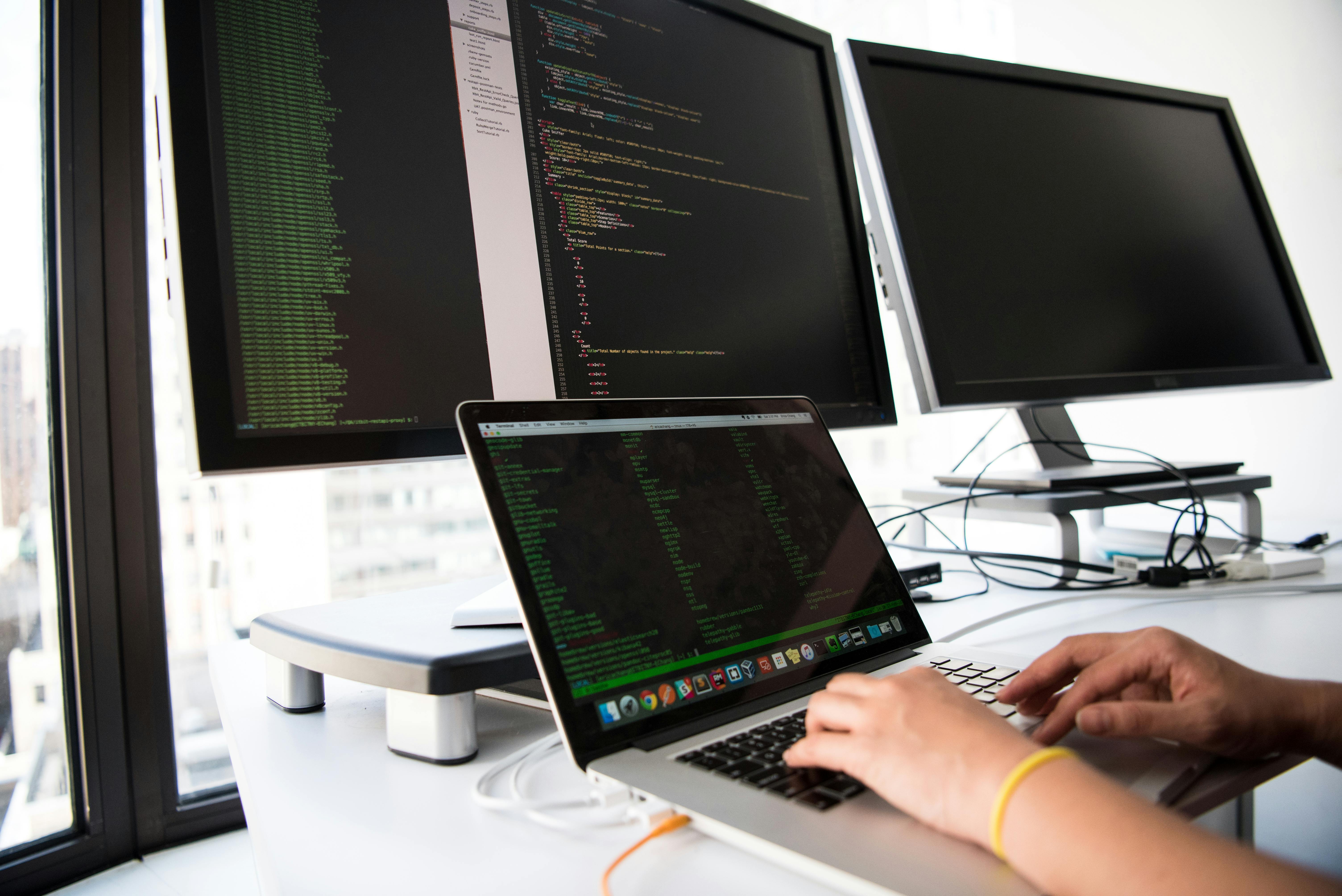
Reviews on platforms like Engadget, TechRadar, Ars Technica, and The Verge now benchmark NPUs as seriously as CPUs and GPUs, highlighting real‑world AI scenarios such as instant background blur, live translation in calls, and local code assistants in IDEs. At the same time, developer communities on Hacker News and X (formerly Twitter) dissect how open models like LLaMA and Mistral perform on consumer‑grade NPUs compared with GPUs.
Mission Overview: What Is an AI PC?
An AI PC is a laptop or desktop with hardware and software designed to accelerate machine‑learning and generative AI workloads locally. The cornerstone is a dedicated NPU that handles tasks such as:
- On‑device large language model (LLM) inference for copilots and chat assistants
- Real‑time speech recognition, transcription, and translation
- Computer vision tasks like background removal, gaze correction, and object detection
- Generative image and video enhancements in creative tools
Microsoft’s Windows ecosystem has become the primary driver of this category. With the latest Windows 11 builds and “AI PC” reference designs, the company aims to make AI features as fundamental as Wi‑Fi or touchpads once were.
“We believe every Windows device will be an AI device,”
— Microsoft executives have repeatedly emphasized in recent keynotes, signaling a long‑term platform transition rather than a short‑lived trend.
From a system‑design perspective, AI PCs aim to solve three core user demands:
- Responsiveness: Near‑instant AI responses without cloud latency.
- Privacy: Sensitive audio, images, and documents processed locally.
- Efficiency: All‑day battery life, even with continuous background inference.
Ecosystem Drivers: Microsoft, Intel, Qualcomm, and Beyond
The current AI PC wave is the result of tight coordination between operating‑system vendors, chipmakers, and independent software developers.
Microsoft: Windows as an AI Fabric
Microsoft has integrated on‑device AI deeply into Windows through features like:
- Windows Copilot and integrated assistants that can summarize documents, generate emails, and answer contextual questions.
- Real‑time transcription and translation for meetings and calls.
- On‑device image generation and editing using optimized diffusion or transformer‑based models.
- Context‑aware system features such as smart window layouts, search, and personalization powered by local embeddings.
These experiences are built on the Windows ML and DirectML stacks, taking advantage of whichever accelerator is available—NPU, GPU, or CPU—while preferring NPUs for power‑sensitive workloads.
Intel: x86 with NPUs and TOPS as the New Metric
Intel’s latest mobile platforms emphasize NPU TOPS (trillions of operations per second) as a headline metric, similar to GPU TFLOPS in the gaming era. By offloading AI workloads from the CPU and GPU to a low‑power NPU, Intel aims to:
- Deliver AI‑enhanced features without noticeably impacting battery life.
- Enable multiple concurrent AI workflows, such as background noise suppression plus live transcription plus camera effects.
- Maintain compatibility with legacy x86 software while adding AI acceleration.
Benchmarks from tech publications increasingly compare not only raw TOPS but also effective throughput on real workloads, such as local LLM inference or live video effects, to reflect end‑user experiences more accurately.
Qualcomm: ARM‑First, Always‑Connected AI PCs
Qualcomm’s Windows on ARM laptops position themselves as battery‑life leaders and “AI‑first” devices. Demos frequently showcase:
- Local large language models running directly in productivity suites.
- Creative tools with generative fill and style transfer powered by the integrated NPU.
- Developer environments with on‑device code completion for offline work.
A senior Qualcomm engineer recently noted that, “The long‑term goal is for AI acceleration to be as invisible and ubiquitous as the modem—always there, always on, and incredibly power efficient.”
This aligns with Qualcomm’s heritage in smartphone SoCs, where NPUs have been standard for camera, voice, and security features long before the “AI PC” label emerged.
Technology: Inside the AI PC Hardware and Software Stack
An AI PC is more than a laptop with a fast processor. It is a tightly integrated stack of hardware accelerators, runtimes, and applications optimized for local inference.
NPU Architecture and TOPS
NPUs are specialized accelerators designed for tensor operations and matrix multiplications. Typical characteristics include:
- Highly parallel compute units optimized for low‑precision arithmetic (INT8, INT4, and sometimes FP16).
- On‑chip SRAM to minimize energy‑expensive off‑chip memory accesses.
- Support for sparsity and quantization to speed up pruned and compressed neural networks.
Vendors often advertise theoretical TOPS, but users should pay attention to:
- Sustained TOPS at realistic power budgets (e.g., 3–7 W typical for laptops).
- Framework support (ONNX Runtime, DirectML, PyTorch, TensorFlow via adapters).
- Latency on representative workloads like a 7B‑parameter LLM at 4‑bit quantization.
Model Optimization Techniques
To run cutting‑edge models within laptop‑grade power and memory constraints, developers rely on several techniques:
- Quantization – Reducing weights and activations from FP32 to INT8 or INT4 to save memory and compute.
- Pruning and sparsity – Removing less important weights to reduce operations while preserving accuracy.
- Distillation – Training smaller “student” models that approximate larger “teacher” models.
- LoRA and adapter layers – Adding small trainable modules around a frozen base model for fine‑tuning without retraining the entire network.
Communities are actively experimenting with running variants of LLaMA, Mistral, and Phi models on NPUs, often using tools like llama.cpp‑style runtimes and ONNX‑based pipelines.
Software Layer: Runtimes and APIs
On Windows, several key layers bridge applications and NPUs:
- ONNX Runtime – A cross‑platform inference engine with NPU execution providers.
- DirectML – A low‑level API that lets developers tap into GPUs and NPUs through a unified abstraction.
- Windows ML and WinRT APIs – Higher‑level interfaces that make it easier for UWP and desktop apps to invoke local models.
This layered approach allows application developers to focus more on user experience and less on hardware‑specific details, while still benefiting from hardware acceleration where available.
Scientific Significance: Edge AI, Privacy, and Human–Computer Interaction
Moving generative AI from centralized data centers to personal machines has far‑reaching scientific and societal implications.
Edge AI and Energy Efficiency
When inference happens locally, network traffic and server‑side computation can be significantly reduced. This has several consequences:
- Lower end‑to‑end latency for interactive applications such as copilots and real‑time media processing.
- Potential energy savings by shifting some workloads away from power‑hungry cloud GPUs, though the net effect depends on usage patterns and scale.
- Resilience – Core AI features continue to function even with limited or no connectivity.
Privacy and Data Residency
For privacy‑sensitive workflows—legal, medical, financial, or personal journaling—local inference is compelling. Instead of sending raw documents, video, or audio to the cloud, users can:
- Run summarization and search directly on encrypted local stores.
- Apply redaction and anonymization before any optional cloud upload.
- Maintain tighter control over data residency for regulatory compliance.
As AI pioneer Yann LeCun has argued, “The future of AI will be largely on-device, for reasons of privacy, personalization, and efficiency.”
Human–Computer Interaction
Always‑available local AI assistants change how people interact with PCs:
- Contextual awareness – Models can continuously build embeddings of local files and activity to provide richer, more relevant suggestions.
- Multi‑modal interfaces – Users can fluidly combine speech, sketches, images, and text when working offline.
- Assistive technology – Real‑time captioning, language simplification, and image descriptions can improve accessibility in line with WCAG 2.2 principles.
Milestones: How AI PCs Reached the Mainstream
AI acceleration in consumer devices is not new—smartphones have integrated NPUs for years—but several key milestones brought AI PCs to the forefront:
- 2017–2020: Phone‑class NPUs demonstrate the value of on‑device AI for photography, voice assistants, and biometrics.
- 2020–2022: Transformers and large language models (GPT‑3, LLaMA, etc.) show the power of scale but rely on cloud GPUs.
- 2023: Open and efficient models, plus aggressive quantization, make it feasible to run multi‑billion‑parameter LLMs on consumer hardware.
- 2024–2025: Microsoft, Intel, Qualcomm, and AMD converge on AI PC branding; major OEMs ship laptops with NPUs and Windows copilot features by default.
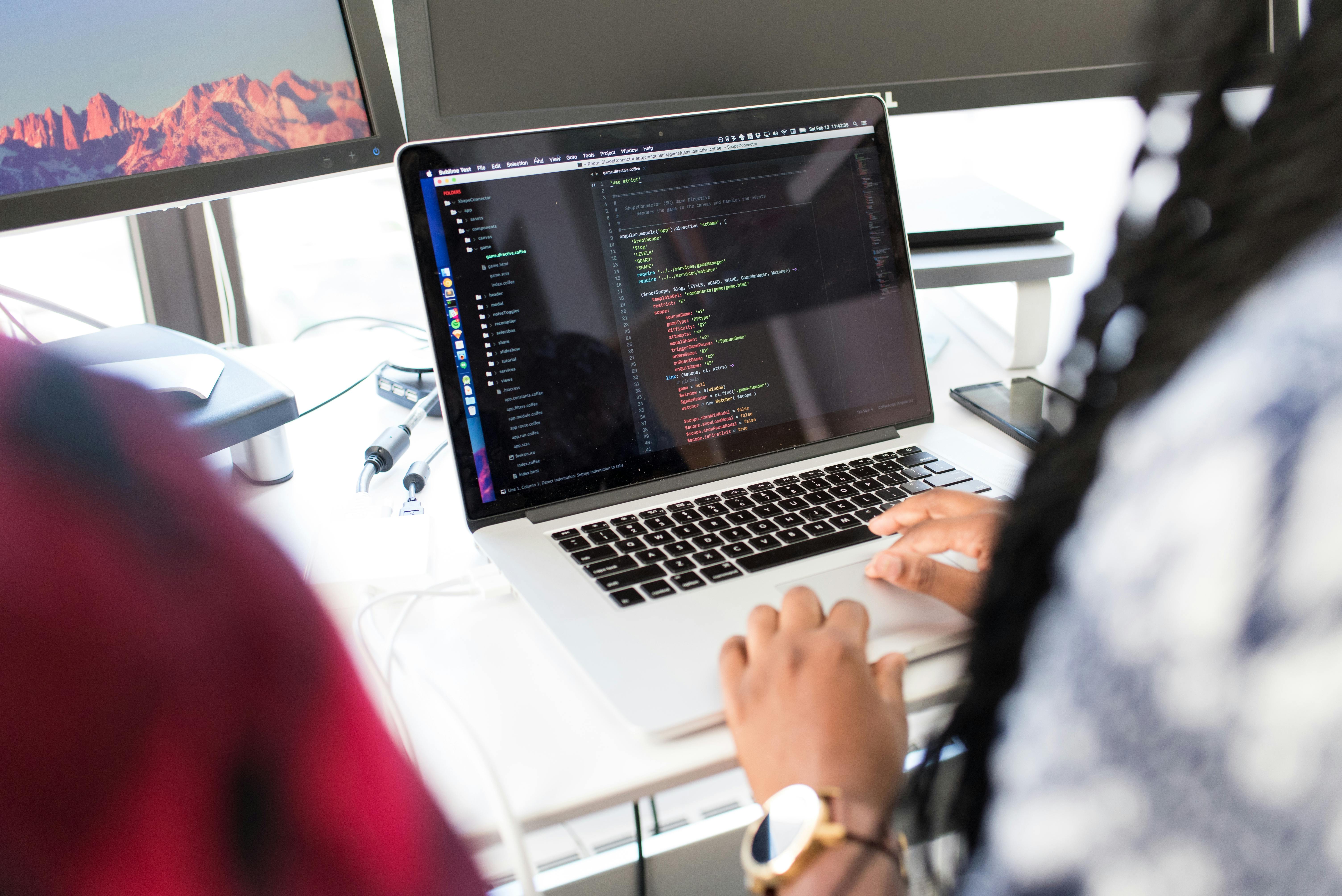
Social media and YouTube have amplified these milestones. Side‑by‑side demos comparing AI PCs to older laptops often highlight:
- Sub‑second latency for on‑device transcription and translation.
- Hours of generative workloads without exhausting the battery.
- Offline‑capable code assistants and creative tools.
Practical Use Cases: What AI PCs Enable Today
While some features still feel experimental, several categories already provide clear day‑one value.
Productivity and Knowledge Work
- Meeting intelligence: Real‑time transcription, language translation, and automatic action‑item extraction.
- Document understanding: Local summarization and question‑answering over large collections of PDFs and emails.
- Contextual email and messaging assistance: Drafting replies and generating reports using local context embeddings.
Software Development
- Local code completion: IDE plug‑ins that run quantized models for offline coding.
- Security‑sensitive analysis: Static analysis and code review using on‑device models — important for proprietary or regulated codebases.
- Developer experimentation: Ability to test and fine‑tune small models without cloud GPUs.
Media and Creativity
- Generative image editing: Inpainting, background replacement, and style transfer directly in photo apps.
- Video conferencing enhancements: Background blur, eye‑contact correction, noise suppression, and live captions.
- Audio enhancement: De‑reverberation, denoising, and voice‑style transformations in DAWs.
Recommended AI PC‑Ready Hardware and Accessories
For users considering upgrading to an AI‑capable laptop or enhancing their current setup, a few categories of products stand out.
- High‑performance AI laptops: Look for recent Intel or Qualcomm‑powered Windows laptops explicitly advertising NPU support and at least 16 GB of RAM to comfortably run local models.
- External NVMe SSDs: Storing local models can consume tens of gigabytes. A fast portable SSD such as the SanDisk 2TB Extreme Portable SSD provides ample, high‑speed storage for model files and datasets.
- USB‑C docking stations: Docking solutions like the Anker 777 Thunderbolt Docking Station help connect multiple monitors and peripherals, useful when building AI workflows that span coding, visualization, and conferencing.
While these accessories do not contain NPUs themselves, they help unlock the full potential of AI PCs by improving I/O, storage, and ergonomic productivity.
Challenges: Hype, Limitations, and Open Questions
Despite the excitement, AI PCs face several technical and strategic challenges.
Are AI Features Truly Useful?
A recurring thread across forums and social media is whether AI integrations are genuinely helpful or merely marketing. Common concerns include:
- Interface clutter: Copilot buttons and AI prompts appearing in every app without clear value.
- Quality of assistance: Local models may underperform compared with cloud‑scale LLMs, especially for nuanced tasks.
- Resource overhead: Background AI services that consume memory and CPU when not wanted.
Telemetry, Cloud Tie‑Ins, and Trust
Even when workloads run locally, users worry about:
- Telemetry and usage data being uploaded to cloud services.
- AI features that silently fall back to cloud inference when local models are insufficient.
- Lack of clear, user‑friendly controls to enforce local‑only processing.
Enterprises, in particular, demand strong guarantees around data residency and auditability before deploying AI PCs widely for sensitive workloads.
Performance and Memory Constraints
Consumer‑grade NPUs and integrated GPUs cannot yet match high‑end data‑center accelerators. This creates trade‑offs:
- Model size limits: Users often rely on 3–13B parameter models instead of 70B or larger.
- Throughput vs. latency: Keeping latency acceptable sometimes means restricting context length or batch size.
- Thermal constraints: Laptops must balance sustained AI workloads against fan noise and device temperature.
Strategic Uncertainties
The AI PC trend raises open questions that will shape the next decade:
- Will on‑device AI significantly reduce cloud AI spending, or will it mostly offload “edge‑friendly” workloads while complex reasoning remains in the cloud?
- How will Apple respond, given its strong on‑device ML story with the Neural Engine but more cautious generative AI branding?
- Will regulations around AI safety, explainability, and data protection impose new requirements on consumer AI hardware?
Developer and Power‑User Perspective
Among developers and enthusiasts, AI PCs are as much a programmable platform as they are consumer products.
- Open‑source tooling: Projects that compile or convert models for ONNX and NPU runtimes, often with aggressive quantization.
- Custom workflows: Chaining local models for retrieval‑augmented generation (RAG) over personal knowledge bases.
- Benchmark culture: Sharing latency, tokens‑per‑second, and power‑draw graphs for different model sizes and quantization schemes.

Discussions on Hacker News and X frequently compare local NPU performance against discrete GPUs, debating whether consumer NPUs can support “high‑quality local assistants” at acceptable speeds, or whether hybrid edge‑cloud approaches will remain the norm.
Enterprise Adoption: Security, Compliance, and Fleet Management
For organizations, AI PCs represent both an opportunity and an operational challenge.
Opportunities
- Data sovereignty: AI operations for confidential documents can remain inside the corporate perimeter.
- Bandwidth savings: Reduced dependency on cloud inference for repetitive, low‑risk tasks.
- Customized AI agents: Locally deployed, domain‑specific models for teams or departments.
Challenges
- Policy enforcement: Ensuring that end‑user settings do not inadvertently send sensitive data to third‑party clouds.
- Model lifecycle management: Keeping local models patched, updated, and aligned with corporate guidelines.
- Hardware diversity: Managing fleets with varying NPU capabilities and driver stacks.
Many enterprises are exploring hybrid architectures where lightweight tasks run locally while heavy analytics or cross‑user aggregation takes place in private or public clouds.
Conclusion: Toward a Hybrid Edge–Cloud AI Future
AI PCs mark a structural shift in personal computing. Instead of treating the laptop as a thin client for cloud AI, the industry is moving toward a hybrid model where intelligence is distributed:
- Edge: Fast, private, context‑rich inference and personalization on NPUs.
- Cloud: Heavy‑duty training, fine‑tuning, and large‑scale reasoning on GPU clusters.
Over the next few years, success will depend less on raw TOPS and more on holistic experience design: clear user controls over privacy, genuinely helpful AI behaviors, and efficient runtimes that make the most of limited power budgets.
Whether AI PCs ultimately become as ubiquitous as Wi‑Fi or fade into another marketing cycle will depend on how convincingly they solve real problems for users. Early evidence—from improved accessibility tools to offline‑capable creative workflows—suggests that on‑device generative AI is here to stay, even as the ecosystem continues to evolve rapidly.
Additional Resources and Best Practices for Users
To get the most from an AI PC while maintaining control over privacy and performance, consider the following best practices:
- Check AI settings: Review Windows and OEM control panels for options that restrict cloud fallback and telemetry.
- Monitor resource usage: Use built‑in performance tools to see when AI services are consuming CPU, GPU, or NPU cycles.
- Prefer reputable models: When running local open‑source models, prioritize versions with clear licensing, security reviews, and active maintenance.
- Stay updated: Keep firmware, drivers, and AI runtimes up to date to benefit from optimization and security patches.
For deeper dives, you can explore:
- Microsoft’s Windows AI documentation and feature overviews
- Intel’s AI and NPU architecture articles
- Qualcomm’s AI platform resources for PCs and edge devices
- ONNX Runtime for information on cross‑platform model deployment
References / Sources
Selected sources for further reading on AI PCs, NPUs, and on‑device generative AI:
- Engadget coverage of AI PCs and NPU benchmarks: https://www.engadget.com/tag/ai-pc/
- TechRadar AI PC and laptop reviews: https://www.techradar.com/computing/laptops
- Ars Technica deep dives on Windows AI and hardware: https://arstechnica.com/gadgets/
- The Verge PC and AI coverage: https://www.theverge.com/pc-reviews
- ONNX Runtime documentation: https://onnxruntime.ai/docs/
- Microsoft Windows AI platform overview: https://learn.microsoft.com/en-us/windows/ai/
- Qualcomm AI for PCs: https://www.qualcomm.com/news/onq
