
What Chernobyl’s Children Are Teaching Us About Radiation, DNA, and Generational Health
New research suggests that children of Chernobyl cleanup workers may carry subtle DNA changes linked to their parents’ radiation exposure, reviving questions about long-term nuclear risks while offering clearer guidance on what this means—and doesn’t mean—for families and public health.
Why DNA Mutations in Chernobyl Workers’ Children Matter Today
If you grew up hearing about Chernobyl, it may have felt like a distant, almost mythical disaster—grim photos, haunting documentaries, and debates about how safe nuclear energy can ever really be. Now, decades later, scientists are finally uncovering clearer evidence of how radiation exposure from that event may have affected not just the workers themselves, but their children.
For many people, this raises understandable questions: Can radiation damage be passed down through generations? What does this mean for people living near nuclear sites today? And how worried should we really be?
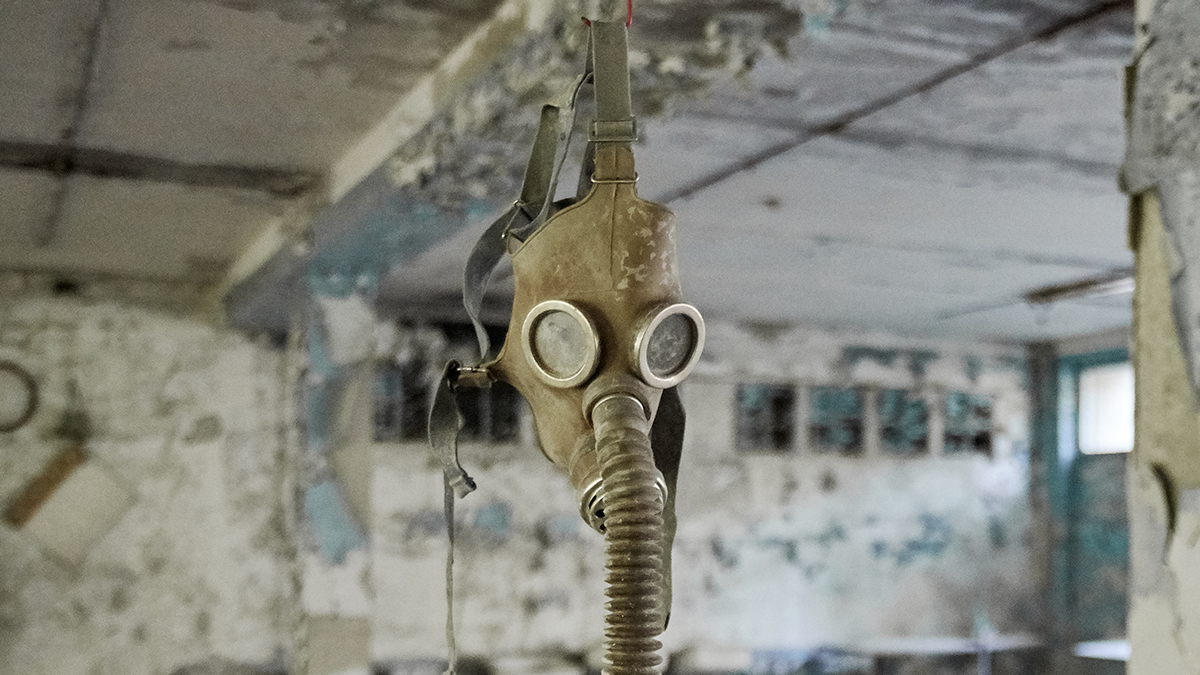
The Core Question: Can Radiation Damage DNA Across Generations?
Ionizing radiation (IR) is powerful enough to break DNA strands. After the 1986 Chernobyl nuclear disaster, thousands of workers—often called “liquidators”—were exposed while trying to contain the fallout. The big scientific and public health question since then has been:
- Does radiation exposure in parents cause detectable DNA mutations in their children?
- If so, are those mutations harmful—raising risks of cancer, birth defects, or other conditions?
- How large is that risk compared to everyday genetic variation and environmental influences?
Earlier research sometimes produced mixed or inconclusive answers. Some studies suggested little to no transgenerational effect; others found hints but not enough to be sure. The latest analysis, reported in outlets like ScienceAlert, adds new data and sharper tools to this long-running puzzle.
How Ionizing Radiation Damages DNA: A Quick, Clear Overview
To understand what’s happening in Chernobyl workers’ children, it helps to know what ionizing radiation actually does in the body.
- Ionizing radiation hits cells
IR (from nuclear fallout, for example) carries enough energy to knock electrons off atoms in our tissues. - DNA breaks and chemical changes occur
This can cause:- Single-strand or double-strand DNA breaks
- Base damage (altered “letters” in the genetic code)
- Chromosomal rearrangements (pieces swapped or lost)
- The body tries to repair the damage
Our cells have sophisticated DNA repair machinery. Most damage is fixed correctly, but:- Some breaks are misrepaired
- Some alterations slip through and become permanent mutations
- If germ cells are affected, changes may be passed on
When damage occurs in egg or sperm cells—and is not lethal to those cells—it can potentially be transmitted to the next generation.
“Ionizing radiation has always been present and is now an established part of modern medicine and industry. The health risks depend strongly on dose, exposure route, and the tissues affected.”
What New Research on Chernobyl Workers’ Children Is Showing
The new findings covered by ScienceAlert focus on DNA from children whose parents worked around Chernobyl and received measurable doses of ionizing radiation during the disaster’s aftermath. Using modern sequencing, researchers looked for:
- Increased rates of de novo mutations (new DNA changes not found in either parent)
- Patterns of damage known to be associated with ionizing radiation exposure
- Whether mutation types differed from those in children whose parents were not heavily exposed
The key takeaway emerging from these analyses is that there is now stronger evidence of a transgenerational signal—a detectable imprint of radiation in the DNA of some children of highly exposed workers.
Before and After: How Genetic Tools Changed Our View
One reason earlier studies often seemed inconclusive is that, in the 1990s and early 2000s, we simply lacked the technology to see subtle patterns in the genome. Researchers relied on:
- Crude chromosomal tests (karyotyping)
- Limited markers (microsatellites, a handful of genes)
- Small sample sizes and uncertain dose reconstructions
Today, whole-genome sequencing and sophisticated bioinformatics can:
- Count every new mutation in a child’s genome with high precision
- Identify mutational signatures characteristic of ionizing radiation
- Compare large groups of exposed vs. non-exposed families
When we compare the “before” era (low-resolution genetics) to the “after” era (high-resolution sequencing), the picture of Chernobyl’s legacy becomes more nuanced—but also more reliable.
A Human Story Behind the Data (Composite Case)
To protect privacy, researchers and clinicians often describe composite cases—examples that blend features from multiple real families. Here is one such composite:
A man in his early 20s worked as a Chernobyl liquidator in the late 1980s. He spent several weeks near the reactor, often with incomplete protective equipment. Years later, he and his partner had two children. Neither child showed obvious birth defects or developmental delays, but the family lived for decades with quiet anxiety: “Did my work there hurt my kids?”
When researchers later invited families like this one to participate in DNA studies, many agreed—not just out of curiosity, but in the hope of clarity. Sequencing sometimes showed a slightly elevated number of new mutations in the children, often matching the patterns linked to ionizing radiation.
For families, the reaction was complex. Some felt relief that the risk appeared smaller than they had feared; others felt a renewed grief, knowing that the disaster truly touched the next generation at the molecular level—even if the clinical impact remains uncertain.
“Knowing there are some changes doesn’t mean my children are doomed. But it does confirm that what we lived through had a cost we’re still counting.”
What Does This Mean for Health Risk? Separating Fear from Facts
It is understandable to feel alarmed when you hear that DNA damage has been found in the children of exposed workers. But science points to a more balanced picture.
What the evidence suggests
- There is a detectable increase in some DNA mutations
Children of highly exposed parents can show a modest elevation in new mutations compared with controls. - The clinical impact is still being clarified
So far, large outbreaks of severe genetic disease linked directly to Chernobyl workers’ children have not been conclusively documented at the scale some feared. - Baseline risk still matters
Every child, everywhere, naturally carries dozens of new mutations that neither parent had. Radiation adds to that burden, but does not create it from scratch.
What the evidence does not support
- Claims that all descendants of exposed workers are inevitably sick or disabled
- Predictions of limitless, growing damage across many future generations
- Equating low-dose environmental or medical exposures with high-dose disaster scenarios
How Scientists Study Transgenerational DNA Effects
Understanding whether radiation affects the next generation requires careful study designs to avoid confusing random variation with real signals.
- Recruit families
Researchers enroll parents who were exposed (e.g., Chernobyl workers) and their children, plus comparison families without such exposure. - Measure or reconstruct dose
Where possible, scientists use dosimeters, work histories, and environmental records to estimate how much radiation parents received. - Sequence whole genomes
DNA from parents and children is sequenced, allowing identification of de novo mutations—changes present in the child but not in either parent. - Analyze mutation types and patterns
Advanced algorithms search for:- Mutation counts (how many new mutations)
- Mutation spectra (what types and where in the genome)
- Signatures typical of ionizing radiation
- Control for confounders
Factors like parental age, smoking, and background radiation can also influence mutation rates and must be accounted for.
Common Obstacles in Understanding Radiation and Genetics
Many people struggle to make sense of nuclear risk and genetic inheritance, often for very human reasons. Some of the most common obstacles include:
- Emotional weight of nuclear disasters
Images of Chernobyl or Fukushima evoke fear and grief that can make neutral risk assessment difficult. - Misleading headlines
Media summaries may overstate or oversimplify nuanced findings, framing them as either “no risk at all” or “catastrophic for generations.” - Complex genetics language
Terms like “mutational signatures,” “de novo variants,” and “germline transmission” can feel alien, widening the gap between experts and the public. - Uncertainty and waiting
Because effects may unfold over decades, families live with ambiguity, which is psychologically draining.
Practical Steps for Families With Radiation Exposure History
If your family has a history of working in nuclear facilities, participating in cleanup operations, or living near a major radiation event, there are evidence-informed ways to care for your health without becoming overwhelmed.
- Document your exposure history
Keep a written record of:- Where and when exposures occurred
- Any official dose records or medical notes
- Known incidents (e.g., Chernobyl, other industrial accidents)
- Share this history with your clinician
A primary care physician or internist can:- Review relevant cancer screening guidance
- Refer you to genetics or radiation medicine specialists if needed
- Help interpret available risk estimates in plain language
- Consider genetic counseling in specific cases
If there is:- A cluster of unusual cancers or congenital conditions in close relatives
- Very high, documented exposure
- Explain what testing can and cannot show
- Discuss reproductive options and screening strategies
- Focus on modifiable risk factors
Even if past radiation exposure cannot be changed, many health risks can be reduced through:- Not smoking or vaping
- Managing blood pressure, cholesterol, and blood sugar
- Staying physically active and maintaining a balanced diet
- Use reliable information sources
When reading new studies or headlines, check organizations such as:

Implications for Public Health and Nuclear Policy
Beyond individual families, research on DNA mutations in Chernobyl workers’ children carries important implications for how societies manage nuclear technology and disaster response.
- Stronger worker protections
Evidence of transgenerational effects reinforces the need for strict occupational dose limits, robust monitoring, and effective protective equipment. - Transparent communication
Clear, honest messaging about risks—neither minimizing nor exaggerating them—helps maintain public trust during nuclear incidents. - Long-term health surveillance
Monitoring affected communities over decades can detect late-emerging health trends and guide resource allocation. - Better disaster planning
Lessons from Chernobyl and subsequently from Fukushima inform evacuation protocols, food safety measures, and mental health support in future events.
What Leading Research Bodies Say About Radiation and Inherited Effects
Several international bodies have periodically reviewed data from Chernobyl and other exposures, including atomic bomb survivors and medical radiation cohorts.
- UNSCEAR
Historically reported limited evidence of major genetic effects in human descendants of exposed populations, while acknowledging methodological limits and calling for more genomic research. - WHO and IAEA
Emphasize that health risks rise with dose and that protecting reproductive-age workers is a key priority in radiation safety frameworks. - Recent genomic studies
Are now providing more sensitive tools that may detect subtle effects missed in earlier analyses, prompting ongoing reassessment rather than a once-and-for-all conclusion.
“Although hereditary effects have been clearly demonstrated in animal experiments, direct evidence in human populations has been more difficult to establish and requires continued, careful study with modern methods.”
Key Takeaways: What You Should Remember
When you step back from the detailed genetics and sometimes alarming headlines, a few grounded messages stand out.
- Chernobyl’s legacy is real, but nuanced
New data supports a transgenerational DNA effect in some children of highly exposed workers, but the scale and clinical consequences are still being mapped. - Radiation risk is strongly dose-dependent
High, acute exposure (as in disasters) is very different from low-level background or most medical imaging. - Most mutations are silent
Not every detected DNA change results in disease; our genomes naturally carry many harmless or low-impact variants. - Support, not stigma, is needed
Families affected by nuclear events deserve medical follow-up, mental health support, and social understanding—not blame or fatalism. - Science is still evolving
As genomic technologies improve, conclusions will be refined. Staying updated through credible sources is more realistic than expecting one final, unchanging answer.
Moving Forward: Staying Informed, Grounded, and Compassionate
The story of DNA mutations in the children of Chernobyl workers is not just a tale of broken molecules—it is a story about how societies weigh risk, care for those who do dangerous work, and learn from hard-won experience.
If you are personally connected to nuclear exposure, your concerns are valid, and you deserve clear, respectful information. If you are simply curious or worried about radiation in general, remember that context and dose matter immensely, and that scientific understanding is becoming more precise year by year.
A practical next step is to:
- Talk with your healthcare provider about any specific exposure history
- Bookmark one or two trusted radiation health resources (WHO, UNSCEAR, IAEA)
- Approach new headlines with curiosity and healthy skepticism, not panic
As research continues, our understanding of Chernobyl’s generational impact will sharpen. In the meantime, combining empathy, evidence, and thoughtful health choices remains our best path forward.
