
Paradise Season 2’s Quantum Twist: Breaking Down Vulture’s “Just the First Act” Recap
Paradise season 2 has officially crossed the line from “weird bunker thriller” to “please hand me a whiteboard and red string.” Vulture’s recap, “Just the First Act”, tracks the moment the show leans hard into quantum entanglement, time-bending consequences, and the feeling that every character has already lived this moment before—maybe more than once.
With Samantha Redmond warning, “It was never just about the bunker,” the series reframes its central mystery: the underground shelter isn’t an endgame, it’s a nexus. This recap doesn’t just summarize the plot; it hints that Paradise is quietly joining the ranks of genre TV that use sci-fi logic to question memory, identity, and who actually gets to reset the future.
From Bunker Drama to Quantum Thriller
Vulture positions this episode as a hinge point: the dots are finally connecting, motives are sharpening, and the show stops flirting with sci-fi and fully commits. Think of it as the moment Lost went from island mystery to time-flash epic, or when Dark casually introduced bootstrap paradoxes over dinner.
Paradise So Far: Why Season 2 Feels Different
To make sense of Vulture’s recap, you need to know where Paradise started. Season 1 played like a contained speculative thriller: a powerful organization, a subterranean bunker, and a group of people whose lives have clearly been curated for reasons no one fully understands. It flirted with dystopian tech themes—who owns your future, what would you trade for safety—but mostly stayed in mystery mode.
Season 2, and particularly this episode, shifts that energy. The bunker isn’t just a panic room; it’s basically a lab where reality itself is malleable. Vulture teases that motifs we thought were symbolic—recurring objects, déjà vu conversations, familiar camera framings—might actually be evidence of overlapping timelines or entangled outcomes.
“It Was Never Just About the Bunker”
Vulture hangs a lot of interpretive weight on Samantha Redmond’s line:
“It was never just about the bunker.”
It reads like a mission statement for the season. The bunker is the MacGuffin, sure, but this episode reframes it as a visible symptom of a much larger experiment—one that’s less about survival and more about control. Who’s orchestrating these timelines? Who remembers the previous iterations? And who’s being reset without consent?
The recap leans into that shift, treating the bunker reveal less as “mystery solved” and more as “welcome to level two.” It’s the kind of narrative escalation that either locks in sci-fi fans for good or completely loses anyone who just wanted a twisty thriller about rich people and secret facilities.

From Speculative Thriller to Quantum Entanglement
According to Vulture, this episode is where the series starts talking in the language of quantum fiction: entangled fates, overlapping possibilities, and events that seem to echo across realities. It’s less about gadgets and more about consequences, borrowing ideas that have powered everything from Primer to Everything Everywhere All at Once.
- Patterns become proof: Recurring choices and mirrored scenes look less like stylistic flair and more like data points.
- Time feels elastic: Conversations hint that certain characters have a double exposure memory of what “already happened.”
- Morality gets messier: If outcomes can be re-run, what does accountability even look like?
The recap doesn’t drown readers in physics jargon, but it’s very clear: Paradise is now playing in quantum territory. That move puts it in conversation with other prestige sci-fi shows that use scientific metaphors to talk about grief, regret, and the fantasy of doing life over.

Character Arcs Under Pressure
One of the stronger points in Vulture’s coverage is how it connects the sci-fi escalation to character development, instead of treating them as separate threads. As the episode pulls us deeper into the bunker’s real function, relationships start to look like experiments, too.
- Samantha Redmond as reluctant prophet: Her line about the bunker signals that she’s either seen behind the curtain or played this scenario before. Either way, she’s suddenly the character we measure the show’s honesty against.
- The true believers vs. the skeptics: Vulture points out how loyalties are shifting along belief lines—who buys into the system, who wants to burn it down, and who just wants to survive the night.
- Memory as a weapon: Some characters cling to their memories as proof of reality; others treat forgetting as mercy. In a quantum framework, both positions are dangerous.
The recap suggests this episode is less about introducing new players and more about recontextualizing the ones we already know. Everyone feels a bit more haunted, like they’re aware—on some level—that this isn’t the first time they’ve made these choices.
Visual Style, Pacing, and How the Episode Feels
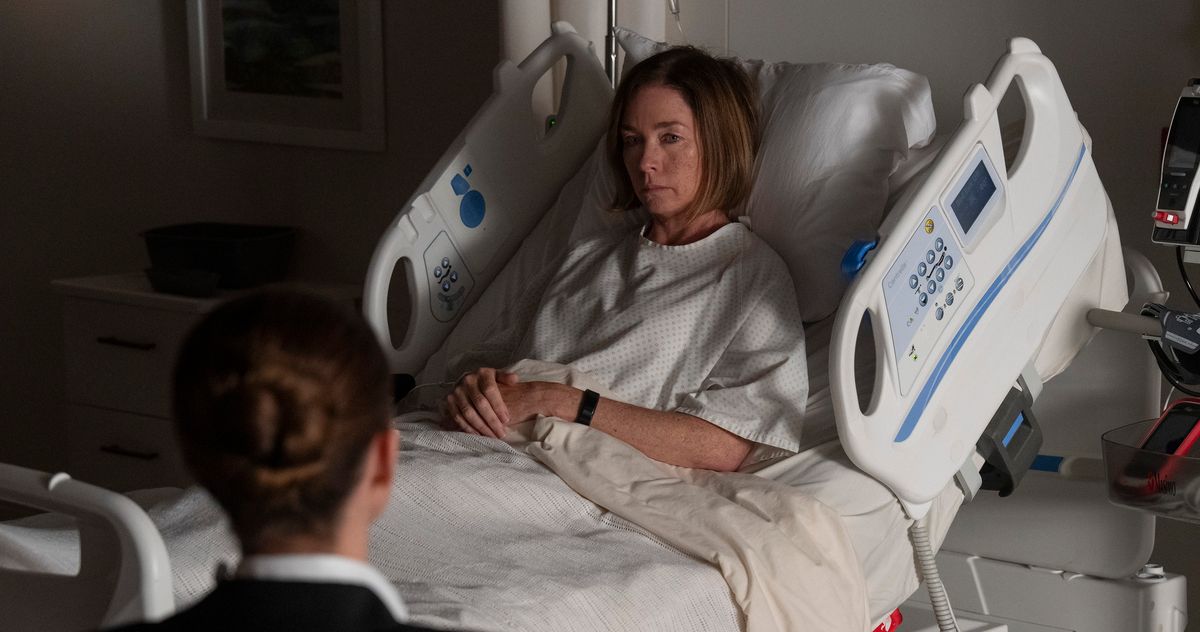
Beyond plot, Vulture’s recap implicitly nods to the episode’s craft. The return to the bunker tightens the visual palette: stark lighting, claustrophobic framing, and those slow, suspicious push-ins that suggest the camera knows more than we do.
The pacing, as described, is transitional—more connective tissue than grand payoff. That lines up with the recap’s title, “Just the First Act.” This isn’t the fireworks; it’s the moment you realize the show has been quietly stacking dynamite under every casual conversation all season long.
Strengths and Weaknesses in “Just the First Act”
Vulture’s recap reads like a cautiously impressed nod: this is the episode where Paradise proves it’s aiming higher than a one-season puzzle box. But that ambition comes with trade-offs.
- Strength – Thematic clarity: The episode finally signals what the show is really about: not just survival, but who gets to rewrite reality and why.
- Strength – Atmosphere: The bunker setting is repurposed from mystery prop to thematic anchor, and the tone matches that escalation.
- Weakness – Exposition load: As the recap hints, viewers are asked to absorb a lot of new information and implications without much immediate payoff.
- Weakness – Risk of alienation: The jump from “speculative thriller” to “quantum entanglement” might feel like a bait-and-switch if you came only for human drama and conspiracy vibes.
That said, the recap frames these weaknesses as growing pains—the cost of trying to earn a place alongside more ambitious sci-fi dramas instead of staying safely in mystery-of-the-week territory.
How Paradise Fits Into the Modern Sci-Fi TV Landscape
Culturally, Paradise is arriving in a crowded field of “prestige sci-fi” where concepts like multiverses and quantum entanglement have moved from physics classrooms to TikTok explainers. Vulture’s recap implicitly places the show in conversation with that trend: it’s not just about what happens in the bunker, but what the bunker says about power, memory, and who gets a second chance.
In a post-Black Mirror, post-Dark TV world, audiences are more willing to follow high-concept storytelling—as long as the emotional throughline stays legible. This recap suggests Paradise is still balancing both, but we’re now firmly in the phase where attention to detail is mandatory. Casual viewing is no longer an option.
Watch the Journey Unfold
If you’re reading recaps before catching up—or deciding whether to commit—this episode is the one that will tell you if Paradise fits your taste. The tone, the quantum pivot, the bunker-as-lab twist: it’s all on display here.
For an official look at the series’ vibe, check out the Paradise trailer and episode clips on the show’s streaming platform and YouTube channel. They capture the moody bunker visuals and the tightly wound performances that Vulture’s recap is responding to.
Verdict: A Promising “First Act” With Quantum Ambition
Taken as a whole, Vulture’s “Just the First Act” recap frames this Paradise episode as a deliberate pivot, not a detour. The bunker is revealed as a front for something stranger and more ethically fraught, the sci-fi concepts step into the spotlight, and character arcs are redefined by who remembers what—and who’s allowed to forget.
It’s not flawless; the info-dump risk is real, and the episode clearly cares more about setup than catharsis. But if you’re the kind of viewer who enjoys connecting narrative dots and arguing over quantum metaphors in group chats, this is where Paradise stops being background TV and starts feeling like an event.
“Just the First Act” lives up to its title: not the climax, but the moment you realize the story you thought you were watching was only the prologue.
