
Measles at Utah State Wrestling: What Parents, Athletes, and Coaches Need to Do Now
Multiple attendees at Utah’s state wrestling championships have been diagnosed with measles, and health officials report the virus is now spreading in schools and extracurricular activities across the state. This article explains what’s happening, how measles spreads, who is most at risk, and the practical steps families, athletes, and coaches can take right now to stay safe and help stop further spread.
Why the Utah measles cases deserve your attention
If you’re a parent, athlete, coach, or school staff member, news like “measles at a state wrestling tournament” can feel alarming—and a little unreal. After all, many people assumed measles was something from “the past.”
Yet as of February 2026, Utah health officials confirm that:
- Several people who attended last weekend’s state wrestling championships have tested positive for measles.
- The virus is now linked to exposures in schools and at other extracurricular events across different parts of the state.
- Public health teams are conducting contact tracing and notifying those who may have been exposed.
This doesn’t mean everyone needs to panic, but it does mean we need to respond thoughtfully, especially around vaccination, symptom awareness, and protecting vulnerable people.
What we know so far about the Utah state wrestling measles cases
The Utah Department of Health and Human Services (UDHHS) reported that multiple people who attended the state wrestling championships in Salt Lake City last weekend were later confirmed to have measles. Because measles is contagious before the rash appears, it’s likely that others were unknowingly exposed during the event.
According to public health updates as of late February 2026:
- Cases have been identified in more than one county, suggesting community spread.
- Exposure sites include:
- The state wrestling tournament venue and possibly associated hotels or restaurants.
- Schools where infected students attend classes.
- Other extracurricular activities (gyms, practices, or competitions) in Utah.
- Health officials are urging anyone who attended the tournament—or who has been notified as a contact—to check their vaccination status and watch for symptoms.
“Because measles is so contagious, even a single case at a large event can lead to outbreaks, particularly in communities with lower vaccination coverage.”
— Infectious disease specialist, summarizing CDC guidance
Measles 101: What it is, how it spreads, and why it matters
Measles is a highly contagious viral illness. Before widespread vaccination, it caused millions of infections and hundreds of deaths each year in the United States. Thanks to the measles-mumps-rubella (MMR) vaccine, measles was declared eliminated from the U.S. in 2000—but it can still be reintroduced through travel and spread in pockets of low vaccination.
How measles spreads
- Through tiny droplets in the air when an infected person breathes, coughs, or sneezes.
- The virus can linger in the air and on surfaces for up to 2 hours after an infected person leaves.
- About 9 out of 10 unvaccinated people who are exposed will become infected.
Common measles symptoms
- High fever (often 101°F–104°F / 38.3°C–40°C).
- Cough, runny nose, and red, watery eyes.
- Tiny white spots inside the mouth (Koplik spots).
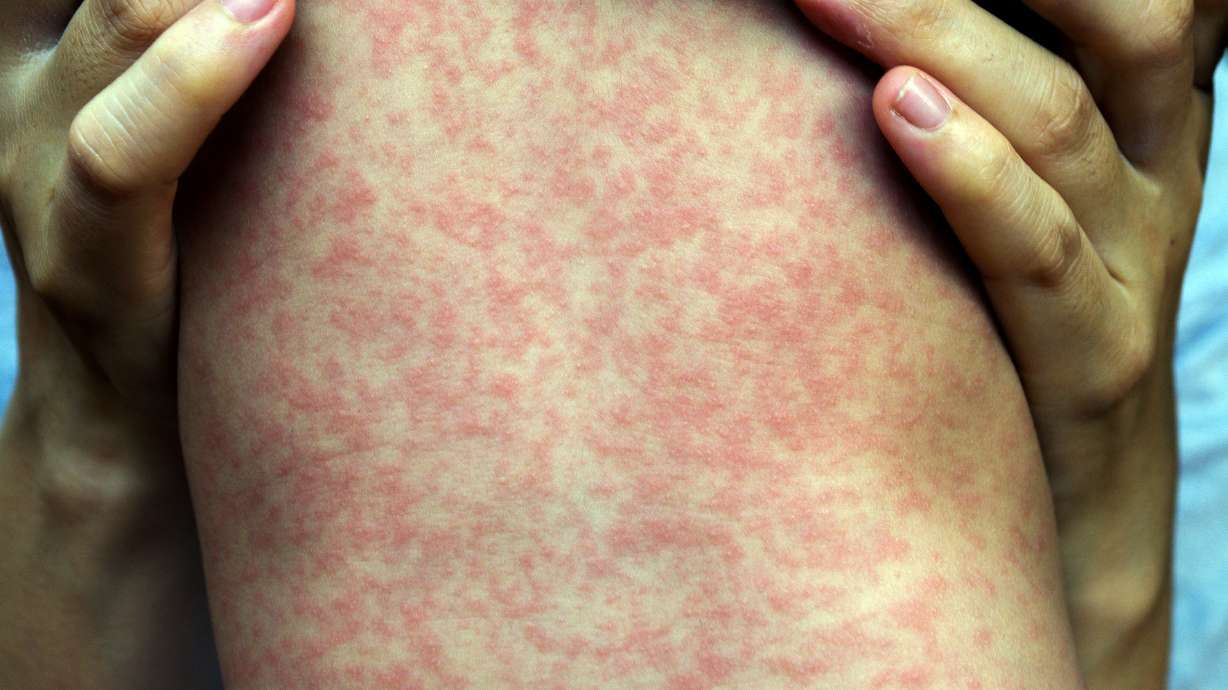
- Red, blotchy rash that usually starts on the face and spreads downward.
Complications can include ear infections, pneumonia, and—in rare but serious cases—brain swelling (encephalitis) and death, especially in very young children and those with weakened immune systems.
If you attended the Utah state wrestling tournament: What to do now
If you, your child, or someone you live with attended the state wrestling championships—or you’ve been notified of possible exposure—take the following steps. These are based on current public health guidance and may be adjusted as Utah officials release more information.
1. Check your (and your child’s) MMR vaccination status
- Children: The CDC recommends:
- 1st dose of MMR at 12–15 months
- 2nd dose at 4–6 years
- Teens and adults: Most people born after 1956 need at least one documented dose; certain higher-risk groups (like healthcare workers or international travelers) are advised to have two.
If you can’t find records, call your clinic or pediatrician. In many cases, it’s safe to repeat the vaccination if records are missing—your healthcare provider can help you decide.
2. Watch for symptoms for 21 days after exposure
Measles symptoms usually appear about 7–14 days after exposure but can take up to 21 days. During this period:
- Monitor for fever, cough, runny nose, red eyes, or rash.
- Limit close contact with high-risk individuals (infants, pregnant people, those with weak immune systems) if you’re unsure of your immunity.
3. Call ahead before going to a clinic or ER
If you or your child develop symptoms that could be measles and you were at the tournament or another exposure site:
- Call your doctor, urgent care, or ER before arriving.
- Explain that you may have been exposed to measles and describe symptoms.
- Follow their instructions—they may arrange a separate entrance or isolation area to protect other patients.
What schools, teams, and coaches in Utah should know
Because the current cases are linked to schools and extracurricular events, principals, athletic directors, and coaches are on the front lines of response. While public health authorities guide the overall approach, there are practical steps teams can take right away.
Immediate steps for school and athletic leaders
- Review immunization requirements and records in cooperation with your district and local health department.
- Communicate clearly with families about:
- Known exposure dates and locations (as shared by health officials).
- Signs and symptoms of measles.
- Policies around staying home when sick or after exposure.
- Encourage sick athletes or students to stay home—especially those with fever and rash.
- Coordinate with health departments on any need for short-term exclusion of unvaccinated students during the outbreak, which is a standard public health measure.
“Removing unvaccinated students from school during a measles outbreak isn’t about punishment—it’s about protecting them and others from a virus that can be very serious.”
— Public health nurse working with school districts
MMR vaccine: How much protection does it offer?
Research over decades shows that the MMR vaccine is highly effective at preventing measles:
- 1 dose: about 93% effective against measles.
- 2 doses: about 97% effective.
That means a fully vaccinated person has a small chance of getting measles, but it’s far less likely—and if they do get infected, the illness is often milder and less likely to cause complications.
Who may need urgent vaccination after exposure?
Utah health officials may recommend post-exposure vaccination for some people who are not fully immunized, especially if:
- The exposure was within the last 72 hours.
- They are at higher risk and medically eligible for the vaccine.
Others, such as pregnant people or those with severely weakened immune systems, may instead need a different form of protection called immune globulin. This decision must be made with a healthcare professional.
Common worries and obstacles—and how to navigate them
It’s normal to feel conflicted or overwhelmed when your family is suddenly part of an outbreak, especially if you’ve had questions about vaccines or your child is in the middle of a sports season.
“My teen wrestler feels fine—do we really need to keep them home?”
Measles is contagious before the rash starts and before some people feel very sick. If a health department or school nurse has advised temporary exclusion due to exposure or lack of vaccination, it’s not about punishing your child—it’s about stopping silent spread.
“We’re worried about vaccine side effects.”
The MMR vaccine has been used for decades and is extensively studied. Like any medical intervention, it can have side effects, but serious reactions are rare compared with the complications of measles itself. A thoughtful, one-on-one conversation with a trusted clinician can help weigh your family’s specific risks and benefits.

“We’ve missed doses or are unsure about our records.”
- Ask your current or previous clinic for records.
- Check state immunization registries if available.
- If records can’t be found, your provider can:
- Order a blood test to check immunity, or
- Recommend catching up on MMR doses (it’s generally safe to repeat).
Before and after strong vaccination: How outbreaks change
History gives a clear “before and after” picture of what happens when communities maintain high vaccination coverage.
Before high MMR coverage
- Measles infected an estimated 3–4 million Americans each year.
- Hundreds of deaths annually.
- Regular school and community outbreaks.
After high MMR coverage
- Measles declared eliminated in the U.S. in 2000.
- Most years see only small, contained outbreaks when the virus is imported.
- Outbreaks are concentrated in areas with lower vaccination rates.
A brief case example: How one team handled a measles scare
A few seasons ago in another state, a high school basketball team faced a measles exposure after a regional tournament. While every situation is different, their experience highlights some practical lessons.
When one player was diagnosed after returning home, the health department:
- Worked with the school to identify teammates, classmates, and bus contacts.
- Quickly reviewed vaccination records.
- Advised a small number of unvaccinated students to stay home temporarily.
Parents were understandably anxious about missed games and school, but open communication from coaches and nurses helped. Most students returned to normal activities within a couple of weeks, and no additional cases occurred on the team. The key factors were:
- High overall vaccination coverage.
- Fast public health response.
- Families willing to cooperate with short-term inconvenience.
While outcomes can’t be guaranteed, the Utah wrestling situation can benefit from the same principles: vaccination, rapid communication, and community cooperation.
Protecting those at highest risk during the Utah measles outbreak
Some people cannot receive the MMR vaccine or may not respond as strongly, including:
- Infants younger than 12 months.
- People with certain immune system problems or on immune-suppressing medications.
- Some pregnant individuals (depending on timing and medical advice).
These are the people most likely to experience serious complications if they catch measles. Protecting them is a community effort.
Staying informed: Reliable sources for Utah measles updates
Outbreak information can change quickly. To stay up to date and avoid misinformation:
- Follow official updates from the Utah Department of Health and Human Services website and social channels.
- Check school or district messages for location-specific guidance.
- Use national resources for background information:
Be cautious about advice from anonymous social media accounts, forums, or unverifiable sources—especially if they dismiss measles as “no big deal” or promise miracle cures. Measles is preventable, but it is not trivial.
Moving forward with care, not panic
The measles cases linked to Utah’s state wrestling tournament are understandably unsettling. At the same time, you have powerful tools at your disposal: vaccines, good information, and a public health system experienced in containing outbreaks.
If you or your child attended the tournament—or live in a community now affected—your next steps are straightforward:
- Confirm vaccination status with your healthcare provider.
- Watch for symptoms for 21 days after any known exposure.
- Call ahead before seeking in-person care for possible measles.
- Follow school and health department guidance, even when it’s inconvenient.
None of this guarantees a perfect outcome, and it’s okay to feel worried or frustrated. But every small, practical step you take—getting records, scheduling a vaccine, keeping a mildly sick child home from practice—helps protect not just your family, but your teammates, classmates, and neighbors across Utah.
If you’re unsure what to do next, make one call today: reach out to your doctor, pediatrician, or local health department and ask how the current measles situation in Utah applies to your family. You don’t have to navigate this alone.
