
How AI‑Designed Proteins Are Rewriting the Rules of Chemistry and Biology
This article explains how modern deep learning models build on breakthroughs like AlphaFold to create new proteins from scratch, how these tools are used in pharma, green chemistry, and synthetic biology, what technologies power them, and which challenges—scientific, ethical, and practical—must be solved for this revolution to be safe and sustainable.
AI‑driven protein design has rapidly evolved from a niche research topic to a central pillar of modern life sciences and chemical engineering. Instead of waiting for evolution to reveal useful proteins, researchers now compute entirely new sequences that fold into novel, functional structures. This shift—from discovery to design—has profound implications for drug development, industrial catalysis, and synthetic biology.
Building on deep learning advances such as DeepMind’s AlphaFold protein structure prediction and newer protein‑specific generative models, scientists can now propose bespoke enzymes and binding proteins in silico, then synthesize and test them in the lab. These workflows compress what once took years into weeks or even days.
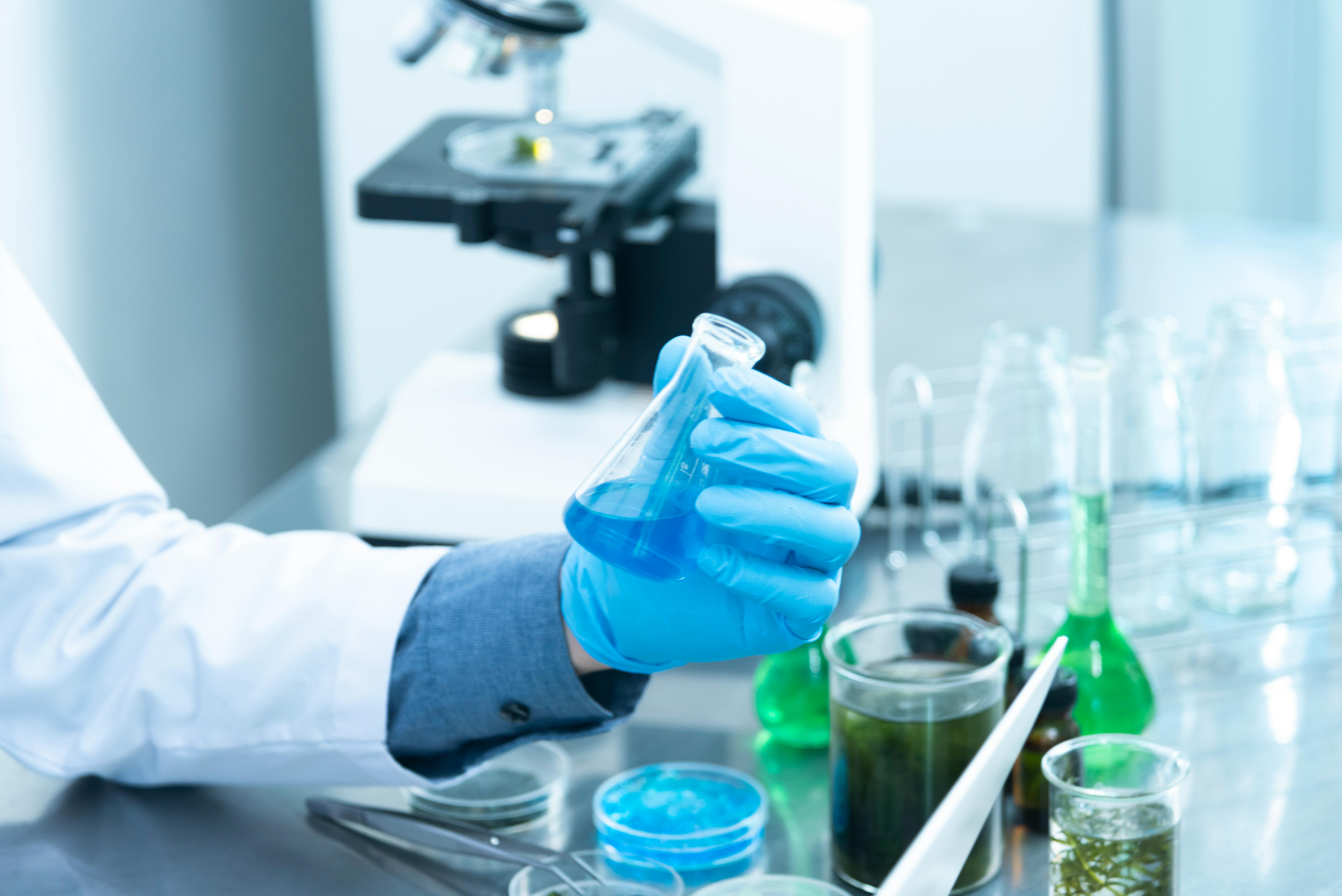
Mission Overview: Why Design Proteins from Scratch?
Proteins are the molecular machines of life: receptors, antibodies, ion channels, and—crucially—enzymes, which catalyze most biochemical reactions. Nature’s catalog of proteins is vast but limited to what evolution has explored. AI‑based protein design aims to go beyond that catalog by:
- Creating de novo proteins that do not exist in nature but are predicted to be stable, soluble, and functional.
- Engineering custom catalytic sites that accelerate specific reactions of interest to chemists and industry.
- Building optimized binding interfaces for drugs, metabolites, or industrial substrates.
- Integrating new proteins into synthetic metabolic pathways that convert cheap feedstocks to valuable products.
“We’re no longer just reading the ‘book of life’—we’re starting to write new chapters.” — David Baker, Institute for Protein Design
Background: From AlphaFold to Generative Protein Design
The recent boom in AI‑designed proteins has roots in decades of structural biology and bioinformatics, but several key breakthroughs catalyzed the current wave:
- AlphaFold and AlphaFold2 (2018–2021): DeepMind showed that deep learning could predict protein structures from amino‑acid sequences with near‑experimental accuracy, dramatically improving our understanding of sequence–structure relationships.
- RoseTTAFold and open ecosystems: Parallel work from academic labs, especially the Baker lab, produced open tools like RoseTTAFold that democratized advanced structure prediction.
- Generative models for proteins (2021–2025): Transformer‑based large language models (LLMs) adapted to protein sequences (e.g., ESM, ProGen, ProtGPT2, Evoformer‑style models) and diffusion models for 3D backbones made it possible to generate realistic but novel proteins.
- End‑to‑end design–build–test loops: Integration with DNA synthesis, high‑throughput screening, and robotics enabled rapid experimental validation of AI‑designed candidates.
These developments changed the field’s mindset. Instead of asking “What structure does this sequence fold into?” researchers increasingly ask “Which sequence will fold into the structure and function we want?”
Technology: How AI Designs De Novo Proteins and Enzymes
Modern AI‑driven protein design stacks several model classes and computational techniques into a coherent workflow. At a high level, there are four core capabilities:
- Sequence modeling
- Structure generation
- Function and fitness prediction
- Iterative optimization and filtering
1. Protein Language Models (Sequence‑First Design)
Protein language models treat amino‑acid sequences like sentences and learn the “grammar” of functional proteins. Architectures include:
- Transformers trained on millions of natural sequences (e.g., ESM, ProGen).
- Masked‑token models that infer missing residues given context, capturing evolutionary constraints.
- Autoregressive models that generate full sequences residue‑by‑residue.
These models can:
- Generate “natural‑like” de novo sequences.
- Score candidate sequences for plausibility or “fitness.”
- Suggest mutations that maintain fold while tuning properties such as stability or binding.
2. Diffusion and Geometric Deep Learning (Structure‑First Design)
A powerful complementary strategy is to design structures directly and then infer sequences that will fold into those structures:
- 3D diffusion models generate protein backbones as point clouds or distance maps, refining noisy initial structures into realistic folds.
- Equivariant graph neural networks (GNNs) respect 3D rotational and translational symmetries, allowing accurate modeling of side‑chain interactions and binding sites.
- Inverse folding models take a target backbone and output sequences likely to adopt that structure.
This “structure‑first” paradigm is especially useful for:
- Designing binding proteins around a known target surface, such as a viral spike protein.
- Creating scaffolds that position catalytic residues in precise geometries for de novo enzymes.
3. Function Prediction and Multi‑Objective Optimization
Once candidates are generated, AI models predict properties such as:
- Thermodynamic stability and solubility.
- Binding affinity to targets (via docking, ML‑scored complexes, or co‑design models).
- Enzymatic turnover proxies like transition‑state stabilization or active‑site geometry.
- Immunogenicity and developability for therapeutic proteins.
In practice, design is framed as a multi‑objective optimization problem, balancing, for example:
- High activity vs. high stability.
- Strong binding vs. low immunogenicity.
- High catalytic efficiency vs. simple expression and purification.
4. Closed‑Loop Design–Build–Test Automation
The most advanced labs and startups now operate closed‑loop platforms where:
- AI models propose thousands of sequences.
- DNA synthesis and automated cloning express proteins in microbes or cell‑free systems.
- High‑throughput assays measure activity, stability, or binding.
- Results feed back into the AI as new training data, improving subsequent designs.
“AI is most powerful when it is tightly integrated with experiment, creating a virtuous cycle of prediction and measurement.” — Frances Arnold, Nobel Laureate in Chemistry
Scientific Significance: Rethinking Sequence–Structure–Function
AI‑designed proteins do more than deliver specific applications; they challenge fundamental assumptions in molecular biology and evolution.
1. Exploring New Regions of Protein Space
Natural evolution has sampled only a vanishingly small fraction of all possible amino‑acid sequences. Yet AI models trained on known proteins can interpolate and extrapolate into novel sequence space, generating functional folds that evolution never visited.
This suggests that:
- Functional proteins may be more abundant in sequence space than previously thought.
- Evolutionary pathways were constrained by historical contingencies, not just biophysical necessities.
2. Testing Theories of Protein Evolution
By systematically exploring novel sequences and measuring their fitness, researchers can:
- Probe the ruggedness of fitness landscapes.
- Quantify how stability, activity, and evolvability trade off.
- Investigate why certain folds are heavily used in nature while others are rare or absent.
3. Understanding Catalysis Beyond Biology’s Toolkit
De novo enzymes designed for reactions rarely or never seen in nature—such as certain organometallic transformations or abiotic C–C bond formations—help tease apart which features are essential for catalysis and which are historical accidents.
These systems act as controlled “testbeds” for:
- Transition‑state theory in complex macromolecular environments.
- Long‑range electrostatic and dynamic contributions to catalysis.
Mission Overview in Practice: Drug Discovery and Therapeutic Design
Pharmaceutical and biotech companies have been among the fastest adopters of AI‑based protein design. The appeal is straightforward: biologic drugs and protein binders can be tuned for exquisite specificity, but finding the right scaffold and sequence is traditionally slow and expensive.
1. De Novo Protein Binders and Biologics
AI models can design small, stable proteins that bind therapeutically relevant targets—such as cytokines, GPCRs, or viral proteins—with antibody‑like affinities but often greater stability and simpler manufacturing.
- De novo scaffolds that tightly bind signaling proteins involved in cancer or autoimmune disease.
- AI‑designed binders used as diagnostic reagents in imaging or assays.
- Stabilized proteins used as vaccine antigens or immunogens.
Companies like The Institute for Protein Design’s spin‑outs, Generate:Biomedicines, and several stealth startups have reported preclinical candidates originating from AI design pipelines.
2. Accelerating Hit Discovery and Lead Optimization
Instead of random mutagenesis and low‑throughput screening, AI‑driven platforms can:
- Generate a diverse panel of binders or enzyme variants computationally.
- Filter them for predicted stability, solubility, and epitope targeting.
- Push only the top percentile into experimental testing.
This reduces both time‑to‑hit and experimental cost while enabling exploration of more creative designs than rational design alone.
Technology in Action: Green Chemistry and Industrial Biocatalysis
Industrial chemistry traditionally relies on metal catalysts, high temperatures, extreme pH, and organic solvents—conditions that are energy‑intensive and can generate hazardous waste. Enzymes, by contrast, often operate efficiently in water at ambient temperatures and near‑neutral pH.
AI‑designed de novo enzymes offer the possibility of tailor‑made green catalysts for reactions where no natural enzyme exists or where natural enzymes lack industrial robustness.
1. Plastic Degradation and Waste Valorization
One widely publicized example is the engineering of polyethylene terephthalate (PET) hydrolases that break down plastic bottles and textiles. AI and computational design have been used to:
- Improve the thermostability of PET‑degrading enzymes.
- Optimize their activity on crystalline plastic surfaces.
- Enable enzymes to function in industrial reactors with mixed waste streams.
Startups and consortia are now exploring AI‑designed enzymes for other polymers and for upcycling plastic into higher‑value products.
2. Fine and Specialty Chemicals
Many pharma intermediates and specialty chemicals require stereoselective transformations that are challenging for traditional catalysis but natural territory for enzymes. De novo enzymes can:
- Perform enantioselective oxidations, reductions, and C–C bond formations.
- Replace multi‑step synthetic routes with single enzymatic steps.
- Operate under mild, aqueous conditions compatible with green chemistry principles.
Companies like Novozymes and others integrate machine learning into enzyme discovery and optimization pipelines, while academic labs demonstrate proof‑of‑concept de novo enzymes for increasingly complex chemistries.
Synthetic Biology and Bio‑Manufacturing: Building New Metabolic Pathways
Synthetic biology treats cells as programmable factories. AI‑designed enzymes extend what those factories can produce by filling gaps in metabolic pathways and introducing entirely new reaction types.
1. Designing Pathways from Feedstock to Product
A typical AI‑driven synbio workflow might:
- Use retrosynthesis tools to identify theoretical biochemical routes from a cheap feedstock (e.g., glucose, glycerol, CO2) to a target molecule (e.g., a biofuel, bioplastic monomer, or pharmaceutical precursor).
- Identify missing or suboptimal reactions requiring novel enzymes.
- Apply generative protein design to create enzymes catalyzing those steps.
- Introduce the designed enzymes into microbes like E. coli or yeast and iteratively optimize.
2. Cell‑Free and Hybrid Systems
De novo enzymes can also be implemented in cell‑free systems, where purified components carry out multi‑step synthesis in vitro. This can:
- Improve safety by avoiding live genetically modified organisms in certain contexts.
- Simplify process control and scaling.
- Enable integration with traditional chemical reactors in hybrid processes.
“We are moving from reading genetic code to compiling and executing biological programs.” — Drew Endy, Synthetic Biologist
Tools, Platforms, and Learning Resources
A vibrant ecosystem of open‑source tools, cloud platforms, and educational content has accelerated entry into AI‑based protein design, even for small labs and startups.
1. Open‑Source Software and Frameworks
- Rosetta / RosettaScripts: A long‑standing suite for protein modeling and design, now often paired with ML models.
- OpenFold and ColabFold: Community‑driven re‑implementations and simplified interfaces for AlphaFold‑like predictions.
- Protein transformers and diffusion models on GitHub: Numerous repositories provide pre‑trained models and notebooks for sequence generation, inverse folding, and backbone diffusion.
Many of these tools are demonstrated in Jupyter notebooks, making them accessible to computational chemists and bioengineers without deep ML backgrounds.
2. Educational Media and Community
To learn more, practitioners frequently turn to:
- YouTube channels such as Two Minute Papers for approachable explanations of new AI‑for‑science papers.
- Conference talks from venues like NeurIPS, ICLR, and ACS, many available freely online.
- Lab blogs and social media feeds from groups like the Institute for Protein Design.
3. Related Books and Lab‑Level Resources
For readers looking to build a deeper foundation in protein science and bioengineering, several widely used resources can help:
- Molecular Biology of the Cell (Alberts et al.) — a comprehensive reference on how proteins fit into cellular systems.
- Biochemistry (Berg, Tymoczko, Gatto, Stryer) — classic coverage of enzyme mechanisms and metabolic pathways.
Milestones: Key Achievements in AI‑Designed Proteins
Several landmark results over the past few years illustrate how rapidly AI‑driven protein design is maturing. While details evolve quickly, recurring themes include:
Representative Milestones (Illustrative)
- De novo protein binders with therapeutic‑grade affinities against disease targets, designed in weeks rather than years.
- AI‑designed enzymes that catalyze reactions previously unknown in biology or with improved turnover numbers and stability compared to natural analogs.
- Modular protein “LEGO blocks” that can be composed to build higher‑order assemblies like cages, fibers, or lattices for nanotechnology and vaccine display.
- Integration of AI design tools in top‑tier pharma pipelines, with multiple AI‑originated proteins entering preclinical optimization and early‑stage trials.
As of early 2026, many of these systems are still in research or preclinical stages, but the trajectory suggests increasing translation into commercial products over the coming decade.
Challenges: Scientific, Technical, and Ethical Hurdles
Despite intense excitement, AI‑designed proteins and de novo enzymes face significant challenges. Responsible progress requires clear‑eyed assessment of both limitations and risks.
1. Prediction vs. Reality: The “Model–Experiment Gap”
Not all AI‑designed proteins behave as predicted:
- A sequence that is predicted to be stable may misfold, aggregate, or express poorly.
- Active‑site geometries that appear ideal in silico may not yield strong catalysis in vitro.
- Unanticipated post‑translational modifications or cellular context effects can alter behavior.
Bridging this gap requires better:
- Physics‑informed models that account for dynamics, solvent, and long‑timescale behavior.
- High‑throughput experimental pipelines that generate diverse, reliable training data.
2. Data Bias and Generalization
Most training data come from natural proteins, which can bias models toward natural‑like folds and chemistries. Designing truly radical new functions may require:
- Curated datasets of de novo proteins and synthetic chemistries.
- Adversarial or exploratory training strategies that encourage creative extrapolation without sacrificing biophysical realism.
3. Safety, Dual‑Use, and Governance
The ability to design proteins more easily also raises concerns:
- Could AI tools be misused to create more potent toxins or evade existing countermeasures?
- How should access to advanced models, data, and design services be governed?
- What level of screening and oversight is needed for synthesized sequences?
Many institutions and policy bodies are now:
- Developing sequence screening standards for DNA synthesis providers.
- Exploring tiered access to higher‑risk tools and capabilities.
- Engaging ethicists, security experts, and the public in shaping norms.
4. Talent and Interdisciplinary Barriers
Effective AI‑driven protein design requires convergence of expertise in:
- Machine learning and statistics.
- Structural biology, biochemistry, and enzymology.
- Chemical engineering and process development.
Training and collaboration models must evolve so that teams can speak a common language across these domains.
Conclusion: Toward a Programmable Molecular Future
AI‑designed proteins and de novo enzymes mark a turning point in how we relate to the molecular world. Instead of relying solely on what nature provides, we are beginning to program matter at the level of sequence and structure, with far‑reaching implications for medicine, industry, and the environment.
Over the next decade, expect:
- More AI‑originated biologics entering clinical pipelines.
- Industrial processes replacing harsh chemistries with designed biocatalysts.
- Synthetic biology platforms that treat enzymes as standard, composable components.
- Richer debates on ethics, safety, and equitable access to powerful design tools.
The central challenge will be to harness this capability responsibly—maximizing benefits in health, sustainability, and knowledge while minimizing risks from misuse or unintended consequences.

Practical Next Steps for Researchers and Students
For readers who want to engage with AI‑based protein and enzyme design, a staged approach can be helpful:
- Build conceptual foundations:
- Review core topics in protein structure (secondary, tertiary, quaternary organization).
- Study enzyme kinetics, binding thermodynamics, and basic structural bioinformatics.
- Learn the tools hands‑on:
- Run structure predictions using platforms like ColabFold.
- Experiment with open protein language models in Jupyter notebooks.
- Practice basic docking and stability prediction workflows.
- Join the community:
- Follow leading labs and practitioners on platforms like LinkedIn and X (Twitter).
- Attend virtual seminars and workshops on AI for protein design.
- Contribute to open‑source repositories or benchmark datasets where possible.
This field rewards curiosity and interdisciplinary thinking. Whether your background is in chemistry, biology, computer science, or engineering, there is room to contribute to the emerging science of programmable proteins.
References / Sources
Selected references and resources for further reading:
- Jumper J. et al. (2021). “Highly accurate protein structure prediction with AlphaFold.” Nature
- Baek M. et al. (2021). “Accurate prediction of protein structures and interactions using a three‑track neural network.” Science
- Rocklin G.J. et al. (2017). “Global analysis of protein folding using massively parallel design, synthesis, and testing.” Science
- Huang P.-S., Boyken S.E., Baker D. (2016). “The coming of age of de novo protein design.” Nature
- Arnold F.H. (2018). Nobel Lecture on directed evolution of enzymes. NobelPrize.org
- Institute for Protein Design — Research and news. https://www.ipd.uw.edu/
- Generate:Biomedicines — Programmable protein therapeutics platform. https://www.generatebiomedicines.com/
- Novozymes — Industrial enzymes and biotech applications. https://www.novozymes.com
- Two Minute Papers YouTube Channel — AI and computational science explainers. https://www.youtube.com/@TwoMinutePapers
