
How AI‑Designed Proteins Are Launching the Era of Generative Biology
In this in-depth guide, we explore how transformer and diffusion models design new proteins, why pharma and climate-tech companies are racing to adopt them, how self-driving labs close the loop between code and experiments, and what guardrails are needed to ensure this unprecedented capability is used safely and responsibly.
The convergence of modern machine learning with molecular biology has created a new discipline often called generative biology. Instead of merely analyzing existing proteins, AI systems are now inventing new ones—designing amino-acid sequences that fold into stable 3D structures with programmable functions. These AI-designed proteins promise faster drug discovery, more efficient industrial enzymes, and powerful new tools for climate and sustainability.
This transformation builds on breakthroughs such as AlphaFold2, which solved the long-standing challenge of predicting protein structures from sequences. The new wave goes a step further: models inspired by large language models (LLMs) and generative image systems can propose millions of realistic, functional protein candidates—far beyond what evolution has already explored.
“We’re at the beginning of a new era in which AI will be a powerful tool for scientific discovery in biology and beyond.” — Demis Hassabis, CEO of Google DeepMind
Mission Overview: What Is Generative Biology?
Generative biology refers to the use of AI models that can generate new biological designs—proteins, RNAs, regulatory elements—rather than only analyzing existing data. In practice, most activity today focuses on AI-designed proteins, because proteins are the workhorses of biology:
- Enzymes catalyze chemical reactions in cells and in industrial bioreactors.
- Receptors and antibodies recognize and bind specific molecules, making them central to therapeutics and diagnostics.
- Structural proteins (e.g., collagen) provide mechanical support in organisms and materials.
The mission of generative biology can be summarized as:
- Learn the “language” and physics of proteins from massive sequence and structure datasets.
- Use generative models to propose novel sequences with desired properties.
- Experimentally test and refine these candidates in a closed loop.
- Deploy successful designs in medicine, industry, and environmental applications.
This closes the gap between in silico design and in vitro/in vivo validation and paves the way toward autonomous discovery engines in the life sciences.
Technology: How AI Designs New Proteins
AI-designed proteins rely on advances from natural language processing (NLP), computer vision, and generative modeling. Conceptually, the key insight is that an amino-acid sequence can be treated as a kind of “biological text,” while its 3D conformation is a structured output that obeys physical constraints.
Transformer Models as Protein Language Models
Transformer architectures—the backbone of LLMs such as GPT-4—are now widely used as protein language models (pLMs). Models like ESM (Evolutionary Scale Modeling by Meta AI) and newer open-source variants are trained on hundreds of millions of sequences.
- Self-attention layers learn which residues “talk” to each other across long distances in the sequence.
- Masked-token prediction teaches the model to infer missing amino acids, encoding evolutionary constraints.
- Fine-tuning on functional datasets allows conditioning on desired properties, such as binding affinity or thermostability.
Once trained, these models can:
- Generate de novo sequences sampled from the learned distribution.
- Optimize existing proteins by proposing beneficial mutations.
- Embed sequences into latent spaces useful for clustering and property prediction.
Diffusion and Structure-Aware Generative Models
Beyond pure sequence modeling, structure-aware generative models explicitly handle 3D geometry:
- Diffusion models start from random noise in 3D coordinate space and iteratively denoise toward a plausible backbone or full-atom structure.
- Graph neural networks (GNNs) operate on residue-level graphs, respecting rotational and translational symmetries (SE(3)/E(3)-equivariance).
- Hybrid models combine sequence transformers with structure modules, enabling joint generation of sequence and fold.
For example, Diffusion-based protein design has produced miniproteins that bind influenza hemagglutinin and SARS-CoV-2 spike proteins with high affinity, showcasing the potential for rapid antiviral development.
Closed-Loop Optimization with Wet-Lab Feedback
The most transformative setups combine AI models with automated, high-throughput experimental pipelines:
- Design: The model proposes thousands of candidate sequences.
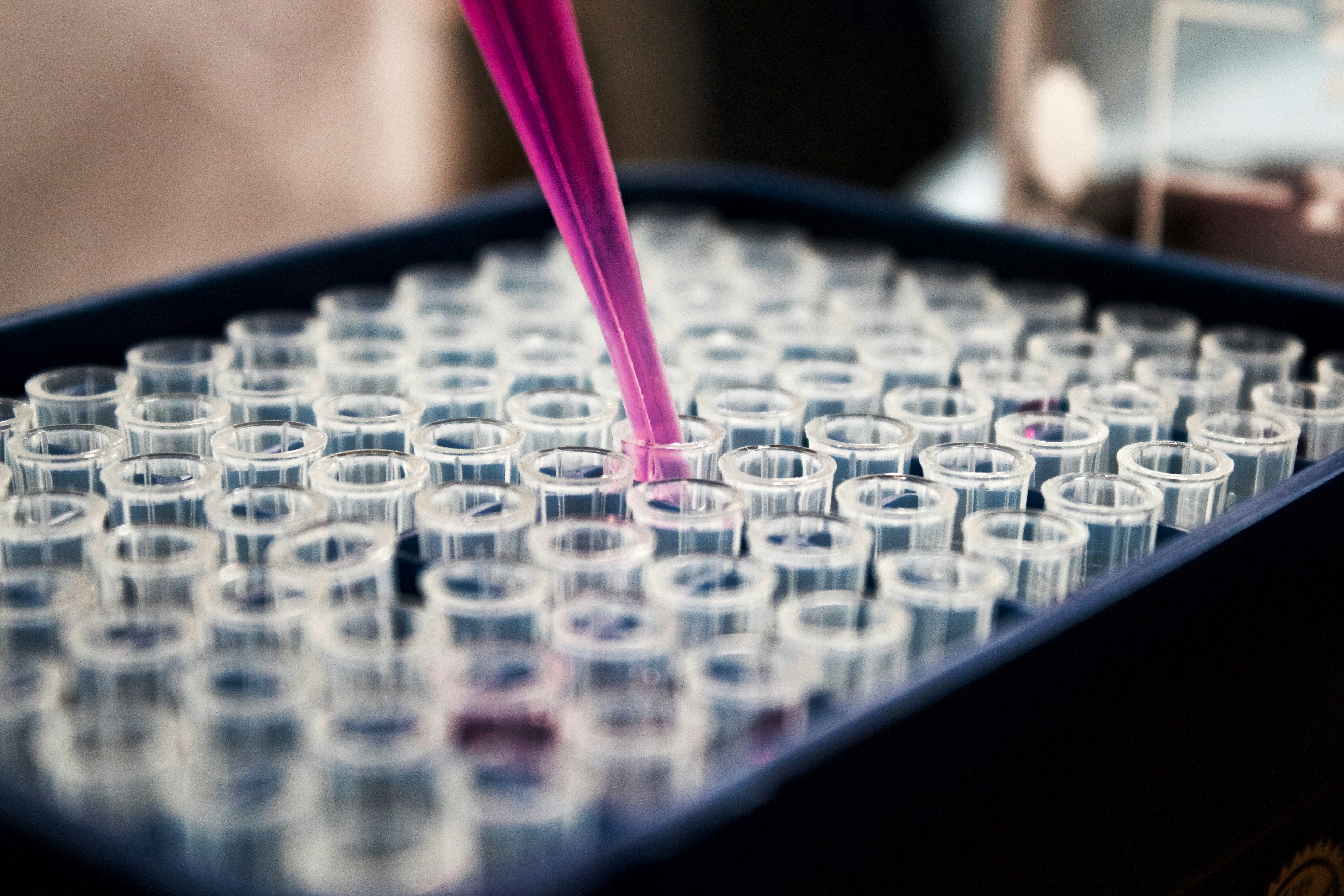
- Build: DNA is synthesized, cloned, and expressed using robotic liquid handlers.
- Test: Assays measure activity, stability, binding, or toxicity.
- Learn: Experimental data update the model, improving its priors and reward function.
This is often described as a “self-driving lab,” analogous to reinforcement learning loops in games. Companies like Recursion, Insitro, and cloud lab platforms such as Strateos and Emerald Cloud Lab are prominent examples of this approach.
Technology in Action: Drug Discovery and Therapeutic Design
Pharmaceutical and biotech companies see AI-designed proteins as a path to compressing the drug discovery timeline from a decade to just a few years, and to explore therapeutic modalities that were previously impractical.
AI-Designed Binders and Biologics
Protein-based drugs such as antibodies and cytokines are already a multi‑billion‑dollar market. Generative models extend this paradigm:
- De novo binders: Small, stable proteins engineered to bind disease targets (e.g., oncogenic receptors, viral antigens) without being derived from natural antibodies.
- Therapeutic enzymes: Proteins tailored to replace missing or defective enzymes in metabolic disorders.
- Multispecifics: Designs that can bind multiple targets simultaneously, enabling sophisticated immune modulation.
Work from labs such as David Baker’s Institute for Protein Design and companies like Generate:Biomedicines and EvolutionaryScale has demonstrated AI-generated protein binders that match or exceed the performance of some natural counterparts in preclinical experiments.
From Target to Candidate: Accelerated Pipelines
A typical AI‑enhanced drug discovery pipeline for proteins may look like:
- Target selection: Identify a biologically validated target (e.g., a receptor involved in a cancer pathway).
- In silico design: Use generative models to propose thousands of binders with predicted high affinity and specificity.
- In vitro screening: Express and test top candidates using high‑throughput binding and functional assays.
- Lead optimization: Apply multi-objective optimization to improve potency, PK/PD, immunogenicity, and manufacturability.
- Preclinical & clinical development: Advance the most promising leads into animal models and human trials.
“Artificial intelligence is becoming a powerful partner to directed evolution, helping us search protein space more intelligently.” — Frances H. Arnold, Nobel Laureate in Chemistry
For practitioners and students, hands-on tools such as “Introduction to Protein Structure” by Branden & Tooze provide a rigorous foundation in protein biophysics that complements AI-based approaches.
Technology Beyond Medicine: Synthetic Biology and Industrial Enzymes
The impact of generative biology extends well beyond therapeutics into synthetic biology, materials science, and climate technology. Proteins can be engineered to function under harsh industrial conditions, convert waste streams into value, or capture and transform greenhouse gases.
Enzymes for Green Chemistry
AI-designed enzymes can be tuned to:
- Operate at higher temperatures or extreme pH, reducing the need for toxic solvents.
- Recognize non-natural substrates, enabling novel reaction pathways.
- Show improved stability and recyclability in industrial reactors.
This directly supports green chemistry initiatives, reducing energy consumption and hazardous waste. Companies in the enzyme and bio-manufacturing space—such as Novozymes (now Novonesis) and newer AI-native startups—are actively exploring generative design for enzyme discovery.
Plastic Degradation and Carbon Capture
Highly publicized examples include engineered variants of PETase and MHETase, enzymes that break down PET plastic. AI tools can:
- Increase catalytic efficiency for plastic degradation at ambient temperatures.
- Broaden substrate range to other common polymers.
- Stabilize enzymes for use in mixed waste recycling facilities.
Similarly, carbon capture enzymes (e.g., modified carbonic anhydrases or RuBisCO-like catalysts) can be tuned to operate in industrial flue gases, supporting novel bio-based carbon capture and utilization (CCU) pipelines.
Programmable Cells as Factories
In synthetic biology, AI-designed proteins are integrated into engineered microbes or cell lines, turning them into programmable factories:
- Metabolic pathways can be rewired by swapping enzymes for AI-optimized variants.
- Sensing circuits based on custom receptors detect environmental cues or process signals.
- Secretion systems are tuned to efficiently export target products.
This vision of biology-as-software is a central theme in books like “Cell Programming”, which is increasingly recommended for engineers entering the generative biology field.
Scientific Significance: Why AI-Designed Proteins Matter
Generative biology is not just a new toolset; it represents a conceptual shift in how we think about evolution, design, and the search space of possible proteins.
Exploring Vast Protein Space
The set of all possible proteins—even just 100 amino acids long—is astronomically large (20100 possibilities). Natural evolution has explored only a minuscule fraction of this space. AI models allow us to:
- Sample from regions that are likely to fold and function, guided by statistical patterns from evolution.
- Systematically study trade‑offs between stability, activity, and specificity.
- Uncover new folds and functions that have no known natural analogs.
This changes protein engineering from largely incremental mutation and selection into an exploratory design discipline.
Unifying Data Across Scales
Modern generative models are increasingly multimodal, integrating:
- Sequence data (from UniProt, metagenomes, and clinical datasets).
- Structural data (AlphaFold Protein Structure Database, PDB).
- Functional and phenotypic data from high‑throughput assays.
This enables models to learn cross‑scale relationships, from sequence to shape to function and even to organism‑level phenotypes. Efforts like the AlphaFold Protein Structure Database and open datasets from protocols.io and Addgene fuel this ecosystem.
Educational and Open-Source Ecosystem
A thriving open‑source community accelerates progress and democratizes access:
- Models and notebooks on GitHub and Hugging Face.
- YouTube tutorials on tools like Rosetta, PyRosetta, and AlphaFold variants.
- Discussion on platforms such as r/compbio and specialist Slack communities.
For hands-on learning, many researchers recommend combining online courses (e.g., the Google AI education resources) with a strong structural biology reference like the Branden & Tooze textbook mentioned earlier.
Milestones: From AlphaFold to Generative Protein Design
The rise of AI-designed proteins is anchored in a series of high‑profile milestones that captured both scientific and public attention.
Key Milestones
- 2018–2020: AlphaFold and AlphaFold2
DeepMind’s AlphaFold achieved unprecedented accuracy in the CASP protein structure prediction challenge, culminating in AlphaFold2’s 2020 performance. The release of predicted structures for most known proteins was hailed as a “revolution in biology”. - 2021–2023: Protein Language Models and Diffusion Design
Models like ESM, ProtTrans, and RoseTTAFold introduced large-scale sequence and structure modeling. Concurrently, generative diffusion models demonstrated de novo protein design capable of high-affinity binding. - 2023–2025: Industrialization and Funding Boom
Multiple startups focused on generative protein design raised significant funding, and large pharma companies announced strategic collaborations and internal AI design programs. - 2024–2026: Closed-Loop “Self-Driving Labs” and Policy Focus
Publications and conference demos highlighted AI-robotics integration, while governments and scientific bodies began issuing guidance on safe AI in biology, with biosafety and governance becoming central themes.
These milestones have helped move AI-designed proteins from speculative concept to an operational capability increasingly integrated into R&D pipelines.
Challenges: Technical, Ethical, and Regulatory Hurdles
Despite dramatic progress, generative biology faces substantial challenges that must be addressed for the field to mature safely and reliably.
Technical Limitations
- Prediction vs. reality: Not all sequences predicted to fold or function in silico perform as expected in wet-lab assays.
- Data biases: Training sets are skewed toward well-studied proteins and organisms, which can limit generalization.
- Multi-objective optimization: Balancing activity, stability, solubility, immunogenicity, and manufacturability remains difficult.
- Scalability in experiments: Experimental validation is still orders of magnitude slower and more expensive than generating candidates.
Ethical and Biosafety Concerns
Generative tools that can design beneficial proteins could, in principle, be misused to design harmful molecules. This raises questions about dual-use research of concern (DURC) and responsible dissemination.
- Access controls for powerful models and sequence design tools.
- Screening for hazardous sequences before synthesis, as recommended by groups like the U.S. National Academies.
- Ethical guidelines for publication of high‑risk capabilities.
- International coordination to avoid regulatory arbitrage.
“We need governance systems that are as innovative as the technologies they aim to oversee.” — Megan J. Palmer, biosecurity expert at Stanford University
Regulatory and Societal Acceptance
Regulators such as the U.S. FDA and EMA are just beginning to grapple with:
- How to evaluate safety and efficacy for AI-designed biologics.
- What documentation of the design process is required.
- How to ensure traceability and quality control in automated labs.
At the same time, public acceptance may depend on clear communication of benefits, risks, and safeguards—similar to debates over genetically modified organisms (GMOs), but now with AI in the loop.
Practical On-Ramps: How Researchers and Students Can Engage
For scientists, engineers, or students interested in entering the field, a combination of computational and biological skills is invaluable.
Core Skill Areas
- Foundational biology: Biochemistry, molecular biology, and structural biology.
- Machine learning: Deep learning, generative models, and statistics.
- Programming: Python, PyTorch or TensorFlow, and tools like Biopython and PyRosetta.
- Laboratory literacy: Understanding wet-lab techniques, even if your role is primarily computational.
Suggested Learning Resources
- AI for Medicine (Coursera) for applied ML in healthcare.
- Rosalind problem sets for bioinformatics practice.
- AlphaFold open-source code and documentation for structure prediction.
- Stanford Online and MIT OpenCourseWare for free lectures in ML and biology.
To build a home reference library, many practitioners also recommend “Molecular Biology of the Cell” by Alberts et al., a comprehensive textbook that underpins much of modern cell and molecular biology.
Conclusion: Toward a Programmable Biology Future
AI‑designed proteins and the broader rise of generative biology signal a transition from reading biology to writing it. Powerful models now help us navigate the immense space of possible proteins, while automated labs accelerate iteration cycles between design and experiment.
The potential upsides are enormous—faster and more precise medicines, sustainable industrial processes, innovative materials, and new tools for environmental remediation. Yet the same capabilities demand careful governance, transparent evaluation, and robust safety practices.
Over the next decade, the most successful efforts will likely be those that:
- Integrate AI tightly with experimental feedback.
- Invest in high‑quality, openly shared datasets.
- Embed ethics, biosafety, and security in every stage of design and deployment.
- Foster collaboration between computer scientists, biologists, clinicians, policymakers, and the public.
In that sense, generative biology is not just a technological revolution; it is a multidisciplinary project that will reshape how we innovate in life sciences and how society governs powerful new capabilities.
Additional Insights: Trends to Watch in 2026 and Beyond
As of early 2026, several emerging trends are worth tracking for anyone interested in the future of AI-designed proteins:
- Multimodal foundation models: Next‑generation models jointly trained on sequences, structures, small molecules, and cellular imaging data, enabling end‑to‑end predictions from genotype to phenotype.
- On‑device and edge inference: Optimization of protein models for efficient inference on local hardware, enabling secure, privacy‑preserving design workflows within hospitals or regulated labs.
- Standardized lab APIs: Unified interfaces for controlling lab robots and instruments, making it easier to plug new generative models into different physical facilities.
- Global policy frameworks: Initiatives via the OECD, WHO, and national science agencies to develop shared standards for safe and secure AI in biology.
For ongoing updates, professional networks like LinkedIn now feature active communities around “AI in drug discovery” and “synthetic biology,” where researchers share preprints, code, and case studies in near real time.
References / Sources
Selected references and further reading:
- AlphaFold: a solution to a 50-year-old grand challenge in biology (Nature)
- Highly accurate protein structure prediction with AlphaFold (Nature)
- De novo design of protein structure and function with diffusion models (Science)
- Biological structure and function emerge from scaling unsupervised learning to 250 million protein sequences (Nature Methods, ESM)
- Self-driving laboratories for materials and molecular discovery (ACS Central Science)
- U.S. Executive Order on Safe, Secure, and Trustworthy AI (White House)
- AlphaFold Protein Structure Database (EMBL-EBI)
- Safeguarding the Bioeconomy (U.S. National Academies)
