
Catherine O’Hara’s Comic Genius: Why Her Legacy Matters More Than Ever
Catherine O’Hara’s sudden passing at 71 has prompted a rare kind of collective mourning: not just for a beloved performer, but for a singular comic sensibility that quietly shaped modern screen comedy for nearly five decades. From SCTV to Beetlejuice to Schitt’s Creek, her work redefined what a funny woman on screen could be—odd, vulnerable, arch, and emotionally precise all at once.
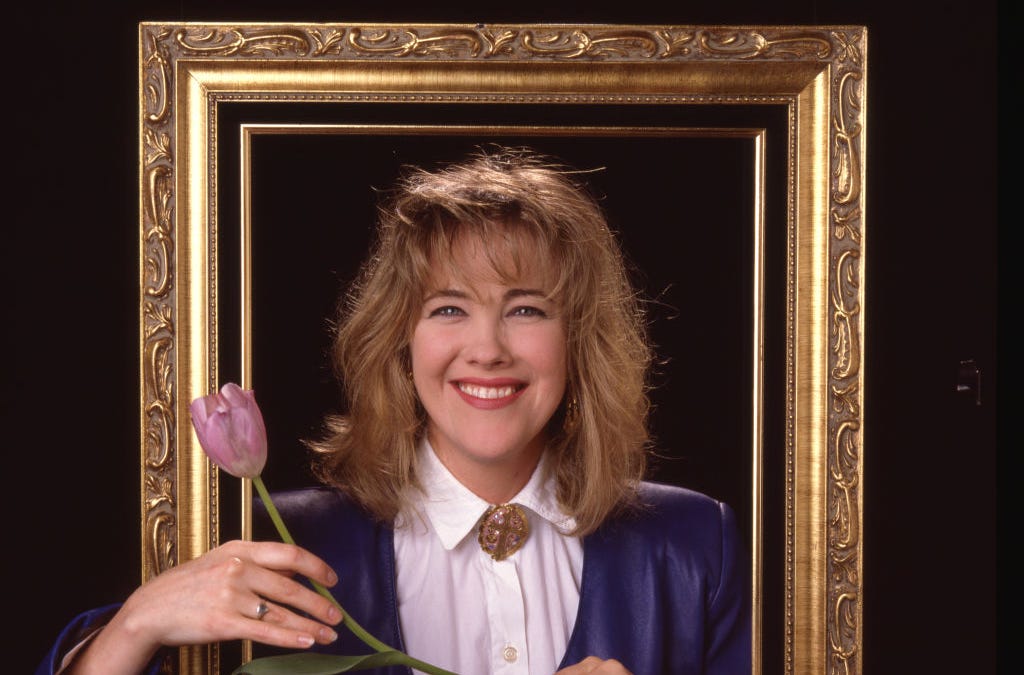
John Podhoretz, writing in The Free Press, called her loss “shocking,” but what really lingers is the shock of just how consistently brilliant she was. O’Hara’s career is a crash course in modern screen comedy: sketch TV, Tim Burton goth, Christopher Guest mockumentaries, prestige streaming sitcom. She wasn’t merely present at these turning points; she was often the weird, beating heart of them.
From SCTV to Schitt’s Creek: A Career That Quietly Rewired Comedy
Long before Moira Rose started mispronouncing “bébé,” O’Hara was already a cult hero. She joined the Toronto company of Second City in the 1970s and became a foundational member of SCTV, the Canadian sketch show that, for comedy nerds, is as canonical as early Saturday Night Live.
Where many sketch performers chased catchphrases, O’Hara specialized in fully inhabited oddballs—characters that felt like you could trace their tax history and family resentments if you had to. It’s no accident that so many later auteurs wanted her in their ensembles; she fit best in worlds where character, not jokes, did the heavy lifting.
“She never went for the easy laugh. Catherine built people, not punchlines.” — a common refrain among comedy writers and critics assessing her legacy
By the time streaming audiences discovered her as Moira Rose, O’Hara had already been doing this work for decades. The “overnight comeback” storyline says more about industry amnesia than about her actual career arc.
Essential Catherine O’Hara Performances That Define Her Greatness
Trying to reduce Catherine O’Hara’s career to a handful of roles is unfair, but a few performances have become shorthand for her range and influence.
- Delia Deetz in Beetlejuice (1988) – A high-strung NYC sculptor who’s part villain, part victim of her own taste. O’Hara plays Delia as both ridiculous and recognizably human, grounding Tim Burton’s gothic chaos.
- Kate McCallister in Home Alone (1990) – Cultural memory has reduced her to the mom who forgot her kid, but watch the airport scenes: the frantic bargaining, the cracked voice, the dawning horror. It’s a masterclass in mixing slapstick with real parental panic.
- Cookie Fleck in Best in Show (2000) – Christopher Guest’s mockumentary universe is all about slow-burn absurdity, and Cookie’s chaos—ex-lovers in every city, a marriage wobbling on the edge—gets some of the movie’s sharpest cringe comedy.
- Moira Rose in Schitt’s Creek (2015–2020) – The role that turned O’Hara into a late-career meme queen: a fallen soap actress whose baroque vocabulary and arsenal of wigs conceal a very real fear of irrelevance.

Across all of these, you can see the same core skill: an ability to play characters who are just left of reality without ever tipping into cartoon. That tension—the sense that you’re laughing at someone but also, uncomfortably, with them—became a kind of O’Hara signature.
The Craft: Voice, Physicality, and That Unteachable Weirdness
Comedy is often reduced to lines, but O’Hara’s genius lived in the negative space: the strange pauses, the flared nostril, the way a single vowel could carry an entire backstory. Her voice alone was an instrument—elastic, over-enunciated, able to turn a mundane word into an aristocratic insult.
As Moira Rose, she created an accent that became a fandom puzzle—part mid-Atlantic, part soap-opera diva, part pure O’Hara invention. It wasn’t just a gag; it told you who Moira thought she was, and how desperately she clung to that identity even while living in a motel in a town she’d once have driven through without noticing.
“Catherine would come in with these fully formed vocal and physical ideas that nobody had written,” one Schitt’s Creek writer recalled in interviews. “You’d just adjust the scene around her because the choice was obviously right.”
Physically, she was fearless. Watch her in Christopher Guest’s films: the way Cookie Fleck leans just a little too far into every social interaction, or how her body goes stiff with barely concealed marital frustration. O’Hara used physical comedy not as a stunt, but as a way of making internal tension visible.

This blend of vocal precision and physical risk-taking is one reason she became a “performer’s performer.” Actors adored her because she made ambitious, specific choices that still left space for scene partners to play.
A Different Kind of Funny Woman: Aging, Authority, and Vulnerability
O’Hara’s greatness is also about what she refused to do. She didn’t chase the ingenue track, and she didn’t retreat when she aged out of it. Instead, she leaned into roles that let older women be complicated, foolish, frightened, and powerful—all at once.
In Home Alone, Kate McCallister is a mother whose mistake becomes a punchline, but O’Hara insists on the character’s dignity; the guilt is real, not sitcom weightless. In Schitt’s Creek, Moira is often ridiculous, but the show’s late seasons make clear she’s also gutsy and disciplined in her own warped way.
- She wasn’t the “cool mom,” but the harried one.
- She wasn’t the sidekick, but the odd gravitational center of ensembles.
- She wasn’t a punchline about aging, but an argument that the funniest roles can (and should) belong to women over 40, 50, 60.
In an industry that still sidelines older actresses, O’Hara’s late-career Moira Rose era felt both triumphant and quietly radical: a 60-something woman anchoring a global streaming hit, and becoming a style icon—thanks to those wigs and extravagant outfits—along the way.
What John Podhoretz Gets Right About Her “Consistent Brilliance”
In his piece for The Free Press, John Podhoretz dwells on a point that’s easy to overlook in the social-media rush to post favorite Moira clips: Catherine O’Hara didn’t really have a “down period.” Even when the projects around her were uneven, her own work rarely was.
Podhoretz argues that the true shock of her passing isn’t only the suddenness, but the realization that we’d started to take that reliability for granted. She was so good, for so long, that her greatness became background noise—only fully audible now that it’s been abruptly cut off.
The real loss, Podhoretz suggests, is of “one of our greatest comediennes” whose work was “shocking” in its consistency—an artist who almost never missed, even in material that didn’t fully deserve her.
That last point is key: part of O’Hara’s cultural role was as a kind of quality guarantee. If she showed up in your movie or series, you knew at least one person on screen would feel alive.
Influence and Afterlife: How Her Work Will Keep Echoing
O’Hara’s influence is already visible in a generation of performers who blend high-style oddness with emotional sincerity—think of Natasha Lyonne’s gravel-voiced weirdos, or the heightened yet vulnerable personas of Phoebe Waller-Bridge and Maya Rudolph. None of them are imitating O’Hara, exactly, but they’re working in a space she helped carve out.
The longer-term impact may be more structural. Casting directors, showrunners, and studios have now seen—over and over—what happens when you put a woman like Catherine O’Hara at the center of a project instead of at the edges. The next Moira Rose may not look or sound anything like her, but that character exists partly because she did.

Practically speaking, her death is also a reminder to revisit the deep cuts: the lesser-streamed seasons of SCTV, the supporting turns in films you maybe forgot she was in. The algorithm will keep pushing Moira Rose; the real treasure is how much else there is.
Watch, Listen, Remember: Where to Revisit Catherine O’Hara
For anyone newly curious—or longtime fans wanting a more deliberate rewatch—her career breaks down nicely into a mini-curriculum of modern comedy.
- Start with sketch: Early SCTV episodes (where available) show her raw improvisational power.
- Move into cult cinema: Beetlejuice and After Hours for peak ’80s oddball energy.
- Hit the mockumentaries: Waiting for Guffman, Best in Show, A Mighty Wind.
- End with Moira: A focused rewatch of Schitt’s Creek, paying attention to how she gradually lets sincerity seep through the armor.

Many of these titles have trailers or clips on official YouTube channels and studio sites, and their IMDb filmography entry for Catherine O’Hara is a useful hub for exploring the full range of her work.
Saying Goodbye Without Letting Go
The shock of Catherine O’Hara’s death is real, and it hits in that increasingly familiar way: you see the push alert, then your feed fills with favorite lines and GIFs, and only later do you feel the larger absence. In this case, the absence is of an artist who proved, again and again, that comedy could be both outlandishly stylized and emotionally grounded.
One way to honor that is to keep watching—and to watch closely. Notice how Delia Deetz’s rage masks insecurity, how Cookie Fleck’s chatter covers panic, how Moira Rose’s theatricality hides a terror of being forgotten. Those layers are the work. The laughs are just how we know they’re landing.
If the industry has any sense, the long-term tribute to Catherine O’Hara won’t just be awards-show montages and highlight reels. It will be more room, on screens big and small, for women of all ages to be as strange, specific, and uncompromisingly themselves as she always was.
