
AI‑Designed Proteins: How Synthetic Biology and Generative Models Are Rewriting the Code of Life
The convergence of modern AI and molecular biology has moved protein science from a descriptive discipline into a design-driven engineering field. After DeepMind’s AlphaFold2 showed that deep neural networks can predict protein 3D structures from amino‑acid sequences with near-experimental accuracy, the research frontier shifted dramatically: instead of merely asking whether we can predict a protein’s fold, scientists now ask whether we can generate completely new proteins on demand—proteins that nature never evolved, but that carry out precisely defined tasks.
AI‑driven generative models—ranging from transformer-based protein language models to diffusion and reinforcement-learning systems—now propose sequences expected to fold into desired shapes and functions: neutralizing a virus, catalyzing a challenging reaction, self‑assembling into nanostructures, or forming smart biomaterials. This leap is accelerating drug discovery, enabling programmable biomaterials, and reshaping fundamental ideas about what “life‑like” systems can be.

On social platforms, this field is often framed as “ChatGPT for proteins”: you specify a function—“bind this viral spike protein,” “capture carbon dioxide,” or “form a nanocage around a drug”—and an AI model suggests candidate protein sequences. Molecular visualizations and animations make this narrative highly shareable, but behind the buzz lies a serious and rapidly maturing scientific discipline.
Mission Overview: What Are AI‑Designed Proteins and Synthetic Biology Trying to Achieve?
AI‑designed proteins sit at the core of a broader mission: to treat biology as an information system that can be read, written, and debugged with engineering principles. Synthetic biology extends this notion to entire pathways, cells, and ecosystems.
In practical terms, the goals include:
- Designing therapeutic proteins and antibodies that precisely target disease pathways.
- Engineering enzymes for green chemistry, carbon capture, and pollution degradation.
- Building programmable biomaterials—fibers, gels, cages, and scaffolds—with tunable mechanical and chemical properties.
- Creating synthetic circuits inside cells that sense, compute, and respond to environmental cues.
- Probing fundamental questions about protein evolution and the limits of functional sequence space.
“We’re moving from reading the code of life to being able to write it at will. AI‑driven protein design is the compiler that makes this possible.”
— Paraphrased from various talks and interviews by Dr. Demis Hassabis (DeepMind/Isomorphic Labs)
Technology: How AI Learns the Language of Proteins
AI‑designed proteins rely on treating amino‑acid sequences as a kind of biological language. Large-scale models are trained on millions of natural sequences, structures, and evolutionary variants, allowing them to implicitly learn grammar-like rules that connect sequence, structure, and function.
From AlphaFold to Generative Models
AlphaFold2, RoseTTAFold, and subsequent systems addressed the “forward problem”: given a sequence, predict the 3D fold. Generative models attack the “inverse problem”: given a desired property, produce sequences that should fold and function accordingly.
- Protein Language Models (PLMs): Transformers similar to GPT are trained on large protein sequence databases such as UniProt and MGnify. Examples include Meta’s ESM family and Salesforce’s ProGen. They:
- Capture long‑range dependencies between residues.
- Infer structural motifs from sequence patterns.
- Generate new sequences by sampling from learned distributions.
- Diffusion and Generative Models for 3D Structures: Tools like RFdiffusion (from David Baker’s lab) and other diffusion-based models generate protein backbones in 3D, then “sequence‑design” those backbones to be physically realistic and designable.
- Reinforcement Learning and Bayesian Optimization: Once an initial design is proposed, RL or Bayesian optimization loops refine sequences based on in silico scoring or limited experimental feedback.
Design‑Build‑Test‑Learn (DBTL) Cycle
Most AI‑driven protein design workflows follow a DBTL cycle:
- Design: Use generative AI to create sequence libraries conditioned on target properties (binding affinity, stability, catalytic rate, etc.).
- Build: Synthesize DNA, express the proteins in suitable host cells or cell‑free systems.
- Test: Measure binding, activity, stability, toxicity, and other functional readouts using high‑throughput assays.
- Learn: Feed experimental data back into models to update priors, retrain, or fine‑tune the generative system.
This closed loop can compress what previously took years of directed evolution into months or even weeks, especially when combined with automated labs and robotics.
These models are often deployed on GPU clusters or cloud infrastructure; some are integrated into lab-automation platforms that design experiments in silico overnight and dispatch protocols to robots the next morning.
Scientific Significance and Applications
The significance of AI‑designed proteins spans medicine, climate, materials science, and fundamental biology. Several high-impact areas are emerging as early success stories.
Next‑Generation Therapeutics
AI‑designed proteins are beginning to reshape the therapeutic landscape:
- De novo antibodies and binders: AI systems can suggest binding proteins targeting epitopes that are difficult for conventional antibody discovery. Some early-stage molecules are entering preclinical pipelines for oncology and infectious diseases.
- Enzyme replacement and metabolic tuning: Custom enzymes may help degrade toxic metabolites in rare metabolic disorders or modulate gut microbiomes in a highly specific way.
- Smart cytokines and immune modulators: Proteins designed to have fine‑tuned receptor affinities could boost anti‑tumor immunity while reducing systemic toxicity.
Companies like Isomorphic Labs, Generate:Biomedicines, and EvolutionaryScale are developing platforms to move from protein design to clinical candidates more systematically.
Programmable Biomaterials
AI‑designed biomaterials leverage the predictability of protein folding to create structures at the nano‑ and microscales:
- Self‑assembling protein cages that can encapsulate vaccines or chemotherapeutic agents.
- Hydrogels with tunable stiffness and degradation rates for tissue engineering.
- Fibers and films with unusual mechanical properties—toughness, elasticity, or self‑healing behavior.
These materials could enable injectable depots for slow‑release drugs, biodegradable plastics replacements, and scaffolds for regenerative medicine.
Environmental and Industrial Biotechnology
AI‑enhanced enzyme design is attractive for green chemistry and environmental remediation:
- Enzymes that break down persistent plastics (e.g., PETases) at industrially relevant rates.
- Catalysts for carbon capture and conversion into value‑added chemicals.
- Biocatalytic processes that replace harsh chemical conditions with mild, aqueous reactions.
“Artificial intelligence gives us an unprecedented ability to search the enormous landscape of possible enzyme sequences for those rare solutions that combine high activity, specificity, and stability.”
— Adapted from commentary by Prof. Frances Arnold, Nobel Laureate in Chemistry
Milestones in AI‑Driven Protein and Synthetic Biology
Over the last few years, a sequence of high‑profile milestones has catalyzed the field and captured public imagination.
Key Scientific Milestones
- AlphaFold2 (2020–2021): DeepMind’s system solved a grand challenge by predicting structures for most known proteins. The open release of predicted structures for hundreds of millions of proteins via the AlphaFold Protein Structure Database became a foundational resource.
- De novo protein design with RFdiffusion and related tools (2022–2024): Generative structural models from the Baker lab and others began producing functional de novo enzymes, binders, and nanomaterials.
- Large protein language models with emergent function (2023–2025): Models such as ESM‑2 and successors, as well as closed-source industrial models, showed that unsupervised learning on raw sequences could predict mutational effects and suggest functional designs.
- End‑to‑end AI drug design pipelines (ongoing): Integration of protein design with ligand docking, ADME/Tox prediction, and multi‑omics data is yielding fully AI‑guided therapeutic programs now approaching human trials.
Industrial and Startup Momentum
Pharmaceutical majors and synthetic biology companies are investing heavily:
- Partnerships between AI firms and big pharma to co‑develop protein therapeutics.
- Biofoundries that combine AI design with high‑throughput build‑and‑test, effectively becoming “factories for biological code.”
- Venture‑backed startups focusing on verticals like enzyme design for industry, AI‑first vaccine platforms, and programmable protein materials.
These developments are widely discussed on platforms like LinkedIn and X (Twitter) by researchers such as Sarah Gershman and Zachary Bentley, who assess both technical progress and regulatory implications.
Challenges, Risks, and Ethical Considerations
Despite spectacular advances, AI‑driven protein design is not a push‑button technology. Multiple scientific and societal challenges must be addressed before routine, safe deployment.
Scientific and Technical Limitations
- Model reliability and generalization: Models are still biased toward the training data; they can hallucinate plausible‑looking but non‑functional sequences, especially in unexplored regions of sequence space.
- Context dependence: Proteins behave differently in test tubes versus living cells or complex tissues. AI predictions often do not fully capture folding dynamics, post‑translational modifications, or interaction networks.
- Data scarcity in edge cases: Rare disease targets, unusual chemistries, or extreme environments may lack sufficient training data, limiting model performance.
Safety, Dual‑Use, and Governance
The ability to design potent biological agents raises dual‑use concerns. Responsible development requires:
- Strict access controls and screening of DNA synthesis orders.
- Regulatory oversight of high‑risk experiments and applications.
- Community standards on publishing designs with potential misuse.
- Continuous engagement with biosecurity experts and ethicists.
“Emerging capabilities in biological design increase our power to do good but also expand the consequences of failure. Governance must keep pace with innovation.”
— National Academies report on future products of biotechnology
Ethical and Philosophical Questions
AI‑designed life‑like systems force society to reconsider foundational questions:
- What distinguishes “natural” from “synthetic” life when both use the same biochemical substrate?
- Who owns the intellectual property of an AI‑generated protein, and how should benefits be shared?
- How do we balance innovation with precaution when emergent behaviors may be hard to predict?
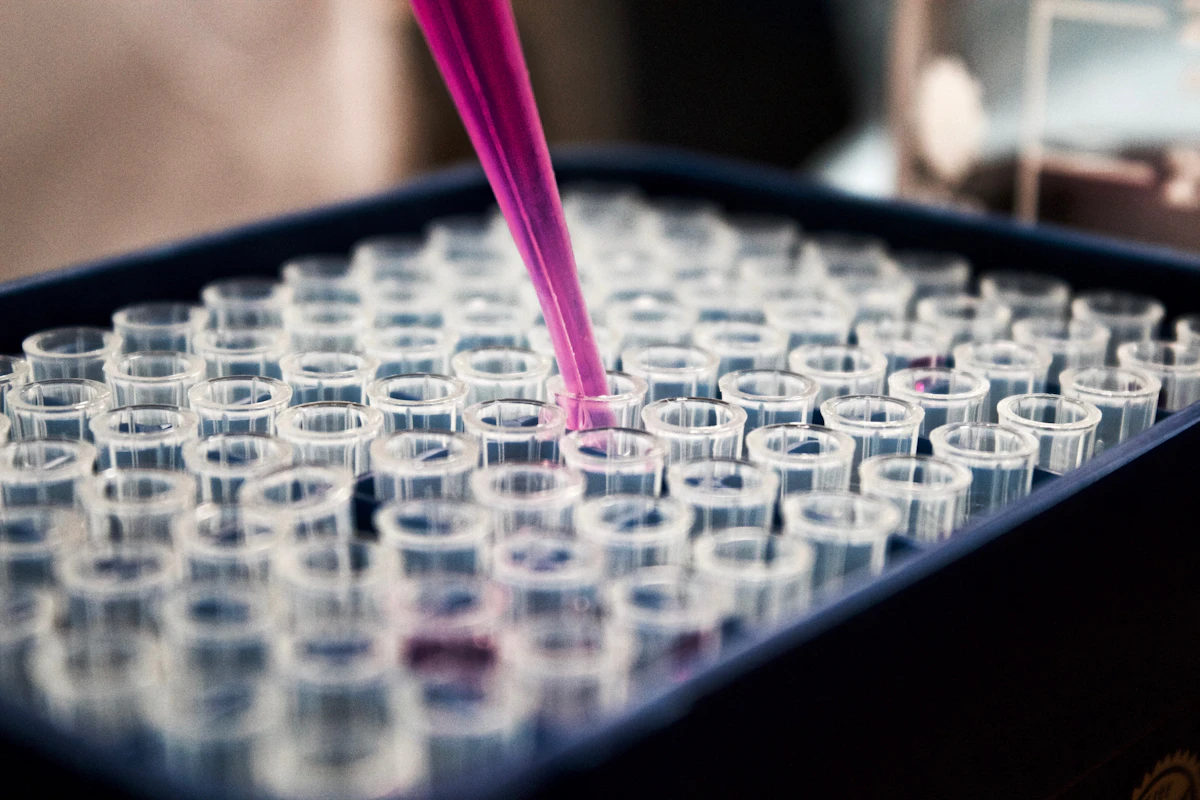
Automated labs tightly coupled with AI models are becoming the experimental engine behind the rapid iteration cycles in synthetic biology.
Tools, Learning Resources, and Hands‑On Exploration
For scientists, students, or technologists who want to understand or even experiment with AI‑driven protein design, several open resources and tools are available.
Open Software and Web Tools
- AlphaFold (GitHub) – Open‑source implementation for structure prediction.
- ColabFold – A Google Colab-friendly environment for running AlphaFold-like predictions.
- RFdiffusion – Diffusion-based protein design framework from the Rosetta community.
- ESM Metagenomic Atlas – Exploration interface for protein language model predictions.
Books and Background Reading
For foundational knowledge in protein structure and design, resources such as:
- Introduction to Protein Structure (Branden & Tooze) – A classic text on protein folding and structure.
- Synthetic Biology: A Primer for Engineers and Scientists – A concise, engineering-focused introduction.
Talks, Courses, and Videos
- DeepMind’s AlphaFold presentation at CASP and NeurIPS – search on YouTube for accessible talks.
- MIT and Stanford online lectures on synthetic biology and protein engineering, available via MIT OpenCourseWare and Stanford Online.
Conclusion and Future Outlook
AI‑designed proteins mark a decisive shift from observing biology to programming it. As models become more powerful and more deeply integrated with automation, multi‑omics data, and high‑resolution phenotyping, we can expect:
- Therapeutic proteins tailored to individual patients and their tumor or immune profiles.
- Biomaterials that sense their environment and change properties dynamically.
- Enzyme cascades designed in silico to replace entire petrochemical workflows.
- New insights into how far functional sequence space extends beyond natural evolution.
The pace of this field is likely to accelerate through 2026 and beyond, with more AI‑designed molecules entering clinical trials and industrial pilot lines. Balancing innovation with robust biosafety, transparent governance, and equitable access will determine whether this technology becomes a broadly beneficial platform or a source of new inequities and risks.
For now, AI‑designed proteins and synthetic biology represent one of the most exciting frontiers in modern science—a domain where computation and wet‑lab experimentation form a single, rapidly learning system for engineering life’s molecular machinery.
Additional Insights: How to Critically Evaluate New Claims
With constant headlines and preprints, it is helpful to apply a critical lens when assessing new breakthroughs in AI‑driven protein design:
- Check validation depth: Were designs tested only in vitro, or also in cells, animals, or early human studies?
- Look for controls and baselines: Are AI‑generated proteins compared to rationally designed or evolved alternatives?
- Consider scalability: Is the process robust under manufacturing conditions and regulatory constraints?
- Assess openness: Are models, data, or protocols shared for independent reproduction?
Following expert commentary on platforms like bioRxiv and Nature’s protein engineering collection can help separate transformative advances from incremental or over‑hyped reports.
References / Sources
Selected reputable sources for further reading:
- Jumper, J. et al. (2021). “Highly accurate protein structure prediction with AlphaFold.” Nature. https://www.nature.com/articles/s41586-021-03819-2
- Baek, M. et al. (2021). “Accurate prediction of protein structures and interactions using a three-track neural network.” Science. https://www.science.org/doi/10.1126/science.abj8754
- Watson, J. L. et al. (2023). “De novo design of protein structure and function with RFdiffusion.” https://www.biorxiv.org/content/10.1101/2023.05.07.539647v1
- Rives, A. et al. (2021). “Biological structure and function emerge from scaling unsupervised learning to 250 million protein sequences.” PNAS. https://www.pnas.org/doi/10.1073/pnas.2016239118
- National Academies of Sciences, Engineering, and Medicine (2017). “Preparing for Future Products of Biotechnology.” https://nap.nationalacademies.org/catalog/24605/preparing-for-future-products-of-biotechnology
- Nature News Feature on AI and protein design. https://www.nature.com/articles/d41586-021-02025-4
