
AI Assistants Everywhere: How OS‑Level Copilots Are Rewiring Work, Creativity, and Privacy
Generative AI has moved from the browser tab to the operating system itself. In 2024–2025, Microsoft, Google, Apple, and a vibrant open-source ecosystem have been racing to embed “copilots” and assistants directly into Windows, macOS, iOS, Android, web browsers, and enterprise SaaS. What started as chatbots is becoming a persistent, context-aware layer across devices—available with a keystroke to summarize meetings, refactor code, draft emails, and even automate multi-step workflows.
This system-level integration raises fundamental questions: How much productivity gain is real? What happens to junior roles and everyday creative work? Who controls the data that copilots see—your emails, documents, logs, and keystrokes? And will open, local models meaningfully compete with cloud giants, or remain a niche for power users and privacy maximalists?
“We’re moving from a world where people had to learn to use computers, to a world where computers understand people.” — Satya Nadella, CEO of Microsoft
The rest of this article walks through the mission and design of OS-level copilots, the underlying technology, scientific and economic significance, key milestones so far, the biggest challenges ahead, and how individuals and organizations can prepare.
Mission Overview: What Are OS‑Level Copilots Trying to Achieve?
At a high level, OS-level copilots aim to be a universal natural-language interface to your digital environment. Instead of manually clicking through menus or writing complex formulas, you describe an outcome—“Find the latest budget spreadsheet, highlight overspending, and draft a report for my manager”—and the assistant orchestrates multiple apps to deliver it.
The core mission spans four dimensions:
- Productivity: Automate repetitive digital tasks, accelerate drafting, summarization, and data analysis.
- Accessibility: Lower the skill barrier for complex tools (spreadsheets, IDEs, DAWs, design suites) via natural language.
- Personalization: Build a contextual memory of your files, habits, and teams to offer proactive assistance.
- Ambient intelligence: Provide help “in place” (inside apps, notifications, and system UI) rather than in a separate chatbot window.
This is why generative AI integration is deeper than “just another feature”: it is an attempt to redefine the user interface paradigm of general-purpose computing.
Technology: How Major Platforms Are Embedding AI Assistants
Microsoft: Copilot Across Windows, Office, and Edge
Microsoft’s Copilot strategy centers on tight integration with Windows 11/12, Microsoft 365, and the Edge browser. Copilot runs as a sidebar, a keyboard shortcut, and increasingly as a context-aware overlay on top of apps.
- Windows: Copilot can search local files, adjust system settings, summarize copied text, and act on app content via APIs and plug-ins.
- Office / Microsoft 365: Copilot in Word, Excel, PowerPoint, and Outlook can draft documents, generate slide decks from prompts, analyze and visualize spreadsheets, and summarize long email threads.
- Edge and Web: Edge integrates Copilot for page summaries, comparison shopping, and coding assistance while browsing.
Under the hood, Microsoft blends large language models (e.g., OpenAI’s GPT‑4 class models and its in-house models) with the Microsoft Graph, which encodes your organization’s documents, identities, and relationships. This Graph grounding is crucial for turning a general-purpose model into a context-aware assistant that understands “our Q4 forecast deck” or “the design doc Alice sent last week.”
Google: Android, Chrome, and Workspace with Generative AI
Google is similarly weaving generative AI through Android, Chrome, and Google Workspace. Gemini (formerly Bard and Duet AI) is being positioned as the unifying assistant across devices and services.
- Android: Contextual assistants can summarize on-screen content, generate replies, and perform device actions through natural language.
- Workspace: Gmail smart replies and drafts, Docs-assisted writing, Sheets formula suggestions, and Slides content generation bring AI directly into everyday workflows.
- Chrome: Experimental features can summarize web pages, generate boilerplate text, and help developers debug and refactor code in browser-based IDEs.
Google is also experimenting with on-device inference using compact variants of its Gemini models on flagship Android phones, reducing latency and improving privacy for some tasks.
Apple: Privacy‑First, On‑Device, and Ecosystem‑Tight
Apple’s AI strategy differs in tone: it emphasizes on-device processing, differential privacy, and tight integration with the Apple ecosystem. Siri upgrades, system-wide writing tools, and image generation features are rolling into iOS, iPadOS, and macOS.
Apple uses a hybrid model:
- On-device LLMs for routine tasks such as rewriting text, suggesting replies, and simple automations.
- Private cloud processing for heavier tasks, with an architecture explicitly designed to decouple user identity from processing where possible.
“We believe AI should be powerful, personal, and private.” — Tim Cook, CEO of Apple
Open‑Source and Local Models: The Parallel Track
In parallel, an ecosystem of open-source models (LLaMA derivatives, Mistral, Mixtral, Phi, and others) and tooling (Ollama, LM Studio, llama.cpp) is enabling laptops, desktops, and even some phones to run surprisingly capable assistants entirely offline.
Key technical trends include:
- Model quantization: Compressing models (e.g., to 4‑bit) to run on consumer GPUs and CPUs.
- Retrieval-Augmented Generation (RAG): Indexing your local files and knowledge bases so a lightweight model can answer questions grounded in your data.
- Fine-tuning and LoRA adapters: Customizing general models for specific domains like legal, medical, or software engineering.
These local assistants appeal strongly to developers, researchers, and privacy-conscious users who want full control over data and model behavior.
Visualizing the AI Assistant Ecosystem

Productivity, Coding, and Creative Workflows
For many users, the most visible impact of AI assistants is in day-to-day productivity—coding, writing, analysis, and creative tasks. Coverage in outlets like TechCrunch, Engadget, Wired, and Ars Technica has focused on measuring real-world gains versus hype.
Coding Copilots in IDEs
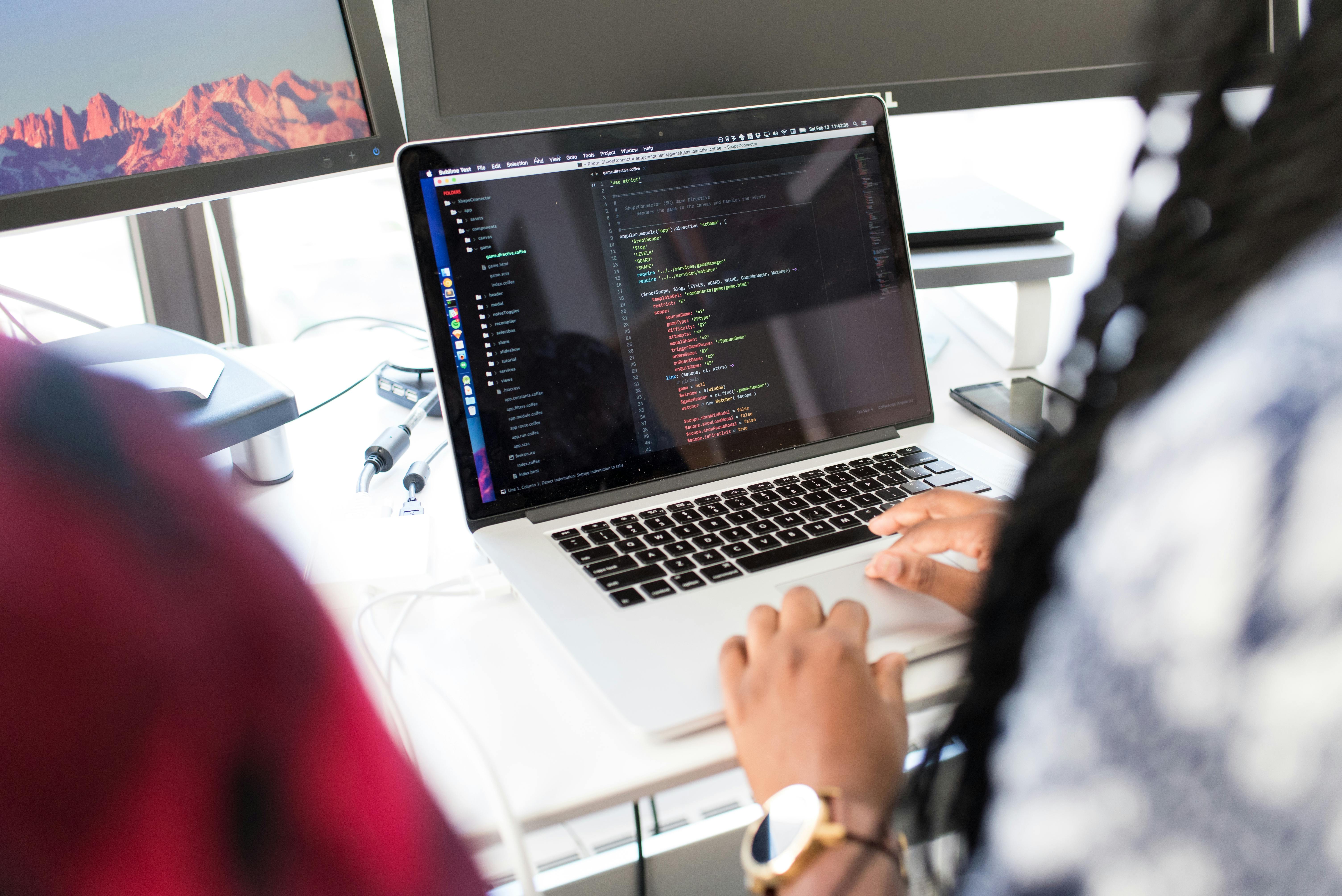
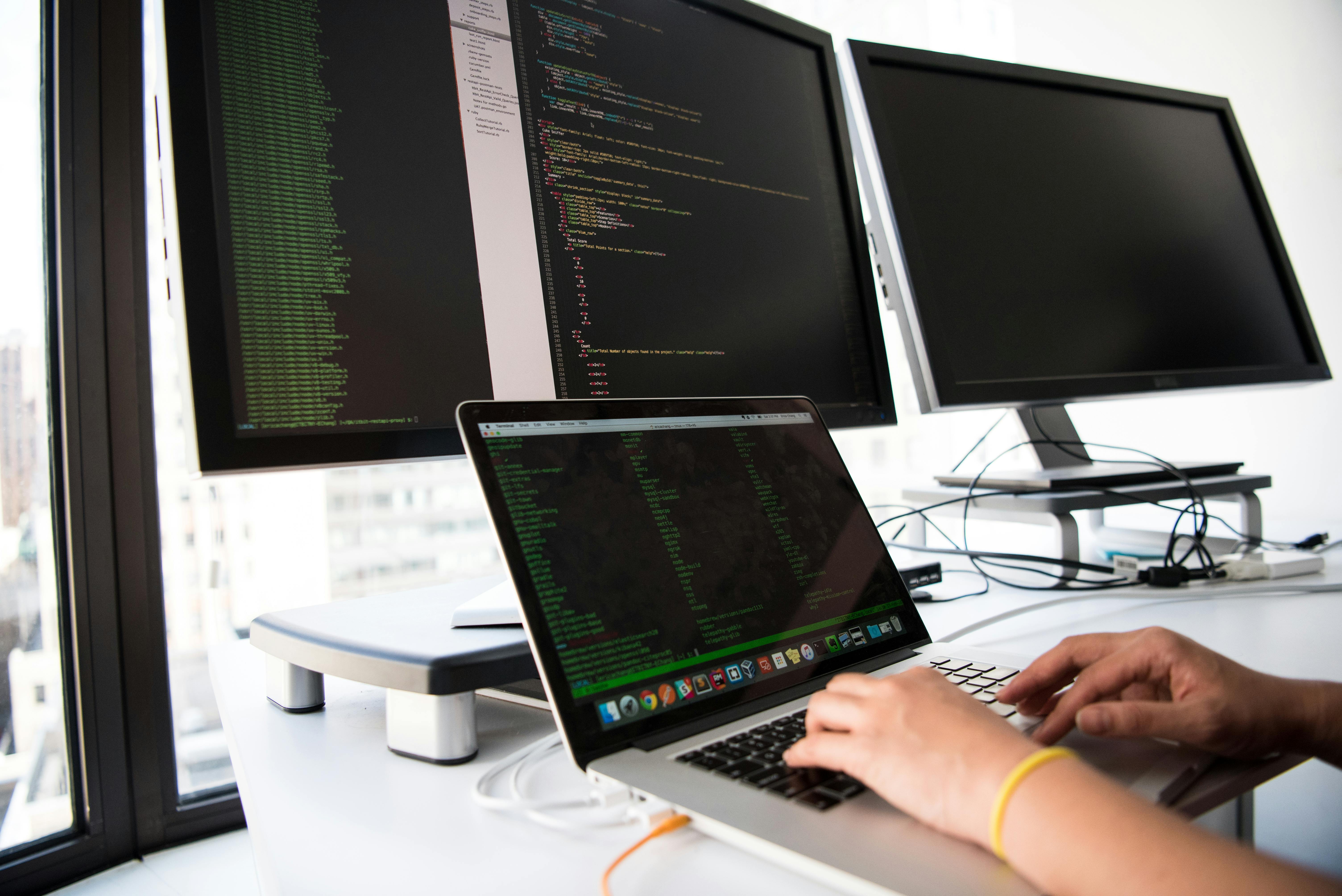
Tools such as GitHub Copilot, Amazon CodeWhisperer, and IDE-native assistants use generative models trained on large code corpora to suggest entire functions or refactors from a single comment.
Empirical studies and industry reports suggest that:
- Developers can complete routine tasks ~20–50% faster, especially for boilerplate and unfamiliar APIs.
- Junior developers use copilots as “interactive documentation,” accelerating onboarding and exploration.
- Senior engineers benefit from quick prototypes and refactors but still need rigorous review processes.
“AI pair programmers don’t replace engineering judgment; they amplify it by removing the drudgery.” — Thomas Dohmke, CEO of GitHub
Knowledge Work: Email, Documents, and Meetings
In enterprise environments, AI assistants summarize meeting transcripts, generate minutes, synthesize long email chains, and draft first-pass documents or presentations.
Typical usage patterns include:
- Summarization: Turning hour-long meeting recordings into structured notes with action items.
- Drafting: Generating first drafts of emails, reports, and slide decks for humans to refine.
- Knowledge queries: “What did we decide about pricing in last quarter’s strategy offsite?” across docs and chats.
These features can significantly reduce “administrative overhead,” but they also risk encouraging shallow reading and over-trust in AI summaries. Many organizations are instituting policies that require human review for critical communications and decisions.
Creative Fields: From Rough Cut to Final Output
AI tools are now built into music DAWs, video editors, and design suites. YouTube and TikTok creators frequently share workflows where AI handles:
- Script drafting and storyboarding.
- Voiceovers and basic audio cleanup.
- Rough video edits, B‑roll suggestions, and captions.
- Thumbnail design and social copy.
Importantly, the most successful creators typically treat AI as a co-creator or production assistant, not a full replacement. Human taste, narrative sense, and domain knowledge still determine what resonates with audiences.
Scientific and Societal Significance
The rise of AI assistants everywhere is not only a UX story; it is a socio-technical shift with implications for labor markets, cognitive work, and the structure of organizations.
Cognitive Offloading and Extended Cognition
Psychologists have long studied “cognitive offloading”—using tools (notes, calculators, search engines) to extend our memory and reasoning. AI assistants intensify this dynamic by offloading:
- Recall: remembering documents, decisions, and conversations.
- Transformation: converting raw data into summaries, tables, and visuals.
- Generation: drafting text, code, or designs from abstract goals.
The open question is whether this leads to higher-level human thinking—or atrophy of baseline skills. Many researchers argue we need deliberate “AI literacy” to use these tools without losing critical reasoning capacity.
Labor Markets and Economic Structure
AI copilots are especially impactful on junior, repetitive, and template-driven roles: entry-level coding, rote technical writing, basic customer support, and some forms of content production.
Potential outcomes include:
- Fewer entry-level roles, but higher expectations for remaining staff to operate AI-augmented workflows.
- Greater leverage for small teams and solo practitioners who can “scale themselves” with automation.
- Pressure on organizations to rethink training, upskilling, and career ladders.
AI Assistants in Science and Engineering
In research, AI assistants help with literature review, code for simulations, and even hypothesis generation. Large-scale projects increasingly use:
- LLMs tuned on domain-specific corpora (e.g., biomedical literature).
- Tools like Semantic Scholar and AI-enhanced search to navigate exploding publication volumes.
- Agents that orchestrate data preprocessing, experiment logging, and result summarization.
“AI won’t replace scientists, but scientists who use AI will likely outpace those who don’t.” — Paraphrased from discussions in Nature and other research forums
Privacy, Security, and Data Governance
The most contentious aspect of OS-level copilots is data access. To be useful, assistants need visibility into emails, documents, messages, screens, sometimes even logs and keystrokes. This inevitably raises privacy, compliance, and security concerns.
What Data Goes Where?
Tech journalists at Recode, Wired, The Verge, and others closely scrutinize how different vendors handle data flows:
- On-device only: Some prompts and data never leave the device; processing is local.
- Ephemeral cloud processing: Data is sent to servers for inference but not retained beyond operational needs.
- Training reuse: In some consumer services, user data may be used (often in aggregated or anonymized form) to improve models, raising consent questions.
Enterprise offerings increasingly include data residency controls, auditing, and fine-grained policy management, but configurations are complex and misunderstandings are common.
Regulatory Landscape
Regulatory bodies, particularly in the EU, are actively shaping how assistants can operate:
- EU AI Act: Classifying certain use cases as higher risk and requiring transparency, human oversight, and robustness.
- GDPR and equivalents: Governing consent, data minimization, and user rights (access, deletion, portability) for data processed by AI services.
- Sector-specific rules: Healthcare, finance, and education have additional compliance layers that heavily restrict training on sensitive data.
Organizations deploying assistants at OS or enterprise scale must perform Data Protection Impact Assessments (DPIAs) and clearly disclose AI usage to employees and customers.
Security and Prompt Injection
Beyond privacy, AI assistants open new attack surfaces. Because they follow natural-language instructions, they can be tricked—via malicious documents, web pages, or APIs—into exfiltrating data or performing unintended actions. This is often called prompt injection or indirect prompt injection.
Mitigations under active research and deployment include:
- Strict sandboxing and permissioning for actions (file operations, emails, API calls).
- Content filtering and anomaly detection on model outputs.
- Defense-in-depth architectures: separating “reasoning” from “tools” with explicit validation layers.
Open vs. Closed Ecosystems and Local vs. Cloud
On forums like Hacker News and specialized tech blogs, one of the fiercest debates centers on open versus closed models and local versus cloud inference.
Closed, Cloud‑Hosted Assistants
Proprietary models from OpenAI, Anthropic, Google, and others typically lead in raw capability: better reasoning, coding performance, and multi-modal understanding. However, they require sending prompts to external servers and trusting vendors’ privacy and security guarantees.
Open, Local, and Hybrid Approaches
Local assistants running open-source models give users:
- Data sovereignty: Sensitive data never leaves the device or private network.
- Customizability: Ability to fine-tune or extend models, integrate with bespoke tools, and audit behavior.
- Long-term resilience: Independence from subscription pricing and API policy changes.
Many power users adopt a hybrid pattern: local models for sensitive tasks and quick offline queries, and cloud models for the most challenging reasoning or creative tasks.
Developer Experimentation and Tooling
Open-source frameworks such as LangChain, LlamaIndex, and semantic search stacks make it easier to prototype custom copilots tied to internal knowledge bases. This experimentation fuels rapid innovation—but also a long tail of unvetted tools with inconsistent security posture.
Milestones in the Rise of AI Assistants
The trajectory from isolated chatbots to OS-level copilots has unfolded through a series of notable milestones in both research and productization.
Key Milestones (Conceptual Timeline)
- Transformer architecture (2017): “Attention is All You Need” provides the foundation for modern LLMs.
- Large-scale pretraining (2018–2020): Models like GPT‑2/3, BERT, and T5 showcase emergent generalization abilities.
- Chat UX and instruction tuning (2020–2023): Conversational agents like ChatGPT drive mainstream awareness.
- IDE and productivity integrations (2021–2024): GitHub Copilot, Google Workspace AI, Microsoft 365 Copilot enter daily workflows.
- OS-level integration (2023–2025): Assistants become persistent, context-aware layers in Windows, macOS, iOS, and Android.
- Multi-modal assistants: Models natively understand text, images, audio, and sometimes video, enabling richer interactions.
Emerging Milestones to Watch
- Broad availability of on-device models that rival today’s cloud LLMs for many tasks.
- Standardized trusted execution environments for AI workloads on consumer hardware.
- Regulated disclosure standards for when and how AI is used in interfaces and decisions.
- Widespread adoption of AI governance frameworks within organizations.
Challenges and Open Questions
Despite rapid progress, OS-level AI assistants face substantial technical, ethical, and organizational challenges.
Technical and UX Challenges
- Reliability and hallucinations: Models can still produce plausible but false information; robust verification is non-trivial.
- Latency and cost: High-quality models are computationally expensive, stressing both cloud budgets and local hardware.
- Context management: Selecting the right subset of a user’s data for each query without missing crucial details or leaking sensitive information.
- Discoverability: Users often underutilize features because they don’t know what is possible or how to phrase requests.
Ethical, Cultural, and Organizational Challenges
- Over-reliance: Risk of deferring too much judgment to assistants, especially in high-stakes domains.
- Bias and fairness: Models may replicate or amplify existing biases unless actively mitigated.
- Transparency: Users may not realize when they are interacting with AI-generated content versus human-authored content.
- Workplace trust: Employees may fear surveillance or job loss tied to AI deployments, undermining adoption.
“The social context in which AI is deployed often matters more than the technical details.” — AI ethics researchers, summarized from AI Now Institute reports
Individual Use: Avoiding Skill Erosion
On the individual level, the key risk is skill erosion. If you always ask an assistant to think, you may gradually lose fluency with core tasks—writing, debugging, structuring arguments, or designing experiments.
Practical guardrails include:
- Using AI for first drafts, but editing rigorously and adding your own structure and insights.
- Regularly tackling tasks without AI to maintain baseline competence.
- Treating AI outputs as proposals, not decisions.
Practical Guidance: Using AI Assistants Responsibly
Whether you are an individual professional, team lead, or IT decision-maker, you can actively shape how AI assistants enhance rather than erode your capabilities and safeguards.
For Individuals and Knowledge Workers
Consider a simple framework for responsible use:
- Automate the repetitive: Use AI for boilerplate, formatting, and rote transformations.
- Own the thinking: Do the conceptual work yourself—analysis, prioritization, and trade-off decisions.
- Verify and iterate: Fact-check outputs and iterate with targeted prompts.
You can also build a personal “AI stack” of tools for writing, coding, research, and scheduling. For those who like physical references, books such as The Future of Work offer useful context on how automation shapes jobs over time.
For Teams and Organizations
At the organizational level, the most successful deployments pair technical rollouts with clear policies and training.
- Define which data sources assistants may access (and which are off-limits).
- Establish guidelines on disclosure: when should employees indicate that content is AI-assisted?
- Provide training on prompt design, verification, and ethical considerations.
- Continuously monitor usage patterns and collect feedback for iterative improvement.
Learning More and Staying Current
The field changes weekly. To stay updated, many professionals follow:
- Tech news sites like TechCrunch, The Verge, and Ars Technica.
- Developer communities on Hacker News and GitHub.
- Expert voices on LinkedIn and long-form podcasts or YouTube channels analyzing AI trends.
Conclusion: From Tools to Digital Colleagues
AI assistants are evolving from discrete tools into ambient digital colleagues embedded across operating systems, browsers, and productivity suites. Their promise is substantial: freeing humans from repetitive digital chores, enhancing creativity, and making powerful software accessible to more people.
Yet this transformation also surfaces hard questions about privacy, control, labor, and human cognition. The answers will depend less on any single model and more on the choices we make in design, regulation, and everyday use.
The most resilient strategy—for individuals, organizations, and societies—is to treat AI assistants as amplifiers of human judgment, not substitutes for it. Used thoughtfully, OS-level copilots can help us spend less time managing software and more time exercising uniquely human skills: curiosity, critical thinking, empathy, and long-term vision.
Additional Resources and Further Reading
To deepen your understanding of AI assistants and their implications, consider exploring:
- OpenAI Research Publications – foundational work on large language models and alignment.
- Google Responsible AI – guidelines and case studies on responsible deployment.
- Microsoft Responsible AI Standard – a practical framework for building and governing AI systems.
- YouTube walkthroughs of AI copilot workflows – real-world demos from developers and creators.
For readers who prefer hardware tinkering and local experimentation, a mid-range GPU (such as an NVIDIA RTX 4070 or similar) combined with tools like Ollama or LM Studio can provide an effective sandbox for running local copilots, experimenting with RAG, and understanding how assistants behave under the hood.
References / Sources
- TechCrunch – AI and Copilot coverage
- The Verge – AI and OS integration reporting
- Ars Technica – Deep dives on Windows, macOS, and AI
- Wired – Features on generative AI, productivity, and ethics
- Hacker News – Community debates on open vs. closed AI
- EU AI Act – Draft and updates on AI regulation in Europe
- Microsoft Copilot for Windows
- Google Workspace AI features
- Apple – On-device intelligence and privacy materials
- GitHub Blog – Copilot research and impact reports
