
AI Assistants Everywhere: How On‑Device Agents Are Quietly Rewriting Personal Computing
In this in-depth guide, we unpack how OS-level integration, on-device models, agentic workflows, and regulatory scrutiny are converging to make AI assistants the next major computing interface—along with what it means for developers, businesses, and everyday users.
The story of AI assistants in 2025–2026 is no longer about quirky chatbots that answer trivia. We are now in the era of deeply embedded, context-aware agents that live inside Windows, macOS, Android, iOS, Linux distributions, browsers, productivity suites, and even headphones, cars, and smart home devices. These systems orchestrate apps, automate multi-step workflows, and increasingly act as a user’s primary interface to the digital world.
Coverage from outlets like TechCrunch, The Verge, Wired, and Ars Technica reflects a clear consensus: AI assistants are becoming the next interface layer after the web browser and the smartphone home screen. Large vendors and startups alike are racing to own that layer.

Mission Overview: From Chatbots to Ambient AI Agents
The “mission” of this new generation of AI assistants is simple but ambitious: become the ambient layer that understands your goals, context, and preferences, then quietly does work on your behalf across devices and services.
Early chatbots primarily:
- Answered questions in a single session
- Relied on cloud-only large language models (LLMs)
- Had little or no memory of past interactions
- Did not directly control apps or devices
Modern AI “agents” are different. They increasingly:
- Run partially on-device via NPUs to reduce latency and improve privacy
- Maintain long-term user profiles and working memory
- Use tools and APIs to take real actions (send email, edit files, book travel)
- Integrate tightly with OS-level permissions, notifications, and security controls
“We’re moving from a world where you go to the computer to do a task, to a world where the computer quietly takes tasks off your plate in the background.” — Paraphrasing coverage in Wired on the shift toward agentic computing.
Technology: OS-Level Integration of AI Assistants
A defining development of 2025–2026 is that AI assistants are no longer just apps. They are woven into operating systems themselves, often shipping as default components.
Windows, macOS, and Linux Distributions
Microsoft has pushed AI deeply into Windows via experiences such as Copilot, integrating with File Explorer, the Start menu, and Microsoft 365. Users can ask the assistant to summarize lengthy PDFs, generate PowerPoint slides, or refactor code in Visual Studio Code. Linux distributions increasingly bundle open-source assistants that leverage projects like Ollama or LM Studio for local LLM inference.
Mobile Platforms: Android and iOS
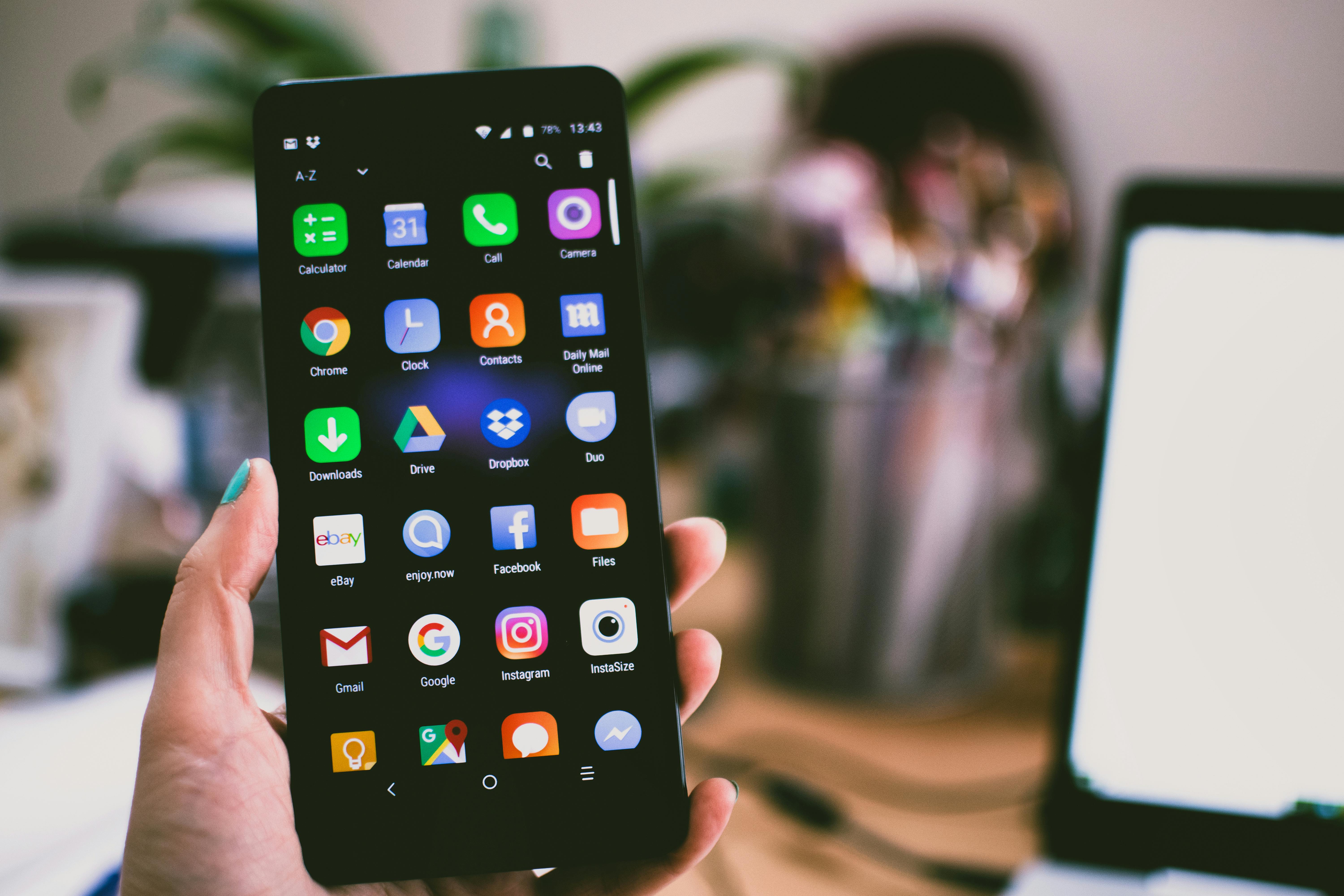
On phones, Google and Apple are turning assistants into first-class OS features. Android devices leverage on-device transformers to provide live transcription, summarization, and image understanding while staying within the device’s trust boundaries. Apple’s ecosystem, heavily focused on privacy, increasingly highlights on-device processing for dictation, image search, and context-aware suggestions.
Key Capabilities Enabled by OS Integration
- Global context: Access to notifications, files, clipboard, and app windows (subject to permissions).
- Consistent UI: System-level hotkeys, voice activation, and accessible interfaces.
- Centralized security: Permissions and sandboxing managed at the OS level.
- Deep productivity hooks: Tight links with calendars, email, documents, and settings.
“Whoever controls the assistant controls how you discover apps, information, and services.” — A theme repeatedly highlighted in The Verge’s coverage of AI integration into OSes and browsers.
On‑Device and Privacy‑Aware Models
A pivotal enabler of this new wave of AI assistants is the rise of specialized NPUs and optimized models that can run directly on consumer hardware. This allows inference to happen locally, reducing dependence on cloud connectivity and minimizing the sharing of raw personal data.
Why On‑Device Matters
- Latency: On-device responses can be near-instant, especially for autocomplete, live translation, and summarization.
- Privacy: Sensitive content (photos, messages, documents) can be processed without leaving the device.
- Offline capability: Users can rely on assistants during travel, in low-connectivity regions, or in secure enterprise environments.
- Cost control: Reduces ongoing cloud compute costs for vendors and large organizations.
Technical Ingredients
From a systems perspective, on-device assistants often combine:
- Quantized LLMs (e.g., 4–8-bit weight quantization) to fit in limited memory.
- Mixture-of-experts or small/fast models for routine tasks, with optional cloud “escalation” for complex queries.
- Specialized NPUs or GPU blocks optimized for transformer operations.
- Local vector databases for semantic search over documents and photos.
“On-device AI is less about raw benchmark scores and more about trust: users need to believe that their most personal data never has to leave the hardware they own.” — A recurring argument in Ars Technica’s analysis of mobile NPUs.
For individuals and small teams exploring local AI, hardware like the Apple MacBook Pro with M3 chip or high-core-count Windows laptops with dedicated NPUs provides enough power to run compact assistants entirely offline.
Agentic Workflows: From Answers to Actions
The most transformative shift is from assistants that respond to prompts to agents that execute multi-step workflows. These systems can plan, call tools and APIs, and react to feedback, much like a junior digital colleague.
Core Concepts Behind Agentic Systems
- Tool use: Agents invoke external tools—APIs, scripts, or applications—to perform operations like file I/O, HTTP requests, or database queries.
- Planning and decomposition: A planning module breaks a user goal into sub-tasks and orders them logically.
- Memory and state: Agents maintain state across steps, remembering intermediate results and user preferences.
- Feedback loops: Error handling and self-critique mechanisms help limit cascading failures.
Example: Booking a Business Trip
Instead of asking you to click through a dozen web pages, an AI agent can:
- Parse your calendar to find suitable dates.
- Check your corporate travel policy and budget.
- Search flights and hotels via partner APIs.
- Ask clarifying questions (e.g., aisle vs. window seat).
- Book the trip and add confirmations to your calendar and email.
Discussions on platforms like Hacker News and The Next Web frequently explore the reliability and safety of such workflows—especially how to bound the agent’s capabilities and avoid unintended actions.

Productivity and Workplace Transformation
Enterprise adoption has moved beyond pilots. Tools like Microsoft 365 Copilot, Google Workspace AI, Notion AI, and specialized coding assistants are now embedded in everyday workflows across industries—from law and consulting to media and software engineering.
Common Enterprise Use Cases
- Drafting and summarizing emails, reports, and meeting notes
- Generating slide decks and proposals from structured data
- Automating routine code changes and test generation
- Monitoring dashboards and alerting humans only when anomalies arise
Workforce Implications
Reporting by Recode/Vox and Wired emphasizes a complex picture:
- Skill shifts: Demand grows for “AI-literate” workers who can design prompts, validate outputs, and integrate assistants into domain-specific workflows.
- Surveillance questions: Telemetry from assistants can reveal detailed patterns of work, raising concerns about micromanagement and privacy.
- Deskilling risks: Over-reliance on AI for routine tasks may erode foundational skills in writing, research, and coding if not managed carefully.
“AI won’t replace people, but people who know how to work with AI will replace those who don’t.” — A widely cited perspective on LinkedIn among technology leaders and hiring managers.
For professionals looking to get hands-on, books like “Generative AI for Business” provide structured frameworks for integrating assistants into real-world operations.
Competition, Gatekeeping, and Antitrust Concerns
As assistants become the main gateway to services and content, they inherit the gatekeeping power once held by browsers and search engines. This has drawn the attention of regulators in the EU, US, and beyond.
Key Regulatory Questions
- Is bundling an AI assistant with a dominant OS or browser anti-competitive?
- How should defaults be set—can users easily choose third-party assistants?
- Do assistants bias results toward their vendor’s services (e.g., app stores, shopping, media)?
- What transparency is required about ranking, recommendations, and sponsored content?
TechCrunch and The Verge have reported on active and anticipated investigations into whether AI assistants could reinforce existing monopolies, mirroring past cases around Internet Explorer, Google Search, and mobile app stores.
“If your assistant is the first and last step for most tasks, then every decision it makes—from what link to open to which app to launch—becomes an antitrust question.” — Paraphrasing antitrust commentary highlighted in TechCrunch.
AI Assistants, Crypto, and Autonomous Agents
In parallel, the crypto and web3 community is experimenting with AI agents that can hold digital wallets, pay for services, and interact autonomously with smart contracts. Outlets like Crypto Coins News and specialized research blogs track these developments closely.
What Makes Crypto-Enabled Agents Different?
- On-chain identity: Agents can have persistent blockchain-based identities.
- Programmable money: They can hold and spend tokens to pay for computation, storage, or services.
- Autonomy: Smart contracts can trigger actions and payments without continuous human involvement.
- Auditability: Key decisions and interactions can be recorded immutably on-chain.
This raises both exciting opportunities—like autonomous data markets or machine-to-machine commerce—and serious concerns about runaway agents, financial abuse, or unregulated automated trading.
Scientific Significance and Research Directions
For researchers in machine learning, human–computer interaction (HCI), and systems engineering, ubiquitous AI assistants provide a rich testbed for real-world AI. Instead of bounded lab benchmarks, agents operate in complex, noisy human environments.
Key Research Frontiers
- Robustness and reliability: Reducing hallucinations, calibrating uncertainty, and building mechanisms for graceful failure.
- Alignment and ethics: Ensuring that agents obey user intent while respecting legal, safety, and societal norms.
- Multi-agent systems: Coordinating multiple specialized agents (e.g., research, coding, scheduling) for large composite tasks.
- Human-AI collaboration: Designing interfaces where humans remain “in the loop” and maintain situational awareness.
“The long-term challenge is not building a single super-intelligent agent, but engineering a socio-technical ecosystem where humans and many AI services can collaborate safely and productively.” — Perspective reflected in recent HCI and AI systems papers.
Leading conferences like NeurIPS, ICML, and CHI feature growing tracks on agentic AI, tool use, and evaluation of assistants in complex real-world workflows.
Milestones: Key Developments in 2025–2026
The 2025–2026 period has seen a steady drumbeat of releases and integrations that collectively push AI assistants from novelty to default.
Notable Milestones
- Major OS releases shipping with pre-installed AI assistants available system-wide.
- Enterprise-wide rollouts of AI copilots in productivity suites, with formal change-management programs.
- Widespread adoption of NPUs in laptops and smartphones, marketed explicitly for on-device AI.
- The emergence of standardized “tool calling” APIs across cloud providers and SaaS platforms.
- Formal regulatory inquiries focused specifically on AI assistants as gatekeepers.
On social platforms like YouTube and TikTok, creators now routinely publish tutorials such as “A day in my life using AI agents for everything,” illustrating a cultural shift: using an assistant is becoming as normal as using a search engine.

Challenges: Reliability, Safety, and Governance
Despite rapid progress, AI assistants and agents face significant open challenges that practitioners and policymakers must address.
Technical and UX Challenges
- Hallucinations and errors: Even state-of-the-art models confidently produce incorrect information, making unsupervised automation risky.
- Context limits: Context windows, memory mechanisms, and retrieval pipelines can fail or omit critical details.
- Interface design: Users must understand when an assistant is guessing, acting, or asking for confirmation.
- Energy and cost: Running powerful models on-device or in the cloud has real energy and financial costs.
Ethical and Societal Questions
- How do we prevent biased or harmful outputs from being amplified at scale?
- Who is liable when an AI agent makes a consequential mistake?
- How can users meaningfully control, audit, and override their assistants?
- What guardrails are needed around autonomous financial or legal actions?
“The more powerful and autonomous assistants become, the more important it is that they are verifiable, debuggable, and aligned with human values.” — Common theme among AI safety researchers and policy experts in recent panel discussions and podcasts.
Podcasts on platforms like Spotify and YouTube increasingly focus on “AI ops” and governance—how to monitor assistants in production, log actions, and create escalation paths when things go wrong.
Practical Guide: Getting Value from AI Assistants Today
For individuals and teams, the key is to adopt assistants intentionally rather than haphazardly. Treat them as powerful tools with clear responsibilities, boundaries, and review processes.
Step-by-Step Adoption Strategy
- Identify repetitive tasks: Email triage, meeting summaries, document drafting, data cleaning.
- Start with “human-in-the-loop”: Let assistants generate drafts; humans review and finalize.
- Standardize prompts: Create reusable prompt templates for common workflows.
- Track outcomes: Measure time saved, quality impacts, and error rates.
- Gradually increase autonomy: Once reliability is established, allow limited unsupervised actions within strict boundaries.
Many professionals also invest in better input devices and setups—mechanical keyboards, large monitors, and noise-cancelling headphones like the Sony WH-1000XM5 —to make extended AI-augmented work sessions more comfortable and productive.
Conclusion: The Next Interface Layer Is Here
AI assistants have moved from curiosities in messaging apps to central, OS-level “agents” that touch nearly every aspect of digital life. Powered by on-device models, cloud-scale LLMs, and increasingly sophisticated tool orchestration, they are poised to become the main way people interact with software and information.
The opportunity is immense: more accessible computing, less digital busywork, and new forms of creativity and entrepreneurship. But so are the risks: concentration of power, opaque decision-making, runaway automation, and new modalities of surveillance.
The next few years will likely be defined by three parallel efforts:
- Engineering more robust, transparent, and verifiable assistant architectures.
- Developing regulatory frameworks that preserve competition and protect users.
- Teaching individuals and organizations how to collaborate effectively—and critically—with their AI counterparts.
Whether you are a developer, policymaker, or everyday user, understanding how these assistants work and where they are headed is now part of basic digital literacy.
Additional Resources and Further Reading
To go deeper into the world of AI assistants and agents, consider exploring:
- TechCrunch’s AI coverage for startup and product launch news.
- The Verge’s AI section for interface, device, and consumer tech analysis.
- Wired’s AI features for cultural and ethical perspectives.
- arXiv papers on tool-use and agentic language models for technical depth.
- YouTube channels focusing on AI workflows and automation, such as “Two Minute Papers” and “Matt Wolfe,” which regularly demonstrate practical use cases.
As the ecosystem matures, expect a growing market of specialized agents for domains like medicine, law, engineering, and education—each with tailored safeguards, evaluation metrics, and regulatory oversight. Staying informed now will make it easier to evaluate and adopt these tools responsibly as they arrive.
References / Sources
The following sources provide additional background and ongoing coverage of AI assistants and agents:
- https://techcrunch.com
- https://www.theverge.com
- https://www.wired.com
- https://arstechnica.com
- https://thenextweb.com
- https://news.ycombinator.com
- https://openai.com/research
- https://deepmind.google/research
- https://arxiv.org (search for “AI assistants”, “tool use”, and “agentic workflows”).
