Zen but Make It Cozy: How to Nail Japandi & Organic Modern Style in Your Living Room and Bedroom
If your living room currently looks like a yard sale hugged a Pinterest board and lost, Japandi and organic modern style might be your new design therapist. These two closely related trends are quietly taking over living rooms and bedrooms, promising fewer regrets at 2 a.m. when you trip over last season’s “statement” decor.
Japandi (Japan + Scandi) and its chill cousin, organic modern, mix Japanese wabi-sabi (calm, natural, a little imperfect) with Scandinavian hygge (cozy, bright, practical). The result? Spaces that feel like a spa, a design magazine, and your favorite soft blanket had a very peaceful baby.
Today we’re diving into how to bring this trend into your living room and bedroom—without selling your sofa, your soul, or your entire personality. Expect:
- Real-life tips for small spaces and real budgets
- Easy swaps instead of full renovations
- A healthy dose of decor humor so you don’t spiral while choosing beige paint
Search trends are loving phrases like “Japandi living room,” “organic modern bedroom,” and “Japandi wall decor”—so let’s make sure yours doesn’t just look good online, but also works for actual living, napping, and occasional crumb-dropping.
What Is Japandi & Organic Modern, Really?
Imagine your home has two fairy godparents:
- The Japanese one whispers, “Simplify. Celebrate natural materials. Imperfection is beautiful.”
- The Scandinavian one adds, “Make it bright. Make it cozy. Please have storage.”
Japandi is that fusion: stripped-back, nature-heavy, and deeply calm. Organic modern is the slightly more relaxed sibling—still minimal, but with soft curves, chunky textures, and a bit more warmth.
In both living rooms and bedrooms, the look usually includes:
- Low, grounded furniture: Think platform beds and low sofas that look like they’re meditating.
- Natural textures: Light wood, linen, cotton, wool, rattan, ceramics, paper lanterns.
- Soft, organic shapes: Curved coffee tables, pebble-like ottomans, rounded lamps.
- Muted earthy palettes: Stone, sand, clay, sage, oat milk (yes, it’s a shade now), with a pinch of black for contrast.
- Decluttered surfaces: Less “stuff museum,” more “every object earns its spot.”
The goal: calm, nature-inspired rooms that feel timeless, not like a trend that expires faster than last week’s viral candle.
Why Japandi & Organic Modern Are Everywhere Right Now
The internet is collectively whispering, “I am tired,” and interiors are reflecting that. Here’s why this style is trending hard:
- Post-clutter fatigue: After maximalist walls and rainbow everything, people are craving visual quiet.
- Mental health & wellness: Clean lines and natural materials are sold as “good for your nervous system”—and honestly, they do feel soothing.
- Small-space friendly: Low furniture, light colors, and fewer objects make apartments feel bigger (even when your rent suggests otherwise).
- Eco-ish appeal: Focus on long-lasting, real materials (wood, wool, linen) instead of short-lived trend pieces.
If your goal is a home that still looks good five years from now and doesn’t scream, “I decorated this in one frantic weekend,” Japandi and organic modern are your patient, practical friends.
Japandi & Organic Modern Living Room: Calm Without Being Boring
Let’s start with the room where you binge shows, pretend to read, and lose your remote: the living room.
1. Go Low (Your Sofa Wants to Nap Too)
The quickest way to “Japandi-fy” your living room is a low-profile sofa or sectional with simple lines and solid fabric. No wild patterns. No twelve tufted buttons. Just calm.
- Look for clean, boxy shapes with slim arms or no arms at all.
- Choose linen, cotton, or textured weave in stone, sand, or warm gray.
- Pair it with a solid wood or rounded coffee table in oak, ash, or birch.
No budget for a new sofa? Cheat:
- Swap a busy slipcover for a plain natural-tone one.
- Replace loud cushions with two or three textured neutrals.
- Lower the visual weight with a low, wide coffee table and simple rug.
2. Layer Natural Textures Like a Very Calm Sandwich
Japandi and organic modern rooms rely on texture so neutral doesn’t become “rental beige sadness.”
- A jute or wool rug under a softer cotton or shag rug.
- Rattan or cane side tables or a storage basket by the sofa.
- Ceramic vases in simple, organic shapes (bonus: branches or a single stem).
The trick is contrast: smooth walls + chunky rug + matte wood + soft textiles. The room should feel like everything is quietly getting along.
3. Decluttered, Not Empty: Style Surfaces with Intention
Japandi is not “own nothing” minimalism. It’s “own things that make sense” minimalism.
For your coffee table or console, try this formula:
- 1 stack of 1–3 neutral coffee table books
- 1 sculptural object (bowl, stone, small wood piece)
- 1 natural element (branch, leaf, or small plant)
That’s it. If your surface starts to look like a gift shop, subtract until it feels calm again.
4. Lights: Soft, Warm, and a Little Paper-y
Lighting is a big part of this trend—think paper lantern pendants, linen drum shades, and low, warm pools of light rather than a single interrogation-style ceiling bulb.
- Add a floor lamp with a fabric shade beside the sofa.
- Choose bulbs in the warm white range (around 2700–3000K).
- If possible, swap a fussy chandelier for a simple rice paper or linen pendant.
Small DIY idea: Limewash or clay-effect paint on one living room wall adds that soft, cloudy texture you see in every organic modern moodboard. It’s forgiving, low-sheen, and makes even a basic sofa feel fancier.
Japandi & Organic Modern Bedroom: Your New Sleep Sanctuary
Your bedroom should not double as your office, gym, and laundry storage, but life happens. Japandi and organic modern design can help trick your brain into “this is a calm place” even if there’s a computer and a rogue sock nearby.
1. The Platform Bed: Low, Simple, Relaxed
If you’re upgrading one thing, make it your bed frame. A low platform bed in wood with a simple or slatted headboard is peak Japandi.
- Choose light wood like oak or ash for that airy feel.
- Skip ornate headboards; opt for flat panels or vertical slats.
- If you’re renting, a simple wood frame + oversized pillow headboard still gives the look.
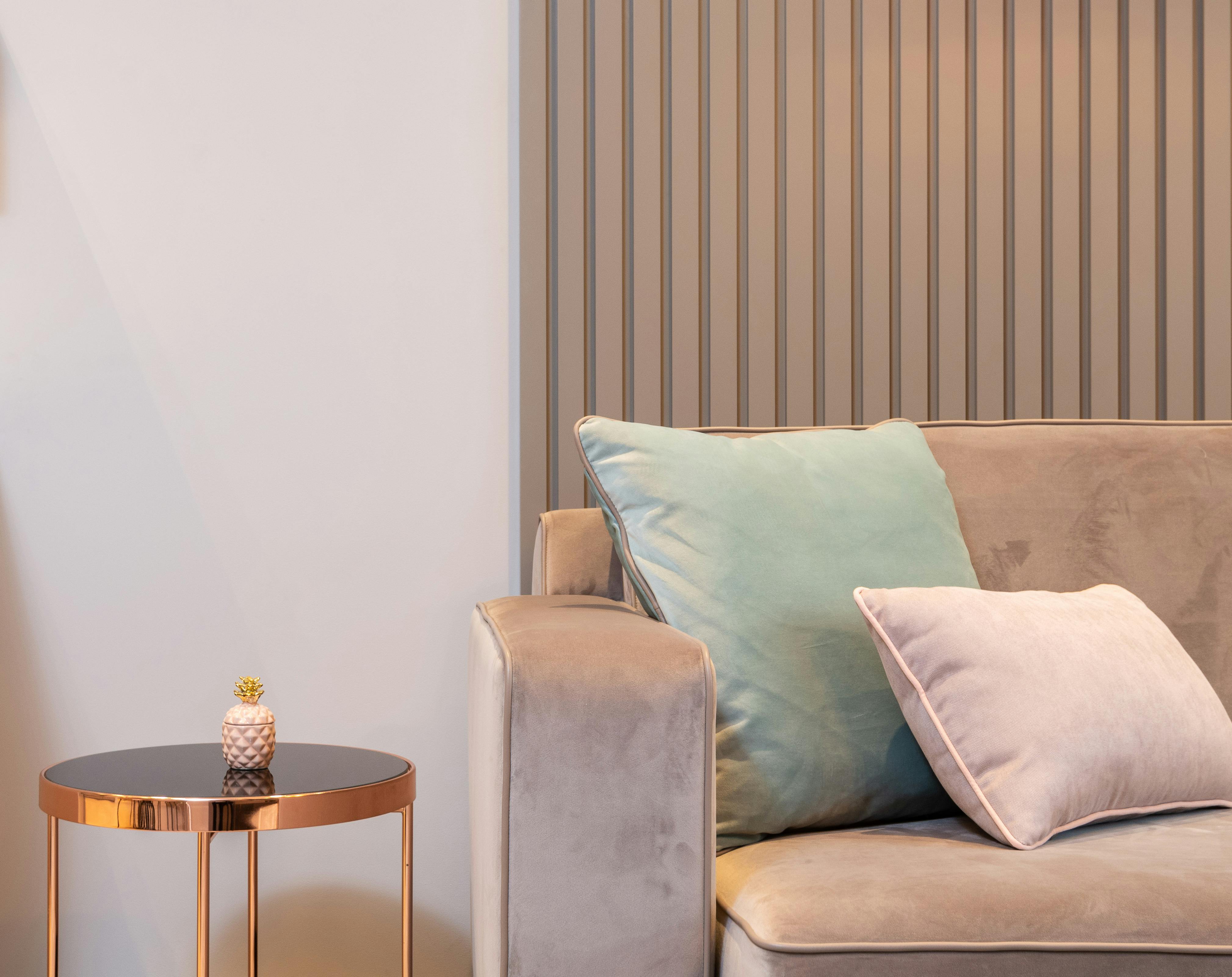
DIY-inclined? A slatted wood headboard wall behind the bed is all over DIY content right now—a few battens, spacers, and patience turns a plain wall into a Pinterest moment.
2. Linen Bedding: Wrinkled on Purpose (Finally)
Wabi-sabi loves a good wrinkle. Linen or washed cotton bedding in off-white, stone, clay, or sage instantly says “I care about design but I also nap aggressively.”
- Mix tones: warm white sheets, sand duvet, clay or sage pillows.
- Limit patterns to a subtle stripe or thin grid if you need variety.
- Layer one textured throw at the foot of the bed in a darker tone (charcoal, cocoa).
3. Nightstands & Lighting: Quietly Useful
Your bedside doesn’t need 12 products and 4 remotes. Japandi bedside styling is simple:
- A small wooden or floating nightstand (hello, more floor space).
- One compact table lamp with a fabric shade or a slim wall sconce.
- One tray or bowl for glasses, jewelry, and the “how did this end up here?” hair tie.
Add one personal object: a small ceramic dish, a tiny vase with a single stem, or a favorite book. That’s enough. The rest can live in a drawer like a civilized chaos goblin.
4. Calm Walls, Big Art
On social feeds, Japandi bedrooms often feature one large piece of simple art above the bed: a soft abstract, a line drawing, or a nature-inspired print.
- Keep frames slim (black, oak, or white).
- Choose matte paper or canvas, nothing too glossy.
- Or hang a fabric wall hanging in a solid or simple pattern for extra softness.
Pair it with walls in warm white, greige, or a light clay tone. If you’re feeling bold, a limewashed accent wall behind the bed adds subtle movement without feeling busy.
The Japandi & Organic Modern Color Palette: Your New Neutrals
Think of your palette like a latte lineup: milky, oat-y, a bit of caramel, maybe a sprinkle of matcha if you’re feeling wild.
A simple formula:
- Base (60%): Warm whites, soft beige, light greige.
- Secondary (30%): Sand, stone, taupe, soft clay, pale sage.
- Accent (10%): Charcoal, black, deep brown, muted terracotta.
Use your boldest colors in small doses: a lamp base, picture frame, or throw pillow. If your room starts to feel like a monochrome oatmeal bowl, add one deeper tone for contrast and one plant for life.
Remember: the magic is less about exact shades and more about how soft everything feels together. Avoid harsh whites and super cool grays; they can make the space feel more office than oasis.
Hidden Storage: Because Minimalism Still Needs a Junk Drawer
Japandi homes online often look like no one actually lives there. In the real world, you have cords, chargers, random mail, and that one mysterious key. The trick is concealed storage.
- Choose closed media units and sideboards in wood instead of fully open shelving.
- Use lidded baskets (rattan, seagrass) under consoles or next to the sofa.
- Add a storage bench in the bedroom for extra linens, blankets, and “I’ll deal with this later” items.
- In small spaces, consider built-in or wall-mounted cabinets painted to match the wall for a seamless look.
The mantra is: “Out of sight, out of stress.” Your home can look peaceful even if your drawers know the truth.
How to Get the Look on a Normal-Person Budget
You do not need designer everything to pull this off. Strategic changes go a long way in living rooms and bedrooms.
Start with These High-Impact Swaps:
- Rugs: Replace busy patterns with a solid or subtly textured neutral.
- Cushions & throws: Stick to 2–3 colors across the room, all in natural textures.
- Lamp shades: Swap colored or metal shades for fabric or paper ones.
- Wall art: Replace galleries of many tiny frames with 1–3 larger, simpler pieces.
- Hardware: Change shiny, fussy handles to matte black, brushed brass, or wood knobs.
DIY-Friendly Upgrades:
- Paint walls in a warm off-white and leave the ceiling bright white.
- Build a simple wood bench for the entry or under a window using basic lumber.
- Turn a plain side table into an “organic modern” moment with fluted trim around the base.
- Use peel-and-stick slat panels as a feature behind the bed or TV unit.
Upgrade slowly, one zone at a time: first your sofa area, then your bed wall, then lighting. Your wallet (and decision fatigue) will thank you.
Keeping Your Personality in a Minimal Space
Concerned that Japandi equals “witness protection chic”? The key is to curate, not erase, your personality.
- Rotate favorite objects instead of displaying everything at once.
- Display one or two meaningful items per room: a travel memento, a handmade bowl, a vintage lamp.
- Use books and plants as your main “decor clutter” so it still feels alive.
- Choose fragrances—candles, diffusers—in natural scents like cedar, sandalwood, or citrus.
Your home should feel like a calmer version of you, not an entirely different person who only drinks herbal tea and speaks in whispers.
Final Thoughts: Your Home, but Softer
Japandi and organic modern style aren’t about perfection; they’re about creating living rooms and bedrooms that feel intentional, calm, and quietly stylish. Low furniture, natural textures, decluttered surfaces, and a warm, earthy palette do most of the heavy lifting.
Start small: clear a surface, soften a light, swap a rug, or add one organic-shaped piece. Bit by bit, your home will start to feel less like a storage unit with a sofa and more like the restful, grounded space you actually deserve.
And if anyone asks what your new look is called, you can say: “It’s Japandi-organic-modern-minimal-wabi-hygge.” Then hand them a cup of tea and let your very calm living room do the rest of the talking.
Suggested Images (Strictly Relevant)
Below are carefully selected, royalty-free, high-quality images that directly support key concepts in this blog. Each image reinforces a specific section and visually explains the decor ideas discussed.
Image 1: Japandi / Organic Modern Living Room
Placement: After the subsection “2. Layer Natural Textures Like a Very Calm Sandwich” in the living room section.
Image description: A realistic photo of a Japandi-inspired living room featuring a low, light-colored fabric sofa with clean lines, a solid light-wood coffee table with rounded corners, and layered rugs (a larger jute rug under a softer neutral rug). There should be a rattan or cane side table, a ceramic vase with a simple branch on the coffee table, and a closed wood media console. Walls are warm white with minimal decor, and lighting includes a fabric or paper-shaded floor lamp. No visible people, no abstract decorative clutter, just intentional, functional pieces.
Supports sentence/keyword: “Japandi and organic modern rooms rely on texture so neutral doesn’t become ‘rental beige sadness.’”
SEO-optimized alt text: “Japandi organic modern living room with low sofa, light wood coffee table, layered jute and wool rugs, rattan side table, and ceramic vase with branch.”
Example image URL:
https://images.pexels.com/photos/6587830/pexels-photo-6587830.jpeg
Image 2: Japandi / Organic Modern Bedroom
Placement: After the subsection “2. Linen Bedding: Wrinkled on Purpose (Finally)” in the bedroom section.
Image description: A realistic bedroom with a low wooden platform bed and a simple or slatted wood headboard. The bed is dressed in wrinkled linen bedding in off-white and sand tones, with one clay or sage accent pillow and a textured throw at the foot of the bed. Walls are warm white or light beige, with one large, simple artwork above the headboard. A small wooden nightstand holds a ceramic lamp with a fabric shade and a small vase with a single stem. Floors are light wood, and possibly a neutral rug underneath the bed. No people, no excessive decor.
Supports sentence/keyword: “Linen or washed cotton bedding in off-white, stone, clay, or sage instantly says ‘I care about design but I also nap aggressively.’”
SEO-optimized alt text: “Japandi organic modern bedroom with low wood platform bed, neutral linen bedding, slatted headboard, and minimal wall art.”
Example image URL:
https://images.pexels.com/photos/7018406/pexels-photo-7018406.jpeg
Image 3: Detail of Slatted Wood Headboard Wall
Placement: After the paragraph mentioning “DIY-inclined? A slatted wood headboard wall behind the bed…” in the bedroom section.
Image description: A close-up or mid-range realistic photo focusing on a bedroom wall with vertical wood slats forming a headboard feature behind a simple bed. The wood slats are light or mid-tone, evenly spaced, and extend at least partway up the wall. The bed below is kept minimal with neutral bedding. Lighting can include a wall sconce or pendant close to the slatted feature. No people, no unrelated decor elements.
Supports sentence/keyword: “A slatted wood headboard wall behind the bed is all over DIY content right now…”
SEO-optimized alt text: “Vertical wood slat headboard feature wall in a Japandi style bedroom with neutral bedding.”
Example image URL:
https://images.pexels.com/photos/8031900/pexels-photo-8031900.jpeg