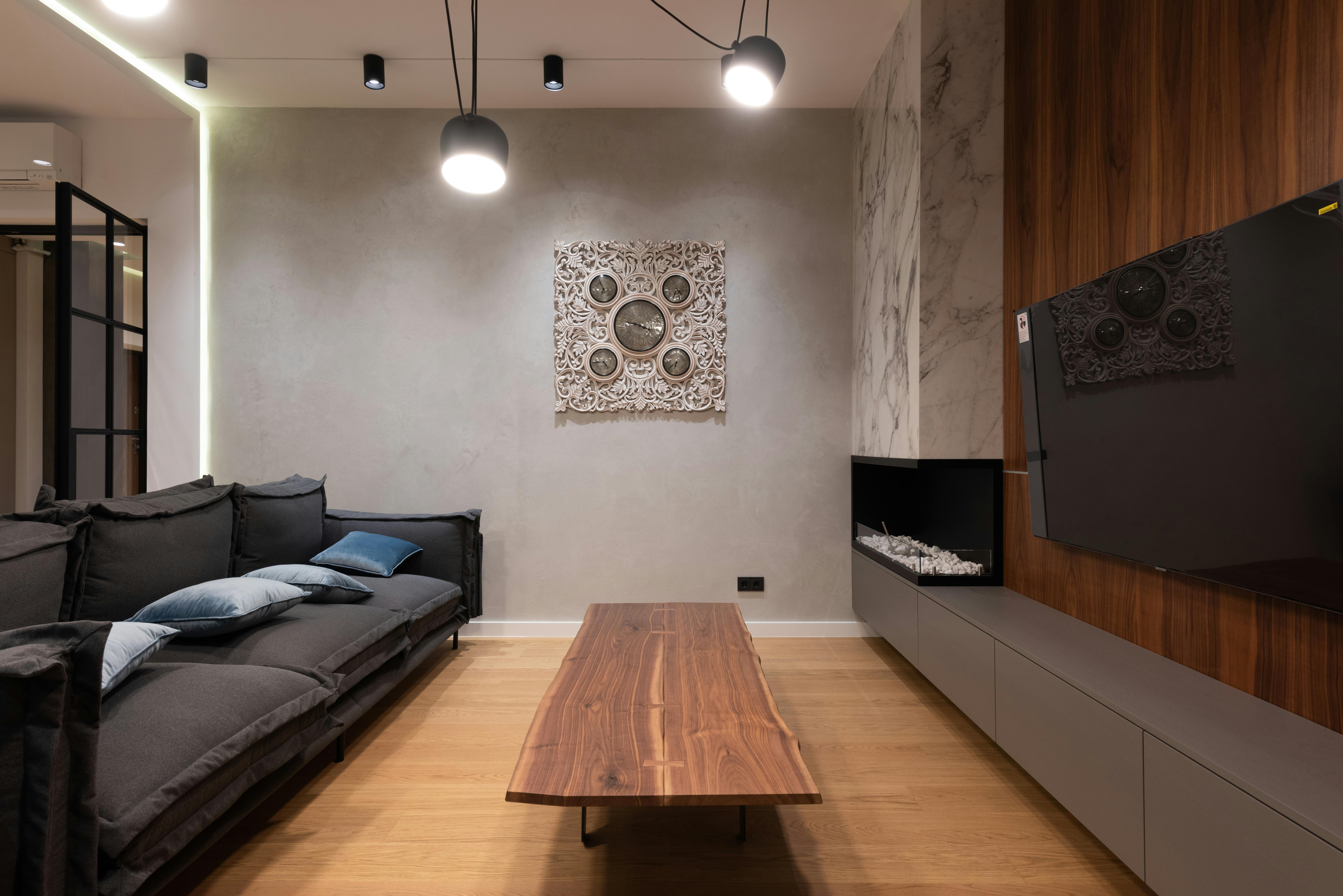
Your Sofa Has a Side Hustle: Genius Small-Space Layouts for Rooms That Do It All
When your living room is also your bedroom, home office, and occasionally your gym, decorating can feel like solving a Rubik’s Cube with throw pillows. The good news: with the right tricks, your 400-square-foot apartment can live like a very polite 800-square-foot one—no major renovation, no magical portal, just clever design and a tiny bit of discipline (the emotional kind, not the “no more plants” kind… we would never).
Today’s big trend in home decor is all about small-space, multi-use rooms—especially flexible living room and bedroom layouts that juggle work, sleep, hosting, and storage without looking like a furniture traffic jam. Think: sofas with side hustles, beds that moonlight as walls, and coffee tables that are basically Transformers with better aesthetics.
Let’s turn your one-room wonder into a shape-shifting superstar.
Step 1: Give Your Room a Résumé — Define Its “Job List”
Before you buy anything with hidden storage and life-changing promises, decide what you actually need the room to do. Small-space success starts with a brutally honest list. Ask:
- Does this room need to be a living room + bedroom?
- Is there a work-from-home setup involved?
- Do you host overnight guests regularly or once in a blue moon?
- Do you need workout space, or will that yoga mat remain purely aspirational?
Once you’ve written down the room’s “job description,” rank each job by importance and frequency. Your layout should prioritize what you do daily (sleep, work, relax) over what you do occasionally (host guests, drag out the stationary bike of guilt).
Pro tip: If everything is “priority,” nothing is. Pick one main function and 1–2 supporting roles.
Step 2: Zone Your Space Like a Tiny, Stylish City
In multi-use rooms, zoning is your superpower. You can’t build walls (well, not easily), but you can trick your brain into thinking there are walls using:
- Rugs to define “living room,” “bedroom,” or “office” areas
- Lighting to signal “work mode” vs. “relax mode”
- Furniture placement as soft dividers
For example, in a studio, place a rug under the sofa and coffee table to define the living area, and a second rug under the bed (even if it’s partly under) to visually mark the sleeping zone. Different but coordinating colors or patterns keep it cohesive instead of chaotic.
Lighting does the rest. A focused desk lamp says “emails only, please.” A floor lamp near the sofa says “we’ve closed all the tabs and opened Netflix.” If possible, put your work zone near a window so you’re less tempted to work from bed. Your back and your boss will both be grateful.
Step 3: Let Your Furniture Have a Side Hustle
In 2026, furniture is no longer allowed to have just one job. Not in this economy. Multi-use pieces are the backbone of small-space, flexible layouts, especially in living rooms and bedrooms.
For Living Rooms That Moonlight as Guest Rooms (or Offices)
- Sleeper sofas & daybeds: Modern versions are actually cute now (we survived the lumpy sofa bed era so you don’t have to). Look for:
- Clean lines so they don’t visually overwhelm the room
- Neutral upholstery you can dress up with throws and pillows
- Easy-open mechanisms (test them if you’re buying in-person)
- Nesting coffee tables: Use one daily, pull out the extras when you’re working, eating on the sofa, or hosting game night. Then tuck them away like your 12 open browser tabs.
- Storage ottomans & benches: These are your clutter bodyguards. Hide blankets, guest bedding, extra cables, or that collection of chargers you swear you’ll organize “soon.”
- Extendable dining tables that double as desks: In tiny apartments, one good table can do it all—dining, spreadsheets, craft projects, and the occasional dramatic life re-evaluation.
For Bedrooms That Need to Disappear by Day
- Murphy beds: They’re having a huge comeback in studio apartments. Pair with shallow side cabinets or floating shelves to create a built-in look without a full renovation.
- “Bed in a cabinet” or platform bed with storage: DIYers are building beds that slide into cabinets or onto platforms with deep drawers. This lets one wall serve as both bed and storage central.
- Headboards with shelves: Excellent for small bedrooms where you can’t fit nightstands. Keep your reading lamp, phone, and water glass within reach—no more contortionist acts at 2 a.m.
Step 4: Vertical Storage — Because Floors Are Overrated
When you can’t spread out, you go up. Wall decor is now doing double duty as storage, and it’s one of the biggest trends across small apartments, boho spaces, and minimalist homes.
- Pegboards & rail systems: Fantastic for offices, craft corners, small kitchens, and entryways. Hang mugs, utensils, headphones, office supplies—whatever usually litters your horizontal surfaces.
- Picture ledges: Use them as skinny shelves above sofas, desks, or beds. They’re perfect for books, small plants, framed art, and tiny storage jars without visually weighing down the wall.
- Wall-mounted hooks & magnetic strips: In entryways, mount hooks for coats and bags; in kitchens, use magnetic strips for knives or spice containers instead of another bulky rack.
Minimalists often go for flush, built-in-looking cabinets painted the same color as the wall, so they visually disappear. Boho and farmhouse fans lean into woven baskets, ladder shelves, and wall-mounted planters for storage that also feels cozy and styled.
Rule of thumb: if it can go on a wall instead of the floor, it probably should.
Step 5: Room Dividers That Don’t Ruin the Vibe
You don’t need a solid wall to create separation—in fact, in small spaces, that can make things feel like a maze. Instead, use room dividers that let light flow while still giving you a sense of privacy.
- Curtains: Ceiling-mounted curtains around a bed instantly create a “room within a room.” Choose light fabrics so you’re not sleeping in a cave (unless that’s the vibe).
- Open shelving: Use a bookshelf as a semi-transparent wall between living and sleeping zones. Store books, baskets, and decor on it—but don’t pack it so full that it becomes a visual barricade.
- Folding screens: Great for hiding a desk at the end of the day or carving out a work nook. Bonus: they fold away when you’re hosting and need the extra square footage.
- Half walls or low storage units: A low dresser at the foot of the bed can double as a divider and TV stand in a studio, keeping the bed tucked away from the sofa view.
Choose dividers that match your style: rattan or wood for boho and farmhouse, black metal and glass for industrial, white or tone-on-tone panels for minimalist decor.
Step 6: The Zoom-Ready Corner (That Doesn’t Own Your Whole Room)
Remote and hybrid work are here to stay, which means your home office often lives in your living room or bedroom. The trick is keeping it compact, functional, and not hideously visible during every dinner party.
Design a Tiny but Mighty Work Zone
- Choose a compact desk: Wall-mounted fold-down desks are huge in tiny apartments right now. Fold up after work, and your office literally disappears.
- Keep a neutral Zoom backdrop: A plain wall, simple art, or pegboard neatly styled looks intentional and professional. Avoid positioning your bed directly behind your head if you can—your boss doesn’t need to see your pillow situation.
- Use wall sconces or clamp lamps: Free up desk space by getting lighting off the surface. Installing plug-in sconces is a very doable weekend DIY—no electrician required.
- Hide work stuff after hours: A rolling cart, nearby cabinet, or storage ottoman can swallow your laptop and paperwork so your home doesn’t feel like an office 24/7.
Think of your work zone like a pop-up shop: it should appear during business hours and then politely vanish.
Step 7: Layout Templates for Real-Life Small Spaces
Let’s make this practical. Here are a few layout formulas you can adapt to your own “cozy” (read: small) situation.
1. Studio Apartment: Living Room by Day, Bedroom by Night
- Place a sleeper sofa or daybed against the longest wall.
- Put a rug under the sofa and coffee table to mark the living zone.
- Use a low bookshelf or storage console as a divider behind the sofa.
- Position a Murphy bed or bed-in-a-cabinet on the opposite wall, or a regular bed tucked into a corner with curtains as a “bed nook.”
- Mount floating shelves and pegboards above the sofa and desk area to keep surfaces clear.
2. Bedroom + Office Combo
- Put the bed on the longest uninterrupted wall; avoid shoving it under a window if that makes the room feel chopped up.
- Choose a headboard with storage or wall-mounted nightstands to free up floor space.
- Create a work zone near the window if possible, using a compact desk.
- Use a rug under the bed and a smaller rug beneath the desk chair to visually separate “sleep” from “work.”
- Hang a curtain or folding screen that can slide or rotate to hide the desk when you’re off the clock.
3. Small Living Room: Lounge, Dining, and Office in One
- Place the sofa against a wall or floating in the middle of the room if space allows, with a rug to define the seating area.
- Use an extendable dining table against another wall or behind the sofa as a “console” that transforms into a desk or dining table.
- Add stacking or folding chairs you can hang on hooks or tuck in a closet.
- Choose a coffee table with storage or nesting tables for flexibility.
- Mount a floating media unit with cabinets or drawers for electronics and extra storage.
Step 8: Style It So It Feels Intentional, Not Improvised
A multi-use room can easily look like a garage sale if you’re not careful. The secret to making it look designed (not desperate) is visual consistency.
- Pick a color palette: 2–3 main colors plus 1–2 accent shades. Use them across textiles, rugs, and decor so all your “zones” feel related.
- Repeat materials: If you love black metal, let it appear in table legs, shelving brackets, and lighting. Into warm wood? Echo it in frames, storage boxes, and furniture.
- Contain the chaos: Baskets, bins, and closed cabinets are your best friends. Open shelving should hold your prettiest or most-used things—not your “I’ll deal with this later” pile.
- Add plants—strategically: Use wall-mounted planters or narrow stands to bring in greenery without sacrificing floor space. Plants soften the hard-working, multi-functional vibe.
Your goal isn’t to hide the fact that your room does five jobs—it’s to make those jobs look coordinated, like a very chic ensemble cast.
Step 9: Tiny DIY Projects with Big Impact
You don’t need to go full renovation mode to ride the multi-use room trend. A few weekend projects can seriously upgrade your space:
- Install a wall-mounted fold-down desk: Perfect for a Zoom-ready corner in the living room or bedroom. When closed, it can double as a message board or art display.
- Build a bench with lift-up storage: Along a window or wall, this gives you seating, hidden storage, and a cozy reading perch all in one.
- Add outlets and plug-in sconces: More power sources mean more layout options. Run neat cable channels along baseboards for a polished look.
- Frame your bed with storage: Use tall cabinets or bookshelves on either side of the bed with a shelf across the top to create an almost built-in feel.
These kinds of DIYs are all over “small apartment makeover” and “tiny bedroom ideas” videos for a reason: they’re do-able, renter-friendly (or close), and they dramatically improve how your space works.
Your Small Space, But Make It Superpowered
Multi-use rooms are not a downgrade from “real” homes—they’re just homes with better time management skills. When every piece of furniture has a side hustle, every wall pitches in, and every corner has a job, your space starts to feel intentional rather than cramped.
Start with the jobs your room needs to do, zone it thoughtfully, invest in 2–3 hard-working furniture pieces, take your storage vertical, and smooth it all over with a cohesive color palette. Suddenly, your living-room-bedroom-office-gym hybrid feels less like a cluttered identity crisis and more like a very well-organized double agent.
Your square footage may be small—but your layout can be mighty.
Image Suggestions (Strictly Relevant & Royalty-Free)
Below are carefully selected, highly relevant image suggestions that directly reinforce the article content. All are from reputable, royalty-free sources and are chosen to visually explain specific concepts.
Image 1: Zoned Studio Apartment with Multi-Use Furniture
- Placement location: After the section titled “Step 2: Zone Your Space Like a Tiny, Stylish City”
- Image description: A realistic photo of a small studio apartment where the living and sleeping areas are clearly zoned. A sleeper sofa sits on a rug with a small nesting coffee table in front. Behind or beside the sofa, an open bookshelf acts as a divider. On the other side, a neatly made bed with soft linens is partially visible. Wall-mounted shelves or pegboard above a compact desk are visible in the background, showing vertical storage. Lighting includes a floor lamp by the sofa and a desk lamp in the work zone. No people present.
- Supported sentence/keyword: “In multi-use rooms, zoning is your superpower.”
- SEO-optimized alt text: “Small studio apartment layout with zoned living, bedroom, and work areas using rugs, open shelving, and multi-functional furniture.”
- Example image URL (royalty-free): https://images.pexels.com/photos/6580213/pexels-photo-6580213.jpeg
Image 2: Murphy Bed and Wall-Mounted Storage in a Small Bedroom
- Placement location: After the subsection “For Bedrooms That Need to Disappear by Day” in Step 3
- Image description: A compact, realistic bedroom featuring a Murphy bed folded up into a sleek cabinet, revealing floor space that can function as a living or office area. Around the Murphy bed are built-in or wall-mounted cabinets and shelves for storage. A small desk or chair may be visible, reinforcing the multi-use concept. The style is modern and minimal; no people present.
- Supported sentence/keyword: “Murphy beds and DIY ‘bed in a cabinet’ projects are particularly popular in studio apartments…”
- SEO-optimized alt text: “Small bedroom with Murphy bed folded into a cabinet and wall-mounted storage creating a flexible multi-use space.”
- Example image URL (royalty-free): https://images.pexels.com/photos/6585763/pexels-photo-6585763.jpeg
Image 3: Wall-Mounted Pegboard and Rail System for Vertical Storage
- Placement location: After the section titled “Step 4: Vertical Storage — Because Floors Are Overrated”
- Image description: A close, realistic interior shot showing a wall-mounted pegboard or rail system used for vertical storage. This could be above a small desk or in a compact kitchen, with hooks holding utensils, mugs, or office supplies, and small shelves holding containers or decor. The floor below is mostly clear, emphasizing the space-saving approach. No people present.
- Supported sentence/keyword: “Wall decor is now doing double duty as storage, and it’s one of the biggest trends…”
- SEO-optimized alt text: “Wall-mounted pegboard and rail system providing vertical storage in a small multi-use room.”
- Example image URL (royalty-free): https://images.pexels.com/photos/3736520/pexels-photo-3736520.jpeg