
Why Right-to-Repair Is Reshaping the Future of Our Devices
The battle over who gets to fix modern technology has become one of the defining tech policy stories of the 2020s. What started as a niche concern among tinkerers, repair cafés, and a few independent technicians has grown into a mainstream movement influencing legislation in the United States, the European Union, and beyond. In parallel, regulators and consumers are pressuring manufacturers to build products that last longer, receive longer software support, and avoid the “sealed black box” design that makes repair nearly impossible.
This article explores how right-to-repair, device longevity, and the backlash against disposable tech are intersecting—covering the legal landscape, key technologies and design practices, environmental stakes, the arguments from manufacturers, and the cultural shift toward fixing rather than throwing away.

Mission Overview: From Niche Activism to Mainstream Tech Policy
At its core, the right-to-repair movement argues that if you buy a device, you should be able to have it repaired by whoever you choose—yourself, an independent technician, or the manufacturer—without artificial barriers like software locks, unavailable parts, or threatened warranties. It is both a consumer rights issue and a sustainability strategy.
Over the last few years, this mission has evolved in scope and ambition:
- Consumer electronics: Smartphones, laptops, tablets, game consoles, and wearables.
- Industrial and professional gear: Tractors, construction equipment, data center hardware.
- Medical and assistive devices: Hospital equipment, wheelchairs, and diagnostic tools.
“We shouldn't have to throw away our devices just because a single component fails. Repair is both a human right and a climate imperative.”
— Kyle Wiens, CEO of iFixit and leading right-to-repair advocate
Coverage from outlets like Ars Technica, The Verge, and Wired has helped move the discussion into the mainstream, where it now shapes product reviews, investor expectations, and policy debates.
Key Laws and Regulatory Pressure
As of late 2025, right-to-repair has gained legislative traction in multiple regions. Details change quickly, but several patterns are clear.
United States: State-Level Momentum and Federal Signals
Multiple U.S. states, including New York, Minnesota, Colorado, and California, have passed or enacted some form of digital right-to-repair legislation, typically requiring manufacturers to provide:
- Access to genuine parts and reasonable pricing.
- Diagnostic software and tools used by authorized repair centers.
- Service manuals and calibration procedures.
These laws often start with consumer electronics but are expanding to include powered wheelchairs, agricultural machinery, and more. At the federal level, the Federal Trade Commission (FTC) has signaled support by challenging “illegal repair restrictions” and publishing reports critiquing manufacturer arguments on safety and security.
European Union: Repairability and Longevity as Design Requirements
The European Union has been even more aggressive, using ecodesign and consumer protection rules to force changes that ripple worldwide. Highlights include:
- Repairability scores and labels for some products, helping consumers compare how easy devices are to fix.
- Mandatory spare parts availability for several years after a product goes off sale.
- Longer software support expectations for connected devices, aligning security and sustainability.
EU initiatives under the Circular Economy Action Plan are pressuring global manufacturers to redesign hardware for easier repair, since building a separate, less repairable model just for non‑EU markets is rarely cost-effective.
Global Trends
Other regions—including Canada, Australia, and parts of Asia—are following with their own consultations and draft rules. As international standards emerge, companies that lead on repairability will likely gain reputational and regulatory advantages.
Technology & Manufacturer Policy Shifts
Under mounting scrutiny, several major manufacturers have modified their stance on repair, often framing these moves as sustainability or customer-service initiatives.
Self-Service Repair Programs
Companies like Apple and Samsung have launched self-service or independent repair programs in selected regions. These programs typically:
- Sell genuine parts, specialized tools, and rental kits.
- Provide step-by-step official documentation.
- Require serial-number or IMEI verification for some components, particularly those tied to biometric security.
Coverage from sources such as Engadget and The Verge notes that the practicality of these programs varies. Critics argue that high part prices, complex procedures, and software pairing requirements mean many consumers still prefer independent repair shops—if they can access the same tools and parts.
Design for Repairability vs. Sealed Devices
From a hardware perspective, repairability often depends on choices made early in the design process:
- Modular design: Components like batteries, cameras, and ports can be replaced individually.
- Fasteners: Standard screws vs. proprietary or glued assemblies.
- Connector design: Use of sockets and flex cables instead of hard-soldered parts for frequently failing components.
- Documentation and labeling: Clear part numbering, board labeling, and schematics.
Companies such as Framework and Fairphone have built their entire business model around modular, easily repairable devices, demonstrating that high-performance hardware and repairability can coexist.

Software Support and “Digital Longevity”
Device longevity is not just about hardware. Operating system and security updates often dictate whether older devices remain safe and usable. Under pressure from regulators and customers, some Android vendors are extending update commitments to five years or more for flagship devices, and laptop makers are improving firmware and driver support lifecycles.
Scientific and Environmental Significance
Beyond consumer frustration, right-to-repair is deeply tied to climate goals, resource conservation, and lifecycle analysis (LCA) of electronic products.
Reducing E-Waste and Resource Consumption
According to recent United Nations and Global E-waste Monitor reports, global electronic waste has surpassed 60 million metric tons per year, and is still rising. Only a fraction is formally recycled, and much ends up in informal recycling operations where workers are exposed to toxic substances.
Extending the lifespan of devices—often by just a few years—can significantly reduce:
- Raw material extraction of rare earth elements, copper, cobalt, and gold.
- Embedded carbon emissions from manufacturing and global logistics.
- Toxic waste from batteries, flame retardants, and heavy metals.
“The greenest device is the one you already own. Repair and reuse keep products in circulation and slow the stream of e-waste to landfills and informal recyclers.”
— Adapted from sustainability research widely cited by environmental agencies
Lifecycle Assessment and Policy
Lifecycle assessment (LCA) studies increasingly inform policy, revealing that a large portion of a device’s total environmental impact occurs before the consumer ever opens the box. This reinforces the logic that:
- Repairability should be a design requirement, not an afterthought.
- Modularity should be promoted where it reduces waste, especially for high-failure components.
- Software support should be long enough to avoid premature retirement of still‑functional hardware.

Security, IP, and Safety: The Counterarguments
Manufacturers often defend repair restrictions on the grounds of cybersecurity, intellectual property protection, and user safety. These concerns are not entirely unfounded, but the debate is nuanced.
Security and Data Protection
Modern devices hold sensitive personal and corporate data. Companies argue that:
- Unauthorized repairs could introduce malicious hardware or tamper with security components.
- Calibration tools might be misused to bypass biometric security features.
However, experts on platforms like Hacker News and security researchers note that:
- Security can be preserved with robust authentication for replacement parts and encrypted storage, without banning independent repair.
- Clear repair logs, device attestation, and secure enclaves mitigate many risks.
Intellectual Property and Trade Secrets
Some manufacturers resist sharing schematics or diagnostic software, claiming it would expose trade secrets. Courts and regulators increasingly distinguish between:
- Genuine trade secrets that offer competitive advantage.
- Routine diagnostic information needed to safely repair devices.
Well-crafted right-to-repair laws often aim to protect the former while mandating access to the latter.
Safety Concerns
High-energy batteries, medical devices, and industrial equipment can indeed be dangerous if repaired improperly. This reality justifies:
- Training standards and certifications for complex repairs.
- Clear labeling of safety-critical components.
- Procedures and tooling that minimize user risk.
But blanket bans on third‑party repair often protect manufacturer margins more than consumer safety. Regulators increasingly ask manufacturers to prove that restrictions are proportionate to the risks involved.
DIY Culture and the Social Media Shift Toward Fixing
Social media has transformed public attitudes toward repair. Platforms like YouTube, TikTok, and Reddit host thriving communities of repair professionals and hobbyists who share teardowns, board‑level troubleshooting, and restoration projects.
Influential creators—such as Louis Rossmann on YouTube, iFixit’s teardown team, and numerous hardware engineers on LinkedIn—have:
- Demystified complex electronics with detailed visual guides.
- Shown that many “unrepairable” devices can indeed be fixed.
- Documented anti‑repair practices like unnecessary pairing locks or glued batteries.
“If a device can be built, it can be fixed. The difference is whether the manufacturer chooses to cooperate—or gets forced to.”
— Paraphrased sentiment from multiple right-to-repair advocates in public talks and videos
This cultural shift has real‑world effects: tech reviewers now routinely mention repairability scores, availability of spare parts, and software support windows in reviews—factors that increasingly influence buying decisions alongside camera quality or benchmark scores.
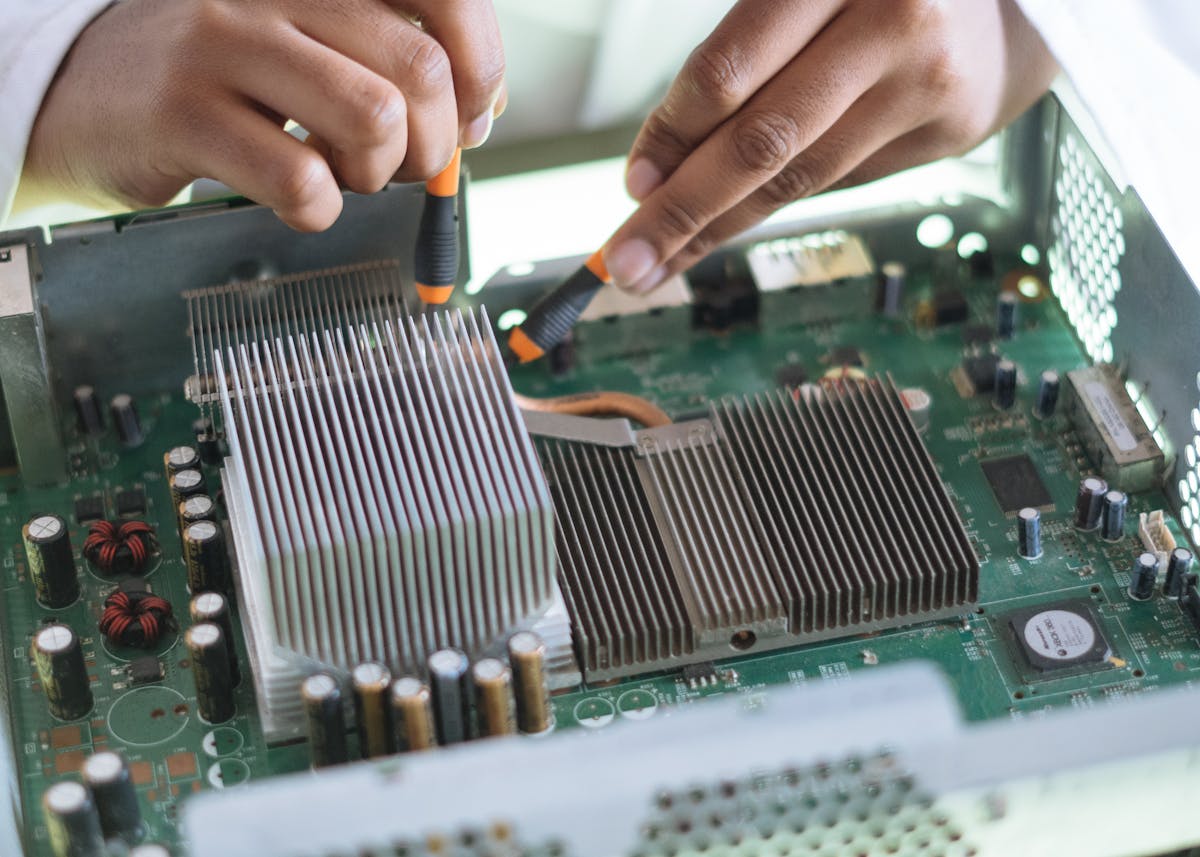
Tools, Methodologies, and Practical Repair Pathways
For consumers and technicians, successful repair depends on methods, tools, and information. A modern repair workflow typically includes:
1. Diagnosis
- Visual inspection for physical damage, corrosion, and broken connectors.
- Software diagnostics using manufacturer or third-party tools.
- Board‑level checks with multimeters, oscilloscopes, and thermal cameras for advanced repairs.
2. Disassembly
- Using specialized screwdrivers (Torx, pentalobe, tri‑point) and prying tools.
- Careful heat application to soften adhesives without damaging components.
- Documentation via photos or videos to assist reassembly.
3. Component Replacement or Repair
- Swapping modular parts like batteries, displays, and ports.
- Microsoldering to repair traces, connectors, or power‑management chips.
- Firmware or calibration steps after replacing cameras, Touch ID / Face ID modules, or sensors.
High-quality tools dramatically reduce the risk of damage. For serious hobbyists or professionals, investing in a precision electronics toolkit pays off over time. For example, the iFixit Mako Precision Bit Set is widely recommended for electronics repair and includes the types of bits used in many consumer devices.
For mobile device repairs—especially batteries and screens—heat mats and antistatic work surfaces also help maintain safety and reliability over repeated repairs.
Recent Milestones in Right-to-Repair and Device Longevity
The last few years have delivered several key milestones that illustrate how fast the landscape is changing:
- State and national laws: Multiple U.S. states and EU regulations codify repair rights and spare parts availability.
- High-profile corporate policy shifts: Large manufacturers announcing self-service repair, extended software support, or more repairable designs.
- Repairability in mainstream reviews: Sites like TechRadar and The Verge now include repairability and support windows as core criteria.
- Rise of modular hardware startups: Companies like Framework and Fairphone proving viable business models for modular, repair‑friendly devices.
- Legal and regulatory enforcement: Authorities challenging warranty-voiding stickers, restrictive licensing for parts, and other anti‑repair tactics.
These milestones are not endpoints; they are early indicators that repairability and longevity are becoming competitive factors—not mere concessions.
Persistent Challenges and Open Questions
Despite the momentum, substantial challenges remain before repairable, long-lived devices become the default.
Economic Incentives and Business Models
Many manufacturers still rely on rapid upgrade cycles, high-margin authorized repair services, or subscription models tied closely to hardware turnover. Transitioning to:
- Service-based revenue that values long-lived hardware,
- Refurbishment and certified pre‑owned programs, and
- Component-level aftermarkets,
requires deliberate strategic shifts and investor patience.
Global Enforcement and Loopholes
Even where laws exist, enforcement can lag. Common loopholes include:
- Making parts technically available but prohibitively expensive.
- Using software locks (e.g., pairing chips) to limit functionality after third‑party repair.
- Restricting access to calibration servers or online diagnostics.
Skills and Education
Legal rights are only as meaningful as the skills and infrastructure to use them. Scaling up:
- Vocational training in electronics repair and microsoldering.
- Community repair events (repair cafés) and maker spaces.
- Online curricula and certifications for different device categories.
will be crucial to ensuring that right-to-repair translates into actual repairs performed safely.
Practical Tips for Consumers Who Want Long-Lived Devices
While policy battles continue, individual buyers can already make smarter, more sustainable choices.
Before You Buy
- Check repairability scores and teardown guides on platforms like iFixit.
- Look for devices with user‑replaceable or modular components (especially batteries and storage).
- Prioritize brands that clearly state software update timelines.
- Read independent reviews that highlight longevity, not just launch‑day performance.
After You Buy
- Use quality protective cases and screen protectors to reduce physical damage.
- Follow battery health best practices like avoiding extreme heat and full discharges when possible.
- Consider professionally installed repairs instead of immediate replacement when something fails.
- When upgrading, resell or donate working devices and recycle responsibly if they are beyond repair.
For DIY‑inclined users, a robust toolkit can make basic repairs far more accessible. In addition to precision bit sets, anti‑static mats and small parts organizers (e.g., magnetic project mats) can reduce mistakes and lost components.
Conclusion: From Disposable Tech to Durable Infrastructure
Right-to-repair and device longevity are no longer fringe concerns; they are central to how we evaluate, regulate, and design technology. They sit at a powerful intersection of:
- Consumer rights to control and maintain owned devices,
- Environmental responsibility in the face of mounting e-waste,
- Corporate accountability for design choices that restrict or enable repair, and
- Cultural values around stewardship vs. disposability.
As legislation matures and companies adapt, the devices we buy in the late 2020s and beyond may look similar on the outside but be radically different inside—modular where they were once sealed, documented where they were once opaque, sustainable where they were once disposable.
For technologists, policymakers, and everyday users alike, the key question is shifting from “Can I repair this?” to “Why was it ever designed so I couldn’t?” The answer to that question will shape the next decade of hardware innovation and environmental policy.
Additional Resources and Future Directions
To go deeper into right-to-repair and repairable design, consider exploring:
- Teardown libraries that show how various devices are constructed.
- Academic research on circular economy and hardware lifecycle modeling.
- Open hardware projects that publish schematics, firmware, and repair documentation by default.
- Policy think tanks tracking the economic and environmental impact of repair regulations.
Looking ahead, several emerging trends could further transform this space:
- Standardized battery formats for certain classes of devices, enabling drop‑in replacements.
- International repair data standards, so tools and diagnostic logs can interoperate across brands.
- AI‑assisted diagnostics that help technicians quickly pinpoint likely faults from symptoms and sensor logs.
- Integration of repair metrics into ESG (environmental, social, and governance) reporting for public companies.
Together, these developments point towards a future where digital devices are treated less like disposable fashion accessories and more like durable infrastructure—maintained, upgraded, and valued over time.
References / Sources
Further reading from reputable sources:
- Ars Technica – Right-to-repair legislative developments
- Wired – Right-to-repair coverage and analysis
- The Verge – Right-to-repair news hub
- U.S. Federal Trade Commission – Right to Repair resources
- European Commission – Circular Economy Action Plan
- iFixit – Right-to-Repair campaign and resources
- YouTube – Right-to-repair talks, teardowns, and tutorials
- Global E-waste Monitor – Data and reports on electronic waste
