
Why Perovskite Tandem Solar Cells Could Outshine Silicon in the Clean Energy Race
Perovskite-based and tandem solar cells have moved from obscure lab curiosities to headline-grabbing clean-energy contenders in just over a decade. In that time, perovskite cell efficiencies have climbed from under 4% to well above 25% in the lab, while perovskite–silicon tandems have already crossed the 30% efficiency barrier—beyond the practical limits of single-junction silicon. This combination of performance, low-temperature processing, and striking visual demos of flexible and semi-transparent panels explains why they dominate science and technology feeds, YouTube explainers, and climate-tech newsletters.
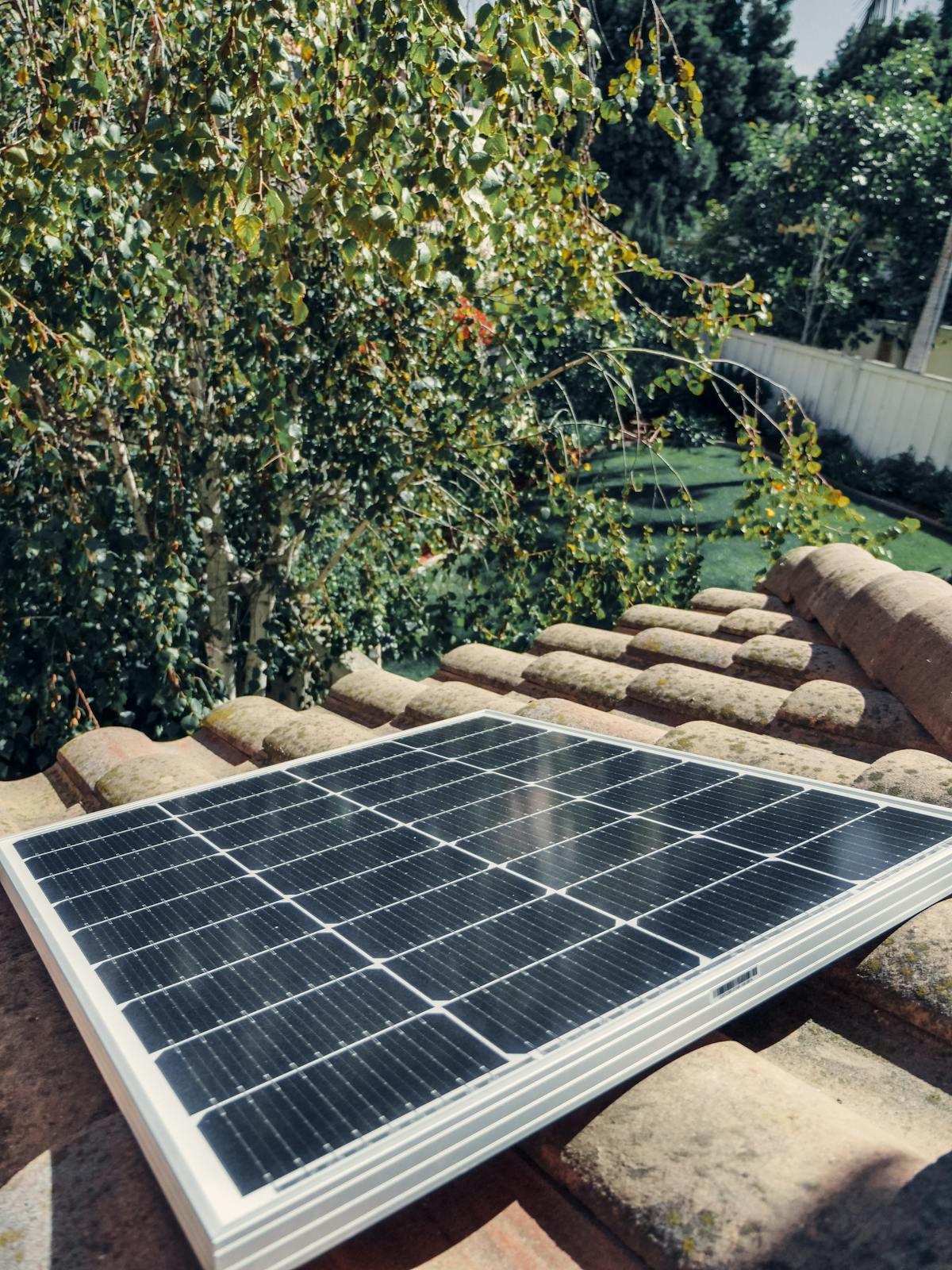
At the heart of the excitement is a simple question: can perovskite and tandem photovoltaics scale from eye-catching prototypes to durable, bankable products that accelerate the global energy transition? This article unpacks the science, technology, opportunities, and challenges behind that question.
Background: What Are Perovskite Solar Cells?
Perovskite solar cells are based on materials that share the crystal structure of the mineral perovskite (calcium titanium oxide, CaTiO3). In photovoltaics, “perovskite” usually refers to hybrid organic–inorganic lead halides with a generic formula ABX3, where:
- A-site cation: often methylammonium (MA), formamidinium (FA), or cesium (Cs)
- B-site cation: typically lead (Pb), sometimes tin (Sn) or alloyed mixes
- X-site anion: a halide such as iodide (I−), bromide (Br−), or chloride (Cl−)
These materials absorb light exceptionally well, have long carrier diffusion lengths, and can be processed from solution at relatively low temperatures (often <150 °C). This combination is highly unusual: silicon required decades of refinement to reach similar efficiencies via energy-intensive, high-temperature processing.
“Perovskites have demonstrated the most rapid rise in power conversion efficiency of any solar technology in history.” — National Renewable Energy Laboratory (NREL)
The Shockley–Queisser limit caps the theoretical efficiency of a single-junction solar cell at around 33% for an optimal bandgap. Traditional crystalline silicon is fast approaching its practical ceiling near this limit, whereas perovskites open a route to multi-junction architectures that can exceed it.
Mission Overview: Why Perovskites and Tandems Matter Now
Global decarbonization requires vast additions of low-cost, reliable solar power. Silicon photovoltaics (PV) are already a success story, but cost curves are flattening and incremental gains are getting harder. Perovskites and tandems aim to:
- Boost efficiency beyond silicon’s practical limits to extract more power per square meter of roof or land.
- Enable new form factors such as flexible, lightweight, and semi-transparent modules for buildings, vehicles, and electronics.
- Lower manufacturing energy and capex via solution processing, printing, and roll-to-roll fabrication.
The “mission” for researchers and companies is to prove that perovskite and tandem solar cells can deliver:
- High, stable efficiency over 20–30 years of outdoor operation.
- Safe handling of lead or credible lead-free alternatives.
- Manufacturing at gigawatt scale with competitive levelized cost of electricity (LCOE).
This is why announcements from groups like Oxford PV, LONGi, and various university consortia routinely appear in outlets such as Nature Energy, Science, and clean-tech media.
Technology: How Perovskite and Tandem Solar Cells Work
Perovskite Solar Cell Architectures
Several device architectures are used, but two dominant ones are:
- n–i–p (normal) structure: transparent conducting oxide / electron-transport layer (ETL) / perovskite absorber / hole-transport layer (HTL) / metal contact.
- p–i–n (inverted) structure: transparent conducting oxide / HTL / perovskite / ETL / metal contact.
The perovskite layer typically has a thickness of 400–800 nm, sufficient to absorb most visible light thanks to its very high absorption coefficient. When photons are absorbed, excitations separate into free carriers, which are extracted at the ETL and HTL interfaces.
Why Perovskites Are So Efficient
Key material properties include:
- Tunable bandgap: by adjusting halide composition (I/Br/Cl) and cations, bandgaps from ~1.2 to 2.3 eV can be achieved.
- Long carrier diffusion lengths: carriers can travel hundreds of nanometers to microns before recombining.
- Defect tolerance: certain defect states are shallow and less harmful than in many semiconductors.
Tandem Solar Cells: Stacking Absorbers for Higher Efficiency
Tandem solar cells combine multiple absorbers with different bandgaps in series or parallel. In a typical perovskite–silicon tandem:
- The top perovskite cell has a bandgap around 1.7–1.8 eV and captures high-energy (blue–green) photons.
- The bottom silicon cell (~1.1 eV bandgap) absorbs lower-energy (red–near infrared) photons that transmit through the perovskite.
Two main tandem configurations exist:
- Monolithic (2-terminal): the perovskite is directly deposited on a textured silicon cell with an intermediate recombination layer; current must be matched between subcells.
- Mechanically stacked (4-terminal): two separate cells are stacked optically but wired independently, allowing independent optimization at the cost of more complex optics and wiring.
Carefully engineered interfaces, optical management layers, and transparent electrodes are critical to minimize reflection and resistive losses, which is an active area of research in labs and industrial R&D.
Manufacturing and Processing: From Spin Coating to Roll-to-Roll
One of the most disruptive aspects of perovskite technology is that the active layer can be made from solution, often in the form of an ink. This opens up manufacturing routes beyond traditional high-temperature vacuum processing.
Common Lab-Scale Deposition Techniques
- Spin coating: droplets of perovskite precursor solution are dispensed on a spinning substrate, forming a uniform thin film after solvent evaporation and annealing.
- Blade (slot-die) coating: used for larger-area films; a meniscus of ink is dragged across the substrate.
- Inkjet printing: patterned deposition, potentially useful for customized modules and integrated electronics.
These methods are often demonstrated in lab vlogs and educational YouTube channels, showing colorful films forming in seconds—content that tends to go viral due to its visual appeal.
Industrial-Scale Approaches
For commercialization, the focus is on:
- Roll-to-roll coating of flexible substrates for lightweight modules.
- High-throughput slot-die and vapor deposition for large glass panels.
- Inline characterization and quality control using optical and electrical probes.
Processing windows—humidity, temperature, solvent choice—are crucial. Slight deviations can lead to defects, pinholes, or phase impurities that degrade device performance and stability.
For readers who want to explore hands-on lab equipment similar to what is used in perovskite research, entry-level spin coaters and gloveboxes are widely described in academic methods papers, and professional-grade versions are available commercially (though typically not consumer products).
Scientific Significance and Performance Records
Perovskite and tandem photovoltaics are more than just incremental improvements. They are a testbed for:
- New semiconductor physics in soft, ionic materials.
- Interface and defect engineering at unprecedented levels of control.
- Multi-junction device design for exceeding traditional efficiency limits.
Efficiency Milestones
According to updates from the NREL Best Research-Cell Efficiencies chart and 2024–2025 literature:
- Single-junction lab perovskite cells: >26% power-conversion efficiency (PCE) in small-area devices.
- Perovskite–silicon tandem cells: reported >33% in record monolithic lab devices.
- Perovskite-only tandems (e.g., all-perovskite 2T tandems): crossing the 30% mark in research labs.
“The pace of progress in perovskite photovoltaics is unlike anything we’ve seen before in solar technology.” — Henry Snaith, University of Oxford
Technologically, these records demonstrate that the materials platform is capable of elite conversion efficiencies. The remaining grand challenge is to maintain that performance outdoors for decades.

Emerging Applications: Beyond Flat Rooftop Panels
Because perovskites can be made thin, light, and even semi-transparent, they open opportunities that standard silicon cannot easily address:
- Building-integrated photovoltaics (BIPV): colored or transparent modules integrated into windows, façades, and skylights.
- Vehicle-integrated photovoltaics (VIPV): curved modules on electric vehicles, trucks, and drones.
- Portable and wearable electronics: flexible chargers, backpacks, and sensor networks.
- Agrivoltaics and greenhouses: spectrally selective panels that let photosynthetically active light through while harvesting other wavelengths.
Many viral social media clips show perovskite-coated drones, rollable solar sheets, or solar windows, giving a tangible sense of what “ubiquitous photovoltaics” might look like.
For readers interested in monitoring solar output at home, consumer devices like the ecobee Smart Thermostat Enhanced can help visualize energy-use patterns when paired with solar-ready HVAC systems, illustrating the value of higher-efficiency panels in everyday life.
Milestones: From Lab to Pilot Lines
Over the last few years, several high-profile milestones have accelerated interest:
- Record tandem efficiencies: Multiple groups reported >33% perovskite–silicon tandem cells between 2023 and 2025, verified by independent institutes and listed on NREL charts.
- First commercial-sized modules: Pilot-scale perovskite–silicon tandem modules in the 400–600 W range have been announced by companies like Oxford PV and other industry players.
- Outdoor stability demonstrations: Field tests now track multi-year performance, with some modules retaining >90% of initial output after thousands of hours of accelerated aging.
- Governments and funding agencies: Significant support from the EU, U.S. Department of Energy, and Asian governments has endorsed perovskites as a strategic technology.
Popular science outlets and YouTube channels such as Just Have a Think and Undecided with Matt Ferrell have produced explainers on perovskite tandems, amplifying these milestones to a global audience.
Challenges: Stability, Toxicity, and Bankability
Despite impressive efficiency records, perovskite solar cells face several serious hurdles before mainstream deployment.
Operational Stability
Traditional perovskite formulations are sensitive to:
- Moisture: water can lead to reversible or irreversible decomposition.
- Oxygen and heat: accelerate degradation and ion migration, especially under bias and illumination.
- UV light: can damage transport layers and interfaces.
Mitigation strategies include:
- Compositional engineering (e.g., mixed-cation, mixed-halide perovskites).
- 2D/3D perovskite interfaces and passivation layers.
- Advanced encapsulation stacks comparable to or better than those used for silicon modules.
Lead Toxicity and Environmental Concerns
Most high-performing perovskites contain lead. While the absolute lead mass per square meter is relatively small, large-scale deployment requires:
- Robust encapsulation to prevent lead leakage during normal operation and weather events.
- End-of-life recycling to capture and safely process lead-containing materials.
- Regulatory frameworks that address worst-case scenarios such as fire or hail damage.
“The environmental impact of lead in perovskite solar cells can be effectively mitigated through proper encapsulation and recycling strategies.” — Adapted from life-cycle analyses in Joule and related journals
Scaling and Bankability
Investors and utilities will only adopt perovskite and tandem modules widely if:
- There is credible 25–30 year reliability data or strong accelerated-aging correlations.
- Manufacturing yields and process control achieve silicon-like consistency.
- Insurance and performance guarantees become standard.
These issues are being addressed through large collaborative projects and third-party tests by organizations such as TÜV and Fraunhofer ISE.
Current Research Directions
Research on perovskite and tandem photovoltaics is highly interdisciplinary, spanning chemistry, physics, materials science, and engineering. Key directions include:
1. Interface and Defect Engineering
Interfaces often limit device performance and stability. Techniques under study:
- Self-assembled monolayers (SAMs) to improve energy-level alignment.
- Passivation molecules that bind to undercoordinated ions and suppress non-radiative recombination.
- Grain-boundary engineering to reduce ion migration pathways.
2. Lead-Free and Low-Lead Perovskites
Tin (Sn)-based perovskites and double perovskites (e.g., Cs2AgBiBr6) are being investigated as alternatives. However, they currently lag behind lead-based perovskites in efficiency and stability, especially in the infrared bandgaps required for tandems.
3. All-Perovskite Tandems
Combining a wide-bandgap and a narrow-bandgap perovskite in a tandem eliminates the need for silicon and could enable ultra-light modules. Achieving long-term stability and scalable manufacturing remains a frontier challenge.
4. Advanced Characterization and Modeling
Techniques such as time-resolved photoluminescence, Kelvin probe force microscopy, and machine learning-based materials discovery are helping researchers understand degradation pathways and optimize compositions more quickly.
Social Media, Public Perception, and Hype vs. Reality
Perovskite solar cells have become a staple of tech explainer videos, animated infographics, and short-form clips on platforms such as YouTube, TikTok, and LinkedIn. Attractive visuals—colorful films, flexible modules, and futuristic solar windows—make them ideal “thumb-stopping” content.
On professional networks like LinkedIn, researchers often share preprints, conference talks, and pilot-line updates, contributing to an informed but sometimes overly optimistic narrative.
The key for non-specialists is to distinguish between:
- Lab-scale records on millimeter-scale devices under ideal conditions.
- Module-scale performance on realistic, encapsulated panels.
- System-level economics that include reliability, installation, and maintenance.
Balanced coverage from science journalists and technical communicators is critical to maintain realistic expectations while still conveying the revolutionary potential of the technology.
Practical Insights for Engineers, Researchers, and Enthusiasts
For engineers and graduate students entering the field, a solid foundation in semiconductor physics, thin-film processing, and characterization is essential. Recommended learning steps include:
- Study conventional silicon PV design and losses.
- Learn thin-film deposition and solution processing fundamentals.
- Gain experience with solar-cell characterization (JV curves, EQE, stability testing).
High-quality reference texts and equipment can be supplemented with accessible lab tools (e.g., programmable power supplies and multimeters). For example, a general-purpose multimeter like the Fluke 117 Electricians True RMS Multimeter can be useful for basic circuit work and prototyping associated power electronics.
For interested lay readers, following organizations like NREL, Helmholtz-Zentrum Berlin, and major university energy institutes on social media provides a curated stream of credible updates.
Conclusion: Disrupting Silicon or Complementing It?
Perovskite solar cells and tandem photovoltaics represent one of the most dynamic frontiers in renewable energy. They combine:
- Record-setting efficiency that can surpass single-junction silicon limits.
- Potentially lower manufacturing costs via solution processing and printing.
- New form factors that could integrate solar generation into nearly every surface of modern life.
Yet the journey from laboratory star to gigawatt-scale workhorse depends on solving stability, toxicity, and bankability challenges. Rather than “replacing” silicon overnight, perovskite and tandem technologies are likely to complement the incumbent industry, pushing module efficiencies higher while unlocking new applications.

Over the coming decade, the most interesting milestones to watch will be:
- Commercial deployment of perovskite–silicon tandem modules with >30% efficiency warranties.
- Credible long-term field data showing minimal degradation.
- Scalable recycling and end-of-life solutions that address environmental concerns.
If these targets are met, perovskites could help make solar not just the cheapest, but also the most versatile primary energy source on the planet.
Additional Resources and How to Stay Updated
To dive deeper into perovskite solar cells and tandem photovoltaics:
- Review articles: Search for recent reviews in Nature Energy, Joule, and Advanced Energy Materials using terms like “perovskite–silicon tandem solar cells review”.
- Conference talks: Many talks from events such as the IEEE PVSC and EU PVSEC are available on YouTube or conference portals.
- Preprint servers: arXiv (applied physics) and ResearchGate host cutting-edge, though not always peer-reviewed, work.
- Energy newsletters and podcasts: Publications like Canary Media and podcasts like The Carbon Copy regularly discuss solar innovation trends.
Maintaining a skeptical but open-minded view will help you navigate hype cycles and focus on indicators that truly matter: long-term performance, transparent data, and real-world deployments.
References / Sources
Selected reputable sources for further reading:
- NREL Best Research-Cell Efficiencies: https://www.nrel.gov/pv/cell-efficiency.html
- NREL Perovskite Solar Cells Overview: https://www.nrel.gov/pv/perovskite-solar-cells.html
- Nature Energy – Perovskite Photovoltaics collection: https://www.nature.com/collections/hxkfrbqfhb
- Review on Perovskite–Silicon Tandems (Joule): https://www.sciencedirect.com/science/article/pii/S2542435119303443
- Helmholtz-Zentrum Berlin – Tandem Solar Cell Research: https://www.helmholtz-berlin.de/projects/pvb/index_en.html
- Oxford PV Technology Overview: https://www.oxfordpv.com/technology
- General Perovskite PV Introduction (Royal Society of Chemistry): https://www.rsc.org/journals-books-databases/technology-innovation/perovskite-solar-cells/
