
Why PC Handhelds, Game Subscriptions, and Cloud Play Are Rewriting the Rules of Gaming
The gaming ecosystem is no longer neatly divided into “PC vs. console.” Instead, players are navigating a continuum that ranges from high-end desktop rigs and living-room consoles to PC-based handhelds, smart TVs, and smartphones tapping into cloud servers. This convergence did not happen overnight; it is the result of strategic bets by platform holders, advances in mobile and x86 hardware, and experiments in subscription- and cloud-driven distribution.
In this long-form analysis, we examine three intertwined trends:
- The rise of PC handhelds that blur the line between portable and desktop gaming.
- The maturation of subscription services that turn games into libraries instead of single purchases.
- The slow but persistent evolution of cloud gaming and hybrid models.
Taken together, these shifts are nudging the industry away from rigid, seven-year console cycles and toward a fluid, service-oriented, hardware-diverse future.
Mission Overview: A Gaming Ecosystem in Flux
From roughly 2000–2020, the industry story was dominated by discrete console generations: PlayStation vs. Xbox vs. Nintendo, with PC as a parallel universe. Today, that framing is increasingly incomplete. Hardware refreshes are semi-iterative (e.g., “Pro” models), PC architectures are creeping into traditional consoles, and platform owners are prioritizing services and ecosystems over single devices.
Coverage from outlets like The Verge, Engadget, TechRadar, and Wired consistently highlights three pillars of this new era:
- PC handhelds and hybrid devices.
- Subscription-first platform strategies.
- Cloud streaming and edge-computing experiments.
“The new console war isn’t about boxes under your TV. It’s about ecosystems that follow you everywhere.” — Paraphrased from contemporary analyses in Wired and The Verge.
PC Handhelds: A New Hybrid Form Factor
The modern wave of PC handhelds was crystallized by Valve’s Steam Deck, followed by devices like the ASUS ROG Ally and Lenovo Legion Go. These systems pack x86 CPUs and RDNA or RDNA-like GPUs into a Switch-style body, running full PC operating systems and desktop launchers.
Key Technical Characteristics
- APUs (Accelerated Processing Units): Custom AMD or Intel chips integrate CPU and GPU on a single die, optimizing power and thermals.
- Variable TDP: Devices dynamically adjust power draw (e.g., 10–30W) to balance battery life against frame rate.
- Linux and Windows: The Steam Deck’s SteamOS (Linux-based) contrasts with many competitors’ reliance on Windows 11, affecting driver maturity and UX.
- Docking support: USB-C with DisplayPort alt mode enables docked play on TVs or monitors, plus external keyboard/mouse.
Reviews in TechRadar and Engadget frequently compare:
- Performance in demanding titles (e.g., Cyberpunk 2077, Elden Ring) at 720p–900p.
- Battery endurance under 30–60 fps targets.
- Thermal characteristics and fan acoustics under sustained load.
- Ergonomics: grip comfort, button layout, and stick drift resilience.
Why PC Handhelds Matter Strategically
For Valve, the Steam Deck is as much a platform play as a hardware product—tight integration with Steam, Proton (its Windows compatibility layer), and community features encourages players to stay in the Steam ecosystem. For Microsoft, ASUS, and Lenovo, Windows-based handhelds expand the Windows gaming footprint while implicitly reinforcing the value of services like PC Game Pass.
Valve has emphasized that Steam Deck is “a PC” first, underscoring its commitment to openness while still nudging players toward the Steam storefront and its social graph.
The Hardware Ecosystem Around Handhelds
Handhelds are spawning an accessory and peripheral ecosystem that mirrors, in miniature, the broader PC market: docks, stands, travel cases, external input devices, and even experimental external GPUs (eGPUs) via USB4 / Thunderbolt on certain models.
Docks, Displays, and Peripherals
Many players effectively treat these devices as portable desktops:
- At home, the handheld lives in a dock connected to a 1080p or 1440p monitor and an external controller.
- On the go, the same device becomes a Switch-like portable, sacrificing resolution and graphical fidelity for mobility.
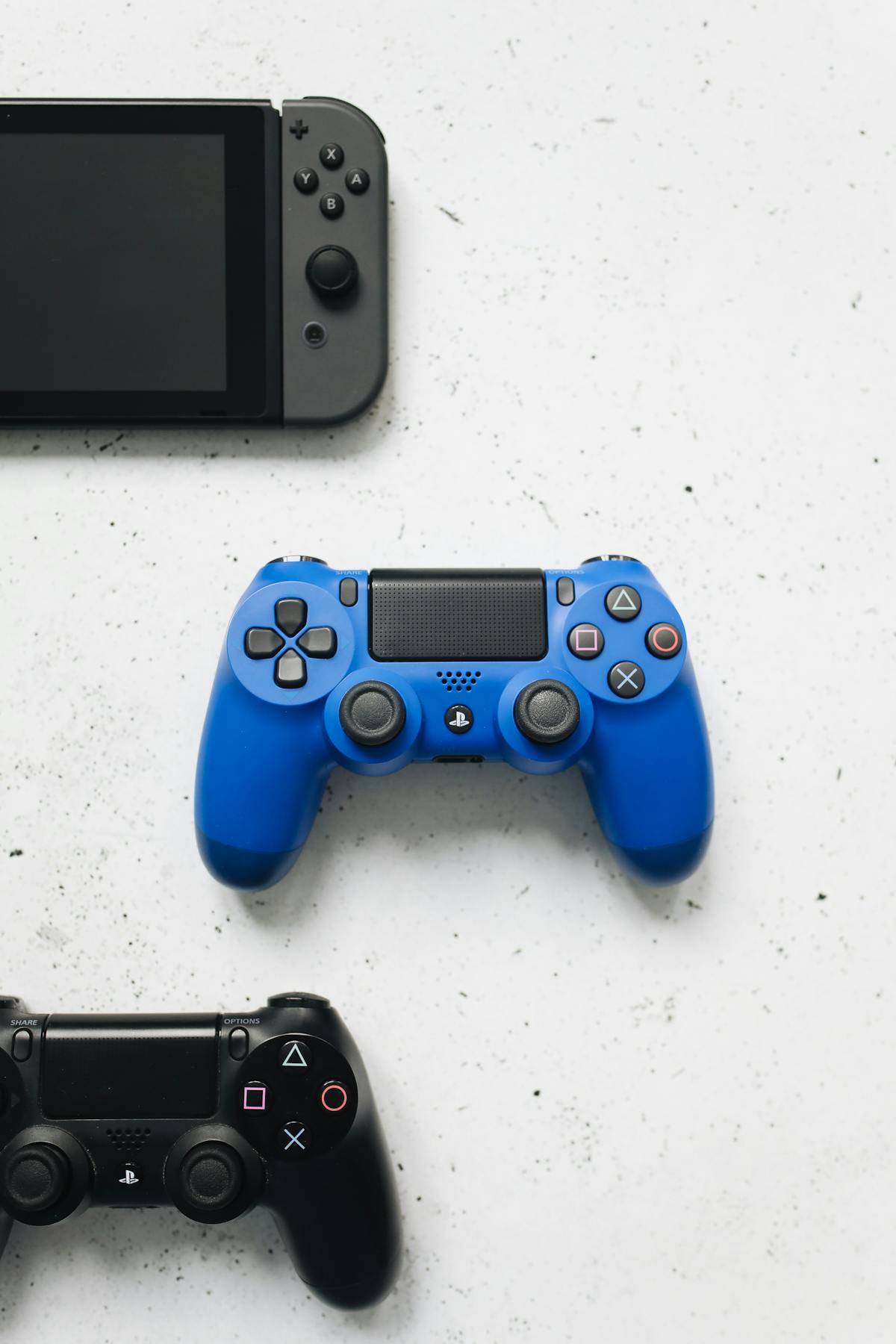
For a responsive, low-latency docked setup, many PC handheld owners look at high-quality controllers. A widely praised option is the Xbox Core Wireless Controller , known for its ergonomics, reliable Bluetooth/2.4 GHz connectivity (via adapter), and excellent compatibility across PC, handhelds, and consoles.
Implications for Traditional Consoles
As handheld PCs get closer to console-like performance, they:
- Challenge the “second console” slot in households that already have a primary platform.
- Let players tap into large existing PC libraries instead of rebuying console versions.
- Encourage cross-platform design, since many players now expect cloud saves and cross-play between PC, handheld, and console.
Subscription Services: From Ownership to Access
Subscription models such as Xbox Game Pass, PlayStation Plus Extra/Premium, EA Play, and Ubisoft+ have turned games into a rotating catalog akin to Netflix or Spotify. For a monthly fee, players get access to hundreds of titles, often spanning console, PC, and cloud.
Economic and Behavioral Shifts
Analysts at outlets like The Verge and The Next Web highlight several effects:
- Lower discovery friction: Players experiment with more genres because the marginal cost of trying a new game is near zero.
- Backlog psychology: A large catalog can create a “paradox of choice,” where players dabble more and finish fewer long games.
- Platform lock-in: Cloud saves, achievements, and curated recommendations incentivize staying within a single subscription’s ecosystem.
“Subscriptions shift the conversation from ‘What game should I buy this month?’ to ‘Where should I subscribe this year?’ — commentary commonly echoed in The Verge’s coverage of Game Pass and PlayStation Plus.
Impact on Developers and Publishers
For developers, subscription economics are complex:
- Upfront licensing deals from platform holders can de-risk development budgets, especially for indies.
- Revenue-share models tied to engagement hours may privilege long, live-service titles over shorter, tightly authored experiences.
- Visibility in a catalog of hundreds of games raises discoverability concerns similar to app stores and streaming TV.
While proprietary data is limited, interviews and conference talks suggest that:
- Being in a major subscription can dramatically increase reach, particularly for first-time or niche developers.
- Long-term monetization may shift toward DLC, cosmetics, and expansions that remain sellable even if the base game rotates out.
Cloud Gaming: Evolving Beyond the Hype Cycle
Cloud gaming has already seen high-profile failures and retrenchments, but it continues to evolve. While Google Stadia shut down, services like NVIDIA GeForce NOW, Xbox Cloud Gaming (part of Game Pass Ultimate), and PlayStation’s cloud offerings have iterated on latency, pricing, and device coverage.

Technical Underpinnings
Discussions on Hacker News and in outlets like Ars Technica often focus on:
- GPU virtualization: Allowing multiple users to share high-end GPUs efficiently via SR-IOV or proprietary partitioning.
- Low-latency codecs: HEVC and AV1, optimized for low-latency encoding and decoding, especially on mobile chipsets.
- Edge computing: Deploying servers closer to players to reduce round-trip time, particularly in dense urban regions.
- Adaptive bitrate streaming: Dynamically adjusting resolution and bitrate based on real-time network conditions.
Constraints and Regional Disparities
Cloud gaming is exceptionally sensitive to:
- Last-mile latency: Even a stable 50 Mbps connection may feel poor if jitter and packet loss are high.
- Data caps: Streaming at 1080p or higher can consume several GB per hour, challenging in markets with strict caps.
- Input latency tolerance: Turn-based and slower-paced games fare better than twitch shooters or high-level fighting games.
Ars Technica and Wired emphasize that “cloud gaming works best when it’s almost invisible”—a standard that remains easier to hit for casual and mid-core titles than for esports-grade experiences.
Technology Deep Dive: How These Trends Interconnect
What makes this transition phase so interesting is the interplay between local hardware capabilities, networking infrastructure, and software distribution models.
Convergence of Local and Remote Compute
A typical player in 2025–2026 might:
- Play graphically demanding titles natively on a PC handheld or console at home.
- Stream the same games to a phone or low-power laptop via cloud gaming while traveling.
- Access progress seamlessly thanks to cloud saves and cross-progression.
From a systems perspective, this demands:
- Unified identity and entitlements across devices.
- Consistent save formats and synchronization logic.
- APIs that abstract away whether the compute is local or in a data center.
Anti-Cheat, Mods, and Preservation
Hacker News debates often highlight tensions between:
- Anti-cheat: Kernel-level anti-cheat systems can conflict with Linux-based handheld OSes and raise privacy questions.
- Modding: Cloud instances and locked-down consoles limit or complicate user mods, impacting communities around games like Skyrim or Minecraft.
- Preservation: Always-online games and license-dependent libraries risk becoming unplayable when services shut down.
“We’re trading some degree of control and modability for convenience and ubiquity,” is a recurring theme among developers and preservation advocates discussing cloud and subscription-heavy futures.
Scientific and Societal Significance
While gaming is often framed as entertainment, the technologies powering this transition have broader scientific and societal implications.
Networking and Systems Research
Cloud gaming acts as a stress test for:
- Real-time transport protocols and congestion control algorithms.
- Edge-caching strategies that might also benefit telemedicine, AR/VR, and remote robotics.
- Energy-efficient data center design, especially around GPU utilization.
Human–Computer Interaction (HCI)
PC handhelds provide rich case studies in:
- Ergonomic trade-offs in extended handheld use.
- UI/UX scaling from 7–8" handheld displays to large TVs and ultrawide monitors.
- Input modality blending—touch, controller, keyboard/mouse—within a single session.
Media Studies and Player Behavior
Subscription and cloud models change how players relate to games:
- Games become streams of content rather than discrete “owned” objects.
- Social discovery (Twitch, YouTube, TikTok) becomes as important as editorial curation.
- Back-catalog classic titles gain new life when added to subscription libraries.
Researchers in game studies note that “playing what’s available on my sub” is now a common answer to “What are you playing?”, underscoring how access models shape culture.
Key Milestones in the Transition Era
While exact dates and future product plans continue to evolve, several milestones between the early 2020s and mid-2020s stand out as turning points in this transition.
Handheld and Hardware Milestones
- Launch of the Steam Deck, validating PC handhelds as a serious category.
- Entry of major OEMs like ASUS and Lenovo with Windows-based handhelds targeting mainstream gamers.
- Incremental refreshes and OLED-screen variants aimed at better battery life and image quality.
Subscription and Cloud Milestones
- Game Pass integration across Xbox consoles, PC, and cloud endpoints, reinforcing a unified library strategy.
- PlayStation Plus restructuring into multi-tier offerings with classic libraries and streaming options.
- Expansion of cloud gaming apps on smart TVs and mobile devices, bypassing consoles entirely for some users.
- High-profile closures (e.g., Stadia) serving as cautionary tales on business viability and content ownership.
Challenges and Unresolved Questions
Despite progress, the transition to a hybrid, service-oriented gaming landscape faces persistent obstacles.
Technical and UX Challenges
- Battery and thermals: PC handhelds struggle to deliver sustained high-performance gaming without significant heat or rapid battery drain.
- Fragmented interfaces: Windows-based handhelds often rely on desktop UIs that are awkward on small touchscreens, requiring manufacturer overlays.
- Offline resilience: As more features assume constant connectivity, players with poor or unstable internet connections risk being left behind.
Economic and Ethical Concerns
- Developer compensation: Long-term revenue impacts of subscriptions on different game types remain uncertain.
- Consolidation: Acquisitions and studio closures raise concerns about diversity of voices and experimental games.
- Preservation and shutdowns: When services close or licenses expire, players can lose access to large portions of their libraries.
Industry panels at events like GDC regularly feature developers asking, “How do we ensure sustainable revenue in a world where players expect everything to be on a subscription?”
Player Behavior, Media, and Community Dynamics
Social media, streaming platforms, and community forums play a significant role in shaping perceptions of handhelds, subscriptions, and cloud gaming.
Creator Ecosystems
On YouTube and TikTok, creators routinely:
- Benchmark new handhelds, compare FPS across titles, and test different TDP profiles.
- Stress-test cloud services across Wi‑Fi and 5G networks to reveal real-world latency and visual artifacts.
- Showcase “can it run X?” challenges for popular AAA games on portable hardware.
Many of these creators also publish longer-form analysis on platforms like LinkedIn, where they discuss business implications, hardware roadmaps, and engine optimizations.
Community Debates
Forums such as Reddit, ResetEra, and Hacker News frequently host debates around:
- Whether subscriptions “devalue” games or increase access.
- Long-term viability of purely cloud-based platforms versus hybrid local/cloud models.
- Linux vs. Windows as the long-term OS foundation for PC handhelds.
Practical Advice: Navigating the New Gaming Landscape
For players and enthusiasts trying to make informed decisions in this rapidly changing ecosystem, a few guidelines can help.
Choosing Hardware
- Handheld vs. console vs. PC:
- If portability plus PC flexibility matters, consider a handheld.
- If you mainly play at home on a TV and want simplicity, a traditional console may still be better.
- If modding and maximum performance are priorities, a desktop or powerful laptop remains king.
- Network conditions: Heavy reliance on cloud gaming only makes sense if your home and mobile connections are stable and relatively low-latency.
Managing Subscriptions
- Audit your library every few months; cancel services you’re not actively using.
- For favorite games you want permanent access to, consider owning a non-DRM or platform-specific copy in addition to subscription access.
Recommended Reading and Viewing
- Steam Deck performance analysis videos on YouTube for detailed, game-by-game benchmarks.
- Digital Foundry for deep technical breakdowns of console and PC performance.
- Engadget’s cloud gaming coverage for ongoing platform updates.
Conclusion: Toward a Fluid, Service-Oriented Future
The convergence of PC handhelds, subscription services, and cloud gaming is gradually dissolving the old boundaries between platforms. Instead of anchoring identity to a single console, players increasingly inhabit ecosystems that span devices, locations, and business models.
This transition brings unprecedented convenience and choice, but it also raises hard questions about preservation, creator compensation, and long-term control over game libraries. For now, the most resilient approach—for both players and developers—is to embrace hybridity: mix local hardware with selective cloud use, combine subscriptions with owned titles, and remain vigilant about how terms of service and platform policies evolve.
Over the next decade, the most successful platforms will likely be those that:
- Deliver consistent experiences across devices.
- Support flexible business models that work for indies and AAA alike.
- Respect player investment by prioritizing backward compatibility and robust migration paths.
Additional Resources and Future Directions
For readers who want to dive deeper into the technical, business, and cultural aspects of this transition, consider exploring:
- Conference talks from GDC and SIGGRAPH on real-time streaming, engine optimization for low-power devices, and cross-platform design.
- Academic work in ACM Transactions on Multimedia Computing and related journals on interactive streaming and edge computing.
- Long-form essays and newsletters from industry veterans on Substack and professional networks such as LinkedIn, where developers and analysts unpack emerging trends in detail.
Keeping an eye on regulatory developments—particularly around digital marketplaces, platform fees, and cloud infrastructure—will also be important. Policy decisions in telecom, competition law, and data protection can meaningfully shape how accessible and open the next generation of gaming ecosystems will be.
References / Sources
Further reading and sources related to topics discussed in this article:
