
Why On‑Device AI Is the Next Big Shift in Laptops, Phones, and Edge Hardware
Consumer technology coverage from outlets such as TechRadar, Engadget, The Verge, Wired, and Ars Technica now treats on-device AI as a primary storyline. “AI PCs,” “AI phones,” and “edge AI” are no longer niche concepts: they are the framing for the next hardware upgrade cycle. Instead of every query making a round trip to the cloud, laptops, phones, tablets, wearables, and even headphones now integrate dedicated NPUs or AI accelerators capable of running optimized language and vision models locally.
This article unpacks what that shift really means: the underlying technology, why it is happening now, how it affects privacy and sustainability, what developers can actually build with it, and the open questions that will define the next decade of AI-powered hardware.
Mission Overview: Why On‑Device and Edge AI Matter
The “mission” of on-device AI is straightforward: move as much AI inference as possible from distant data centers to the edge—your personal devices, enterprise endpoints, and embedded systems—without sacrificing accuracy or user experience.
Three core forces drive this transition:
- Latency: Local inference removes network round trips, enabling sub‑100 ms responses for interactions that feel instant.
- Privacy and sovereignty: Sensitive data such as voice, photos, documents, and sensor streams can stay on the device for many use cases.
- Cost and scalability: Offloading inference from the cloud to billions of devices reduces vendors’ ongoing compute bills and helps scale AI to massive user bases.
“The most interesting AI systems of the late 2020s may not live in centralized cloud silos but in the thousands of tiny accelerators scattered through our pockets, homes, and cars.”
The Hardware Race: AI PCs, AI Phones, and Edge Devices
Chipmakers and OEMs are in a branding and capability arms race around on-device AI. Product launches and reviews increasingly highlight AI TOPS (tera operations per second) alongside CPU and GPU metrics.
Laptops and “AI PCs”
Major PC platforms—AMD, Intel, Qualcomm, Apple, and others—now ship SoCs with NPUs specifically optimized for transformer-style workloads, audio enhancement, and computer vision.
- Windows “AI PCs”: Microsoft’s Copilot+ and recall-like features depend on NPUs to process local context (window content, recent actions) with acceptable latency and battery life.
- Apple Silicon Macs: The Apple Neural Engine (ANE) accelerates tasks such as on-device dictation, background removal, and neural image upscaling across macOS and iOS ecosystems.
- Chromebooks and Arm laptops: Arm-based chips with integrated NPUs are enabling more offline Chrome features and Android app acceleration on laptops.
Smartphones and “AI Phones”
Flagship phones from Apple, Samsung, Google, and leading Chinese OEMs aggressively market on-device AI capabilities:
- Real-time background noise suppression and spatial audio tuning during calls and video recording.
- On-device “Magic Eraser” and background fill for photos and videos.
- Offline transcription, live captions, and translation, leveraging speech and language models tuned for low power.
Edge and Embedded Hardware
Beyond consumer devices, edge AI is reshaping embedded and industrial systems:
- Smart cameras running local object detection for security or retail analytics.
- Automotive SoCs performing perception and driver monitoring in real time.
- IoT gateways aggregating sensor data and running anomaly detection without sending raw data to the cloud.
TechCrunch and The Next Web regularly report on strategic alliances between chip vendors, PC manufacturers, and software companies, all framing “on-device AI” as the catalyzing feature for the next wave of upgrades.
Technology: How On‑Device AI Actually Works
Delivering capable AI experiences within the tight power, memory, and thermal budgets of mobile and edge devices depends on a layered technology stack: specialized hardware, optimized models, and efficient runtimes.
Specialized Silicon: NPUs and AI Accelerators
Modern SoCs integrate NPUs—vector and matrix engines tailored for deep learning workloads—alongside CPUs and GPUs. These NPUs target operations like matrix multiplication and convolution with high throughput and low energy per operation.
- Dataflow-optimized architectures: NPUs reduce memory accesses by keeping intermediate tensors on‑chip.
- Mixed-precision math: INT8 and even 4‑bit operations dramatically lower power while preserving inference quality after appropriate quantization.
- On-chip memory and caches: Fast SRAM caches are carefully sized to keep core layers resident without frequent DRAM trips.
Model Optimization: Quantization, Pruning, and Distillation
Even with NPUs, naïve deployment of server-scale models on-device is impractical. Developers rely heavily on optimization techniques:
- Quantization: Converting 16‑ or 32‑bit floating-point weights to 8‑bit or lower to reduce memory and bandwidth dramatically.
- Pruning: Removing redundant connections or entire channels from neural networks to slim models without major accuracy loss.
- Knowledge distillation: Training smaller “student” networks to mimic large “teacher” models while being efficient enough for edge devices.
Open-source communities highlighted on Hacker News frequently share benchmarks for running small language models (SLMs) such as LLaMA‑family derivatives, Phi, and Mistral variants on consumer GPUs, Apple Silicon, and even higher-end phones.
Runtimes and Frameworks
Numerous frameworks provide the glue between optimized models and heterogeneous hardware:
- ONNX Runtime Mobile and TensorFlow Lite for cross-platform deployment.
- Core ML on Apple devices, integrating tightly with the ANE.
- Qualcomm’s AI Engine, MediaTek NeuroPilot, and other vendor-specific SDKs for Android SoCs.
- WebNN and WebGPU efforts to expose on-device acceleration via the browser while respecting security sandboxes.
This stack enables personalized assistants, document summarizers, and camera pipelines to run mostly or entirely on your device, with the cloud used selectively for complex or large-context tasks.
Scientific Significance and Research Directions
On-device AI is not just a product trend; it opens new research frontiers and practical capabilities in machine learning, human-computer interaction, and systems design.
Personalization and Continual Learning
Running models close to user data enables fine-grained personalization without sharing that data with vendors:
- Adaptive keyboards and editors that learn writing style locally.
- Health and wellness apps that build private embeddings of biometric patterns.
- Context-aware assistants that model long-term device usage to anticipate needs.
“Edge devices are where personalization and privacy finally meet. The challenge is teaching models to adapt continuously without exploding their resource footprint.”
Federated and Privacy-Preserving Learning
Techniques like federated learning and secure aggregation allow devices to collaboratively train global models without uploading raw data:
- Each device performs local training on private data.
- Only model updates (gradients or parameter deltas) are encrypted and sent to a server.
- The server aggregates updates and refreshes the global model.
On-device computation is crucial for these methods, which have been deployed in production for keyboard suggestions, speech recognition, and recommendation tasks.
Human-Computer Interaction and Cognitive Load
With ultra-low latency and offline reliability, on-device AI changes how people interact with machines:
- Wearables can provide real-time translations or safety alerts without a data connection.
- AR glasses and spatial computing devices can overlay context on the physical world with minimal lag.
- Assistive technologies for disabilities can become more responsive and dependable.
Real-World Features: What On‑Device AI Delivers Today
Reviews from Engadget, TechRadar, and The Verge now dedicate entire sections to built-in AI features, assessing them as core buying criteria rather than optional extras.
Common On‑Device AI Use Cases
- Real-time transcription and captioning: Live captions for video calls and media, even when offline.
- Image and video enhancement: Super-resolution, denoising, background blur, and object removal in camera apps.
- Voice assistants with local wake words: Always-on hotword detection and limited local intent handling.
- Security and biometrics: On-device face and fingerprint recognition without sending biometrics to servers.
- Personal document search: Local embeddings of files and notes to enable semantic search of your own knowledge base.
Developers also leverage on-device models for basic coding assistance, quick summarization of PDFs, and context-aware notifications that consider what you are doing on your device in real time.
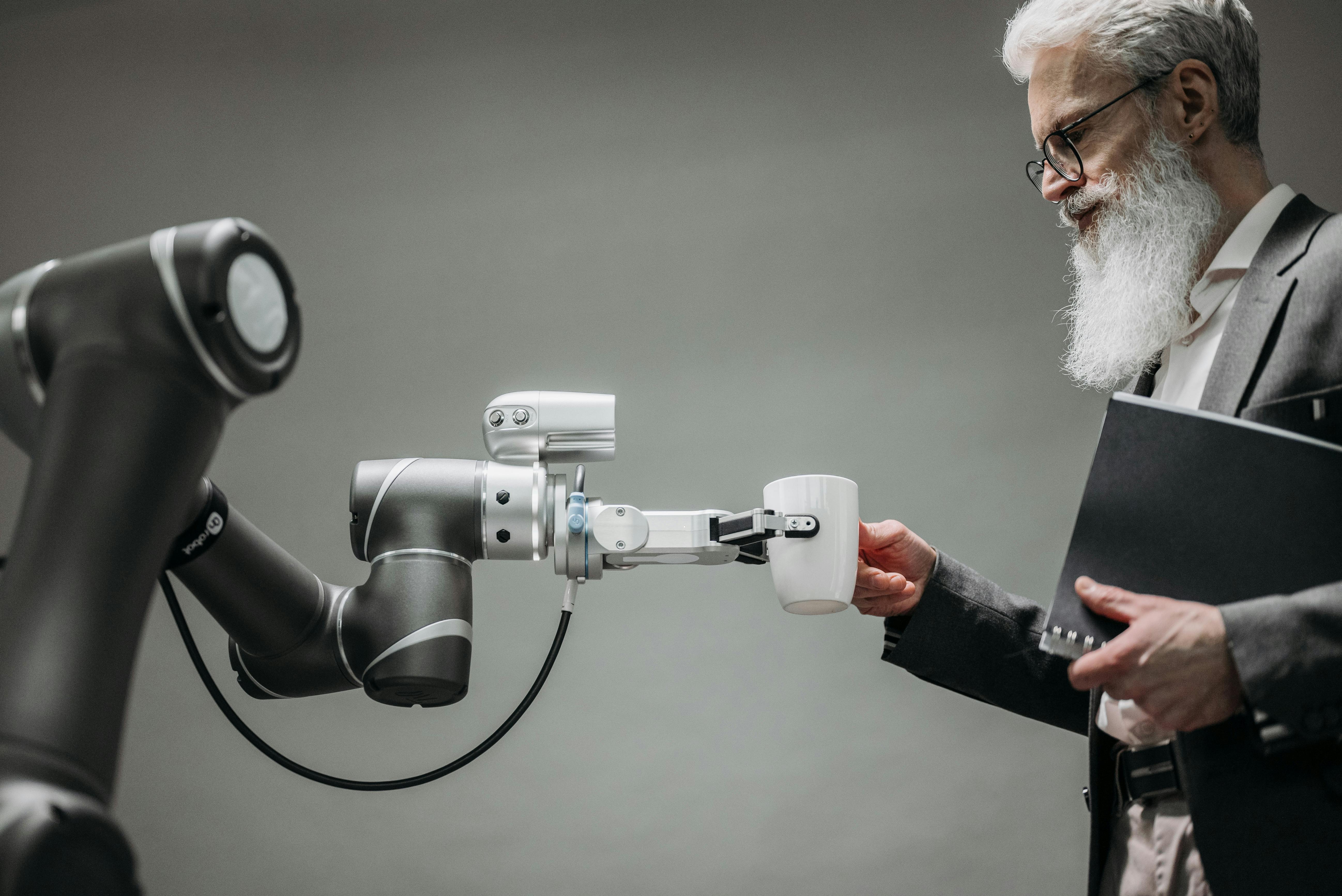
Visualizing the On‑Device AI Ecosystem


Milestones in the On‑Device AI Boom
From the mid‑2010s through the mid‑2020s, a series of key milestones has pushed AI from the cloud to the edge.
Selected Milestones
- Early smartphone NPUs: Initial mobile accelerators appear in flagship devices, mainly targeting camera and basic vision tasks.
- Neural engine integration: Mainstream SoCs integrate neural engines, enabling on-device face unlock, AR, and speech features.
- Federated learning deployments: Large-scale production use of federated learning in keyboards and recommendation systems.
- AI PC branding: Major OS vendors and chip makers formalize “AI PC” categories to anchor marketing and developer ecosystems.
- Small language models (SLMs) on consumer devices: Practical local assistants running open models on laptops and high-end phones become common among enthusiasts.
Coverage from TechCrunch and other business outlets treats these inflection points as markers of a broader competitive realignment among chip vendors and OEMs.
Privacy, Control, and Platform Power
Wired and Ars Technica frequently frame on-device AI as a counterweight to hyperscale cloud providers’ dominance. Local processing inherently reduces the volume of sensitive data traversing networks and being stored on remote servers.
Benefits for Privacy and Agency
- Data locality: For many tasks—such as offline transcription or local document search—raw data never leaves the device.
- Regulatory alignment: Local processing can help organizations comply with data protection rules by minimizing cross-border transfers.
- User trust: Clear messaging about on-device processing can reassure users skeptical of “always listening” assistants.
Emerging Concerns
Despite these advantages, experts highlight several open issues:
- Lock-in and DRM: Will vendors lock NPUs behind proprietary APIs and app stores, constraining which models users may run?
- Opacity: If on-device models are shipped as sealed binaries, users may have little insight into what is being inferred about them.
- Telemetry creep: Even when inference is local, usage analytics and embeddings might still be uploaded unless carefully governed.
“On-device AI does not magically solve privacy; it just redraws the boundaries. The question becomes which inferences stay local and which flow back to the mothership.”
Sustainability: Is “AI Everywhere” Environmentally Defensible?
Training and serving large AI models in data centers is energy intensive. Shifting inference to billions of devices could, in principle, distribute this cost and reduce peak data center load—but the net effect is complex.
Potential Environmental Upsides
- Reduced data transfer: Fewer round trips to the cloud can cut network energy usage, especially for high-bandwidth media.
- Energy-proportional computing: Edge devices often run anyway; incremental AI workloads may be comparatively low overhead.
- Model efficiency pressure: Power constraints on mobile devices force aggressive model compression, benefitting overall efficiency.
Risks and Unknowns
- Rebound effects: If AI features become ubiquitous and always-on, total energy use might still increase.
- Embedded carbon: Adding NPUs and more memory increases device manufacturing footprint.
- Shorter upgrade cycles: Aggressive marketing of “AI-ready” hardware may accelerate device replacement, increasing e-waste.
Tech media and academic sustainability studies are beginning to quantify these trade‑offs, but definitive lifecycle assessments remain an active research area.
Developer Ecosystem, Tools, and Learning Resources
For developers, the on-device AI boom is both an opportunity and a learning curve. Efficient deployment requires understanding hardware constraints, optimization pipelines, and evolving SDKs.
Typical On‑Device AI Development Workflow
- Train or select a baseline model in frameworks like PyTorch or TensorFlow.
- Apply quantization-aware training or post-training quantization.
- Prune, distill, and compress the model to hit target latency and memory budgets.
- Convert to deployment format (e.g., Core ML, TFLite, ONNX) and target specific accelerators.
- Profile performance using vendor profilers and iterate on architecture or precision.
Hacker News frequently surfaces detailed tutorials and benchmarks that walk through this process on consumer hardware, from Apple M-series laptops to gaming GPUs.
Useful Learning and Reference Links
Selecting AI‑Ready Devices: Practical Buying Considerations
For readers choosing their next laptop or phone, on-device AI capabilities are now part of the spec sheet. Instead of focusing only on CPU and RAM, consider NPU throughput, memory bandwidth, and software support.
Key Factors to Evaluate
- NPU performance (TOPS): Higher TOPS can enable more complex real-time features, but architecture and software support matter as much as raw numbers.
- RAM and storage: Running local models often benefits from higher RAM and fast NVMe or UFS storage.
- Vendor software stack: Check whether your OS and hardware expose AI features to third-party developers or lock them behind proprietary apps.
- Battery capacity and efficiency: On-device AI should not dramatically degrade runtime; look for independent battery tests covering AI features.
Example AI‑Capable Gear
If you are exploring hardware that can comfortably handle local models for note summarization, coding helpers, and media enhancement, consider:
- Apple MacBook Pro 14‑inch (Apple Silicon) – strong neural engine, excellent battery life, and mature Core ML ecosystem.
- ASUS Zenbook S 14 OLED (Intel Core Ultra) – representative of new Windows “AI PC” designs with integrated NPUs.
- Samsung Galaxy S24 series – showcases generative photo tools, live translation, and on-device enhancements.
These examples illustrate the pattern: premium devices increasingly differentiate on the strength and openness of their on-device AI story.
Challenges and Open Problems
Despite rapid progress, the on-device AI ecosystem faces substantial technical, economic, and societal challenges.
Technical Constraints
- Memory limits: Even 8–16 GB of RAM can be tight for multi‑billion parameter models plus normal app workloads.
- Thermal throttling: Sustained heavy inference on phones and thin laptops can trigger throttling, hurting experience.
- Model robustness: Smaller, aggressively compressed models may be more fragile to distribution shifts or adversarial inputs.
Security and Abuse
Local AI brings its own security questions:
- How to prevent malware from hijacking NPUs for cryptomining or brute-force tasks?
- How to sandbox local models so they cannot exfiltrate data to remote attackers?
- How to authenticate and verify model updates distributed over the air?
Governance, Standardization, and Interoperability
With each vendor offering its own NPU, SDK, and AI marketing label, fragmentation threatens developer productivity and user clarity. Emerging standards in model formats, safety evaluation, and telemetry policies will be critical to a healthy ecosystem.
Conclusion: The Future of Intelligence at the Edge
On-device AI represents a structural shift in how intelligence is delivered to users. Instead of a thin client tethered to a distant cluster, devices increasingly host powerful, personalized models that see and shape everything we do on screens and in the physical world.
The next few years will likely bring:
- Hybrid assistants that blend fast local reasoning with cloud-scale knowledge.
- Richer personalization that remains private by design.
- New hardware form factors—AR glasses, spatial computers, ambient sensors—built around always‑on AI cores.
Yet fundamental questions remain unresolved: What governance will constrain these systems? Will they empower users or deepen platform lock‑in? How will we balance convenience with sustainability? The answers will determine whether the on-device AI boom becomes a durable foundation for humane computing or just another hype cycle.
Additional Resources and Next Steps
For readers who want to deepen their understanding or start building with on-device AI, consider the following actions:
- Experiment with running a small language model locally using open-source tools such as llama.cpp or similar projects on your laptop.
- Explore edge-optimized model zoos hosted by major ML frameworks, focusing on quantized and distilled variants.
- Enable and test AI features on your current devices—live captions, offline translation, local photo editing—to get a practical feel for on-device capabilities.
- Follow AI and systems researchers on platforms like LinkedIn and X to keep up with new model architectures and deployment strategies.
Used thoughtfully, on-device AI can bring powerful, privacy-respecting assistance into everyday life. The more informed both users and developers are, the better we can shape this technology toward beneficial, accountable outcomes.
References / Sources
- The Verge – AI PC and smartphone coverage
- Engadget – Reviews of AI-enabled laptops and phones
- TechRadar – On-device AI and consumer hardware analysis
- Wired – Privacy and centralization in AI
- Ars Technica – Deep dives into hardware and AI ecosystems
- Google AI Blog – “Federated Learning: Collaborative Machine Learning without Centralized Training Data”
- TensorFlow Lite Model Optimization Toolkit
- ONNX Runtime – Mobile and edge deployment
