
Who Really Owns Your Gadgets? Right‑to‑Repair, Device Longevity, and the New Hardware Power Struggle
Modern devices are sleeker, thinner, and more powerful than ever—yet many fail or become obsolete long before their hardware is truly worn out. Batteries are glued in, displays are fused to frames, and replacement parts are locked behind authorized service channels. At the same time, consumers, regulators, and technologists are pushing back, insisting that a purchased device should be repairable and usable for as long as its components can physically last.
Right‑to‑repair now spans smartphones, laptops, game consoles, tractors, medical devices, and even smart fridges. It touches everything from hardware architecture and firmware signing to antitrust, copyright, and climate policy. Publications such as The Verge, Wired, and Ars Technica track each new law, teardown, and corporate policy shift, while communities like Hacker News and Reddit dissect what this means for real‑world users.
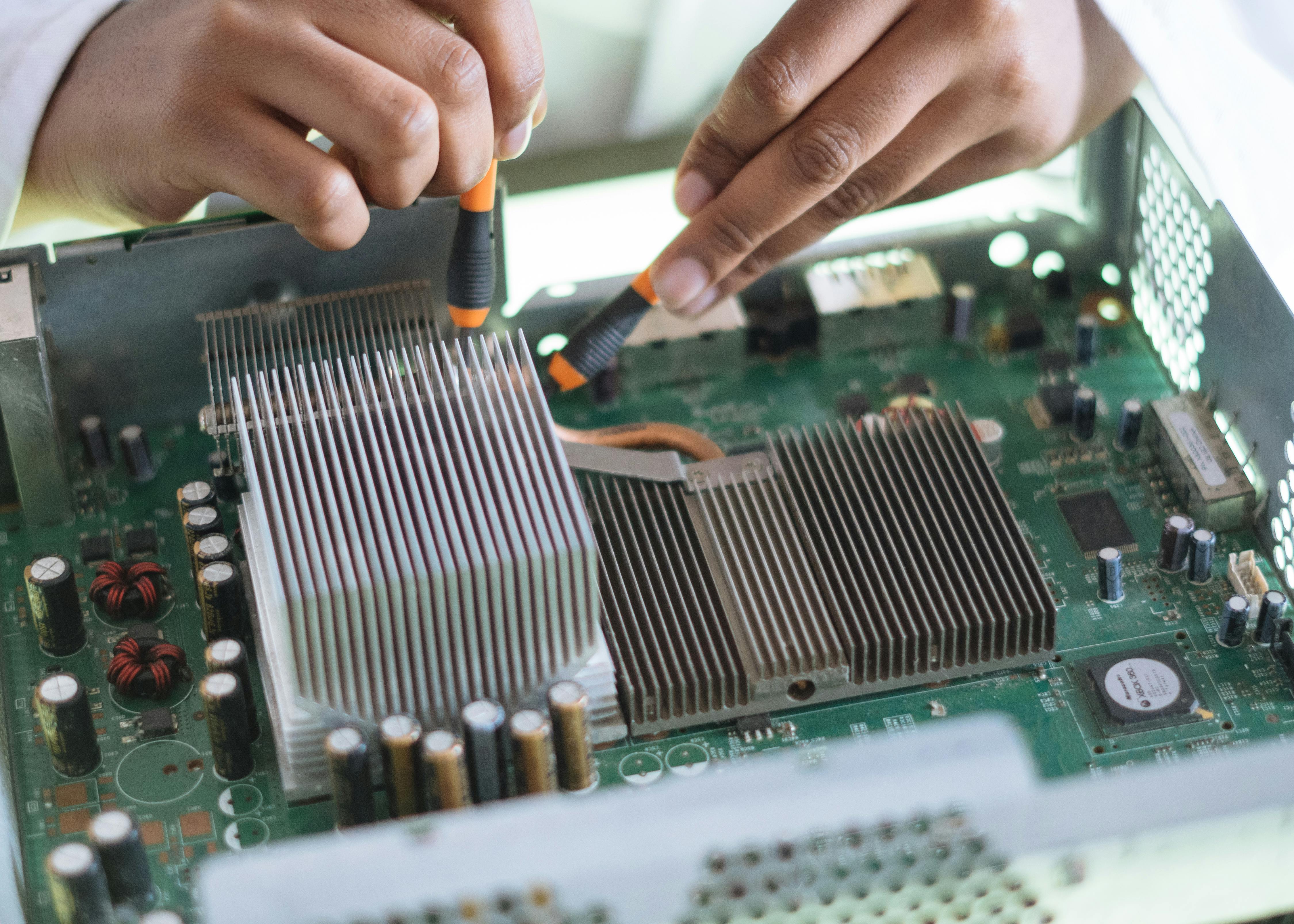
Visualizing the Right‑to‑Repair Debate

Mission Overview: What Is the Right‑to‑Repair Movement?
At its core, the right‑to‑repair movement poses a deceptively simple question: when you buy a device, do you own it in any meaningful sense, or are you merely licensing a tightly controlled platform?
Advocates argue that ownership should include:
- The ability to open, diagnose, and repair your device without legal threats.
- Access to official parts, diagnostic software, and schematics on fair terms.
- Freedom to use independent repair shops without losing functionality.
- Reasonable software support lifetimes so hardware isn’t bricked prematurely.
Manufacturers that resist right‑to‑repair typically cite:
- Safety concerns (e.g., lithium‑ion batteries, medical devices).
- Security and privacy (protecting user data and secure boot chains).
- Protection of intellectual property and trade secrets.
- Liability risks if third‑party repairs go wrong.
“If you can’t fix it, you don’t really own it.” — Kyle Wiens, co‑founder of iFixit
This tension—between consumer autonomy on one side and corporate control and risk management on the other—defines the mission and the battleground of right‑to‑repair.
Technology: How Design Choices Shape Repairability
Repairability is not an afterthought; it is coded into the industrial design, component layout, and firmware of each product. Choices that favor thinness or water resistance can conflict with ease of disassembly, while business models based on rapid upgrade cycles often deprioritize longevity.
Physical Design: Screws, Glue, and Modularity
Outlets like Ars Technica and iFixit have documented a long trend: from modular, screw‑based assemblies to sealed, glued hardware. Common design constraints include:
- Glued‑in batteries that require heat and solvents to remove, raising fire risks.
- Proprietary screws (e.g., pentalobe) that require specialized bits to open.
- Fused displays where the cover glass, OLED/LCD, and frame are one part, increasing replacement cost.
- Non‑socketed storage and RAM soldered directly to the motherboard.

By contrast, emerging repair‑friendly designs emphasize:
- Modular architecture, such as the Framework Laptop, where storage, ports, and even mainboards are user‑swappable.
- Standard fasteners and labeled components, often highlighted in iFixit repairability scores.
- Accessible batteries that can be replaced with basic tools.
Digital Locks: Serialization, Pairing, and Secure Elements
Increasingly, the real gatekeeper of repair is not the screwdriver but the secure element and firmware:
- Component serialization: parts such as cameras, touch ID sensors, or screens are cryptographically “paired” to a device’s logic board. After replacement, software must re‑authorize the new part, or features may break, or nag messages appear.
- Diagnostic software locks: OEM diagnostic tools are kept behind paywalls or NDAs, preventing independent shops from running calibrations or reading fault codes.
- Secure boot chains: firmware modifications for repair or recovery can be blocked by signed‑only boot pipelines.
“When a manufacturer restricts independent repair, it can lead to higher costs, longer wait times, and more e‑waste.” — U.S. Federal Trade Commission report on repair restrictions
Software Support: The Hidden Half of Device Longevity
Even if a device’s hardware is pristine, lack of security updates or app support can effectively kill it. Policymakers in the EU and UK are pushing for minimum software support windows (for example, 5–7 years for phones and IoT devices) to ensure:
- Security patches for vulnerabilities.
- Driver compatibility for future OS releases.
- Ongoing access to app stores and services.
Without this, “soft obsolescence” sets in: apps stop working, secure websites reject older browsers, and users are shepherded toward new purchases even though their hardware remains functional.
Scientific and Societal Significance: E‑Waste, Climate, and Competition
Right‑to‑repair is often framed as a consumer rights dispute, but its repercussions span environmental science, resource economics, and even geopolitics.
E‑Waste and Environmental Impact
Consumer electronics are a fast‑growing waste stream. According to the Global E‑waste Monitor, tens of millions of metric tons of e‑waste are generated annually, with only a fraction properly recycled.
- Manufacturing a smartphone can account for 70–90% of its lifetime carbon footprint.
- Critical minerals like cobalt, lithium, and rare earth elements are often mined under environmentally and socially challenging conditions.
- Short upgrade cycles magnify upstream extraction and manufacturing emissions.
Extending device lifetimes via repair is one of the most effective forms of “embedded carbon” conservation, reducing demand for new production and the associated emissions.
Economic and Competitive Dynamics
Restrictive repair policies can:
- Create quasi‑monopolies where only authorized centers can fix a product.
- Raise total cost of ownership through expensive, centralized repair options.
- Suppress independent innovation in diagnostics and refurbishment.
Meanwhile, an open repair ecosystem:
- Supports local repair shops, refurbishers, and parts suppliers.
- Improves access in rural or underserved regions where OEM centers are scarce.
- Encourages competition on durability and service, not only on initial specs.
“Product repairability is an essential component of a circular economy, enabling value retention across multiple lifecycles.” — OECD circular economy analysis
Milestones: How the Right‑to‑Repair Movement Went Mainstream
Over the last decade, right‑to‑repair has shifted from fringe activism to global policy. Several milestones have accelerated this change.
Early Advocacy and Teardown Culture
In the 2010s, sites like iFixit Teardowns and YouTube channels documenting repairs made visible what was once hidden inside sealed gadgets. Repairability scores, step‑by‑step guides, and toolkits helped:
- Demystify electronics for hobbyists and professionals.
- Quantify how design changes affected repair difficulty.
- Provide data points for journalists and regulators.
Legislative Breakthroughs
By the mid‑2020s, momentum crystallized into law:
- European Union: “Right‑to‑repair” rules and eco‑design regulations began requiring availability of spare parts and encouraging user‑replaceable batteries in some product categories, aligning with the EU’s Green Deal and circular economy goals.
- United States (state‑level): States such as New York, Minnesota, and California advanced or passed electronics right‑to‑repair laws covering phones, laptops, and other digital equipment, sometimes with carve‑outs or phased requirements.
- Farm equipment and medical devices: Battles over tractor software locks—highlighted in coverage by Motherboard and others—spurred specialized legislation and regulatory scrutiny.
Corporate Shifts and Self‑Repair Programs
Under pressure, several major OEMs launched or expanded:
- Self‑repair portals with genuine parts and manuals.
- Partnerships with third‑party logistics and repair networks.
- Re‑manufactured parts programs that reclaim and recertify components.
While critics argue that some initiatives are limited or selectively implemented, they mark a public acknowledgment that repairability matters to brand reputation and policy risk.
Challenges: Security, Safety, and the Limits of Openness
Even staunch right‑to‑repair advocates acknowledge that not all restrictions are arbitrary or malicious. The hardest problems lie at the intersection of safety, cybersecurity, and regulatory compliance.
Security and Privacy Concerns
Device makers argue that loosening control over firmware and diagnostics can:
- Expose secure boot chains to tampering.
- Enable cloning or theft by bypassing activation locks.
- Increase attack surfaces through unofficial tools or modified components.
For example, biometric sensors (fingerprint readers, Face ID modules) are often cryptographically paired to avoid harvesting of biometric data by malicious replacements. The challenge is designing protocols where:
- Security‑critical components remain strongly bound to the device.
- Legitimate repairs can still be authorized without OEM exclusivity.
Safety and Regulatory Compliance
In categories like medical devices, aviation electronics, and high‑energy battery systems, faulty repairs can have life‑threatening consequences. Regulators require strict documentation and certification, which makes fully open repair models difficult.
The nuanced debate is not “open everything” versus “lock everything,” but:
- Which components and procedures require certified expertise?
- How can independent technicians be trained and accredited?
- What documentation is necessary to repair safely without disclosing trade secrets unrelated to repair?
Business Model Friction
Many consumer electronics companies rely on high margins from:
- Frequent device upgrade cycles.
- OEM repair services and extended warranties.
- Closed ecosystems of accessories and certified parts.
Transitioning to a world where devices last longer and are widely repairable may require:
- Alternative revenue streams (e.g., services, subscriptions, trade‑in‑driven refurbishment flows).
- Stronger design incentives around modularity and durability.
“Repair isn’t the enemy of innovation; it’s the foundation of trust and long‑term value.” — Gay Gordon‑Byrne, Executive Director, The Repair Association
Practical Side: Tools, Skills, and DIY Repair Culture
At the grassroots level, right‑to‑repair is sustained by people willing to pick up a spudger and try. From community repair cafés to professional shops, a growing ecosystem of tools, guides, and courses makes repair more accessible.
Essential Tools for Safe Electronics Repair
For many common phone and laptop repairs, a compact toolkit is enough. Popular options include:
- iFixit Pro Tech Toolkit — a comprehensive, ESD‑safe kit designed specifically for electronics.
- Kaisi Precision Screwdriver Set — a budget‑friendly, high‑reviewed bit set covering most proprietary screws.
- Anti‑static wrist strap — to reduce risk of electrostatic discharge damaging sensitive components.
High‑quality tools reduce the risk of stripping screws, cracking displays, or damaging connectors—improving both the success rate and safety of DIY repair.
Learning and Community Resources
Several platforms teach repair techniques:
- iFixit Guides for step‑by‑step teardown and repair walkthroughs.
- YouTube channels such as Louis Rossmann (board‑level repairs and policy commentary) and Phone Repair Guru.
- Community “repair cafés” and makerspaces that host in‑person workshops.

How Consumers Can Choose for Longevity and Repairability
While policy battles continue, individual buyers can already nudge the market by rewarding repair‑friendly devices.
Before You Buy: Evaluating Repairability
When considering a new phone, laptop, or gadget:
- Check the device’s repairability score and teardown reports.
- Confirm battery replacement procedures and cost.
- Look for modular designs that allow RAM or storage upgrades.
- Review the manufacturer’s stated software support window.
Devices marketed explicitly around longevity—such as the Framework Laptop or certain business‑class notebooks—often come with clearer commitments to spare parts and documentation.
During Ownership: Extending Life Safely
To maximize lifespan:
- Use high‑quality protective cases and screen protectors.
- Avoid extreme temperature exposure that accelerates battery and component wear.
- Replace batteries and SSDs proactively when performance degrades, if possible.
- Keep firmware and OS patched to minimize security‑driven obsolescence.
For older but functional devices, consider:
- Passing them to family, schools, or nonprofits after secure data wiping.
- Installing lightweight operating systems (where supported) for extended basic use.
- Using them as dedicated media players, home automation dashboards, or test devices.
Conclusion: Ownership in the Age of Software‑Defined Hardware
The right‑to‑repair debate is ultimately about control. Hardware is increasingly defined not just by its materials and circuits, but by cryptographic keys, firmware policies, and service agreements. When manufacturers can revoke features, block parts, or end support unilaterally, traditional notions of ownership erode.
Yet the trajectory is not fixed. Regulatory frameworks in the EU, UK, and parts of the US are beginning to demand:
- Accessible, affordable repair options.
- Longer support lifecycles.
- Greater transparency in design choices that affect durability.
Forward‑looking companies are experimenting with modular designs, robust refurbish programs, and repair‑friendly documentation as differentiators rather than threats. Independent labs, open‑hardware projects, and citizen technologists are providing proof‑of‑concepts for devices that are both modern and maintainable.
Owning technology in the 2020s and beyond will increasingly mean not just having a receipt, but having practical and legal control over how, when, and by whom it can be repaired—and how long it can remain part of our digital lives.
Additional Resources, Reports, and Further Reading
To explore the topic in more depth—from policy to hands‑on repair—these resources provide high‑quality, regularly updated information:
Policy and Legal Landscape
- The Repair Association: Legislation Tracker — current state and federal initiatives in the U.S.
- European Commission: Right‑to‑Repair Initiatives.
- FTC “Nixing the Fix” Report on Repair Restrictions (PDF).
Technical and Engineering Perspectives
- Ars Technica smartphone and laptop repairability coverage.
- iFixit Repairability Scores and Guides.
- Lifecycle assessment research on electronics longevity and emissions.
Video and Social Coverage
- YouTube: Right‑to‑Repair explainers and hearings.
- LinkedIn articles on right‑to‑repair and circular economy.
- Twitter/X discussions on “right to repair”.
Staying informed about right‑to‑repair is not just a matter of following tech news. It is a way to think critically about how we design, buy, and maintain the infrastructure of our connected lives—and to ensure that, in the long run, our tools serve us, not the other way around.
References / Sources
- https://www.ifixit.com
- https://www.theverge.com/right-to-repair
- https://www.wired.com/tag/right-to-repair/
- https://arstechnica.com
- https://www.repair.org
- https://www.unep.org/resources/report/global-e-waste-monitor-2024
- https://ec.europa.eu/environment/topics/circular-economy/right-repair_en
- https://www.ftc.gov
