
Tech’s Energy Crunch: How AI and Data Centers Are Reshaping the Global Power Grid
Behind every AI chatbot response, 4K stream, and multiplayer game session sits an energy‑hungry infrastructure whose growth is starting to collide with hard physical and environmental limits—raising urgent questions about how far digital expansion can go without a revolution in efficiency.
As large language models, generative AI tools, and hyperscale cloud platforms expand, the electricity demand of data centers is becoming a central constraint on the tech industry’s future. Analysts at the International Energy Agency (IEA) now estimate that data center electricity use—driven heavily by AI and cloud—is likely to roughly double between 2022 and 2026, approaching the combined consumption of many mid‑size countries. This “energy crunch” is no longer an abstract sustainability concern; it is reshaping where data centers are built, how chips are designed, and how regulators think about digital infrastructure.
Mission Overview: Why Tech’s Energy Crunch Matters
The core problem is simple: our appetite for computation is growing faster than improvements in energy efficiency. Training frontier AI models can consume gigawatt‑hours of electricity, while running them across billions of user requests amplifies the load on data centers and power grids. At the same time, many governments and companies have committed to net‑zero emissions, placing strict limits on how much carbon‑intensive power this digital growth can rely on.
Today’s energy crunch sits at the intersection of several trends:
- Explosive growth of AI workloads—from recommendation systems to generative models and autonomous systems.
- Cloud as default—businesses are rapidly migrating workloads from on‑premises servers to hyperscale data centers.
- Electrification of everything—transport, heating, and industry are also moving to electricity, stressing grids further.
- Climate constraints—clean energy must scale fast enough to decarbonize existing demand and this new digital load.
“Data centres, AI and cryptocurrencies are emerging as major drivers of global electricity demand, and governments need to act now to ensure they are sustainably and securely integrated into power systems.” — International Energy Agency, 2024 analysis
Technology: AI Models and the New Power Appetite
AI workloads are qualitatively different from traditional web hosting. They rely on massively parallel computation, often across thousands of GPUs or specialized accelerators running at high utilization. Two phases are especially energy‑intensive: training large models and serving them (inference) at scale.
Training Frontier-Scale Models
Training a frontier‑scale language or multimodal model can involve:
- Thousands to tens of thousands of GPUs or TPUs connected by high‑bandwidth networks.
- Weeks to months of continuous operation at high power draw (often 300–700 W or more per accelerator).
- Massive cooling requirements to keep equipment within safe temperature ranges.
Public estimates for some recent frontier model trainings suggest energy consumptions in the hundreds of megawatt‑hours to low gigawatt‑hour range per training run, depending on model size, hardware, and efficiency of the data center. While firms rarely publish exact numbers, independent analyses in peer‑reviewed venues and technical blogs increasingly attempt to infer them from parameter counts, compute budgets, and hardware specs.
Inference at Planetary Scale
Once deployed, inference often dominates long‑term energy use:
- Each user query to a large model may require billions of floating‑point operations.
- Popular AI assistants and APIs serve millions to billions of requests per day.
- Latency constraints force providers to keep GPUs and accelerators powered and ready, rather than idling them aggressively.
The combination of high request volumes and latency‑sensitive infrastructure leads to a persistent, substantial power draw—one that grows with user adoption, model size, and context window length.

Cloud Sprawl and Hyperscale Clusters
Hyperscale cloud providers—Amazon Web Services, Microsoft Azure, Google Cloud, and others—are concentrating AI‑optimized data centers in regions with:
- Relatively low electricity prices and strong grid capacity.
- Access to renewable resources (wind, solar, hydro) and favorable permitting.
- Cooler climates that simplify thermal management.
This clustering helps operators manage costs and emissions but can create local tension when new campuses draw hundreds of megawatts from regional grids or require large volumes of water for cooling.
Technology: The Race for Efficient Computing
To avoid hitting hard energy and carbon ceilings, the industry is pursuing a multi‑layered efficiency strategy—from transistor physics up through model design and workload scheduling.
Chip-Level Innovation: GPUs, TPUs, and Custom AI Silicon
Modern AI chips are designed around a metric often called performance per watt. Improvements come from:
- Process node advances (e.g., 5 nm to 3 nm) that allow more operations per joule.
- Specialized matrix units (tensor cores) for dense linear algebra, boosting throughput.
- On‑chip memory and high‑bandwidth memory stacks to reduce energy‑expensive data movement.
- Domain‑specific architectures (e.g., Google’s TPUs, AWS Inferentia) tuned to popular AI workloads.
For practitioners and researchers, high‑efficiency hardware is increasingly accessible in smaller labs and enterprises through cloud instances and on‑premises accelerators. For example, many teams deploy compact GPU workstations such as the NVIDIA RTX 4090 to prototype models locally while relying on hyperscale clusters for the largest training runs.
Algorithmic Efficiency: Doing More With Less Compute
Hardware gains alone are no longer enough. Researchers are aggressively pursuing algorithmic optimizations, including:
- Model pruning — removing redundant parameters to shrink model size and speed inference.
- Quantization — representing weights and activations with lower precision (e.g., 8‑bit or 4‑bit) instead of 16‑ or 32‑bit floating‑point.
- Sparsity — designing architectures that activate only a fraction of parameters per token (Mixture‑of‑Experts, sparse attention).
- Knowledge distillation — transferring capabilities from a large “teacher” model into a smaller “student” model.
“At this point, the main challenge is not just making models bigger, but making them vastly more efficient to train and run in real‑world products.” — Paraphrased from public commentary by leading AI lab researchers
Smaller Models and the Edge Computing Shift
A complementary trend is the shift toward edge AI—running models directly on devices such as laptops, smartphones, and embedded systems. This:
- Reduces data transfer and cloud inference loads.
- Improves privacy by keeping sensitive data local.
- Spreads energy consumption across billions of devices rather than centralizing it in data centers.
Optimized edge‑capable models (for example, variants fine‑tuned for on‑device deployment) are beginning to handle tasks such as speech recognition, summarization, and code assistance without hitting the cloud for every request.
Technology: Power, Cooling, and Data Center Design
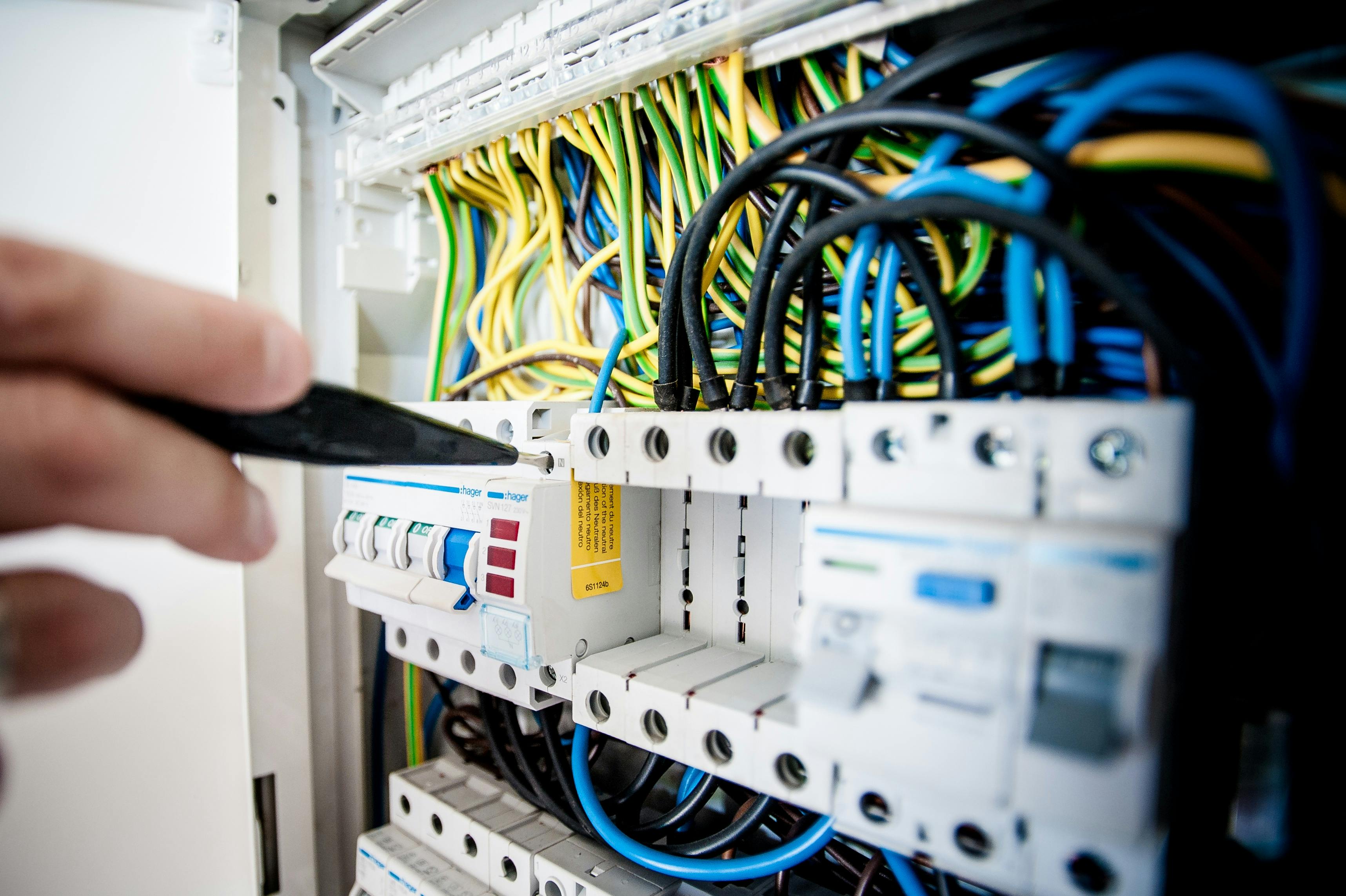
Even with efficient chips and algorithms, data centers must safely dissipate immense heat loads. Thermal management and facility‑level engineering therefore play a pivotal role in the energy story.
From Air Cooling to Advanced Liquid Cooling
Traditional air‑cooled racks struggle once power density exceeds ~30–40 kW per rack. AI‑focused deployments can push well beyond that, prompting adoption of:
- Direct‑to‑chip liquid cooling — coolant channels or cold plates contact the processor package directly.
- Rear door heat exchangers — chilled water pulls heat off hot exhaust air at the rack level.
- Immersion cooling — entire servers submerged in dielectric fluid, enabling very high power density.
These techniques dramatically improve the ratio of useful computing to cooling overhead (often tracked via Power Usage Effectiveness, PUE), thereby reducing total energy consumption per unit of compute.
Locating Data Centers Near Renewable Energy
To decarbonize their power supply, major operators are:
- Co‑locating data centers with large solar, wind, or hydro installations.
- Signing long‑term power purchase agreements (PPAs) to finance new renewable capacity.
- Experimenting with on‑site storage (batteries or other technologies) to buffer intermittent supply.
Regions like Scandinavia, parts of the U.S. Pacific Northwest, and some Middle Eastern and Asian markets have become attractive for new facilities due to abundant renewable energy or favorable climate conditions.
Waste Heat Reuse
As data center heat densities rise, waste heat becomes a resource rather than a nuisance. In several European cities, for instance, operators are:
- Feeding low‑grade heat into district heating networks for homes and offices.
- Supporting greenhouse agriculture and industrial processes.
- Offsetting local fossil fuel use for heating, improving overall energy system efficiency.
These strategies help frame data centers not just as energy consumers but as integrated components of urban and regional energy systems.
Scientific Significance: Computing at the Scale of Power Systems
The energy footprint of AI and data centers is pushing computer science, electrical engineering, and climate science into closer collaboration. Several research frontiers have become especially important.
Metrics and Transparency
One challenge is simply measuring the energy and carbon costs of AI systems accurately. Emerging proposals from academia and industry emphasize:
- Standardized reporting of compute used during training (FLOPs) and typical inference loads.
- Energy‑aware benchmarks that track joules per token, not just tokens per second or accuracy.
- Public documentation of data center PUE, water use, and carbon intensity.
Initiatives like the Machine Learning Emissions Calculator and research from organizations such as Hugging Face, Allen Institute for AI, and major universities are helping quantify these impacts.
Carbon-Aware and Grid-Aware Scheduling
Another active area is carbon‑aware computing, where non‑urgent tasks (e.g., batch training, retraining, indexing) are scheduled when and where electricity is cleanest:
- Shifting jobs to regions with surplus wind or solar generation.
- Delaying elastic workloads to hours of low grid carbon intensity.
- Co‑optimizing compute, cost, and sustainability via intelligent schedulers.
“To align AI with climate goals, we need systems that are aware of both carbon intensity and grid constraints, and can adapt their behavior in real time.” — Insights from sustainability teams at major cloud providers
Alternative Computing Paradigms
In the longer term, research is expanding into fundamentally different computing architectures that could offer major energy advantages:
- Analog and in‑memory computing — performing matrix operations directly in memory arrays, reducing data movement.
- Neuromorphic hardware — chips modeled on biological neural systems, targeting ultra‑low‑power inference for edge devices.
- Quantum and hybrid approaches — exploring where quantum acceleration might reduce classical workloads, while recognizing that today’s quantum systems themselves have significant overheads.
While many of these technologies are in experimental stages, their potential to break current energy‑compute trade‑offs makes them a focus of aggressive investment and academic research.
Milestones: How Fast Is the Energy Curve Bending?
The energy story of data centers is not purely one of growth. There are important milestones demonstrating that efficiency improvements can partially offset rising demand.
Historical Perspective
Over roughly the last decade and a half, studies (including work from the IEA and major research consortia) have found that:
- Global data center workloads increased dramatically—by several multiples.
- Total energy use grew much more slowly than workloads, thanks to shifts to hyperscale data centers with better PUE, server virtualization, and hardware advances.
However, the arrival of energy‑intensive AI workloads is testing whether that trend can continue. Multiple 2023–2025 analyses warn that AI could significantly accelerate data center electricity demand if efficiency plateaus.
Recent Industry Commitments
Several significant milestones from 2022–2025 include:
- Major cloud providers committing to run their operations on 100% carbon‑free energy on a 24/7 basis in specific regions by the early 2030s.
- Multi‑billion‑dollar investments in new renewable capacity tied directly to data center expansion plans.
- Public dashboards and reports from companies like Google, Microsoft, and Amazon offering more granular visibility into energy use and carbon intensity.
Policy and Regulatory Milestones
Governments are beginning to treat data centers as critical energy consumers:
- Some European countries have introduced efficiency standards and reporting requirements for large facilities.
- Local authorities in parts of the U.S. and Europe temporarily paused new data center approvals over grid and water concerns.
- National strategies are emerging that position data centers as strategic infrastructure tied to digital sovereignty, AI leadership, and climate targets.
Challenges: Physical, Environmental, and Social Constraints
Even with aggressive efficiency efforts, several hard challenges remain. These are technical, environmental, and socio‑political.
Grid Capacity and Local Impacts
Many proposed AI campuses require hundreds of megawatts of capacity each, comparable to or exceeding the consumption of entire towns. This raises questions such as:
- Can existing transmission and distribution infrastructure handle sudden new loads?
- Will large data centers crowd out other forms of electrification (e.g., EV charging, industrial decarbonization) in constrained regions?
- Who pays for grid upgrades, and how are costs allocated between ratepayers and cloud operators?
Local communities have also raised concerns about land use, noise, and the resilience of water‑stressed ecosystems when data centers rely on evaporative cooling.
Water Usage and Thermal Management
While liquid cooling improves energy efficiency, some designs rely on evaporating significant quantities of water at cooling towers. In arid regions, this can become controversial. Alternatives such as dry cooling, closed‑loop systems, or siting in cooler climates mitigate water load but may carry cost or performance trade‑offs.
Embodied Carbon and Hardware Lifecycles
Energy use during operation is only one part of AI’s environmental footprint. There is growing attention to:
- Embodied carbon in servers, chips, and construction materials.
- Short hardware refresh cycles as organizations chase the latest accelerator generations.
- E‑waste management and reuse of decommissioned equipment.
Lifecycle assessments (LCAs) are increasingly used to capture these effects and guide procurement policies.
Ethical and Governance Questions
A deeper governance debate asks: what kinds of AI applications justify large energy and carbon expenditures?
- Do entertainment and advertising‑driven use cases merit the same energy footprint as medical research or climate modeling?
- How should companies disclose energy and carbon costs to users and regulators?
- Should public funding for AI infrastructure be tied to strict efficiency and transparency thresholds?
Civil society organizations and think tanks argue that without clear governance, AI expansion could undermine climate targets and exacerbate environmental inequality.
Practical Strategies: What Organizations Can Do Today
While hyperscale cloud providers tackle grid‑scale issues, enterprises and research teams that build on these platforms can still make meaningful choices to reduce their energy and carbon footprint.
1. Right-Size Models and Workloads
- Use smaller, fine‑tuned models wherever they meet requirements instead of defaulting to frontier‑scale models.
- Cache results for common queries to avoid redundant inference.
- Profile workloads to identify hotspots and eliminate unnecessary computations.
2. Choose Efficient Infrastructure
- Select regions advertised as having low carbon intensity when latency allows.
- Prefer instances with newer‑generation accelerators that offer better performance per watt.
- Use serverless and autoscaling features to match capacity to demand dynamically.
3. Monitor and Report
- Track energy use estimates via cloud‑provided sustainability dashboards.
- Include environmental metrics in internal performance reviews and external ESG reporting.
- Adopt tools and practices inspired by frameworks like the “Green AI” initiative.
For teams building in‑house infrastructure, power‑efficient server designs, high‑quality power supplies, and proper airflow or liquid cooling can yield substantial savings. Compact AI workstations with optimized GPUs—such as those powered by NVIDIA RTX 4080‑class cards—can handle many development tasks locally, reducing the need for constant cloud usage during experimentation.
Public Debate and Media: Why This Topic Is Trending
The energy crunch occupies a unique place in public discourse because it connects familiar consumer experiences with invisible infrastructure. Viral posts on social platforms and forums like Hacker News or Reddit frequently surface:
- Case studies of individual data centers drawing power comparable to small cities.
- Investigations into water usage in drought‑prone regions hosting large cloud campuses.
- Debates about whether ever‑larger models are socially and environmentally responsible.
Articles from outlets such as The New York Times, Financial Times, and MIT Technology Review have detailed how AI‑driven data center expansions are influencing local politics and zoning battles. Meanwhile, sustainability‑focused organizations are publishing white papers and policy briefs urging mandatory disclosures of AI energy use.

For an accessible overview of how AI models translate into physical energy demand, several researchers and practitioners share explainers on platforms like YouTube and LinkedIn, helping non‑specialists understand both benefits and trade‑offs.
Conclusion: Toward a Sustainable Future for Intelligent Compute
The energy crunch surrounding AI and data centers is not a passing headline; it is a structural issue that will define the next decade of digital infrastructure. The same technologies that promise leaps in productivity, scientific discovery, and creativity also demand enormous physical resources in the form of electricity, cooling, and materials.
Whether the future of computing is compatible with climate and grid stability goals depends on several intertwined factors:
- The pace of innovation in energy‑efficient chips, algorithms, and cooling systems.
- The speed at which clean energy and stronger grids can be deployed worldwide.
- The willingness of companies and regulators to prioritize transparency, governance, and responsible deployment of AI.
There is no single silver bullet. But a combination of efficient hardware, careful model design, intelligent scheduling, and robust policy can keep AI’s benefits while respecting planetary boundaries.
The central question is not whether we will use more compute—history suggests we will—but whether each unit of intelligence delivered to users can be provided with orders of magnitude less energy and carbon than today.
For professionals working in AI, cloud architecture, or sustainability, staying informed on these trends is becoming part of core competence. For policymakers and the public, understanding that the “cloud” is deeply material—built from gigawatts, water, steel, and silicon—is essential to shaping a digital future that is both powerful and sustainable.
Additional Resources and Further Reading
To dive deeper into the intersection of AI, data centers, and energy systems, the following resources offer data‑rich and technically grounded perspectives:
- White Papers and Reports
- International Energy Agency (IEA) reports on data centers and AI electricity demand.
- Major cloud provider sustainability and environmental reports (Microsoft, Google, Amazon).
- Think‑tank analyses on digital infrastructure and climate targets from organizations such as RMI and academic energy institutes.
- Technical and Academic Work
- “Green AI” and related papers advocating for energy‑aware AI research practices.
- Research on in‑memory computing, neuromorphic architectures, and advanced cooling systems in top conferences such as ISCA, MICRO, and HotChips.
- Professional Communities
- Data center engineering groups and sustainability forums on LinkedIn.
- Technical discussions on sites like Hacker News and specialized subreddits for data centers and energy.
For engineers, architects, and decision‑makers, regularly reviewing both hardware roadmaps and regional energy strategies will be crucial to ensuring that new AI deployments are aligned with long‑term resilience and sustainability goals.
References / Sources
Selected publicly accessible references for further reading:
- International Energy Agency – Electricity 2024 report
- IEA commentary on data centres and AI electricity demand
- Green AI (ACM Communications) – energy‑aware AI research
- Google – Carbon‑Intelligent Computing (research publication)
- Microsoft – Sustainability commitments and data center strategy
- Amazon – Sustainability and data center energy initiatives
- Data Center Dynamics – Industry news and technical coverage
- MIT Technology Review – Reporting on AI, climate, and infrastructure
