
San Francisco Sends Off a Deadhead Legend: Inside the Massive Celebration of Bob Weir’s Life
“We Will Get By”: San Francisco’s Massive Farewell to Grateful Dead Legend Bob Weir
Thousands of fans filled San Francisco’s Civic Center to celebrate the life of Grateful Dead co-founder and beloved guitarist Bob Weir, turning public grief into a communal, music-filled tribute that underscored just how deeply his improvisational spirit and countercultural ethos shaped American music and Bay Area identity.
Coming just days after Weir’s death at 78, the gathering felt less like a somber memorial and more like a city-sized “Shakedown Street”—a public affirmation that the Dead’s long, strange trip didn’t end so much as evolve. From vintage tie-dye to teenagers discovering the band through Dead & Company streams, San Francisco put its cultural history on display and invited the world to sing along.
Inside the Civic Center Celebration of Life
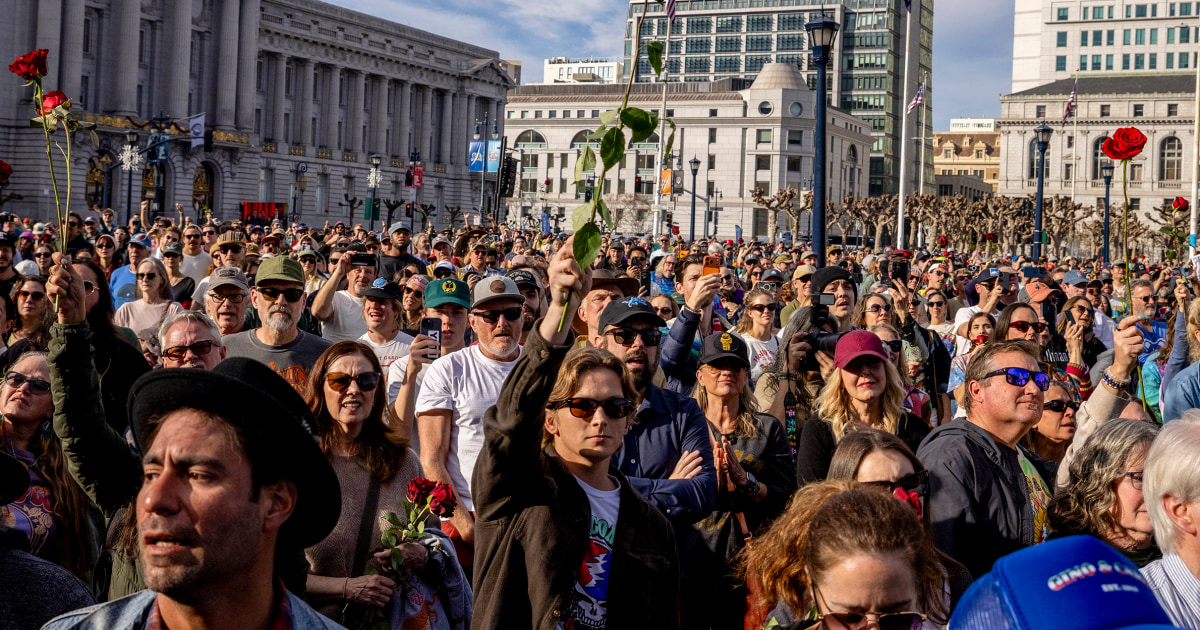
The San Francisco Civic Center has hosted protests, inaugurations, and Pride rallies, but on this particular Saturday it became a cathedral of guitars. According to local reports, thousands of Deadheads, casual fans, musicians, and curious onlookers converged on the plaza to pay their respects to Bob Weir in the most Weir-appropriate way possible: with an open-air, communal celebration.
Attendees arrived draped in tie-dye, denim, and well-worn tour shirts that spanned decades of Dead history. Makeshift shrines popped up near the steps—candles, roses, ticket stubs, and handwritten setlists forming a kind of analog social feed of shared memory. It wasn’t just nostalgia; it was an intergenerational roll call of people who’d found community in the shadow of the band’s ever-evolving sound.

The program blended speeches, archival audio, and live performances. Musicians cycled through Weir staples, reimagining his angular rhythm guitar and soulful baritone. There were moments of pure catharsis—thousands of voices belting out “I will get by, I will survive” on “Touch of Grey” felt less like a lyric and more like a shared mantra for enduring loss.
“This isn’t a funeral,” one longtime fan told local TV. “It’s a thank-you note to Bob, written in music.”
Bob Weir’s Legacy: The Reluctant Frontman Who Redefined Rhythm Guitar
Even within the Grateful Dead’s mythic orbit, Bob Weir’s role was a little unconventional. Not the psychedelic shaman (Jerry Garcia) and not the business brain (Phil Lesh and the crew around them), Weir was the restless experimenter who quietly reinvented what a rhythm guitarist could do in a rock band.
Rather than chugging along with standard chords, Weir played against the grain—weaving jazz voicings, country twang, and unexpected accents into the Dead’s free-form jams. His parts on “Cassidy,” “The Other One,” or “Estimated Prophet” are practically co-leads, turning the band’s improvisations into intricate conversations rather than solo showcases.

Lyrically, his collaborations with writers like John Perry Barlow gave the Dead some of their most enduring songs. Where Robert Hunter often leaned into mythology and Americana, Weir-Barlow compositions like “Looks Like Rain” and “Throwing Stones” brought a wry, emotionally direct, and occasionally political edge.
“I don’t think of myself as a lead anything,” Weir once shrugged in an interview. “I just listen and try to play what the song needs.”
From Haight-Ashbury to Civic Center: Cultural Impact and Counterculture Continuity
The symbolism of this memorial being held in San Francisco isn’t subtle. The city is practically ground zero for Grateful Dead lore: the Haight-Ashbury house parties, the Human Be-In in Golden Gate Park, and countless nights at the Fillmore and Winterland. Weir’s life is tightly woven into the Bay Area’s story of protest, psychedelic experimentation, and DIY community-building.
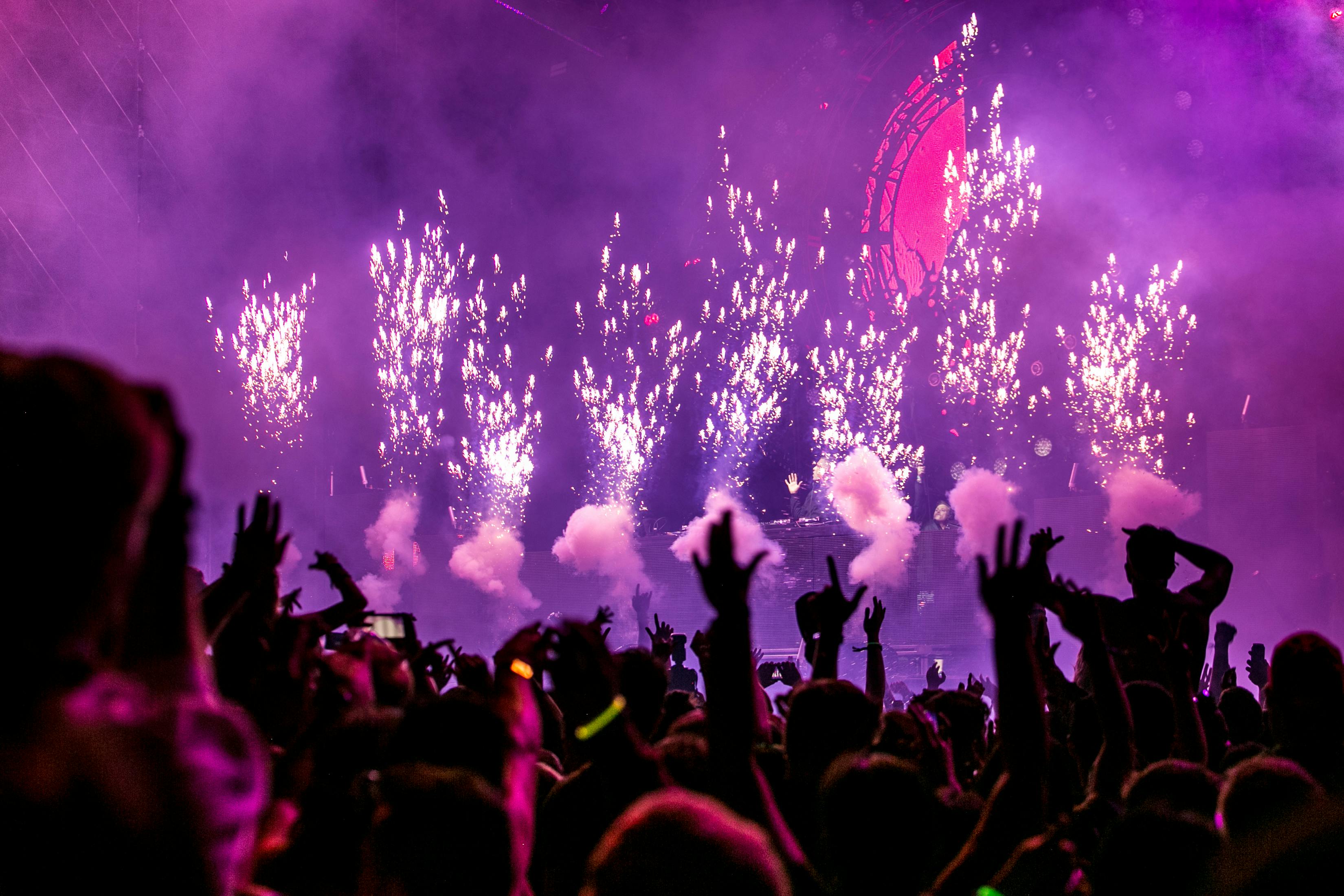
Seeing Civic Center dressed in tie-dye decades later is a reminder that the band’s influence has far outlived the “Summer of Love” branding. The Dead pioneered ideas that are now standard in entertainment culture: live taping policies that prefigured remix culture, touring economies built around loyal fan communities, and an improvisational ethos that shows up everywhere from jam bands to EDM.
The memorial also highlighted the Dead’s evolving fan base. Alongside original Deadheads were fans who discovered Weir through Dead & Company tours, streaming platforms, and even TikTok edits of “Friend of the Devil.” This isn’t just legacy rock; it’s living culture, passed down like great folk music.
Strengths, Weaknesses, and Honest Reflection
Any clear-eyed look at Bob Weir’s career has to acknowledge the polarizing side of the Grateful Dead universe. To some listeners, the band’s sprawling live recordings and Weir’s unconventional phrasing can feel meandering or indulgent. There were tours and eras where the experimentation tipped into inconsistency.
Yet that same risk-taking is precisely what made Weir’s artistry so enduring. He seemed constitutionally allergic to autopilot. Even late in life, with Dead & Company, he was reworking vocal lines, reharmonizing old standbys, and gently pushing his bandmates into new territory. “Play it safe” was never really on the menu.
The Civic Center celebration captured that tension well. There were ragged moments—not every song was pristine, not every speech polished—but that rawness felt appropriate. The point wasn’t technical perfection; it was sincerity, participation, and the sense that the audience was part of the band, just as it had been for decades of Dead shows.
As one local critic put it in a recap, “The sound wasn’t flawless, the timing wasn’t always tight, and that’s exactly how you honor Bob Weir. You leave room for the weirdness.”
Where to Watch, Listen, and Dive Deeper into Bob Weir’s World
For fans who couldn’t make it to San Francisco, coverage of the memorial has surfaced across news outlets and social media, with clips of sing-alongs, speeches, and crowd panoramas. While not every stream is official, they collectively paint a vivid portrait of a city in full communal mourning.

To explore Weir’s legacy in more depth, consider:
- Bob Weir on IMDb — for an overview of his film, TV, and documentary appearances.
- “The Other One: The Long, Strange Trip of Bob Weir” — an intimate documentary focusing on his life beyond the usual Dead mythology.
- Official Grateful Dead site — archival releases, artwork, and curated live recordings.
- Major streaming platforms — search for classic live shows like “Europe ’72,” “Cornell ’77,” and later Dead & Company performances featuring Weir in veteran-bandleader mode.
After the Music Fades: What Bob Weir’s Send-Off Tells Us
The Civic Center gathering for Bob Weir wasn’t just about one musician; it was about a way of relating to art and to each other. In an era of algorithmically curated playlists and meticulously choreographed arena tours, the Dead’s world—with Weir as one of its most restless architects—remains a reminder that music can still be messy, participatory, and gloriously unpredictable.
The fans who danced, wept, and sang in downtown San Francisco weren’t simply saying goodbye. They were reaffirming a social contract that has outlasted trends, technologies, and even its central figures: show up, listen hard, leave room for improvisation, and take care of each other on the long, strange trip home.
