
Room-Temperature Superconductivity After LK‑99: Hype, Hope, and How Physics Self‑Corrects
Mission Overview: Why Room‑Temperature Superconductivity Matters
Superconductors are materials that conduct electricity with effectively zero resistance and expel magnetic fields via the Meissner effect. Conventional superconductors only work at extremely low temperatures, often just a few kelvin above absolute zero, which makes them expensive and difficult to deploy outside specialized environments such as MRI machines, particle accelerators, and some quantum computers.
A genuinely reproducible superconductor operating at or near room temperature and ambient pressure would be one of the most disruptive technologies in modern history. It could:
- Enable near lossless power grids, sharply reducing transmission losses.
- Make compact, ultra‑efficient motors and generators routine.
- Revolutionize maglev transportation and precision bearings.
- Transform fusion reactor designs and high‑field magnets.
- Supercharge high‑performance computing, quantum devices, and sensors.
This enormous potential explains why the LK‑99 saga and other room‑temperature superconductivity claims have captivated not only physicists, but also investors, technologists, and millions of people on social media.
Background: From Low‑Temperature Classics to High‑Pressure Hydrides
Superconductivity was first discovered in 1911 by Heike Kamerlingh Onnes in mercury cooled to about 4 K. For decades, critical temperatures (Tc) remained low, until the 1980s when copper‑oxide (cuprate) superconductors broke the so‑called “liquid nitrogen barrier” with Tc values above 77 K. This made cooling with relatively cheap liquid nitrogen possible and triggered an earlier wave of excitement.
In the last decade, the frontier has shifted again toward hydrogen‑rich “superhydride” materials synthesized under extreme pressures. Using diamond anvil cells, researchers have reported:
- Lanthanum hydride (LaH10) with superconducting transitions above 250 K under pressures of ~170–200 GPa.
- Other carbonaceous sulfur hydride systems with reported Tc around room temperature under comparable pressures.
While scientifically significant, these systems require pressures comparable to those deep inside Earth’s core. They are far from the ambient‑pressure materials that could power real‑world technologies.
“Reaching room temperatures was a landmark, but doing so only under multi‑megabar pressures reminds us that practicality and possibility are not the same thing.”
— Condensed‑matter physicist quoted in Nature
The LK‑99 Episode: Viral Ambient‑Pressure Superconductivity
In mid‑2023, two preprints claimed that a modified lead apatite compound, dubbed LK‑99, showed superconductivity above room temperature at ambient pressure. The material was described as a copper‑doped lead phosphate apatite, and preliminary videos circulated showing small samples that appeared to partially levitate above magnets and exhibit low resistance.
Several features made LK‑99 uniquely viral:
- Ambient conditions: No diamond anvils or megabar pressures—just lab‑synthesizable ceramics.
- DIY appeal: The recipe looked simple enough that university labs and some well‑equipped hobbyists attempted replication, streaming their efforts on YouTube, TikTok, and X.
- Timing and algorithms: Social‑media algorithms amplified visually striking “levitation” clips, often stripped of scientific caveats.
Within weeks, dozens of independent teams worldwide had synthesized samples and reported measurements. The consensus that emerged by late 2023 and through 2024 was clear: LK‑99 is not a conventional superconductor.
Most replications showed:
- Resistivity too high and not dropping sharply to zero.
- Magnetic behavior consistent with ferromagnetism or mixed phases, not a clean Meissner effect.
- Structural inhomogeneity and impurity phases that could explain quirky signals.
“If LK‑99 were the miracle claimed, every solid‑state lab on Earth would have seen a clear superconducting transition months ago. They haven’t.”
— Paraphrased sentiment from multiple condensed‑matter researchers on X (Twitter), 2023–2024
Technology: How Scientists Test Superconductivity Claims
Verifying superconductivity is not as simple as seeing something float above a magnet. Physicists rely on a toolkit of complementary measurements, each probing different signatures of the superconducting state.
Core Experimental Signatures
- Zero DC resistance: Measuring resistivity as a function of temperature to see a sharp drop to effectively zero at a critical temperature Tc.
- Meissner effect: Demonstrating that the material expels magnetic fields, usually via magnetization measurements or AC susceptibility.
- Critical fields and currents: Characterizing how the superconducting state breaks down with magnetic field strength (Hc) and current density (Jc).
- Thermodynamic signatures: Heat capacity and other bulk properties showing a phase transition consistent with superconductivity.
Advanced Characterization and Theory
To understand why or whether a material might be superconducting, researchers combine:
- Crystallography: X‑ray and neutron diffraction to determine atomic structure and identify impurity phases.
- Spectroscopy: ARPES, Raman, and optical probes to map electronic band structures and pairing interactions.
- First‑principles calculations: Density‑functional theory (DFT) and beyond‑DFT methods to model electron‑phonon coupling or unconventional pairing.
- Machine learning: Screening large materials databases to predict candidates with high Tc or favorable electronic structures.
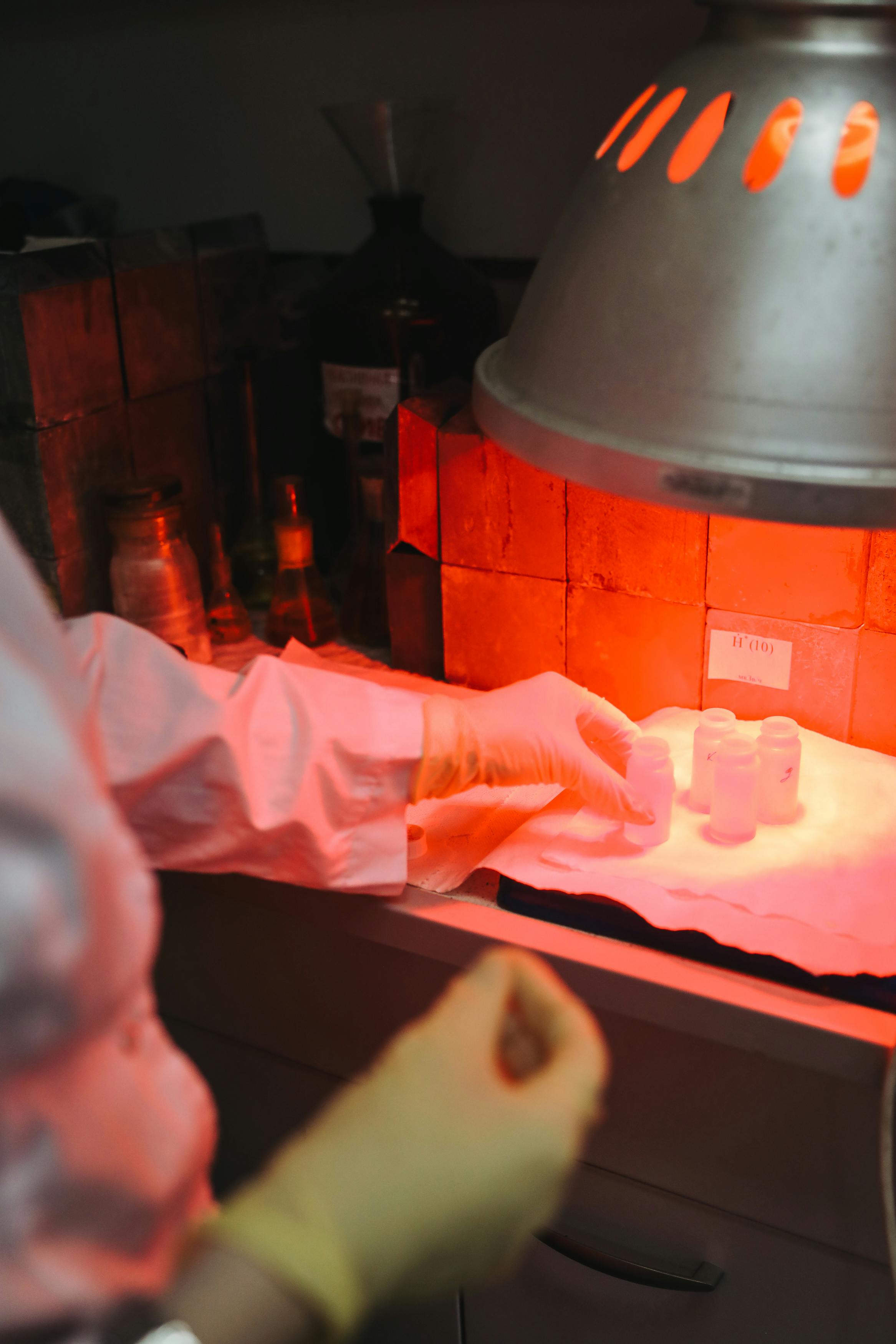
Modern work increasingly blends high‑throughput computation with automated synthesis and measurement, creating closed loops where algorithms propose candidates, robotic systems synthesize them, and measurements feed back to refine models.
Scientific Significance: Beyond the Hype
Even when headline‑grabbing claims fail replication, they can accelerate progress in several ways. The LK‑99 episode, along with contested high‑pressure hydride reports and retracted papers, has:
- Stress‑tested techniques: Forced labs to refine high‑precision magnetization and transport setups.
- Highlighted materials classes: Renewed interest in apatites, doped oxides, and unconventional copper‑ or nickel‑based compounds.
- Shaped theoretical work: Motivated new models of strongly correlated electrons, flat bands, and topological effects that could stabilize high‑Tc phases.
Importantly, the controversy has made the replication process itself more visible to the public. Many science creators on YouTube and X used the LK‑99 story to explain how science progresses: bold hypotheses, rapid community testing, and eventual convergence toward a consensus.
“What you’re watching in real time is not failure, but the scientific method doing exactly what it’s supposed to do.”
— John Baez, mathematical physicist, commenting during the LK‑99 discussions
Social Media, Preprints, and the Replication Crisis Narrative
The LK‑99 aftermath dovetailed with ongoing debates about a “replication crisis” in physics and other fields. While the term originally gained traction in psychology and biomedical research, physics is not immune to:
- Under‑powered or noisy experiments.
- Over‑fitted data analysis and cherry‑picking.
- Publication and confirmation bias toward positive results.
What’s new is the speed and visibility of this process. Preprint servers like arXiv allow rapid dissemination. Social platforms then amplify early, often unvetted interpretations.
The Double‑Edged Sword of Virality
- Pros:
- Fast replication attempts across the world.
- Open data and code sharing under public scrutiny.
- Opportunities for science communication and education.
- Cons:
- Over‑simplified narratives (“miracle material found!”).
- Pressure on researchers to rush results to avoid being “scooped.”
- Public disappointment when hype collapses, risking cynicism about science.
The community’s challenge is to preserve the benefits of openness while maintaining rigorous standards for claiming extraordinary results.

Milestones: Where the Field Actually Stands
Stripping away the hype, several robust milestones define the state of high‑temperature superconductivity as of early 2026:
- High‑pressure hydrides: Multiple groups continue to refine measurements on hydrides such as LaH10 and related compounds, confirming very high Tc under extreme pressures.
- Iron‑based and cuprate superconductors: Still central in fundamental studies, with incremental improvements in understanding pairing mechanisms and disorder effects.
- Nickelates and other oxides: Emerging families that may bridge behavior between cuprates and conventional superconductors.
- Thin‑film and interface superconductivity: Engineered heterostructures, “magic‑angle” twisted bilayer graphene, and moiré materials show tunable superconducting states controlled by gating, twist angle, and strain.
None of these represent a room‑temperature, ambient‑pressure superconductor ready for the grid, but collectively they deepen our understanding of correlated electrons and unconventional pairing.
Potential Applications: What a Real Ambient Superconductor Could Do
To appreciate why LK‑99 and similar claims matter, it helps to visualize concrete applications if a practical room‑temperature superconductor were realized.
Energy and Infrastructure
- Power transmission: Drastically reduced line losses, enabling more flexible grid architectures and easier integration of renewables.
- Ultra‑compact transformers and motors: Smaller, lighter, and more efficient devices for everything from data centers to electric aircraft.
- Fusion and large magnets: Lower cost, higher‑field magnet systems for tokamaks, stellarators, and particle accelerators.
Transport and Mobility
- Maglev rail: More efficient and potentially cheaper levitation and propulsion systems.
- Precision bearings: Frictionless or ultra‑low friction supports for industrial machinery and scientific instruments.
Computing and Sensing
- Superconducting logic: Energy‑frugal high‑speed circuits and interconnects.
- Improved quantum devices: More scalable qubits and resonators with higher coherence times.
- High‑sensitivity sensors: Better SQUIDs and magnetometers for medicine, geology, and fundamental physics.
For readers interested in the engineering side, detailed introductions to applied superconductivity can be found in textbooks like “Introduction to Applied Superconductivity” , which covers devices, magnets, and power applications.
Challenges: Physics, Materials, and Scientific Culture
Achieving reproducible room‑temperature superconductivity at ambient pressure is difficult for several intertwined reasons.
Fundamental Physics Barriers
- Pairing mechanisms: Conventional BCS theory, based on electron‑phonon coupling, has limits on achievable Tc. Many high‑Tc materials appear to rely on more complex, strongly correlated mechanisms not yet fully understood.
- Competing phases: In many candidate materials, superconductivity competes with magnetism, charge order, or structural instabilities.
- Dimensionality and disorder: Low‑dimensional and strongly disordered systems can both foster exotic states and suppress long‑range superconducting order.
Materials Science and Engineering Hurdles
- Producing phase‑pure, homogeneous samples on a reproducible basis.
- Controlling doping, strain, and defects at the atomic scale.
- Scaling from tiny crystals or thin films to bulk wires and devices.
Cultural and Methodological Issues
The LK‑99 saga also exposed cultural challenges:
- Insufficient error analysis and incomplete data in some high‑profile claims.
- Publication pressure and the temptation to announce incomplete findings.
- Public communication gaps that can blur the line between speculation and established fact.
Many leading physicists have called for stronger norms around data sharing, open code, and preregistered analysis pipelines for especially extraordinary claims, similar to moves already seen in other disciplines.
Modern Tools: AI, Automation, and Quantum‑Materials Design
Despite the controversies, genuine progress is being made in how we search for new superconductors.
- Machine‑learning‑guided discovery: Algorithms trained on known superconductors and large crystal‑structure databases can propose candidate compounds predicted to have favorable electronic and phonon properties.
- Combinatorial synthesis: Thin‑film libraries with gradients in composition allow researchers to scan wide swaths of phase space quickly.
- Autonomous labs: “Self‑driving” laboratories integrate AI planning with robotics to iterate through synthesis–measure–analyze loops with minimal human intervention.
For a broader view of how AI is reshaping materials science, talks from conferences such as the Materials Research Society (MRS) and YouTube channels like Materials Today provide accessible deep dives.
How to Follow Room‑Temperature Superconductivity Responsibly
Given the likelihood of future “miracle material” announcements, it helps to have a checklist for evaluating new claims:
- Is the work peer‑reviewed, or at least accompanied by full data and methods?
- Have multiple independent groups reproduced the key results?
- Are both zero resistance and the Meissner effect convincingly demonstrated?
- Do experts in condensed‑matter physics endorse the interpretation, or are they skeptical?
- Is the claim physically plausible given existing theory and similar materials?
Following reputable sources—such as Nature Physics, Physical Review Letters, and researchers like Andrea Cavalleri or well‑known condensed‑matter theorists on X—helps separate serious developments from over‑hyped noise.
Learning More: Accessible Resources for Curious Readers
For readers who want a structured introduction to superconductivity, from fundamentals to applications, consider:
- Introductory books on superconductivity that balance equations with clear physical explanations.
- YouTube lecture series such as those from MIT OpenCourseWare and Stanford, which often cover condensed‑matter physics and quantum materials.
- Review articles in journals like Reports on Progress in Physics and Reviews of Modern Physics, which summarize the current state of high‑Tc research.
Conclusion: LK‑99, Self‑Correction, and the Road Ahead
The LK‑99 aftermath underscores a central lesson: extraordinary claims demand extraordinary evidence, but the path to such evidence is messy, public, and sometimes dramatic. While LK‑99 itself almost certainly is not the ambient‑pressure room‑temperature superconductor once imagined, the episode accelerated replication, sharpened methods, and brought millions of new observers into conversation with frontline physics.
Meanwhile, serious work on hydrides, nickelates, interface superconductors, and AI‑guided discovery continues. Whether the eventual breakthrough arrives in years or decades, it will almost certainly emerge from this slow accumulation of understanding rather than a single viral preprint.
For now, the most productive stance is informed optimism: expect bold ideas and be excited by them, but insist on rigorous, transparent, and reproducible evidence. That balance is how physics ultimately transforms speculative possibilities into reliable technologies that reshape the world.
References / Sources
- Nature collection on superconductivity
- American Physical Society: Superconductivity topic page
- arXiv: Recent preprints on superconductivity (cond-mat)
- “Room-temperature superconductivity: the next steps” – Nature news feature
- Science Magazine coverage of room‑temperature superconductivity claims
- Analytical YouTube videos discussing LK‑99 data and replications
Additional value for readers: monitoring curated lists such as X (Twitter) lists of condensed‑matter physicists or LinkedIn groups focused on quantum materials can provide timely, expert‑filtered updates whenever the next superconductivity claim inevitably surfaces.
