Quiet Luxury at Home: How to Dress Your Space Like It Owns a Yacht (On a Bus Pass Budget)
Home
If quiet luxury were a person, it would be that friend who shows up in the simplest outfit and still somehow looks like they own three passports and a house with a name. The twist? That same energy has officially moved into home decor—only now it’s bringing its responsible, sustainability-obsessed cousin along for the ride.
Think of this as building a capsule wardrobe for your home: fewer but better pieces, neutral foundations, delicious textures, and materials that are kind to both your eyeballs and the planet. Less “look at my stuff,” more “oh this old thing? I’ll have it forever.”
Today we’re walking through how quiet luxury meets sustainable home styling—with practical tips, playful metaphors, and zero judgment if your current “design scheme” is 80% laundry chair. By the end, you’ll know how to make your place feel polished, intentional, and quietly expensive… even if your bank account is whispering something very different.
1. The Capsule Home: Dress Your Space Like a Timeless Outfit
If a capsule wardrobe is a tight edit of pieces you can mix, match, and wear on repeat, a capsule home is exactly the same idea—just with furniture that doesn’t need dry cleaning.
Instead of crowding your place with trendy decor hauls, you build a small rotation of hardworking staples:
- A well-made, comfortable sofa in a neutral tone (your “tailored blazer”)
- Solid wood or metal dining table that actually survives dinner parties
- Quality rug that anchors the room like great trousers
- Two or three lighting sources per room (your statement shoes, but make it practical)
The goal: cost per use. That slightly pricier, responsibly made coffee table you’ll love for 10 years beats three wobbly impulse buys that chip faster than your nail polish.
Quiet luxury at home isn’t about having more; it’s about owning the right things and using them relentlessly.
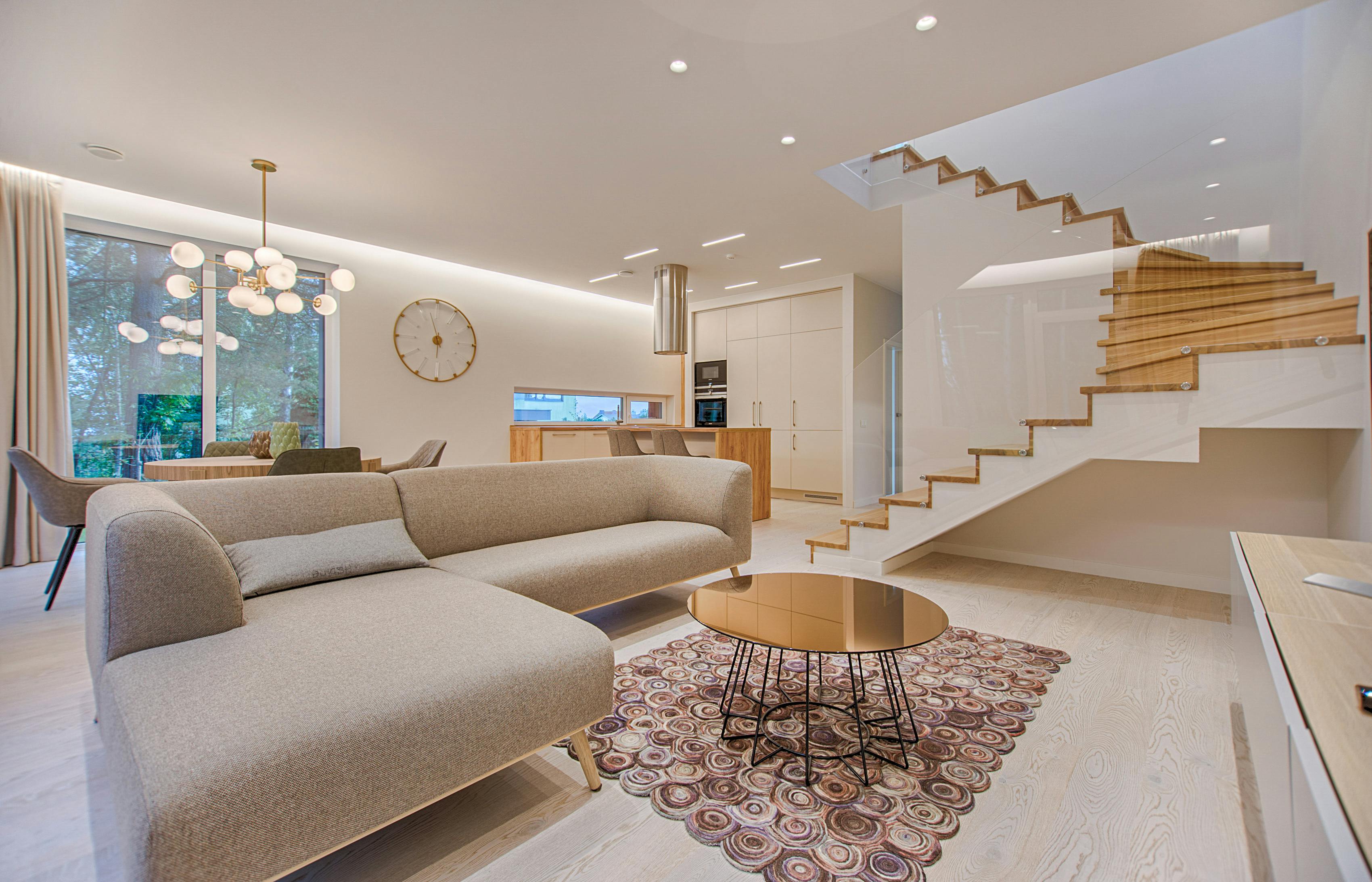
Start with your “big four” pieces (sofa, dining, bed, rug) and keep them classic. You can always dress them up or down with accessories later—just like a great pair of jeans.
2. Build a Quiet Luxury Color Palette (That Still Feels Like You)
In fashion, quiet luxury loves stone, navy, black, cream. At home, that translates into a soft, neutral base that makes everything look more composed—even if there’s a rogue sock colony under the couch.
Think:
- Walls in warm white, soft greige, or pale taupe
- Big furniture in oatmeal, sand, charcoal, or deep olive
- Wood tones: oak, walnut, or ash instead of bright orange varnish
Worried it’ll look like a beige waiting room? That’s where texture comes in—linen, bouclé, wool, jute, stone, and matte ceramics. Texture is the jewelry of quiet luxury decor: subtle, but it does the heavy lifting.
Then, add color like you’d add a bold bag or scarf:
- Cushions in moss green, rust, or deep blue
- One or two art pieces that feel personal, not generic hotel lobby
- Books, vases, or throws as your “accent accessories”
You’re not banning color; you’re just making it earn its place. If it doesn’t go with at least three things in the room, it’s that one chaotic shirt you never actually wear.
3. Fabric, Not Flex: Materials That Whisper “I’m Expensive”
In fashion, quiet luxury skips giant logos and lets the fabric do the talking: cashmere, merino, organic cotton. At home, the same principle applies. Your space should feel good as much as it looks good.
Look for:
- Natural fibers: linen curtains, cotton or wool throws, jute or wool rugs
- Solid wood instead of veneer when possible (or high-quality veneer used sensibly)
- Ceramic and glass for vases, lamps, and everyday objects
- Stone or stone-look surfaces for trays, coasters, side tables
This doesn’t mean everything has to be luxury-brand expensive. Look for pieces with:
- Clear information about materials (no mystery blends everywhere)
- Repairable parts (chair covers you can wash, modular sofas, replaceable lamp shades)
- Responsible certifications where possible—FSC-certified wood, organic cotton textiles, low-VOC finishes
If fast furniture is fast fashion, then your goal is to build a closet of “evergreen basics” for your home. Every item should either feel good to touch or genuinely earn its keep.
4. Sustainable Decor: Your Home, but Make It Ethically Chic
Just like fashion is moving from haul culture to slow, sustainable wardrobes, decor is catching up fast. The vibe is: “I love this, I’ll keep it for years, and I know roughly where it came from.”
Some easy ways to bring that energy home:
- Buy fewer, better. One sturdy, ethically made chair is better than four wobbly ones that crack within a year.
- Mix new with vintage. Thrift stores, flea markets, and online resale are goldmines for solid-wood tables, unique lamps, and storage pieces with character.
- Support makers. Look for local ceramicists, textile artists, and carpenters when budget allows. A single handmade bowl on your coffee table can elevate the entire room.
- Check brand transparency. Many home brands now highlight recycled materials, take-back programs, and repair services.
The sustainable quiet-luxury test: if you moved tomorrow, would you carefully wrap this item and bring it with you… or “accidentally” leave it behind?
5. Stealth Wealth Styling: Your Space, but Soft-Launch the Fancy
Online, “stealth wealth” is about looking quietly polished: no logos, no obvious flexing. At home, this means styling that feels calm and intentional rather than curated for the loudest Instagram moment.
Try these quiet luxury styling tricks:
- Curated surfaces. Instead of a cluttered coffee table, use the “3 + 1” rule:
- 1 stack of books
- 1 tray or bowl
- 1 sculptural object (candle, ceramic piece, stone)
- + fresh element (flower stem, small plant, or branch)
- Hidden storage. Baskets, closed cabinets, and storage ottomans keep the chaos out of sight. Quiet luxury rarely leaves its cables screaming in the middle of the room.
- Layered lighting. Overhead lights are the fluorescent fitting-room mirrors of interiors. Add table lamps, floor lamps, and wall lights so the room glows instead of glares.
- Symmetry (but not too much). Pair lamps on either side of a sofa or bed, then offset with a single asymmetrical object to keep it relaxed.
Your home should feel like it’s casually well-dressed, not like it spent three hours rehearsing for a photoshoot.
6. Style a Room Like an Outfit: Formula Time
If getting dressed feels easier than decorating, steal your own logic. Style a room with the same formula you’d use for a great outfit:
- The Base: In fashion: jeans and a tee. At home: rug + main seating + wall color.
- The Layer: In fashion: blazer, cardigan, or coat. At home: throw blanket, accent chair, curtains, or a bench.
- The Shoes: In fashion: the element that grounds everything. At home: coffee table, side tables, or storage units that tie the layout together.
- The Jewelry: In fashion: earrings, bags, belts. At home: cushions, vases, candles, books, art, and plants.
- The Signature: In fashion: your go-to color, silhouette, or accessory. At home: a recurring color, texture, or material that shows up in every room.
When you’re stuck, ask: “What’s missing—base, layer, shoes, jewelry, or signature?” Suddenly, decorating feels less like a mystery and more like getting dressed for brunch.
7. Trendy, But Make It Timeless: How to Flirt with Fads Responsibly
Fashion has micro-trends; decor has viral aesthetics that change faster than you can say “algorithm.” Quiet luxury plus sustainability means you can enjoy trends—just don’t hand them the keys to your entire home.
Use this rule: Trendy on the top, timeless on the bottom.
- Make the bones timeless. Walls, big furniture, and flooring should stay relatively neutral and classic.
- Let trends live in the accessories. A certain color? Try it in cushions, candles, or an inexpensive print. Organic, wavy shapes? Add a single mirror or ceramic piece, not a whole house of wiggle furniture.
- Try before you commit. Love a bold color? Start with a throw or small rug. If it still thrills you after six months and a few seasons, then consider a bigger piece.
Your home should evolve, not yo-yo. Quiet luxury is more “personal signature style” than “latest TikTok sound.”
8. Five Tiny Upgrades That Make Your Home Feel Quietly Expensive
You don’t need a full renovation to give your space a quiet luxury glow-up. Try one (or all) of these micro-makeovers:
- Swap harsh lights for warm bulbs. Choose warm white (around 2700–3000K) and aim for multiple low-level lamps instead of one overhead spotlight interrogating your soul.
- Decant the chaos. Use matching glass jars, ceramics, or baskets in open storage areas (kitchen shelves, bathroom, entryway). Suddenly, even mundane items look intentional.
- Elevate the textiles. Replace worn cushions or pilled throws with fewer, better ones in linen, cotton, or wool. A single structured cushion beats six sad, lumpy ones.
- Frame your art properly. Print your favorite photos or art in a cohesive size and frame color. No more collage of random frames from five different decades of your life.
- Introduce one sculptural object. A nicely shaped vase, bowl, or lamp base is like a statement earring for your coffee table or console.
None of these require selling a kidney, but together they nudge your space from “it’ll do” to “oh hello, who is she?”
9. Quiet Luxury Is a Feeling, Not a Price Tag
At its core, quiet luxury—whether in your closet or your living room—isn’t about wealth. It’s about confidence, care, and clarity:
- You know what you like, so you buy with intention.
- You choose quality where it matters most.
- You take care of what you own instead of constantly replacing it.
Your home doesn’t need to be large, new, or architect-approved to feel elevated. It just needs to fit you the way a perfectly tailored outfit does: comfortably, quietly, and with a little bit of “I know what I’m doing” energy.
So the next time you’re tempted to fill your cart with a dozen trendy decor pieces, pause and ask: Would my capsule home invite this in… or politely leave it on read?
Start small, edit often, choose thoughtfully—and let your space become the best-dressed room you know.
Suggested Image 1
Placement: After the section titled “1. The Capsule Home: Dress Your Space Like a Timeless Outfit”.
Supports sentence/keyword: “Start with your ‘big four’ pieces (sofa, dining, bed, rug) and keep them classic.”
Image description: A realistic photo of a living-dining area that clearly shows the “big four” home staples: a neutral-toned sofa, a solid wood dining table with simple chairs, a large neutral rug, and a visible bed in an adjoining open-plan studio space or partially visible through an open doorway. The furniture should be simple, timeless, and in soft neutral colors (oatmeal, beige, grey, or soft taupe). Decor is minimal: one or two cushions, a simple ceramic vase on the table, and warm lighting. No people present, no flashy logos, and no overly stylized or abstract objects.
SEO-optimized alt text: “Neutral open-plan living room with sofa, wood dining table, bed, and rug illustrating capsule home essentials.”
Example royalty-free image URL:
https://images.pexels.com/photos/1571460/pexels-photo-1571460.jpeg
Suggested Image 2
Placement: After the section titled “2. Build a Quiet Luxury Color Palette (That Still Feels Like You)”.
Supports sentence/keyword: “Think: Walls in warm white, soft greige, or pale taupe… Texture is the jewelry of quiet luxury decor.”
Image description: A realistic photo of a calm, neutral living room with warm white or light greige walls, a beige or taupe sofa, and multiple textures: linen cushions, a wool or bouclé throw, a jute or wool rug, and a stone or ceramic coffee table. A few subtle accent colors (e.g., moss green or rust cushions) may be present. No people, no abstract artwork dominating the scene; art, if present, should be simple and minimal so the focus stays on the palette and texture.
SEO-optimized alt text: “Neutral living room with layered textures and soft color palette showing quiet luxury decor style.”
Example royalty-free image URL:
https://images.pexels.com/photos/6585613/pexels-photo-6585613.jpeg
Suggested Image 3
Placement: After the section titled “8. Five Tiny Upgrades That Make Your Home Feel Quietly Expensive”.
Supports sentence/keyword: “Instead of a cluttered coffee table, use the ‘3 + 1’ rule… A nicely shaped vase, bowl, or lamp base is like a statement earring for your coffee table or console.”
Image description: A realistic close-up of a styled coffee table in a living room, following the “3 + 1” rule: a small stack of books, a tray or bowl, one sculptural object (such as a ceramic piece or candle), and a fresh element like a single flower stem or small plant. The surrounding decor is simple and neutral to emphasize the styling. No people, no unrelated decorative items, and no heavy branding on any visible objects.
SEO-optimized alt text: “Minimalist coffee table styled with books, tray, sculptural decor, and plant using the 3 plus 1 rule.”
Example royalty-free image URL:
https://images.pexels.com/photos/8092388/pexels-photo-8092388.jpeg