
Planet Nine to Alien Skies: How the Hunt for Hidden Worlds Is Rewriting Our Place in the Cosmos
This guide explains the evidence for Planet Nine, how exoplanets are discovered and studied, why these two quests are scientifically linked, and what they reveal about our cosmic neighborhood and the chances for life beyond Earth.
Illustration of planets and distant icy orbits in the Solar System. Image credit: NASA/JPL-Caltech.
Mission Overview: Two Frontiers of Planet Hunting
Planetary astronomy is living through a dual revolution. On one front, researchers are testing whether our Solar System hides a large, unseen planet—popularly dubbed Planet Nine—in the dark beyond Neptune. On the other, they are cataloging and characterizing thousands of exoplanets, worlds orbiting distant stars, with unprecedented precision.
These stories often go viral on X, YouTube, TikTok, and Reddit: artists’ impressions of a frozen super-Earth lurking in the dark; color-coded spectra of alien atmospheres; animations of compact planetary systems with orbits measured down to the minute. Behind the eye-catching visuals lies a sophisticated blend of celestial mechanics, big-data statistics, and cutting-edge instrumentation.
- Local mystery: Does a massive planet sculpt the orbits of far-flung icy bodies in our own Solar System?
- Cosmic survey: How common are other planetary systems, and how many may host habitable, Earth-like worlds?
“The exciting thing about Planet Nine and exoplanets is that they’re really the same problem: how do planetary systems build themselves?” — Konstantin Batygin, planetary scientist, Caltech
Planet Nine: Evidence, Hypotheses, and Debates
The idea of Planet Nine gained traction around 2016, when Konstantin Batygin and Mike Brown analyzed the orbits of a handful of extreme trans-Neptunian objects (TNOs)—icy bodies whose elongated paths swing far beyond Pluto. Several of these orbits appeared to be clustered in orientation, as if shepherded by the gravity of a distant massive planet.
Proposed Properties of Planet Nine
- Mass: Roughly 5–10 times the mass of Earth (a “mini-Neptune” or super-Earth).
- Semi-major axis: A few hundred astronomical units (AU), where 1 AU is the Earth–Sun distance.
- Orbit: Highly elongated (eccentric), possibly inclined relative to the main planetary plane.
- Temperature and brightness: Cold and dim, emitting primarily in the infrared, making it difficult to detect in visible light surveys.
Simulations suggest such a planet could naturally produce the observed clustering, tilt the orbits of distant bodies, and even explain some peculiarities in the Solar System’s long-term dynamics.
Alternative Explanations
Not all astronomers are convinced Planet Nine exists. Several alternative ideas are being actively explored:
- Observational bias: Telescopes have not surveyed the sky uniformly. Known TNOs may be clustered simply because of where and when we have looked.
- Small-number statistics: The original claim relied on a small sample of objects. As more TNOs are discovered, the apparent clustering may weaken.
- A massive disk of small bodies: Instead of a single planet, a distributed “disk” of distant icy debris could generate similar gravitational effects.
- Modified gravity theories: A minority view holds that tweaks to gravity on large scales, rather than a new planet, might explain the orbital patterns.
“Extraordinary claims require extraordinary evidence. Until we see Planet Nine directly, we must treat it as a compelling but unproven hypothesis.” — Michele Bannister, planetary astronomer
Technology and Techniques: How We Hunt for Planet Nine
Spotting a faint, slow-moving object hundreds of AU away demands both sensitive detectors and clever computational methods. Modern surveys repeatedly image large swaths of sky and use algorithms to sift out moving sources from backgrounds of stars and galaxies.
Wide-Field Surveys and Data Pipelines
- Dark Energy Survey (DES) and similar projects have already placed constraints on where Planet Nine cannot be, based on non-detections.
- Vera C. Rubin Observatory (LSST), expected to deliver its first light science data in the mid-2020s, will repeatedly scan the southern sky with a 3.2-gigapixel camera, dramatically improving our sensitivity to slow-moving, distant objects.
- Custom pipelines track subtle motion over days, months, and years, rejecting artifacts and variable stars.
Machine learning and probabilistic modeling are increasingly central: algorithms are trained to flag candidate Planet Nine–like objects for follow-up observations with larger telescopes.
Citizen Science and Public Engagement
While Planet Nine searches are more specialized than typical citizen-science tasks, projects such as Zooniverse show how volunteers can help scan images for moving objects, easing the burden on professionals and engaging the public in discovery.
Visualization of exoplanet systems discovered by NASA missions. Image credit: NASA/ESA.
The Exoplanet Boom: From Detection to Characterization
Since the first confirmed exoplanet around a Sun-like star in 1995, the field has expanded explosively. As of early 2026, astronomers have confirmed well over 5,000 exoplanets, with thousands more candidates awaiting validation. The focus is shifting from simply finding planets to measuring their properties in detail.
Key Detection Methods
- Transit Method
When a planet crosses (transits) in front of its star, the starlight briefly dims. Missions like Kepler and TESS have used this technique to discover most known exoplanets. - Radial Velocity (Doppler) Method
As a planet orbits, it tugs on its star, causing subtle shifts in the star’s spectral lines. Ground-based spectrographs like HARPS and ESPRESSO can detect stellar wobbles of less than 1 m/s. - Direct Imaging
By blocking a star’s glare with coronagraphs and adaptive optics, astronomers can directly photograph massive planets far from their stars—still rare but crucial for atmospheric studies. - Microlensing and Timing Methods
Gravitational microlensing and pulsar/Transit Timing Variations (TTVs) add to the toolkit, especially for planets in wider orbits or multi-planet systems.
“We’ve gone from wondering if exoplanets exist to mapping out entire planetary systems and sniffing their atmospheres. It’s a transformation on par with the invention of the telescope.” — Sara Seager, MIT exoplanet scientist
Technology: Peering Into Alien Atmospheres
The current “precision era” of exoplanet science is driven by powerful telescopes and ultra-stable instruments, on the ground and in space. Among them, the James Webb Space Telescope (JWST) plays a starring role.
The James Webb Space Telescope, a key observatory for exoplanet atmospheres. Image credit: NASA/ESA/CSA.
JWST and Atmospheric Spectroscopy
JWST’s infrared instruments can detect tiny changes in starlight as a planet transits or passes behind its star. This allows astronomers to extract a transmission spectrum or emission spectrum of the planet’s atmosphere.
- Molecules detected: Water vapor (H2O), carbon dioxide (CO2), methane (CH4), carbon monoxide (CO), sulfur dioxide (SO2), and signs of clouds/hazes.
- Temperature profiles: Brightness at different wavelengths reveals atmospheric layers and heat distribution, especially for hot Jupiters and warm Neptunes.
- Clouds and aerosols: Flat or muted spectral features can indicate hazy, cloud-rich atmospheres.
For smaller, cooler planets—including some in the habitable zones of red dwarfs—JWST is beginning to place constraints on whether thick atmospheres exist at all, an essential step toward assessing habitability.
Ground-Based Giants and Future Missions
- Extremely Large Telescopes (ELT, TMT, GMT): Next-generation ground observatories with mirrors up to 39 m across will resolve smaller planets and provide high-resolution spectra.
- PLATO (ESA) and Roman Space Telescope (NASA): Planned missions will extend transit surveys and enable direct imaging and microlensing studies of cooler, more Earth-like planets.
For students and enthusiasts, relatively affordable entry-level telescopes can’t detect exoplanets but are excellent for learning basic observational techniques and tracking planets in our own Solar System.
Scientific Significance: Habitable Zones and Biosignatures
A central theme in exoplanet research is the search for potentially habitable worlds: rocky planets where liquid water could exist on the surface for geologically long timescales.
The Habitable Zone
The classical habitable zone (HZ) is the range of distances from a star where a planet with an Earth-like atmosphere could maintain liquid water on its surface.
- Too close: Water evaporates, leading to a runaway greenhouse (like Venus).
- Too far: Water freezes into ice (like Mars today).
- Just right: With appropriate atmospheric pressure and greenhouse gases, liquid water can persist.
JWST and high-precision spectrographs will not directly “see” oceans or continents anytime soon, but they can probe atmospheric composition and thermal structure.
What Counts as a Biosignature?
Researchers discuss biosignatures—observable signals consistent with biological activity. Leading candidates include:
- Oxygen (O2) and Ozone (O3): On Earth, both are largely produced by photosynthesis.
- Methane (CH4) + Oxygen: These gases rapidly react; their coexistence in large amounts suggests continual replenishment, potentially by life.
- Nitrous oxide (N2O) and other trace gases: Could indicate microbial activity under some conditions.
However, false positives are a major concern. Abiotic processes like water photolysis, volcanic outgassing, or unusual stellar radiation can mimic some biosignatures.
“We’re not looking for a single ‘life gas’ but for chemical disequilibria—mixtures of gases that shouldn’t coexist unless something, perhaps biology, is constantly stirring the pot.” — David Catling, astrobiologist
Connecting the Dots: Planet Nine, Exoplanets, and Planet Formation
At first glance, the search for a hidden planet in our backyard and the census of worlds around other stars seem unrelated. In reality, they are deeply linked through the physics of planet formation and migration.
Why Our Solar System Looks “Weird”
Many exoplanet systems host:
- Hot Jupiters: Gas giants orbiting closer to their stars than Mercury orbits the Sun.
- Super-Earths / mini-Neptunes: Planets 1.5–3 Earth radii on tight, days-long orbits.
- Compact multi-planet systems: Several planets with resonant or near-resonant orbital periods.
By contrast, our Solar System lacks super-Earths and hot Jupiters and has widely spaced planets with relatively circular orbits. Understanding whether a Planet Nine–type world exists could clarify:
- Whether the Solar System once had more giant planets that were scattered outward.
- How interactions among Jupiter, Saturn, Uranus, Neptune, and leftover planetesimals sculpted today’s configuration.
- Why the inner Solar System avoided forming or retaining super-Earths.
Simulations show that a planet flung to hundreds of AU could survive for billions of years on a distant orbit, explaining a potential Planet Nine origin story.
Disk Dynamics and Migration
Exoplanet observations reveal that planet migration—planets moving inward or outward due to interactions with the protoplanetary disk or with each other—is ubiquitous. This informs Planet Nine theories in several ways:
- Migration can create resonant chains, tilt orbital planes, and scatter smaller bodies into the outer system.
- Gaps and asymmetries in debris disks around young stars, seen by ALMA, hint at unseen planets sculpting them, just as Planet Nine may shape our Kuiper Belt.
- Statistical comparisons across many systems help distinguish which planetary architectures are common versus rare outliers.
Milestones in the Search for New Worlds
Planet Nine–Related Milestones
- 2014–2016: Statistical evidence for clustering of extreme TNOs published; Planet Nine hypothesis formulated.
- Late 2010s–early 2020s: Multiple follow-up studies test robustness of clustering; some support, others point to bias.
- 2020s: Deeper wide-field surveys place tighter constraints on Planet Nine’s allowed brightness and sky location.
- Rubin Observatory era (expected this decade): Continuous, multi-year coverage likely to provide the most definitive test yet.
Exoplanet Milestones
- 1995: First exoplanet around a Sun-like star (51 Pegasi b) discovered.
- 2009–2018: Kepler mission reveals that planets are common and small, rocky planets may be abundant.
- 2018–present: TESS shifts the hunt to nearer, brighter stars, ideal for follow-up characterization.
- 2021–present: JWST begins delivering atmospheric spectra of exoplanets, including possible water and CO2 signatures on temperate worlds.
For staying current, resources like NASA’s Exoplanet Exploration portal and the ADS database track new discoveries and peer-reviewed papers.
Challenges: Data, Bias, and Interpretation
Both Planet Nine and exoplanet research face significant scientific and technical challenges, many rooted in the limitations of our instruments and the complexity of astrophysical systems.
Planet Nine–Specific Challenges
- Faintness and sky coverage: If Planet Nine exists, it may be near aphelion (its farthest point from the Sun), making it exceedingly faint. Surveying enough sky deeply enough is non-trivial.
- Orbital uncertainties: Models allow a wide range of possible positions and brightnesses; there is no single, exact “X marks the spot.”
- Statistical rigor: Testing whether orbital clustering is truly significant requires meticulous accounting of discovery biases and selection effects.
Exoplanet Challenges
- Stellar activity: Starspots, flares, and granulation can mimic or mask planetary signals in both transit and radial-velocity data.
- Instrument systematics: Tiny drifts in instrument performance over years must be modeled and corrected.
- Degeneracies: Different atmospheric compositions or cloud structures can produce similar spectra, complicating interpretation.
- Biosignature ambiguity: Distinguishing life-driven chemistry from geophysical or photochemical processes requires careful modeling and multiple lines of evidence.
“Nature gives us one spectrum, one light curve, and we have to reverse-engineer an entire planet from it. It’s an inverse problem in the noisiest possible universe.” — Jessie Christiansen, exoplanet scientist
Public Engagement: Social Media, Citizen Science, and DIY Exploration
Planet Nine rumors and exoplanet announcements reliably trend on social media. Short, visually rich explainers—animated orbit simulations, size comparisons, and atmospheric visualizations—help bridge the gap between technical papers and popular understanding.
Citizen Science Opportunities
- Planet Hunters TESS: Volunteers examine TESS light curves to spot exoplanet transits that automated pipelines might miss.
- Backyard astronomy: Amateur astronomers contribute follow-up transit observations and occultation measurements of minor bodies.
For those building a home observing setup, stable tripods, good eyepieces, and sky atlases are often more impactful than bigger mirrors. Accessories like a high-quality eyepiece and filter kit can significantly improve the viewing experience.
Educational and Professional Content
Many leading scientists share insights and preprint discussions on platforms like X (Twitter) and LinkedIn. For example:
- Konstantin Batygin on Planet Nine dynamics and planetary theory.
- Sara Seager on exoplanet atmospheres and biosignatures.
- NASA’s YouTube channel for mission explainers and visualization-rich talks.
Practical Tools for Following the Search
You do not need a PhD—or a massive telescope—to track progress in the search for new worlds.
Online Databases and Dashboards
- NASA Exoplanet Archive — A searchable catalog of confirmed exoplanets with filters for size, orbit, and discovery method.
- The Exoplanet Encyclopaedia — Up-to-date listings and visual tools for exploring exoplanet populations.
- Minor Planet Center — Data on TNOs and other small bodies whose orbits may hint at Planet Nine.
Recommended Reading and Viewing
- Caltech Planet Nine public lecture (YouTube).
- JWST and the search for habitable exoplanets (various conference talks on YouTube).
- Nature exoplanet collection for high-level research highlights.
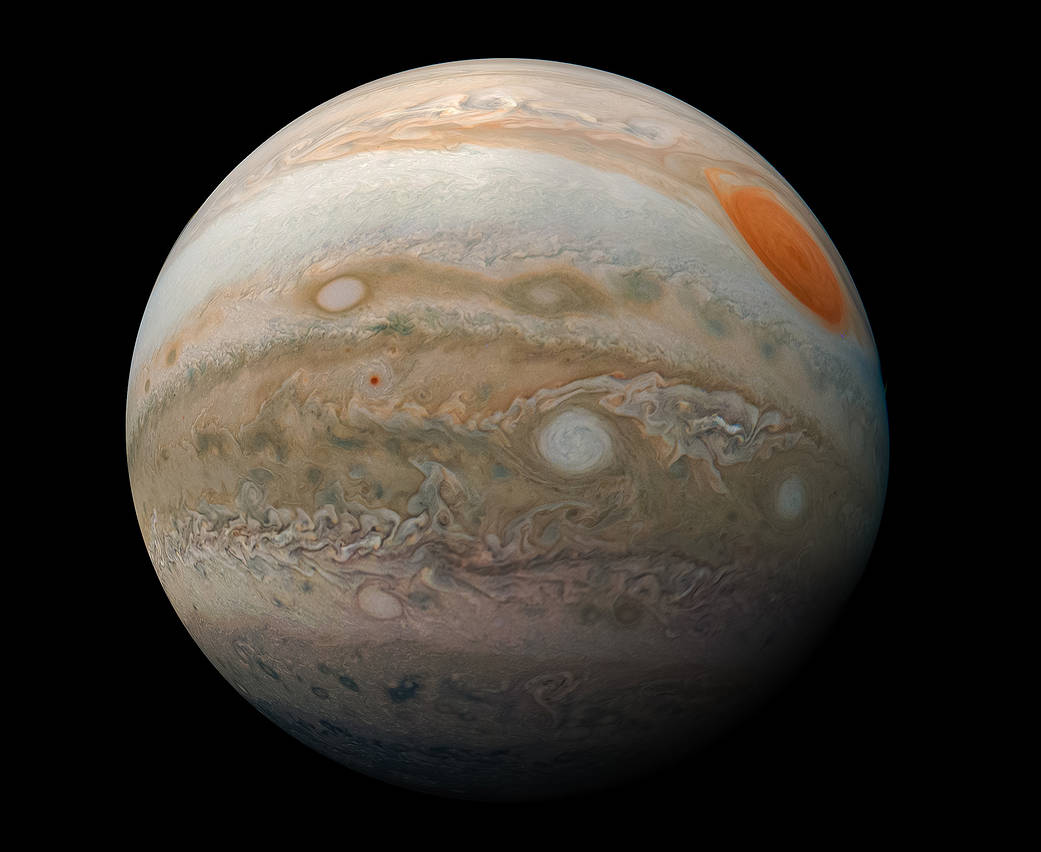
Artistic view of diverse exoplanets scattered through the galaxy. Image credit: NASA/JPL-Caltech.
Conclusion: Our Place Among Countless Worlds
Whether Planet Nine exists or not, the effort to find it is sharpening our understanding of the Solar System’s distant frontier and forcing us to confront biases in how we observe the sky. Simultaneously, exoplanet surveys are revealing that planets are ubiquitous and remarkably diverse, from ultra-hot gas giants skimming their stars to temperate rocky planets in gentle orbits.
Together, these endeavors are transforming our view of Earth—from a unique oasis to one example among many potential habitable worlds. If a hidden giant is ultimately found in our own system, it will join an already crowded cosmic family of planets. If not, the very act of searching refines the theories we use to interpret planetary systems across the galaxy.
Over the coming decade, as Rubin Observatory comes online and JWST continues its survey of alien skies, we can expect major leaps: tighter constraints on Planet Nine, more detailed exoplanet atmospheres, and perhaps the first serious candidates for life-bearing worlds. For now, we stand at an exciting threshold, armed with powerful tools and an ever-growing map of the worlds that share our universe.
Extra: How to Critically Read Planet and Exoplanet News
Media coverage of Planet Nine and exoplanets can sometimes oversell tentative results. A few quick checks can help you assess new headlines:
- Is there a peer-reviewed paper? Look for links to journals like Astronomy & Astrophysics, AJ, ApJ, or Nature.
- Detection vs. inference: A directly imaged object is stronger evidence than an orbital anomaly that could have multiple explanations.
- Confidence level: Phrases like “candidate,” “tentative,” or “marginal” mean the result is still under scrutiny.
- Reproducibility: Independent teams confirming the same signal dramatically increases credibility.
Keeping these points in mind will help you appreciate both the excitement and the caution that define frontier science.
References / Sources
Selected reputable resources for deeper exploration:
