
Mickey Rourke’s GoFundMe Shock: What His Rent Struggle Says About Hollywood’s Brutal Reality
Mickey Rourke, the once‑in‑demand Hollywood star of The Wrestler and 9½ Weeks, is back in the headlines for a far more sobering reason: he’s turned to GoFundMe to cover more than $59,000 in back rent and avoid eviction, a situation that exposes just how fragile “movie star” security can be in today’s entertainment economy.
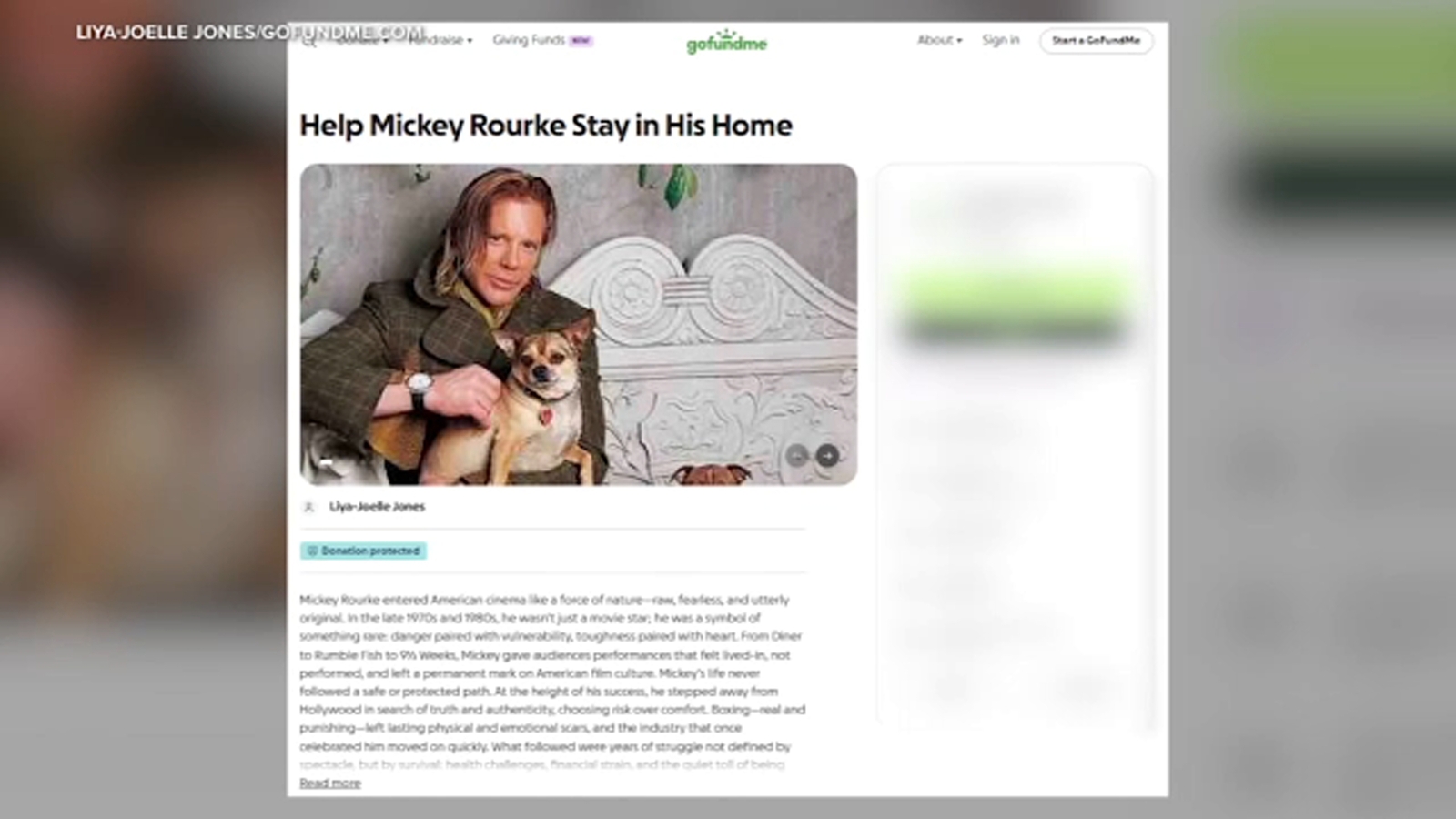
According to reporting from The Hollywood Reporter and local outlet ABC7 Los Angeles, the crowdfunding campaign launched on a Sunday morning and quickly drew attention—not just as a personal plea, but as a symbol of how unstable a career in film and television can be, even for an Oscar-nominated actor.
From 1980s Sex Symbol to Oscar Comeback: Rourke’s Unusual Career Arc
To understand why Mickey Rourke’s GoFundMe hits such a nerve, it helps to remember who he has been in the cultural imagination. In the 1980s, Rourke was framed as a kind of American Jean-Paul Belmondo—brooding, dangerous, and magnetic in films like 9½ Weeks (1986), Angel Heart (1987), and Rumble Fish (1983).
Then came one of the strangest pivots in Hollywood history: Rourke stepped away from leading-man status to pursue professional boxing in the early 1990s. The ring left him with injuries, surgeries, and a changed face, which Hollywood—brutal about aging and image—never fully forgave.

His big redemption arc came with Darren Aronofsky’s The Wrestler (2008), a low-budget character study that mirrored Rourke’s own battered public image. The role won him a Golden Globe, a BAFTA, and an Oscar nomination—plus the sense that maybe, just maybe, he was back for good.
“Rourke doesn’t play Randy ‘The Ram’ Robinson; he inhabits him.” — Roger Ebert on The Wrestler
Yet even that resurgence didn’t fully translate into the kind of long-term, high-paying mainstream roles that keep residuals flowing for decades. That context makes his current financial situation less shocking, if still unsettling.
The GoFundMe: $59,000 in Back Rent and the Fear of Eviction
According to ABC7 Los Angeles, the GoFundMe page states that Rourke is facing more than $59,000 in unpaid rent and is at risk of eviction. The campaign description frames the effort as a way to prevent homelessness and give the actor some measure of stability during a “stressful time.”
While the precise breakdown of the debt and timeline of missed payments hasn’t been exhaustively detailed in public reports, the message is clear: this is not a PR stunt, it’s a stopgap. The optics—an Oscar nominee essentially passing the hat online—are jarring, but not entirely unique in today’s entertainment ecosystem.

The GoFundMe model has become a kind of unofficial social safety net in the United States—for medical bills, emergency housing, and now, more visibly, for some public figures whose earning potential no longer matches their cost of living.
Fan Loyalty vs. Financial Responsibility: How People Are Reacting
Celebrity crowdfunding tends to split opinion. Some fans see it as a chance to give back to someone whose work meant something to them; others view it as a blurred line between fandom and financial obligation. Early reactions across social platforms and comment sections follow a familiar pattern:
- Supportive fans point to Rourke’s history of personal struggles and Hollywood’s tendency to discard people once they’re no longer profitable.
- Skeptical voices argue that, even with a spotty career, Rourke likely earned enough over decades that better financial planning—or downsizing—should have prevented this scenario.
- Industry observers frame the story less as an individual failure and more as a systems issue: irregular paychecks, opaque royalty structures, and the erosion of middle-class acting jobs.
“It’s jarring to see a guy from The Wrestler starting a GoFundMe, but when the work dries up, the money dries up. That’s the business.” — Anonymous casting director, speaking to a trade outlet

Morally, the question isn’t whether Rourke “deserves” help—no one is obligated to donate—but what it means when decades in a highly paid industry still leave a veteran actor vulnerable to eviction in his later years.
Hollywood’s Harsh Math: Irregular Income, High Costs, and the Streaming Squeeze
Rourke’s situation lands at the intersection of several industry trends:
- Irregular income is the norm, not the exception.
Even for known actors, there can be months—or years—between meaningful paychecks. Residuals that once cushioned slow periods have been upended by the shift to streaming. - Los Angeles is brutally expensive.
Rent in greater L.A. routinely rivals New York City and San Francisco. For actors whose income fluctuates, falling behind can happen quickly. - The “middle class” of acting is shrinking.
A small tier of stars still makes enormous money, but working actors increasingly rely on side hustles, teaching, or entirely different professions to stay afloat.
The recent SAG-AFTRA labor actions put some of these issues in sharper focus, with actors publicly revealing how little they sometimes earn from popular streaming titles. Rourke’s GoFundMe isn’t directly tied to those negotiations, but it resonates with the same anxiety: visibility does not equal security.
Why This Story Hits Hard: The Myth of the Indestructible Movie Star
Part of what makes Rourke’s appeal for help so striking is the disconnect between the characters he played and the reality he’s living. Onscreen, he often embodied a kind of wounded toughness—men who seemed impossible to knock out, no matter how many hits they took.
In The Wrestler, that fragility became text rather than subtext: an aging performer pushing his body and finances to the edge just to taste the adoration of the crowd a little longer. The film now feels eerily prophetic.

The current moment also fits into a broader reappraisal of 1980s and 1990s stars. Viewers are revisiting Rourke’s performances in films like Sin City (2005) and Sin City: A Dame to Kill For (2014), recognizing how much of modern antihero cinema owes to his emotional rawness.
The Upside and Downside of GoFundMe as a Safety Net
Rourke’s campaign underscores both the promise and the limits of crowdfunding in celebrity contexts.
- Strengths
- Provides immediate short-term relief in emergencies like impending eviction.
- Lets fans directly support someone whose work they care about, bypassing studios and gatekeepers.
- Raises awareness about the instability of creative careers, potentially fueling industry pressure for better protections.
- Weaknesses
- Reinforces a “lottery” model: those with fame or viral stories get help, while countless others in similar situations remain invisible.
- Can blur boundaries between personal responsibility and public bailout, prompting understandable discomfort.
- Is reactive rather than preventative; it doesn’t address structural issues like affordable housing or fairer royalty practices.
For public figures in particular, there’s also the cost of vulnerability: admitting that your finances are dire, in an industry that still largely sells fantasy.
Beyond the Headline: What Mickey Rourke’s Story Tells Us About the Future of Fame
Mickey Rourke’s GoFundMe isn’t just a sad twist in one actor’s biography; it’s a snapshot of a changing entertainment landscape where the old assumptions about fame, money, and security no longer hold. A recognizable name, an Oscar nomination, a handful of iconic roles—none of that guarantees stability in an era of streaming, short-term contracts, and skyrocketing living costs.
Whether the campaign ultimately covers his back rent or not, the story forces a more sober conversation about how Hollywood treats its aging talent, what fans owe the artists they love (if anything), and how we talk about money in an industry built on illusion. The myth of the indestructible movie star is fading; what replaces it might be a more honest, if uncomfortable, view of creative work as precarious labor rather than a golden ticket.
For now, the GoFundMe page is a lifeline for Rourke—and a quiet warning sign for anyone who still assumes that fame and financial security are the same thing.
