
Magellan Recast: How a New Film Turns a Maritime Legend into a Moral Question
Hero or Tyrant? How a New Magellan Film Rewrites the Age of Discovery
A new acclaimed film dramatizing Ferdinand Magellan’s circumnavigation voyage is reigniting a centuries‑old argument: was the 16th‑century Portuguese navigator a bold maritime genius or a ruthless instrument of empire? In an era shaped by debates over statues, syllabi, and historical memory, revisiting Magellan is less about nostalgia for tall ships and more about how we tell stories of conquest, resistance, and “discovery.”
The BBC has framed the controversy around Magellan with unusual bluntness, quoting critics who accuse him of “incontinent bloodlust.” The film at the centre of this conversation – directed by Miguel Gomes’s contemporary and fellow Portuguese auteur (referred to widely as Diaz in coverage) – takes aim at the familiar, heroic Magellan myth and replaces it with something thornier, stranger, and deliberately uncomfortable.
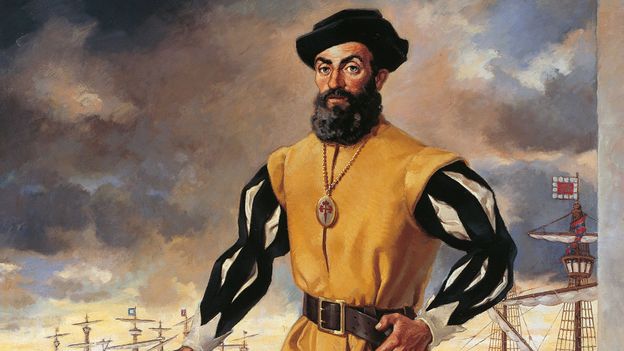
That approach places the movie in the same conversation as post‑colonial reappraisals of figures like Christopher Columbus and Vasco da Gama. It’s less a swashbuckling adventure than a cinematic argument about what Europe did to the rest of the world – and why we still cling to the old legends.
Magellan in History: From Classroom Hero to Contested Icon
For generations, Magellan has been presented in textbooks as one of the clean heroes of the Age of Discovery: the man whose fleet proved the world could be circumnavigated, who braved unknown seas and rewrote the map. The messy details – mutiny, enslavement, violence, catastrophic losses of life – often receded into the background.
Historically, the official record of Magellan’s voyage rests heavily on a few key European sources, particularly Antonio Pigafetta’s chronicle. Indigenous accounts, oral histories, and local perspectives from places like Guam and the Philippines were sidelined or dismissed. That asymmetry shaped Magellan’s halo.
In the last few decades, that narrative has started to crack. Filipino historians have long taught the Battle of Mactan not as a tragic end for a European hero, but as a triumphant act of resistance led by Lapu‑Lapu. In academic circles, the language has shifted from “exploration” to “expansion” and “colonial incursion,” and Magellan’s image has followed suit.
“What Europeans called ‘discovery’ was often, for the people already living there, the start of catastrophe.”
— Common formulation in post‑colonial scholarship, echoed in recent BBC coverage of Magellan
The new film rides this wave of reassessment, insisting that you can’t separate Magellan the navigator from Magellan the agent of conquest.
Inside the New Magellan Film: Art-House Epic or Historical Takedown?
The film – a festival darling that has drawn acclaim in European and Latin American circuits – is not a conventional prestige biopic. Instead of a linear life story, it zeroes in on the voyage itself as a crucible: a space where religious fervour, greed, and paranoia blur into one long, feverish sea dream.

Diaz’s interpretation strips away the cosy classroom glow. His Magellan is brilliant but disturbing: an obsessive tactician whose faith in the mission shades into a reckless disregard for human life. The film embraces moments drawn from the historical record – brutal discipline on deck, fraught encounters with Indigenous communities, the lethal consequences of misrecognition and arrogance.
Stylistically, the film belongs less with glossy studio fare and more with slow‑burn historical interrogations like The New World, Aguirre, the Wrath of God, or even Apichatpong Weerasethakul’s dreamlike political cinema. Long takes and a muted colour palette turn the ocean into a psychological space rather than a postcard backdrop.
“I didn’t want to prove Magellan was a monster or a saint. I wanted to show how dangerous it is when we pretend those are the only options.”
— Director Diaz, in an interview cited by European critics
That ambivalence is crucial: the movie is not simply a cancellation of Magellan, but a refusal to let him sit comfortably on either side of the moral ledger.
Hero vs. Brutal Tyrant: What the Film Argues About Magellan
The official logbooks record Magellan as a man of discipline and conviction. The film translates those same traits into something more troubling. We see how a quest framed as “for God and king” enables everything from everyday cruelty to outright slaughter.
- Navigation as domination: The act of charting new routes is shown alongside the act of claiming them, usually without consent of the people already living there.
- Religious zeal as cover: Magellan’s Catholic piety becomes indistinguishable from imperial ideology; conversion scenes are played as fraught negotiations, not spiritual revelations.
- “Incontinent bloodlust” unpacked: A phrase used by some historians and quoted by the BBC comes alive in scenes of disproportionate retaliation and performative violence designed to keep both crew and locals afraid.

Yet the movie avoids turning Magellan into a cartoon villain. There are glimpses of fear, doubt, and even awe in the face of landscapes and cultures he doesn’t understand. That complexity keeps the film from settling into easy moralism, even as it clearly tilts away from the old hero‑worship.
Centering Indigenous Perspectives: From Mactan to Modern Memory
One of the most radical choices the film makes is to give time and texture to the people on the receiving end of Magellan’s voyage. Instead of treating Pacific Islanders and Filipinos as background “natives,” Diaz lingers on their rituals, conversations, and debates about how to handle these strange arrivals.
The Battle of Mactan – where Magellan dies – is staged less as a tragic fall of a European hero than as a climactic assertion of local power. Lapu‑Lapu’s forces are not magically virtuous, but they are clearly defending their own terrain and autonomy.
“For Filipino viewers, Magellan has always been the invader who lost. It’s the Western narrative that needed catching up.”
— Filipino cultural critic, responding to the film’s premiere
By redistributing narrative weight this way, the film mirrors a broader industry trend: giving Indigenous and colonised communities authorship over stories long told about them, not by them.
Part of a Bigger Wave: Decolonising the Historical Epic
The Magellan film doesn’t exist in a vacuum. Over the last decade, film and TV have increasingly re‑examined historical “great men” through a critical, sometimes decolonial lens. Think of series like Godless, which recasts Western myths, or films like The King, which interrogate medieval heroics.
What distinguishes the Magellan project is its focus on maritime power – the original globalisation engine. By foregrounding contracts, trade routes, and the calculated use of military force, the film connects 16th‑century expeditions to 21st‑century conversations about capitalism, extractivism, and empire.

This fits neatly with contemporary scholarship and public debates, where the word “explorer” often gets quotation marks. The BBC coverage nods to this shift, contrasting schoolbook images of noble adventure with archival evidence of enslavement, forced conversions, and scorched‑earth tactics.
- The film contributes to the overdue trend of centring colonised perspectives.
- It challenges the genre conventions of historical epics by resisting clear heroes.
- It encourages audiences to connect past voyages to present‑day power structures.
Performances, Craft, and Where the Film Stumbles
On a craft level, the film is quietly impressive. The production design avoids glossy, over‑clean costuming in favour of sweat‑stained fabrics, cramped bunks, and brittle wooden decks. The sound design – creaking hulls, howling winds, indecipherable prayers – amplifies the sense of entrapment.
The actor playing Magellan balances charisma with a brittle edge, conveying how quickly conviction can curdle into cruelty. Supporting performances, particularly from Indigenous cast members, add grounded humour and scepticism that puncture the expedition’s inflated rhetoric.
That said, the film won’t work for everyone:
- Deliberate pacing: Its slow rhythm and long, quiet stretches may frustrate viewers expecting a straightforward adventure in the vein of Master and Commander.
- Historical abstraction: Some characters feel more like symbols than fully rounded figures, reflecting the director’s philosophical aims but sometimes diffusing emotional impact.
- Limited exposition: Unless you arrive with a basic sense of Magellan’s biography, you may have to piece together context on the fly.
Still, for viewers interested in historical cinema that argues as much as it entertains, these trade‑offs will likely feel intentional rather than accidental.
Cultural Impact: Why Magellan Matters in 2026
The controversy around Magellan is ultimately a proxy war over how we remember the Age of Discovery. Are figures like him primarily innovators – geniuses of navigation, science, and endurance – or are they primarily vanguards of a system that left deep scars across the Global South?
In 2026, that question feels particularly sharp. Debates about museum restitution, maritime borders, and the legacies of European empires are no longer niche topics. Streaming platforms have discovered that audiences will show up for stories that interrogate national myths, not just celebrate them.
By staging Magellan not as a settled icon but as a contested figure, the film aligns with contemporary historical scholarship and with an entertainment industry increasingly conscious of who gets to be a hero onscreen. It invites viewers to interrogate their own reflexes: when a story of “bravery” is also a story of “invasion,” which word feels more honest?
Verdict: A Haunting Reframing of a Familiar Legend
You may walk into this film expecting a stirring, old‑fashioned tale of sails and stars. You’ll likely walk out thinking instead about treaties, massacres, and the stories we inherit without quite noticing. That’s its real accomplishment.
As cinema, it’s formally restrained but thematically bold; as history, it’s less interested in fact‑checking every detail than in interrogating the moral architecture of the Magellan myth. Not everyone will embrace its slow tempo or its refusal to deliver a cathartic redemption arc, but that’s precisely what makes it feel current.
Ultimately, Diaz’s Magellan isn’t asking whether the explorer was a hero or a tyrant. It’s asking why we keep needing him to be one or the other. Between those poles, the film finds a far more unsettling – and illuminating – truth.
[New Magellan Film]
Review by Staff Writer
Rating: 4/5
If nothing else, the film ensures that the next time Magellan’s name appears in a classroom, a quiz, or a casual conversation, it will come trailing questions – and maybe a little less unexamined admiration.
