
Julio Iglesias Responds: Inside the Sexual Assault Allegations Shaking a Latin Music Icon
Julio Iglesias Denies Sexual Assault Allegations: Context, Culture, and What We Know So Far
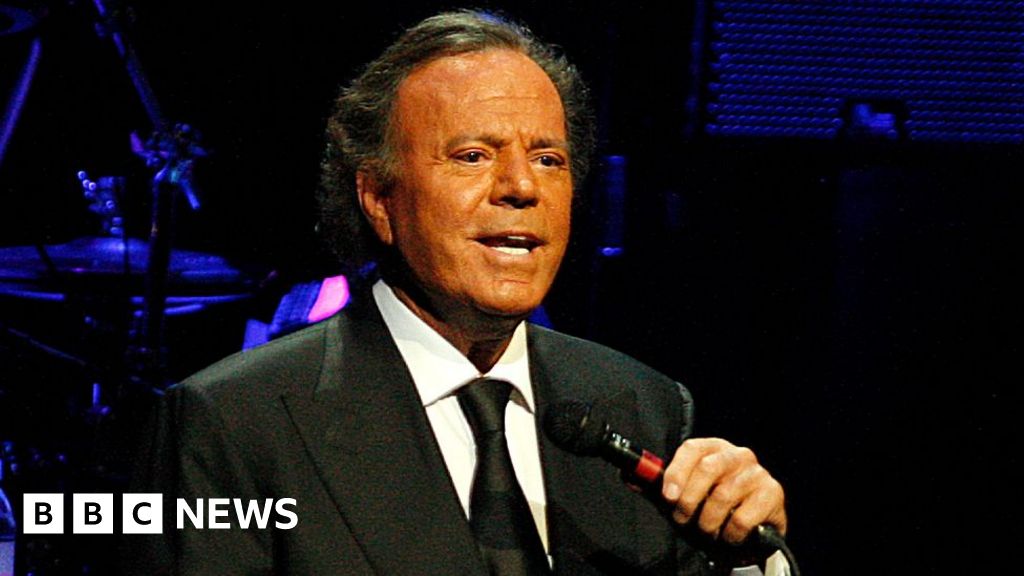
Julio Iglesias, the 82‑year‑old Spanish crooner whose voice helped define romantic pop for generations, is now facing some of the most serious accusations of his career. Two former female employees have accused him of sexual assault and of fostering a workplace culture that allegedly “normalised abuse” through coercive and threatening behaviour. In a statement reported by the BBC, Iglesias has firmly rejected the claims, calling them “absolutely false and deeply sadden me.”
As the story develops, it sits at the tense intersection of celebrity, historic power imbalances in the music industry, and shifting cultural expectations around accountability. This piece looks at what is currently known, how it fits into the wider entertainment landscape, and why a figure like Julio Iglesias matters in this conversation.
Who Is Julio Iglesias in the Landscape of Global Pop?
Long before Latin crossover became an industry strategy, Julio Iglesias was already a global export. Rising to fame in the 1970s and 1980s, he built a multilingual catalogue—Spanish, English, French, Italian, Portuguese—that turned him into an international staple of romantic ballads.
With reported worldwide record sales in the hundreds of millions, he ranks among the best‑selling Latin artists of all time. To many, his name conjures an almost cinematic image: tuxedos, orchestras, love songs, and a carefully curated persona of old‑world charm. That persona is precisely what makes the current allegations so jarring: they clash sharply with the soft‑focus nostalgia many fans associate with him.
In Spain and across much of Latin America, Iglesias is more than a singer; he’s part of the cultural wallpaper. This makes any allegation, substantiated or not, an especially charged topic in public conversation and media coverage.
What the Allegations Say—and What Iglesias Has Said in Response
According to reporting from the BBC and other outlets, two women who previously worked for Julio Iglesias have come forward with allegations of sexual assault. They also describe an environment in which, in their view, abusive dynamics were “normalised” and supported by coercion and a climate of fear.
Iglesias has categorically denied the claims. In his public statement, he pushed back not just on specific allegations but on the broader implication that abuse was in any way tolerated around him.
“These accusations are absolutely false and deeply sadden me.”
— Julio Iglesias, via statement reported by the BBC
At this stage, the situation sits in a familiar but uncomfortable limbo: allegations on one side, strong denial on the other, and ongoing scrutiny from media and the public. Legal processes, where initiated, tend to move more slowly than the news cycle, which can easily distort perceptions of guilt or innocence long before any formal conclusion is reached.

A Post–#MeToo Lens on a Pre–#MeToo Career
One reason this case draws so much attention is timing. Julio Iglesias’ core fame was forged in an era when celebrity behaviour was rarely challenged in public, especially in male‑dominated sectors like mainstream Latin pop. The #MeToo movement changed that, recalibrating expectations for both accountability and how the press covers such stories.
The pattern—allegations by employees or collaborators, followed by denial and public debate—echoes many previous entertainment industry controversies. Still, every case is specific, and details matter. There is a tension between the legitimate cultural push to believe and protect accusers and the legal presumption of innocence for the accused.
- For fans: The allegations force a re‑evaluation of an artist whose songs may be tied to deeply personal memories.
- For the industry: They raise questions about tour culture, staff protections, and power dynamics—even around legacy acts.
- For media: There is renewed pressure to report with nuance, avoiding both sensationalism and minimisation.
In Spain, where Julio Iglesias has long been seen as a sort of national export product, the case also touches on generational divides. Younger audiences tend to be more accustomed to discussing workplace abuse and consent in systemic terms, while older fans may be more protective of a cherished icon.
The Music, the Myth, and the Brand at Stake
Julio Iglesias’ discography spans decades, with major albums and collaborations that helped pave the way for later Latin pop stars. Even listeners who never bought a record have likely absorbed his music via radio, film soundtracks, and background playlists in restaurants or weddings.
When allegations like these surface, they don’t just target a private individual—they collide with a carefully managed global brand. For label partners, promoters, and streaming platforms, the questions are pragmatic as well as ethical: how to respond without pre‑judging an unresolved case, while also taking accusations seriously?
- Catalogue streaming: Fans may revisit or avoid his music depending on their personal stance.
- Legacy curation: Documentaries, box sets, and tributes now have to decide how, or whether, to incorporate the controversy.
- Family brand: Given the visibility of Enrique Iglesias and other family members, public narrative can easily spill over.
Historically, the entertainment industry has shown a wide range of responses—from quiet distancing to full‑scale support—depending on the strength of evidence, public reaction, and commercial calculus. Where Julio Iglesias will fall on that spectrum remains to be seen.
How Media and Audiences Navigate Unresolved Allegations
For news outlets, covering allegations against long‑established figures like Julio Iglesias comes with built‑in challenges: avoiding sensationalism, providing context, and clearly distinguishing allegation from fact. The BBC’s framing—reporting both the women’s claims and Iglesias’ categorical denial—is a relatively textbook example of that balancing act.
Audiences, meanwhile, are rarely so neutral. Social media tends to split into rough camps: those who prioritise listening to alleged victims, those who emphasise the presumption of innocence, and those who would rather not know at all, preferring to keep the art sealed off from the artist’s personal life.
It may be more accurate to think in terms of a spectrum than a binary:
- Separationists: Continue listening, arguing that personal conduct and art can be compartmentalised.
- Conditional fans: Reserve judgment but keep a watchful eye on developments and institutional responses.
- Refusers: Choose to step back from the music, either temporarily or permanently.
None of these positions is entirely free of contradiction. But together they show how modern fandom is less about blind loyalty and more about ongoing negotiation between ethics, nostalgia, and personal taste.

What Comes Next for Julio Iglesias and His Legacy?
As of mid‑January 2026, the Julio Iglesias case is still in flux. The allegations have been made public, the singer has firmly denied them, and the story is now moving through legal, institutional, and cultural channels that operate at different speeds.
Several things are worth watching going forward:
- Whether formal legal proceedings advance and what evidence, if any, enters the public record.
- How Spanish and international media continue to frame coverage: as a footnote to a long career, or as a defining controversy.
- How the music industry—labels, streaming platforms, broadcasters—chooses to position his catalogue in light of ongoing scrutiny.
Whatever the outcome, this moment underscores a broader shift: no artist, however legendary, is entirely insulated from questions about conduct and responsibility. The romantic image of Julio Iglesias that once seemed almost timeless now shares space with a more complicated, contested narrative.
For listeners and observers alike, the task is to stay alert to new, verified information; to resist both reflexive dismissal and automatic conviction; and to recognise that the story of how we treat powerful figures is still very much being written—across courtrooms, newsrooms, and playlists.

Summary and Critical Perspective
Cultural Review: Julio Iglesias, Allegations, and the Future of a Latin Pop Institution
From a cultural standpoint, the allegations against Julio Iglesias sit at a crossroads of legacy and accountability. His denial is explicit and emotionally framed, casting the accusations as both false and deeply saddening. For now, with facts still emerging, any definitive moral verdict would be premature. What we can say is that this controversy further illustrates how the #MeToo era has redrawn the boundaries of what is publicly discussable about famous men and their working environments.
In terms of reputation risk, the impact is significant even in the absence of a legal resolution. Julio Iglesias’ body of work remains historically important to Latin and global pop, but younger audiences are likely to approach it with more skepticism and context than previous generations. That tension—between the enduring appeal of the songs and the evolving story around the singer—may ultimately define how his name is remembered.
