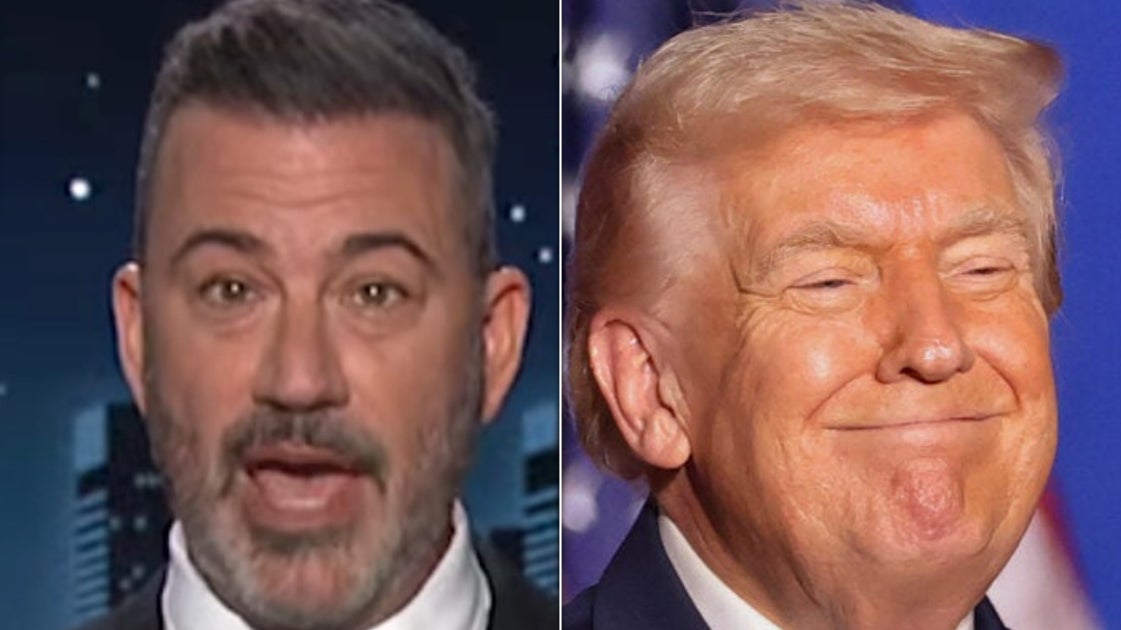
Jimmy Kimmel Calls Out Trump’s ‘Paid Protesters’ Claim In a Blistering Late-Night Takedown
Late-night television has become one of the most reliable places to see politics put through the cultural blender, and Jimmy Kimmel’s latest segment on Donald Trump’s favorite line about “paid protesters” is a textbook example. On Tuesday night, Kimmel used his ABC platform to call out the former president’s long-running claim that the people protesting him are hired agitators rather than everyday Americans, essentially telling Trump: prove it.
The Long Life of the “Paid Protesters” Talking Point
Trump’s “paid protesters” allegation has been in regular rotation since his 2016 campaign. Any time large crowds showed up to boo, march, or hold signs against him—whether outside rallies, at airports during the travel ban, or in the wake of major court rulings—he and his allies often pushed the idea that these weren’t organic demonstrations, but a kind of political cosplay funded by shadowy donors.
The charge accomplishes a few things at once: it questions the authenticity of public dissent, paints Trump as the victim of an organized smear operation, and reassures his supporters that opposition to him is artificial. Late-night hosts from Stephen Colbert to Seth Meyers have poked at this narrative before, but Kimmel’s newest monologue puts the burden of proof squarely back on Trump.
Jimmy Kimmel’s Challenge: “Prove It!”
In the segment covered by HuffPost, Kimmel zeroed in on Trump’s go-to accusation, paraphrasing the former president’s line that protesters are:
“paid insurrectionists” and “paid agitators.”
Kimmel’s response was deliberately simple: if these people are really on someone’s payroll, name the employer, show the receipts, or at least offer something resembling evidence. By framing it as a straightforward challenge, he positions himself less as a partisan warrior and more as the guy at the bar saying, “Okay, but where’s the proof?”
The segment leans into Kimmel’s familiar mode—mock-serious, exasperated, but rooted in a basic journalistic principle: extraordinary claims deserve at least ordinary evidence. The comedy comes from how far Trump’s rhetoric is from that standard.

From a critical standpoint, the bit works because it doesn’t get lost in policy weeds. Instead, it targets the logic behind Trump’s line: if every critic is fake, then no criticism counts. Kimmel isn’t debunking one conspiracy so much as spotlighting the habit of dismissing any opposing voice as illegitimate.
How Late-Night Comedy Became a Political Reality Check
Kimmel’s takedown exists in the same media ecosystem that once turned Jon Stewart into a kind of unofficial ombudsman for the Bush and Obama eras. Ever since The Daily Show popularized the idea that comedy can double as media criticism, viewers have increasingly relied on late-night segments to parse the day’s political noise.
- Stephen Colbert plays the Catholic dad who’s seen too much news.
- Seth Meyers brings an ex-SNL writer’s cadence to “A Closer Look.”
- Jimmy Kimmel often leans into the “regular guy” persona, puncturing spin with basic common sense.
That last mode is especially effective here. Kimmel doesn’t need a legal brief to challenge the “paid protesters” myth; he just has to say what many viewers are already thinking: if this is such an obvious truth, why has no one produced a contract, a Venmo screenshot, or a single whistleblower from the supposed protest-industrial complex?

What the Segment Gets Right—and Where It’s Limited
As media criticism, Kimmel’s call-out is sharp, accessible, and timed to a long-running talking point that still surfaces whenever Trump faces visible opposition. But like most late-night political jokes, it lives within certain constraints.
Strengths
- Clarity: It distills a sprawling conspiracy into a simple demand for proof.
- Accessibility: No policy expertise required; the humor leans on everyday logic.
- Cultural resonance: It taps a long-standing frustration with fact-free political claims.
Limitations
- Preaching to the choir: Viewers already skeptical of Trump will nod along; his core base isn’t likely to be swayed by a late-night host.
- Time constraints: Network monologues rarely have room to unpack how such narratives spread through social media and partisan outlets.

Quotes, Reactions, and the Media Echo Chamber
While the HuffPost write-up focused on Kimmel’s pushback to Trump, the segment also fits comfortably into a larger pattern where late-night moments quickly become online clips, then social posts, then fodder for new articles.
“When you say people are paid to protest, you’re basically admitting you don’t believe anyone could care enough to show up unless they were on the clock.”
That sort of line—paraphrasing a sentiment that has circulated among critics and commentators—captures why these monologues travel so well. They condense complex frustrations into one or two quotable sentences that can stand alone on X, TikTok, or Instagram Reels.

In this case, the “prove it” framing plays well on social media because it feels less like a partisan attack and more like a challenge to basic credibility—a tone that resonates beyond hardcore political junkies.
Where to Watch the Segment and Read More
For those who want to see the full bit in context, the monologue is typically available on Jimmy Kimmel Live!’s official YouTube channel, alongside other political segments and celebrity interviews.
- Jimmy Kimmel Live! on IMDb – Show credits, episode info, and viewer ratings.
- HuffPost Entertainment – Coverage of late-night reactions to U.S. politics.
- Official Jimmy Kimmel Live! site – Clips, schedules, and guest lineups.
Why This Matters—and What Comes Next
Kimmel calling out Trump’s “paid protesters” claim won’t, by itself, retire the talking point—it’s too useful as a political shield. But segments like this do perform a quiet cultural function: they normalize the idea that you’re allowed to ask for proof, even when the person speaking has been a U.S. president.
As the next election cycle heats up and rallies, protests, and counter-protests move back into the spotlight, expect this narrative to reappear—and expect late-night hosts to keep pushing back. Whether you see them as comedians, commentators, or both, their monologues have become part of how Americans argue about whose voices are real and whose are just “paid.”