
Jessie Buckley’s Oscar Buzz: Inside Shakespearean Grief Epic “Hamnet”
Jessie Buckley in Hamnet: Rewriting Shakespeare’s Story from the Woman’s Point of View
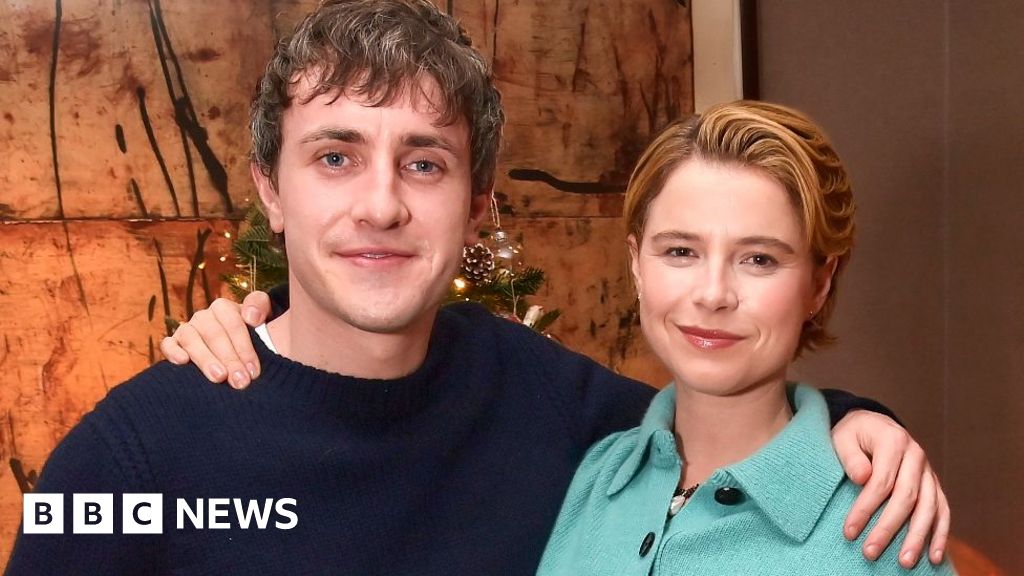
Jessie Buckley’s performance in the Oscar-tipped film Hamnet has sparked serious awards buzz, as she steps into the emotionally complex role of William Shakespeare’s wife and the mother of their son, Hamnet. Blending literary prestige with contemporary star power from Buckley and Paul Mescal, the adaptation lands at a moment when audiences are hungry for intimate, character-driven period dramas that rethink who gets to stand at the center of Shakespeare’s story.
Based on Maggie O’Farrell’s bestselling novel, Hamnet doesn’t just orbit the genius of Shakespeare; it quietly shifts the camera toward the woman who loved him, argued with him, and ultimately survived him. Speaking to the BBC, Buckley said of her character:
“She was what I understand a woman to be.”
That line is doing a lot of work: it hints at how the film uses historical fiction to explore contemporary ideas of womanhood, partnership, and grief without turning the era into a museum piece.
From Bestseller to Oscar Contender: How Hamnet Got Here
Before it became an Oscar-tipped film, Hamnet was a literary phenomenon. Maggie O’Farrell’s 2020 novel was acclaimed for its lyrical reimagining of the short life of Shakespeare’s son and the emotional fallout of his death. The book won the Women’s Prize for Fiction and quickly became catnip for filmmakers and theatre producers alike, eventually spawning a hit stage adaptation for the Royal Shakespeare Company.
The film version leans into what made the novel resonate: it’s not a dusty Shakespeare biopic but a domestic drama about marriage, motherhood, and creativity under pressure. Jessie Buckley plays Agnes (often historically rendered as Anne Hathaway), while Paul Mescal takes on William Shakespeare during the years when he is still more husband and father than immortal playwright.
Within the current prestige-film landscape—think Brooklyn, Carol, and more recently Past Lives—Hamnet slots into that increasingly popular niche of emotionally intense, mid-budget dramas built around serious performances rather than IP spectacle. The Oscar buzz for Buckley feels like a natural extension of the critical appetite for nuanced, actor-driven period pieces.
Jessie Buckley’s Performance: A Shakespearean Wife, Not a Footnote
Jessie Buckley has been quietly building one of the most interesting filmographies of her generation—from Wild Rose and I’m Thinking of Ending Things to The Lost Daughter. Hamnet gives her something trickier: a woman known mostly as a historical afterthought, tasked with anchoring a story that rewrites her as the emotional core of the Shakespeare myth.
According to the BBC interview, Buckley has described feeling “overwhelmed” by the intensity of stepping into this role, which requires her to move between earthy domesticity, sensuality, and shattering grief as Hamnet’s illness and death unfold. Her comment—
“She was what I understand a woman to be”
—suggests that Buckley isn’t playing Agnes as a sainted, tragic mother, but as a fully rounded person: stubborn, intuitive, and occasionally furious. It’s the sort of role that tends to travel well with Academy voters: emotionally big but grounded in small, specific behaviors.
In awards terms, the part sits in that sweet spot between classical and contemporary: she’s in period dress, yes, but the emotional register feels very 21st century. If you’ve watched her oscillate between vulnerability and volatility in The Lost Daughter, you’ll recognize the skill set she’s deploying here—only this time the character is carrying the weight of Shakespeare’s entire legacy on her back.
Paul Mescal, Chemistry, and the Marriage at the Film’s Heart
Casting Paul Mescal opposite Buckley is a smart piece of 2020s star economics. Mescal brings with him the emotional transparency of Normal People and his Oscar-nominated turn in Aftersun, both of which made him synonymous with wounded masculinity. As Shakespeare, he isn’t framed as the untouchable genius; he’s a young man with ambition, desire, and more than a little selfishness.
The film reportedly leans heavily on the couple’s chemistry in its early stretches—depicting their courtship, domestic life, and the clash between Agnes’s rootedness and William’s restless pull toward London’s theatre world. This isn’t just backstory; it’s the emotional architecture that makes Hamnet’s death later in the story feel like a rupture that both joins and breaks them.
- Strength: Mescal’s vulnerability complements Buckley’s intensity, creating a layered portrait of a marriage under strain.
- Risk: The film occasionally flirts with a too-modern feeling of coupledom, which may irk viewers hoping for stricter historical texture.
Still, in the current awards ecosystem where screen chemistry is often as heavily dissected as cinematography, the Buckley–Mescal pairing is one of Hamnet’s biggest selling points.

Grief, Art, and Legacy: What Hamnet Is Really About
At its core, Hamnet isn’t primarily about how a boy’s death “inspires” Hamlet; it’s about how grief rearranges a family and, by extension, the stories that family produces. This is where the film is most in conversation with contemporary prestige cinema—projects like Aftersun, Manchester by the Sea, or Pieces of a Woman that focus relentlessly on what happens after the unthinkable.
Thematically, the adaptation navigates:
- Maternal grief: Agnes’s mourning is portrayed as physical, spiritual, and nearly mythic without losing its raw, human texture.
- Art as translation: Shakespeare’s later work becomes, implicitly, an attempt to translate what cannot be said aloud at home.
- Who owns the story: By centering Agnes, Hamnet pushes back on the idea that only the “great man” gets to define the narrative of a loss.
That last point might be the film’s most quietly radical choice. In a culture where “Shakespeare” is often shorthand for canonical, male genius, telling the story from the wife’s vantage point is both corrective and deeply modern: it asks who gets to be remembered and whose pain gets folded into art without a name.

Cinematic Craft: From Page to Screen
Adapting O’Farrell’s novel means translating lush, interior prose into something visual and immediate. The filmmaking approach leans toward intimate period drama rather than grand historical epic. Expect candlelit interiors, textured costuming, and a camera that often stays at eye level, privileging faces over architecture.
Where the film appears strongest is in its attention to:
- Domestic detail: The rhythms of rural Elizabethan life—herbal remedies, household rituals—ground the more operatic emotional beats.
- Sound design and score: A subdued but insistent score underlines the sense that grief is always humming underneath even mundane scenes.
- Restraint: Rather than constantly winking at Hamlet, the film largely trusts viewers to make the connections themselves.
If there’s a vulnerability here, it’s that viewers hoping for expansive depictions of the London theatre world may find the film more contained and interior than expected. Its focus is the home, not the Globe.

Awards Season Prospects: How Serious Is the Oscar Buzz?
Hamnet is entering a crowded awards season, but the chatter around Jessie Buckley is already loud. The industry loves a technically demanding, emotionally raw period performance anchored in a respected literary adaptation, and that’s exactly the lane this film occupies.
Within the likely Oscar conversation, the film’s prospects shake out roughly as:
- Best Actress (Jessie Buckley): The central talking point—“Oscar-tipped” is not just polite hype.
- Best Supporting Actor (Paul Mescal): Possible, depending on how voters respond to the balance between his arc and Buckley’s.
- Craft categories: Costumes, production design, and score are all plausible contenders given the film’s aesthetic ambitions.
Awards aside, Hamnet strengthens Buckley’s reputation as one of the most fearless and versatile actors working in contemporary cinema. Whether or not she walks away with the statue, this is the kind of performance that tends to be cited for years after the season’s dust settles.
Where Hamnet Fits in the Shakespeare-on-Screen Universe
Culturally, Hamnet arrives after decades of films that orbit Shakespeare from very different angles: the romanticized Shakespeare in Love, the brooding late-life portrait All Is True, and countless direct adaptations of the plays. What’s distinct here is the pivot away from the playwright and toward the domestic world that shaped him.
In that sense, it sits alongside a wider trend of “side-door” biographical storytelling, where we get the story of a famous man refracted through the less-documented lives around him—think Spencer’s focus on Princess Diana’s inner life rather than institutional spectacle, or Mary Magdalene retelling a biblical narrative from a marginalized perspective.
That angle also makes Hamnet more approachable for viewers who aren’t hardcore Shakespeare devotees. You don’t need to have Hamlet memorized to understand a couple grieving their child or a woman confronting the realization that her husband’s art might outlive their family.

Final Thoughts: A New Center of Gravity in the Shakespeare Myth
With Hamnet, Jessie Buckley isn’t just chasing an Oscar; she’s helping to relocate the emotional center of one of English literature’s most over-examined lives. By playing Agnes as “what I understand a woman to be,” she gives audiences a Shakespearean story that feels both ancient and freshly lived-in.
Whether the film sweeps awards season or simply carves out a loyal niche among fans of thoughtful period drama, it signals where a lot of contemporary screen storytelling is heading: away from the marble busts and toward the people who stood just outside the frame of history, finally brought into focus.
