
Inside Apple’s AI Revolution: How On‑Device Intelligence Is Quietly Rewiring the iPhone and Mac
Apple’s AI push has moved from quiet background optimization to a central pillar of its product story. In recent iOS, iPadOS, and macOS releases, Apple has leaned heavily into “Apple Intelligence”—a suite of features that integrate generative models, semantic search, and real-time understanding of user context, all anchored by its custom silicon and Neural Engine. The company’s approach stands apart from cloud-first strategies: Apple is insisting that as much as possible should run locally, with the cloud used selectively and transparently.
This article dives into how Apple is architecting on-device intelligence, why the strategy matters for privacy and performance, and what the trade-offs look like for developers and users. We’ll also look at how Apple’s approach compares with competitors, what the latest coverage from outlets like The Verge, Wired, and Ars Technica is highlighting, and where the ecosystem may be headed next.
Mission Overview: Apple’s AI Strategy in Context
For years, Apple was seen as lagging behind highly visible AI leaders like OpenAI’s ChatGPT and Google’s Gemini. Siri felt stagnant, and Apple wasn’t shipping the kind of headline-grabbing chatbots or generative tools dominating tech news. Internally, however, Apple was quietly investing in foundational pieces: custom chips with dedicated Neural Engines, a secure enclave architecture, and OS-level frameworks like Core ML and Create ML.
Around 2023–2025, the public narrative started to pivot. Instead of racing to ship a single chatbot, Apple framed AI as:
- A deeply embedded system layer that understands content on your device—emails, notes, photos, documents—and can summarize, rewrite, search, and act across apps.
- An on-device by default platform where local models do as much work as possible, with privacy and responsiveness as core design constraints.
- A developer-facing capability exposed via frameworks and APIs so third-party apps can hook into Apple’s AI stack without shipping their own huge models.
“Our goal is not to chase every trend in AI, but to build intelligence that feels personal, private, and seamlessly integrated into the devices people already rely on every day.”
— Paraphrased from Apple executive commentary in recent Apple events and newsroom briefings
Technology: The Architecture of On‑Device Intelligence
Apple’s AI stack spans hardware, firmware, operating systems, and developer frameworks. The technical story centers on how tightly the company binds machine learning workloads to its own chips and platforms.
Apple Silicon and the Neural Engine
Since the A11 Bionic, Apple has included a Neural Engine—specialized ML accelerators—on its chips. With the M‑series for Macs (M1, M2, M3 families) and later A‑series chips in iPhones and iPads, these Neural Engines now reach trillions of operations per second (TOPS), making them suitable for running large multimodal models locally.
- Parallelism: Neural Engines execute matrix operations and convolutions massively in parallel, ideal for transformer-based models and vision tasks.
- Power efficiency: By offloading ML workloads from CPU/GPU, Apple can run inference without rapidly draining battery.
- Unified memory: Unified memory architectures reduce overhead when moving tensors between CPU, GPU, and Neural Engine.
Core ML and Model Deployment
On the software side, Core ML is Apple’s primary framework for shipping ML models on-device. Developers convert models from PyTorch, TensorFlow, or other frameworks to Core ML format, enabling:
- Quantization and pruning to shrink models while preserving acceptable accuracy.
- On-device compilation that optimizes kernels specifically for the user’s chip.
- Secure deployment where models can run with restricted access to user data.
Apple’s own generative and assistive features leverage internal models tightly coupled to this stack, giving them a performance advantage and greater control over latency.
Hybrid Local + Cloud Models
While “on-device first” is the headline, Apple is increasingly using a hybrid approach:
- Local models handle frequent, latency-sensitive operations like inline text rewriting, simple summarization, and image enhancements.
- Cloud-hosted, privacy-preserving models are invoked for heavier tasks—large documents, complex reasoning, or multimodal synthesis—often through encrypted channels with strict data minimization.
This hybrid pattern mirrors broader industry trends but with Apple’s distinct twist: make the cloud feel like an extension of the device, not the default compute location.
Visualizing Apple’s AI and On‑Device Ecosystem
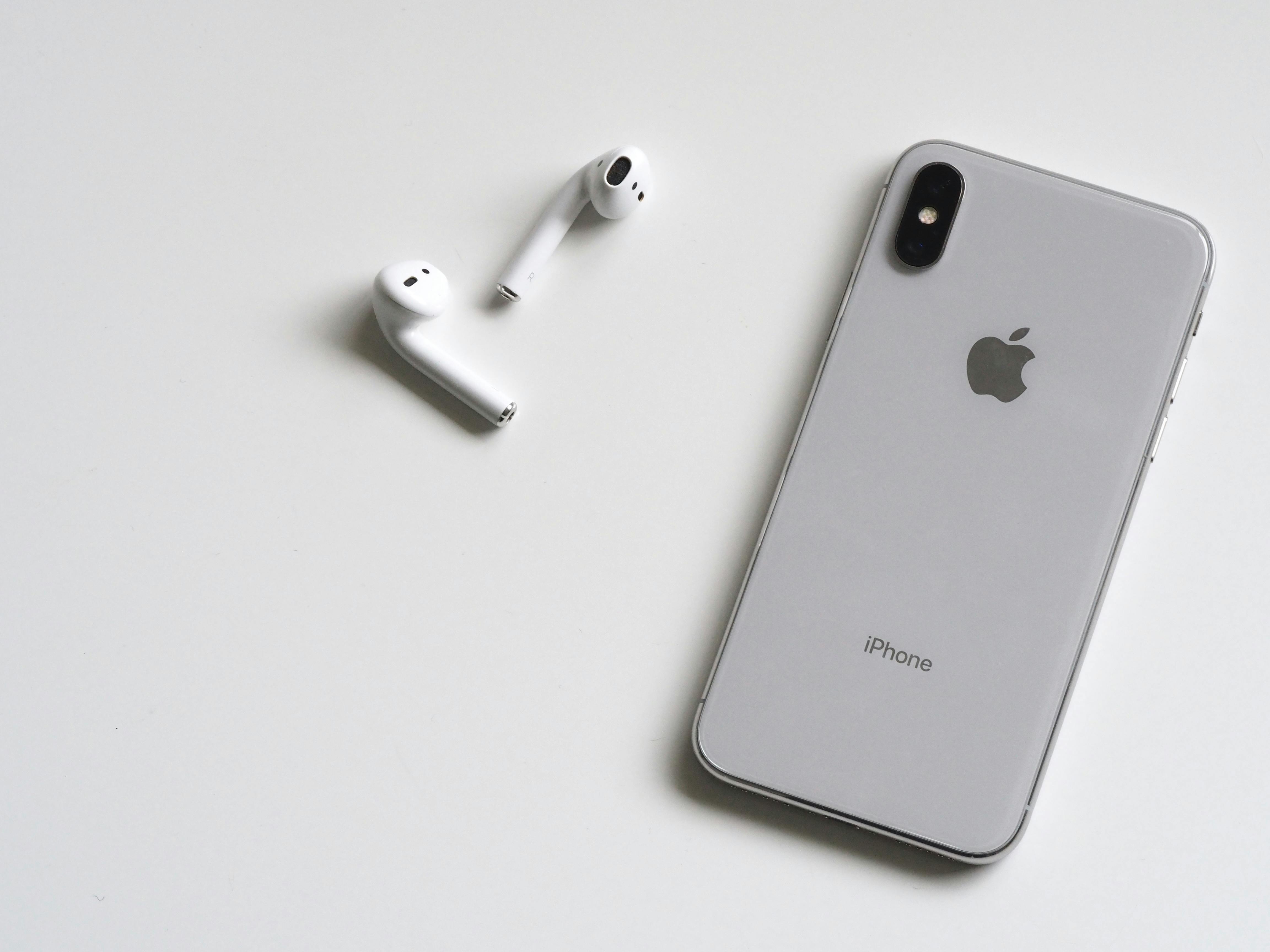
The following images illustrate how Apple’s AI stack is distributed across devices, silicon, and user-facing experiences. All are high-resolution, royalty-free visuals representative of modern mobile and desktop computing environments.



Scientific Significance: Why On‑Device AI Matters
Apple’s shift toward on-device intelligence is not just a product decision; it reflects deeper research trends in efficient ML, privacy-preserving computation, and human–computer interaction.
Privacy and Data Protection
Running models on-device allows sensitive data—messages, health metrics, photos, browsing history—to stay within the user’s hardware boundary. This aligns with principles in federated learning and privacy-preserving inference, even when Apple is not strictly doing federated training on consumer devices.
- Reduced attack surface compared with centralized data lakes.
- Clearer compliance posture for GDPR-like regulations that emphasize data minimization.
- Better user trust, as users increasingly understand that data leaving the device can be logged, breached, or repurposed.
“Data is a toxic asset. The less you collect and move, the safer you are.”
— Bruce Schneier, security technologist and privacy advocate
Latency and User Experience
On-device inference has a straightforward performance benefit: it eliminates round-trip latency to remote servers. For user experiences like:
- Live dictation and transcription
- Real-time photo and video enhancement
- Inline writing suggestions and code completion
Even 200–300 ms of additional latency can make interactions feel sluggish. On modern iPhones and Macs, many ML tasks now complete in tens of milliseconds, enabling fluid interfaces that would be impossible if every request hit the cloud.
Edge AI and Efficient Models
Apple’s approach underscores a broader academic and industrial push toward edge AI, focusing on:
- Model compression (quantization, pruning, distillation) to fit generative and multimodal models within mobile resource constraints.
- Energy-aware scheduling that balances performance with battery life.
- Context-aware computing that leverages on-device signals (location, sensors, app usage) to provide more relevant assistance.
These topics are widely discussed in venues like NeurIPS, ICML, and USENIX systems conferences.
Key Features and User-Facing Capabilities
Apple’s AI efforts manifest in a growing set of system-level features that touch everyday workflows across iPhone, iPad, and Mac. Coverage in outlets like TechRadar and Engadget frequently highlights how these show up in real life.
System‑Wide Assistance and Summarization
Apple is gradually transforming Siri and system search into a context-aware assistant capable of:
- Summarizing long emails, documents, and web pages.
- Suggesting responses based on email or message context.
- Surfacing relevant files, notes, and photos in response to natural language queries.
Unlike standalone chatbots running in a browser, these capabilities have direct access to on-device content (under strict permissions), enabling highly personalized yet private assistance.
Media, Photography, and Creativity Tools
Apple’s Photos, Notes, and creative apps increasingly incorporate AI-driven features:
- Semantic search over photos (“find pictures of my dog at the beach in 2022”).
- Smart editing tools for background removal, subject enhancement, and noise reduction.
- Generative suggestions for layouts, titles, and visual variations in supported apps.
YouTube creators frequently compare these tools to Google Photos and Microsoft’s Designer, benchmarking things like background removal accuracy, face detection reliability, and processing speed.
Writing and Productivity Enhancements
Across Mail, Notes, and third-party apps, Apple is exposing writing aids that:
- Rewrite text in different tones (formal, friendly, concise).
- Summarize meeting notes into action items.
- Generate outlines for documents or presentations.
These features are often powered by compact language models tuned for low-latency, high-privacy use cases, rather than massive general-purpose LLMs running exclusively in the cloud.
Ecosystem and Developer Perspective
Apple’s AI roadmap sits at the intersection of its hardware lock-in, App Store rules, and developer tooling. This is where much of the debate on platforms like Hacker News and X (formerly Twitter) is focused.
Opportunities for Developers
For developers committed to Apple platforms, the company’s approach unlocks several strengths:
- Predictable hardware baseline: Knowing that a high percentage of users have Neural Engine–equipped devices simplifies optimization decisions.
- High-quality frameworks: Core ML, Vision, and Natural Language frameworks provide battle-tested building blocks.
- System integration: Apps can hook into system features like Share Sheets, Siri Shortcuts, and Widgets, making AI capabilities feel native.
Constraints and Criticisms
At the same time, critics raise valid concerns:
- Closed ecosystem: Apple’s control over distribution and APIs can limit experimental AI agents or alternative model deployment approaches.
- Slower visible iteration: Unlike web-based AI tools that can ship changes daily, OS-level AI features often align with annual or semiannual OS releases.
- Opaque model details: Apple rarely publishes full technical specs for its consumer models, making benchmarking and scientific scrutiny harder.
“Apple doesn’t want to be the company of wild AI experiments. It wants to be the company of AI that never embarrasses you—and that may mean moving a little slower.”
— Summary of commentary from AI-focused coverage in Wired and The Verge
Benchmarks, Comparisons, and Social Media Discourse
Social media and YouTube have become de facto test labs for Apple’s AI claims. Creators run side‑by‑side comparisons against Google’s Pixel, Microsoft’s Copilot-infused PCs, and web-based assistants like ChatGPT.
Typical comparison scenarios include:
- Email triage: Which assistant best summarizes inboxes and drafts accurate replies?
- Note-taking: How well do on-device models convert messy bullet lists into clean, structured documents?
- Media workflows: Can Apple’s tools keep up with AI-assisted video editing, thumbnail generation, and B‑roll suggestions?
Channels like MKBHD and Marques Brownlee’s shorts frequently cover these comparisons, influencing public perception of whether Apple is “catching up” or quietly surpassing rivals in specific user flows.
Hardware That Enables Apple’s AI Push
For most users, Apple’s AI features are only as good as the hardware they run on. Modern iPhones and Macs with advanced Neural Engines are the practical foundation of on-device intelligence.
Devices Optimized for On‑Device Intelligence
Newer iPhones (with A‑series chips) and Macs (with M‑series chips) offer significantly better AI performance than earlier generations. When choosing hardware with AI in mind, look for:
- Recent A‑series or M‑series chips with high TOPS Neural Engines.
- Adequate unified memory (8 GB or more) for handling heavier ML workloads.
- Latest OS versions (recent iOS, iPadOS, macOS) where Apple’s newest AI frameworks are available.
Relevant Hardware (Affiliate Recommendations)
For users looking to experience Apple’s latest on‑device AI features with strong performance, the following popular devices in the U.S. market are particularly well-suited:
- Apple iPhone 15 (128GB, Unlocked) – Excellent Neural Engine performance and battery efficiency for on-device AI.
- Apple 2023 MacBook Pro 14‑inch with M3 Pro – Strong M‑series Neural Engine and unified memory ideal for local ML workloads.
- Apple iPad (10th Generation, 10.9‑inch) – A versatile tablet for AI‑enhanced note-taking, drawing, and media consumption.
Product availability, pricing, and specifications can change; always verify current details on the product page.
Milestones: From Background Feature to Front‑Page Story
Apple’s AI evolution has unfolded over several key inflection points that attracted increasing media attention.
- Early ML Integration: Face recognition, photo categorization, and predictive text on iOS signaled the first wave of on-device intelligence.
- Apple Silicon Transition: The move from Intel to M‑series chips on the Mac put AI acceleration directly under Apple’s control across the entire product line.
- System-Level AI Features: System-wide transcription, live captions, and advanced accessibility tools showcased the practical potential of edge AI.
- Deep OS Integration: AI began appearing as a consistent thread across Settings, Safari, Notes, Mail, and beyond—no longer a bolt-on feature.
Each phase has been covered extensively across tech media, with a shift from skepticism (“Apple is behind”) to a more nuanced debate about the merits of its privacy-first and ecosystem-driven strategy.
Challenges: Speed, Openness, and Expectations
Despite substantial progress, Apple faces nontrivial challenges as AI expectations accelerate.
Pace of Innovation vs. Stability
Rapidly-evolving AI capabilities mean that models can feel “old” in a matter of months. Apple’s strengths—tight integration, thorough testing, and high reliability—can clash with:
- Developers’ desire to experiment with cutting-edge models and interaction paradigms.
- Users who see web-based tools getting weekly upgrades while OS features change annually.
- Competitive pressure from OpenAI, Google, and Anthropic, which can iterate publicly and rapidly.
Ecosystem Control and Developer Friction
Apple’s App Store rules and sandboxing model provide strong security guarantees, but commenters in forums and on social media often argue that:
“The same walls that keep the garden safe can also keep out some of the most interesting experiments.”
This tension is likely to continue as developers push for more flexible access to system-level AI, background tasks, and model hosting options.
Ethical and Regulatory Pressures
As AI systems make more decisions about how information is filtered, summarized, and presented, Apple must navigate:
- Bias and fairness in models that operate on personal data.
- Explainability when AI suggestions influence communication, work, and learning.
- Regulatory scrutiny from EU and other jurisdictions regarding automated decision-making and data processing.
Apple’s longstanding privacy narrative is an asset, but it doesn’t exempt the company from the intense regulatory and ethical debates now surrounding AI.
Further Learning and Deep Dives
For readers who want to go deeper into the technical and strategic dimensions of Apple’s AI and on-device intelligence, the following resources provide additional context:
- Apple Machine Learning Research – Official blog highlighting Apple’s ML research, including efficiency, privacy, and on-device inference.
- WWDC Sessions on Core ML and Apple Silicon – Technical talks on optimizing models for iPhone, iPad, and Mac.
- YouTube: Apple Intelligence and On‑Device AI Overviews – Video explainers and benchmarks from multiple creators.
- Papers With Code – Explore papers and code bases related to efficient transformers, edge AI, and model compression.
Conclusion: Is Apple Catching Up or Redefining Consumer AI?
Apple’s on-device AI push is less about flashy demos and more about re‑architecting everyday computing around private, context‑aware intelligence. By binding generative and assistive models directly to its silicon, operating systems, and ecosystem, Apple is betting that the future of AI is not just in massive cloud clusters, but in the chips inside hundreds of millions of personal devices.
Whether this strategy is seen as “catching up” or “redefining” depends on perspective. Compared purely on chatbot capabilities, Apple may appear more conservative. But measured by how seamlessly AI infuses routine tasks—email, notes, photos, accessibility features—the on-device approach could ultimately prove more durable and user‑friendly.
The next several years will reveal how far Apple can push the boundaries of edge AI while maintaining its commitments to privacy, stability, and ecosystem control. What’s clear already is that Apple’s AI strategy is no longer a side story—it is central to how the iPhone and Mac will evolve, and to how millions of people will experience AI in their daily lives.
Practical Tips: Preparing for an On‑Device AI Future
If you’re an Apple user, developer, or decision-maker planning around Apple’s AI roadmap, consider the following practical steps:
- Keep devices current: Update to recent hardware and OS releases to ensure access to the latest Neural Engine features and AI frameworks.
- Audit your data permissions: Review which apps have access to location, photos, and documents, since AI features may build on these permissions.
- For developers: Experiment with Core ML model conversion, and profile performance on real hardware early in your development cycle.
- For teams and organizations: Evaluate how on-device AI can reduce data exposure; for sensitive workflows, this may significantly improve your risk posture.
Staying informed—through technical blogs, WWDC sessions, and independent reviews—will help you make informed choices as Apple continues weaving AI deeper into the fabric of its ecosystem.
References / Sources
The insights in this article are informed by a range of reputable sources, including technical documentation, news coverage, and research discussions:
- https://www.apple.com/newsroom/
- https://developer.apple.com/machine-learning/
- https://machinelearning.apple.com/
- https://www.theverge.com/
- https://www.engadget.com/
- https://www.techradar.com/
- https://www.wired.com/
- https://arstechnica.com/
- https://news.ycombinator.com/
- https://neurips.cc/
- https://icml.cc/
