
How a Lost 1972 Harlem Epic Became One of 2026’s Best Movies
A long-lost 1972 Harlem-set film by William Greaves has finally premiered at the 2026 Sundance Film Festival, instantly vaulting into the conversation as one of the year’s best movies and rewriting how we think about both film history and Black independent cinema.
One of 2026’s Best Movies Was Shot in 1972: Why William Greaves Matters Now
The idea sounds like a logline cooked up by an overcaffeinated programmer: a “new” film by the late, pioneering Black filmmaker William Greaves, shot on the streets of Harlem in 1972, reconstructed and finally premiering at Sundance 2026 to rapturous critical response. Yet that’s exactly what’s happened, as Vulture has already framed it as one of the standout movies of the year.
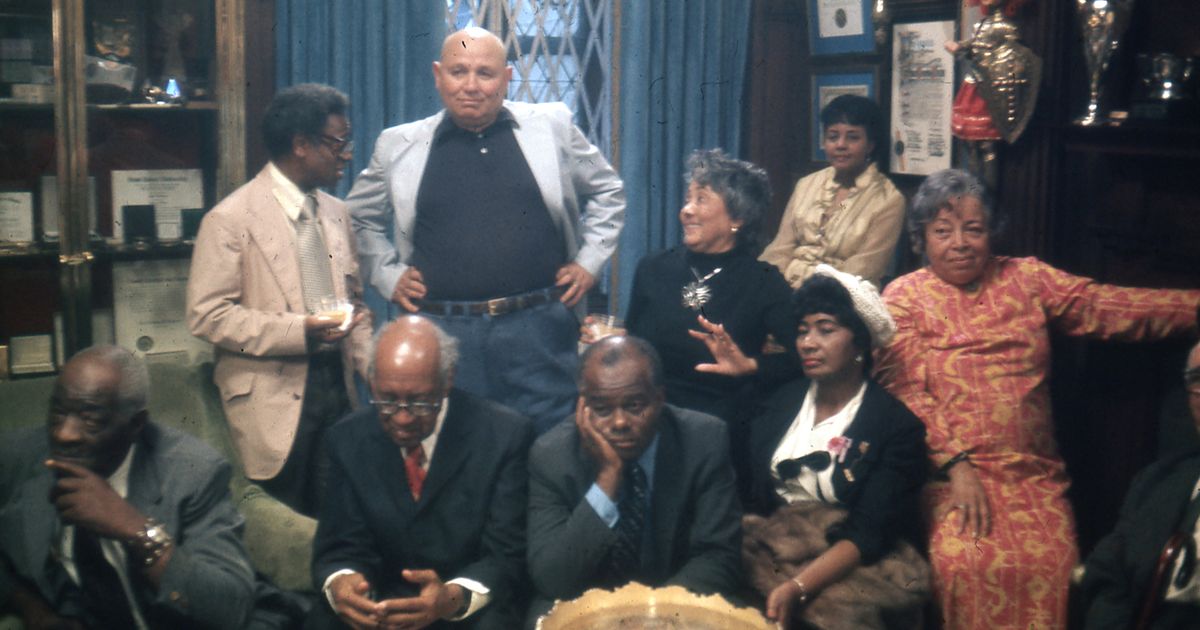
The film—reshaped from Greaves’s long-gestating material, often referred to in coverage as a kind of Once Upon a Time in Harlem–style epic—arrives like a time capsule cracked open at precisely the right cultural moment. In an era obsessed with “lost media” and director’s cuts, this is something rarer: a work that feels at once historically crucial and startlingly alive.
William Greaves: The Visionary Behind the “New” Classic
To understand why this 1972 project is hitting so hard in 2026, you have to understand William Greaves. A documentarian, actor, and trailblazer of Black independent film, Greaves is best known to contemporary viewers for the metacinematic cult favorite Symbiopsychotaxiplasm: Take One (1968). Long before “mockumentary” and “reality TV” were pop-cultural fixtures, Greaves was experimenting with fragmented narratives, reflexive storytelling, and the politics of representation.
By the early ’70s, Harlem was both muse and battleground: a site of Black cultural renaissance and of systemic neglect. Greaves’s 1972 shoot unfolded against a backdrop of post–civil rights disillusionment, Black Power aesthetics, and a city teetering on fiscal crisis. The fact that this project went unfinished for decades is, in a way, part of the story: a reflection of the chronic underfunding and under-recognition of Black filmmakers of his generation.
“Greaves was doing, in the late ’60s and early ’70s, what we now call ‘innovative cinema’ — he just wasn’t given the infrastructure white experimental filmmakers took for granted.”
— Film historian quoted in festival coverage
The 1972 Harlem Epic: What the Film Is Actually About
While early Sundance and Vulture write-ups are cautious about over-spoiling the film’s specific narrative turns, enough detail has filtered out to sketch its shape. The movie we see in 2026 is assembled from footage Greaves shot in 1972: street-corner scenes, semi-scripted vignettes with local performers, observational documentary moments, and more formally staged sequences that blur fiction and reality.
Rather than follow one clean protagonist arc, the film unfolds as a mosaic of Harlem lives. You get a struggling musician chasing a gig, a young activist wrestling with the limits of protest, elders who remember the Harlem Renaissance with equal parts nostalgia and frustration, and kids improvising rituals of play on the sidewalk. It’s less “plot-driven drama” and more a day-in-the-life city symphony, filtered through Greaves’s experimental sensibility.
Structurally, the film nods to traditions like The Cool World and Shadows, but the tone is Greaves’s own: part sociological study, part performance piece, part jazz riff. The 2026 cut leans into this hybridity, using sound design and editorial choices to stitch together disparate moods into something emotionally unified.

From Lost Footage to 2026 Premiere: The Restoration Journey
The mythology around this movie is already part of its aura. Greaves shot the material in 1972 but, for a tangle of financial, technical, and industry reasons, never completed a definitive cut. The reels became, for decades, the stuff of rumor—known to scholars and archivists, tantalizing to programmers, effectively invisible to mainstream audiences.
The current version is the result of a meticulous restoration and editorial process undertaken by collaborators, archivists, and members of Greaves’s estate. We’re talking color correction for faded stock, audio clean-up on location recordings, and piecing together Greaves’s intentions from notes, interviews, and partial assemblies.
“Our aim was not to ‘modernize’ Greaves, but to listen to what the footage wanted to be. The 2026 cut is a conversation with his original vision, not a replacement.”
— Member of the restoration team, Sundance Q&A
This kind of archival cinema has been a quiet trend in recent years—think of projects like They Shall Not Grow Old or Hallelujah: Leonard Cohen, a Journey, a Song in how they rework archival materials—but Greaves’s film is different. It’s not merely a restoration; it’s a completion of something that the industrial and racial dynamics of 1970s Hollywood never fully allowed to exist.
A Time Capsule That Feels Contemporary: Style, Form, and Tone
Watching the film in 2026, what’s striking is how contemporary its rhythms feel. Greaves’s instinct for self-reflexivity—moments where the camera’s presence is acknowledged, or where performers slip between “character” and themselves—lines up eerily well with our current appetite for hybrid documentary and playful formalism.
- Cinematography: Grainy, handheld 16mm images lend the film a tactile immediacy. The look sits comfortably next to modern “retro” aesthetics in streaming dramas, but here it’s the real thing.
- Sound and music: A mix of era-appropriate jazz, soul, and ambient street noise. The restoration team reportedly resisted the temptation to overdress it with new score, keeping the sonic palette authentically ’70s.
- Editing: Elliptical and rhythmic rather than plot-driven, with episodes that drift into each other as if you’re walking block by block through the neighborhood.
If anything, the film slots neatly beside recent critical favorites like Red Rocket, Moonlight, or American Honey, even though it predates them by decades. The themes—economic precarity, performance of identity, communities on the edge of gentrification—are as 2026 as they are 1972.
Harlem, Black Cinema, and the Rewriting of Film History
Part of what makes this movie feel “monumental,” as Vulture puts it, is how it reframes the cinematic portrayal of Harlem and Black life in the early ’70s. Mainstream viewers often know that period through the prism of blaxploitation—Shaft, Super Fly, Coffy—films that mixed genuine subversion with market-friendly stereotypes.
Greaves’s Harlem is something else. It’s neither tourist spectacle nor urban-decay porn. It’s lived-in, contradictory, often funny, occasionally bleak. The camera lingers on the small rituals of daily life: barbershops, playgrounds, stoops. People argue, flirt, hustle, dream, and complain, but they’re never flattened into “type.”
“What we see here is Black life not as allegory, not as pathology, but as texture. You feel the air in these images.”
— Critic’s reaction from early Sundance coverage
In that sense, the movie sits in conversation with the L.A. Rebellion filmmakers (Julie Dash, Charles Burnett, Haile Gerima) as well as later works like Spike Lee’s Do the Right Thing. The difference is that for decades, this conversation happened without Greaves’s 1972 Harlem experiment fully at the table. The Sundance premiere changes that calculus.

Strengths: Why Critics Are Calling It “Monumental”
It’s not just the backstory that has critics buzzing. On its own terms, the film delivers in ways that feel both emotionally direct and formally daring. If you strip away the archival narrative around it, you’re still left with a work that can stand beside the most acclaimed independent films of the current decade.
- Emotional resonance: The film’s vignettes build into a cumulative portrait of a community that’s struggling but not defeated. Small, quiet beats—the look between two strangers on a bus, a musician’s face after a botched audition—hang in your memory.
- Formally adventurous: The blend of documentary and fiction never feels like a gimmick. You can sense Greaves probing how people behave when a camera is there, and how performance is baked into everyday survival.
- Historical significance: For scholars and cinephiles, the film fills in a missing puzzle piece in the history of Black American cinema. For general audiences, it’s simply a gripping, beautifully made movie.
Limitations and Challenges: Where the Film May Lose Some Viewers
Calling the movie “one of the best of 2026” doesn’t mean it will work for everyone. In fact, part of its power lies in how stubbornly it resists the smoothness of contemporary prestige storytelling.
- Fragmented narrative: Viewers used to neatly plotted arcs may find the mosaic structure disorienting. The film is more about mood and environment than set-up/payoff storytelling.
- Inherent incompleteness: Even in its lovingly reconstructed form, you can feel the gaps—missing scenes, ideas that may never have been fully realized. That “unfinished” quality is poignant but occasionally frustrating.
- Archival imperfections: Some footage still carries scratches, audio hiss, or exposure issues. Purists may love this; others may see it as a barrier.
These aren’t flaws so much as features of what the project is: a dialogue across time, between a filmmaker working under constraints in 1972 and a restoration team trying not to sand off the rough edges that make the film what it is.

Industry Impact: What This Means for Sundance and Streaming
From an industry perspective, the film’s Sundance debut is a statement. At a festival often dominated by bidding wars for buzzy narrative features and docuseries-ready true crime, elevating a half-century-old, Black-made experimental project sends a different signal about what counts as “new.”
It’s easy to imagine a prestige streamer or boutique distributor using this as both cornerstone content and brand positioning—“the film history you were never allowed to see.” The commercial playbook is familiar: remastered physical release, contextual making-of documentary, panel discussions on film Twitter, a Criterion or similar platform edition.
But beyond marketing, the film raises deeper questions for programmers and funding bodies. If one of the most talked-about “new” films of 2026 is a completed work from 1972, what other projects are languishing in archives? How much of the cinematic canon is still waiting not just to be restored, but actually finished?
Trailer and Viewing Experience
As of its Sundance bow, the film is primarily accessible on the festival circuit, but a wider release—whether theatrical, streaming, or both—is widely expected. A restored-film rollout tends to be slow and curated, with early playdates at art-house cinemas, film museums, and Black film festivals before broader availability.
Expect a trailer that leans into the time-capsule allure: saturated 16mm images of Harlem streets, voiceover about a “lost masterpiece,” and festival pull quotes about it being “one of the best movies of 2026.” If the marketing is smart, it will also foreground Greaves himself, reminding audiences that this isn’t just retro content but the work of a distinct, under-recognized auteur.
For maximum impact, this is the kind of film that benefits from a big screen and a focused crowd. The grain, the street noise, the layered conversations—they’re immersive in a way that a half-watched stream on a tablet simply can’t match.
Final Verdict: A Late Arrival That Feels Right on Time
Title: 1972 Harlem Film by William Greaves (Restored 2026 Cut)
Principal photography: 1972
Premiere: 2026 Sundance Film Festival
Seen from 2026, the film plays like both revelation and reckoning. It’s a revelation because the work is that good—formally daring, emotionally grounded, culturally specific without ever feeling narrow. And it’s a reckoning because you can’t watch it without wondering how many other films like this never got finished, never got screened, or were never funded in the first place.
Calling it “one of the best movies of 2026” is, in some ways, an understatement. It’s one of the most important cinematic events of the year: a reminder that innovation in movies doesn’t always mean new IP or fresh tech. Sometimes it means listening, at last, to a voice that’s been waiting in the can for half a century.
For viewers willing to embrace its loose structure and archival texture, Greaves’s resurrected Harlem project is essential viewing—a bridge between eras that feels uncannily attuned to our present.
Reviewed by: Staff Contributor
Rating: 4.5/5
