
How AI‑Driven Protein Design Is Launching the Era of Digital Biology
The convergence of artificial intelligence and molecular biology has catalyzed a paradigm shift often described as digital biology or computational bio‑design. Instead of studying life only by observing cells and tissues in a microscope, researchers now operate in a hybrid realm where code, data, and molecular structures are tightly interwoven. At the heart of this revolution are AI models that can predict protein structure, design new enzymes, and even explore entirely novel regions of sequence space that evolution has not yet sampled.
These capabilities are already reshaping microbiology, industrial biotechnology, and early‑stage drug discovery. They enable faster hypothesis generation, more targeted experiments, and the possibility of designing biological systems with an engineering mindset. Yet, as with any transformative technology, AI‑driven protein design brings dual‑use risks, governance questions, and the need for new educational approaches for the next generation of scientists.
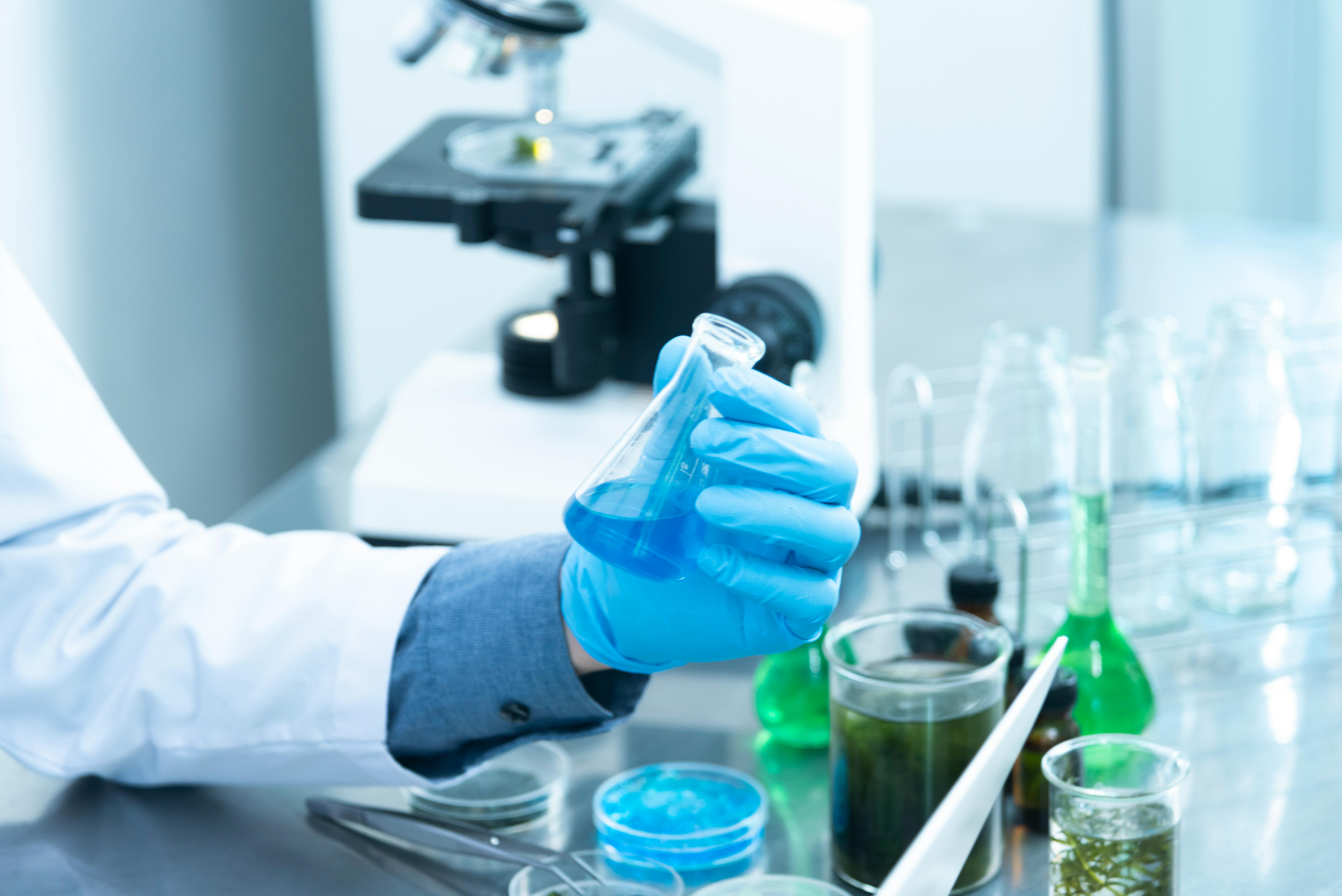
Mission Overview: What Is “Digital Biology”?
Digital biology refers to the growing practice of treating biological systems—genes, proteins, metabolic pathways—as objects that can be computed on, simulated, and systematically redesigned using software. This does not replace wet‑lab biology, but it profoundly changes the workflow:
- Biological data in: Genomes, protein sequences, and structural data are fed into AI models.
- Computation and design: Models predict how molecules fold, interact, and function, or generate new candidates.
- Microbial expression: Engineered microbes (such as E. coli or yeast) produce the designed proteins.
- High‑throughput testing: Robotics and microfluidics test thousands of variants in parallel.
- Closed‑loop learning: Experimental results refine the next rounds of AI training and design.
This loop effectively transforms biology into a partially autonomous, iterative optimization process—a “self‑driving lab” vision that major research institutes and biotech companies are rapidly embracing.
“We are moving from reading and editing DNA to programming biology,” notes geneticist George Church, emphasizing how computational design is changing both the scale and ambition of biological engineering.
Technology: From AlphaFold to Generative Protein Design
The inflection point for public awareness came in 2020–2021, when DeepMind’s AlphaFold demonstrated that deep learning could predict the 3D structures of proteins from amino‑acid sequences with near‑experimental accuracy for a large fraction of known proteins. In partnership with EMBL‑EBI, DeepMind subsequently released the AlphaFold Protein Structure Database, covering hundreds of millions of proteins across the tree of life as of 2024–2025.
Structure Prediction: AlphaFold and Its Successors
AlphaFold and successors (such as AlphaFold3 and RoseTTAFold) use attention‑based neural networks trained on experimentally solved structures from the Protein Data Bank alongside multiple sequence alignments. These models:
- Take an amino‑acid sequence as input.
- Infer residue‑residue relationships and evolutionary constraints.
- Output a 3D conformation and confidence scores for each region.
Modern versions extend beyond single proteins to complexes, nucleic acids, and ligand binding, making them invaluable for drug discovery and structural biology.
Generative Models: Designing Proteins That Never Existed
While structure prediction answers “What does this sequence look like?”, generative models ask “What sequence would produce a protein with the function I want?” Recent work employs:
- Protein language models (e.g., ESM, ProGen) trained on billions of sequences.
- Diffusion models that gradually “denoise” random structures into functional proteins.
- Reinforcement learning and Bayesian optimization guided by experimental feedback.
These tools can propose sequences predicted to fold stably and perform specific tasks, ranging from catalyzing chemical reactions to binding particular cellular targets. Leading academic groups and startups (e.g., Generate:Biomedicines, Isomorphic Labs, and others) have reported de novo enzymes and binders that match or exceed natural counterparts.
Membrane Proteins and Complexes
A particularly active area involves membrane proteins—channels, receptors, and transporters essential for neurobiology and pharmacology but historically difficult to study crystallographically. Advanced AI models:
- Predict conformations across multiple functional states (open/closed, active/inactive).
- Model large assemblies such as ion channels, GPCR oligomers, and viral fusion complexes.
- Guide mutagenesis and ligand design for high‑value drug targets.
The capacity to simulate these complex systems is reshaping how neuroscientists, pharmacologists, and structural biologists prioritize experiments.
Microbiology at the Core: Microbes as Protein Factories
Microbiology and industrial biotechnology sit at the center of AI‑driven protein design because microbes are the workhorses that express and test the designed proteins. The typical loop in a modern lab looks like this:
- In silico design: AI proposes thousands of protein variants with predicted structure and function.
- DNA synthesis or assembly: Sequences are encoded into DNA, often ordered from commercial gene synthesis providers.
- Microbial transformation: DNA is inserted into bacteria, yeast, or filamentous fungi.
- Expression and purification: Microbes produce the proteins, which are then purified.
- High‑throughput screening: Automated assays test activity, stability, and specificity.
AI and automation enable scientists to move from designing a handful of variants to exploring tens of thousands in a single campaign, dramatically increasing the chance of discovering high‑performing molecules.
As synthetic biologist Christina Smolke has remarked in interviews, “We are no longer limited to what nature gives us. We can now start from function and work backwards to sequence.”
Applications: From Enzyme Engineering to Personalized Therapeutics
The online buzz about AI + protein design is fueled by concrete case studies that resonate across disciplines—from ecology and industrial chemistry to immunology and neuroscience.
Enzymes for Sustainability and Industry
- Plastic‑degrading enzymes: AI‑assisted design has improved variants of PETase and related enzymes that break down polyethylene terephthalate (PET), with potential use in recycling infrastructure.
- Green chemistry catalysts: Tailor‑made enzymes catalyze reactions in pharmaceutical manufacturing under mild conditions, replacing harsh solvents and heavy metals.
- Carbon capture and valorization: Engineered pathways in microbes convert CO2 into value‑added chemicals or fuels.
Antivirals, Antibodies, and Vaccines
During and after the COVID‑19 pandemic, researchers turned AI tools on viral proteins (e.g., SARS‑CoV‑2 spike, influenza hemagglutinin):
- De novo binders that neutralize viral entry mechanisms.
- Optimized antibodies with improved affinity and manufacturability profiles.
- Structure‑guided immunogens that focus immune responses on conserved, protective epitopes.
Several biotech companies now run AI‑driven antibody and protein therapeutic pipelines, integrating models for both affinity and developability (solubility, aggregation risk, immunogenicity).
Neuroscience and Imaging Tools
AI‑designed fluorescent proteins and biosensors are expanding the toolbox for brain research:
- Brighter and more photostable fluorescent markers for microscopy.
- Genetically encoded sensors for calcium, neurotransmitters, and metabolites.
- Targeted probes that bind specific receptors or synaptic proteins.
These tools enable higher‑resolution mapping of neural circuits and dynamic signaling in live tissues.
Personalized and Precision Biologics
Looking to the next decade, AI‑guided protein design is converging with personal genomics and electronic health records to explore:
- Individualized cancer vaccines targeting patient‑specific neoantigens.
- Tailored biologics (e.g., enzyme replacement therapies) matched to a patient’s mutations.
- Adaptive therapies where AI refines designs as new clinical and molecular data arrive.
Although regulatory and manufacturing hurdles are substantial, proof‑of‑concept studies suggest that genuinely personalized biologics are plausible, especially for rare diseases and oncology.
Technology Integration: Toward Self‑Driving Labs
A defining feature of digital biology is the tight coupling between AI models and lab automation platforms. Major research centers now deploy:
- Robotic arms that handle plates and liquid transfers.
- Automated incubators, bioreactors, and plate readers.
- Microfluidic chips for miniaturized, parallel experiments.
- Cloud‑connected data pipelines that log every step and result.
In a “self‑driving lab,” experiment design, execution, and analysis are orchestrated by software. The AI model suggests which sequences to test next, the robots run the experiments, and the resulting data update the model—a closed‑loop optimization cycle.
Recommended Tools for Learning and Prototyping
For students and professionals who want hands‑on exposure to lab automation and computational biology, several accessible tools and products can help:
- Adjustable single‑channel micropipette set for basic molecular biology workflows.
- Arduino‑based electronics starter kits to prototype simple lab automation devices.
While these tools are far from industrial‑scale robotics, they are effective for understanding the basic principles of programmable experiments and data‑driven optimization.
Scientific Significance: Rethinking How We Do Biology
The impact of AI‑driven protein design goes beyond convenience; it changes fundamental scientific practice in several ways.
From Descriptive to Generative Science
Traditional biology has been largely descriptive—cataloguing genes, pathways, and structures. Digital biology encourages a generative mindset:
- Instead of asking “What does this gene do?”, researchers ask “What gene would perform this function?”
- Rather than passively studying evolution, they actively traverse sequence space guided by algorithms.
- Hypotheses can be encoded as design constraints and tested at scale.
Cross‑Disciplinary Convergence
This field is inherently interdisciplinary:
- Computer scientists build models and algorithms.
- Biologists and chemists interpret results and design assays.
- Engineers develop lab automation and data systems.
- Ethicists and policy experts shape governance frameworks.
Universities are responding with new programs in quantitative biology, computational life sciences, and bioengineering, often highlighting AI and data science as core competencies.
Educational Transformation
For students, the shift is particularly striking:
- Structural models are explored interactively rather than memorized from static diagrams.
- Assignments may include using tools like AlphaFold notebooks or open‑source protein language models.
- Courses connect genetics, biochemistry, and microbiology through unified computational frameworks.
Online platforms and YouTube channels—such as lectures from the MIT OpenCourseWare channel or specialized bioengineering podcasts—are amplifying this educational shift, making high‑level digital biology content accessible to a global audience.
Milestones: Key Developments in AI‑Driven Protein Design
Several landmark events over the last decade have shaped today’s digital biology landscape:
- AlphaFold’s CASP14 performance (2020): Demonstrated that deep learning could rival experimental methods in structure prediction.
- Public release of AlphaFold and databases (2021–2023): Democratized access to structure prediction for researchers worldwide.
- Rise of open‑source alternatives: Tools such as RoseTTAFold and OpenFold empowered community‑driven innovation.
- Generative model breakthroughs (2021–2025): Demonstrated de novo enzymes and binders designed largely by AI, with multiple peer‑reviewed validations.
- Integration with robotics: Self‑driving lab demonstrators showed closed‑loop design–build–test–learn workflows for protein engineering.
“We have crossed a threshold where computation is not just helping us interpret biological data—it is actively proposing new biological hypotheses in the form of molecular designs,” observed computational biologist Frances Arnold, a Nobel laureate in directed evolution.

Challenges: Safety, Ethics, and Reliability
Alongside excitement, AI‑driven protein design raises serious concerns that are widely debated on platforms like X/Twitter, specialized forums, and in policy circles.
Dual‑Use Risks and Governance
The same models that design beneficial enzymes could, in principle, be misused to design toxins or enhance pathogen properties. This has sparked discussion about:
- Access control for high‑capability models and detailed protocols.
- Export controls on certain biological design capabilities or datasets.
- Responsible open‑sourcing, where code and models are shared with safeguards and monitoring.
Organizations such as the WHO Hub for Pandemic and Epidemic Intelligence and national biosecurity agencies are increasingly involved in shaping guidelines.
Model Reliability and Experimental Validation
AI models can be confidently wrong. Over‑reliance without rigorous testing can waste resources or, in the worst case, pose risks. Best practice requires:
- Comprehensive bench validation for any therapeutically or environmentally relevant design.
- Assessing off‑target effects, immunogenicity, and long‑term stability.
- Maintaining transparent documentation of design choices and experimental results.
Equity and Access
There is a risk that only well‑funded institutions will benefit from cutting‑edge digital biology, exacerbating global inequities in health and innovation. Addressing this requires:
- Open educational resources and freely available baseline tools.
- International collaborations that include low‑ and middle‑income country labs.
- Funding mechanisms that support inclusive participation.
Conclusion: The Future of AI‑Driven Protein Design
AI‑driven protein design is ushering in an era where biology can be explored and engineered with unprecedented precision. From sustainable enzymes and advanced therapeutics to neurobiology tools and self‑driving labs, the implications reach far beyond any single discipline. The term digital biology captures this shift toward a world where biological function is increasingly specified, simulated, and optimized in silico before being realized in cells.
The coming years will likely bring:
- More powerful multimodal models that jointly reason about sequence, structure, function, and phenotype.
- Tighter integration between hospital data, genomics, and therapeutic design pipelines.
- Robust governance frameworks balancing openness with biosecurity.
- New professional roles at the interface of software engineering, microbiology, and ethics.
Navigating this future responsibly will require collaboration among scientists, technologists, policymakers, and the public. The choices made now—about openness, oversight, and education—will determine whether digital biology fulfills its promise of improving human and planetary health while minimizing misuse.
Practical Next Steps for Learners and Practitioners
For readers who want to go deeper into AI‑driven protein design and digital biology, a structured approach can be helpful:
- Build conceptual foundations
Study basic molecular biology, biochemistry, and structural biology through textbooks or MOOCs. The free courses on Coursera Bioinformatics Specializations and edX bioinformatics tracks are good starting points. - Learn the computational toolkit
Acquire Python skills, familiarize yourself with libraries such as PyTorch or TensorFlow, and explore open‑source repos for protein language models and structure prediction. - Experiment with public datasets
Use resources like UniProt, PDB, and the AlphaFold database to perform your own analyses, from simple structure visualization to sequence similarity searches. - Engage with the community
Follow leading researchers on platforms like LinkedIn and X, join open Slack communities or forums on computational biology, and attend virtual seminars posted by institutes such as EMBL‑EBI or the Broad Institute.
By progressively combining conceptual understanding, computational skill, and engagement with the broader community, learners can meaningfully participate in—and help shape—the rapidly evolving landscape of digital biology.
References / Sources
- Jumper et al., “Highly accurate protein structure prediction with AlphaFold,” Nature (2021).
- AlphaFold Protein Structure Database (DeepMind & EMBL‑EBI).
- Baek et al., “Accurate prediction of protein structures and interactions using a three-track neural network,” Science (RoseTTAFold).
- Madani et al., “Deep neural language modeling enables functional protein generation across families,” Cell (ProGen).
- Watson et al., “De novo design of protein structure and function with generative models,” Nature.
- Tournier et al., “An engineered PET depolymerase to break down and recycle plastic bottles,” Nature.
- WHO Hub for Pandemic and Epidemic Intelligence.
- MIT OpenCourseWare – Biology and Computational Biology playlists.
