
How AI‑Designed Proteins Are Rewiring the Future of Synthetic Biology
AI‑designed proteins sit at the intersection of molecular biology, computational chemistry, and large-scale machine learning. Instead of merely predicting the shape of existing proteins, new AI systems invent candidate proteins tailored for tasks such as catalyzing non‑natural reactions, targeting disease‑associated molecules, or assembling into programmable nanostructures.
This shift—from analysis to design—marks a new era for synthetic biology. Protein design, once a slow and uncertain exercise in mutagenesis and trial‑and‑error, is becoming a data‑driven engineering discipline. AI models trained on millions of sequences and structures now help scientists explore a design space vastly larger than what evolution has sampled in Earth’s history.
Public interest in this field is fueled by the broader boom in generative AI, the promise of AI‑first drug pipelines, and visible successes shared on platforms like YouTube, LinkedIn, and peer‑reviewed journals. At the same time, ethicists and policy makers are racing to ensure that these tools are used safely and responsibly.
Mission Overview: What Are AI‑Designed Proteins Trying to Achieve?
The central mission of AI‑driven protein design is to turn proteins into programmable, reliable components—much like electronic parts—so that scientists can rapidly build:
- New therapeutics and vaccines customized for specific patients or pathogens.
- Enzymes that replace toxic industrial catalysts in chemical manufacturing.
- Self‑assembling biomaterials for tissue engineering, drug delivery, or optics.
- Regulatory proteins and sensors that power sophisticated gene circuits in engineered cells.
“We are starting to treat proteins less as mysterious biological artifacts and more as designable objects in a vast combinatorial space.”
In practice, AI does not eliminate the need for experiments. It acts as a powerful filter, focusing wet‑lab efforts on the most promising designs out of astronomically many possibilities. The long‑term vision is a tight loop: AI proposes designs, robotic labs synthesize and test them, and the resulting data are fed back into the models to improve future generations.
Background: From Structure Prediction to Generative Design
For decades, protein engineering relied on two primary strategies:
- Directed evolution: randomly mutating a protein and screening thousands to millions of variants for improved activity. Powerful but slow and often blind to underlying structure–function rules.
- Rational design: making carefully chosen mutations based on limited structural knowledge—useful when high‑resolution structures and mechanistic insights were available, but not scalable.
The arrival of deep learning–based structure prediction, especially DeepMind’s AlphaFold2 and the academic RoseTTAFold, changed the landscape. These models can predict the 3D structure of many natural proteins with near‑experimental accuracy, giving researchers an unprecedented map of protein folds.
Building on this foundation, several research groups began to ask: if AI can predict how sequences fold, can it also generate sequences that will fold into functional structures—potentially ones that nature has never explored? This question led directly to today’s explosion of:
- Protein language models trained on amino‑acid sequences.
- Diffusion and generative models that propose 3D backbones or full atomistic structures.
- Hybrid models that couple structural and sequence information.
Technology: How Generative AI Designs Novel Proteins
Modern AI‑based protein design involves several complementary model classes working in a pipeline.
Protein Language Models (PLMs)
Protein language models treat amino‑acid sequences like sentences, where each residue is a “token.” Models such as ESM (Evolutionary Scale Modeling), ProtBert, and newer transformer architectures are trained on hundreds of millions of sequences from databases like UniProt.
- Training objective: predict masked residues or the next residue in a sequence.
- Learned knowledge: patterns of conservation, co‑evolution, and motifs linked to stability, folding, and function.
- Design use: sample new sequences, optimize sequences for higher predicted stability or activity, or generate families of variants for directed evolution starting points.
Diffusion Models and Backbone Design
Inspired by image generators, diffusion models for proteins start from random noise in 3D coordinate space and iteratively refine it to produce coherent protein backbones or full structures.
- Generate a coarse backbone (α‑carbon trace or full backbone).
- Check physical plausibility: no severe clashes, realistic bond lengths/angles.
- Assign amino‑acid sequences compatible with that backbone (often using a PLM).
- Refine and validate using structure prediction tools such as AlphaFold.
Structure‑Guided and Task‑Conditioned Design
For therapeutic or catalytic applications, models need to respect functional constraints:
- Binding design: condition the model on the 3D structure of a target (e.g., a viral protein or receptor) and design complementary protein surfaces that bind with high affinity.
- Enzyme engineering: preserve the active site geometry while re‑designing surrounding residues for improved stability, selectivity, or solvent compatibility.
- Regulatory proteins: design DNA‑binding domains or sensor domains tuned to specific sequences or metabolites.
Closing the Loop: Wet‑Lab Automation
The power of AI models is multiplied by automation:
- DNA synthesis companies can rapidly manufacture designed sequences.
- High‑throughput screening platforms test thousands of designs in parallel.
- Robotic labs execute standardized protocols and feed results back into the models.
This “design–build–test–learn” cycle is central to synthetic biology and is increasingly being executed with minimal human intervention, allowing rapid iteration.
Scientific Significance and Key Application Domains
AI‑designed proteins are already demonstrating practical value across multiple sectors.
1. Therapeutics and Precision Medicine
In drug discovery, AI‑driven design accelerates the creation of:
- De novo binders that recognize disease targets such as oncogenic receptors or misfolded proteins.
- Engineered cytokines and growth factors with tuned potency and reduced toxicity.
- Therapeutic enzymes for rare metabolic diseases or for degrading pathogenic molecules.
AI can propose variants that:
- Increase serum half‑life.
- Reduce off‑target interactions and immunogenic epitopes.
- Improve manufacturability in systems like CHO cells or yeast.
Researchers share progress through venues such as Science, Cell, and biotech‑focused podcasts, underscoring how AI can compress timelines from hit discovery to clinical candidate selection.
2. Green Chemistry and Sustainable Manufacturing
Engineered enzymes offer a route to cleaner chemistry:
- Operate at lower temperatures and neutral pH, reducing energy input.
- Eliminate or reduce the use of toxic solvents and heavy metals.
- Enable selective transformations that simplify downstream purification.
AI‑designed enzymes are being explored for:
- Biodegradation of plastics and persistent pollutants.
- Synthesis of chiral pharmaceutical intermediates.
- Bio‑based production of monomers, fuels, and specialty chemicals.
3. Materials Science and Nano‑Engineering
Designer proteins can self‑assemble into higher‑order structures—fibers, cages, 2D lattices, and gels:
- Biomaterials for medicine: scaffolds for tissue regeneration or localized drug delivery.
- Optical and electronic materials: protein lattices with tunable photonic or conductive properties.
- Encapsulation systems: protein shells that protect sensitive cargo such as RNA or small molecules.
4. Synthetic Biology and Cellular Engineering
AI‑generated regulatory proteins expand the toolbox for programming cells:
- Custom transcription factors for precise gene regulation.
- Sensors that detect metabolites, environmental signals, or disease markers.
- Logic‑gate proteins that implement conditional responses inside cells.
“We are moving toward a world where we can design living systems with the same predictability as digital circuits—proteins are the fundamental logic units.”
Milestones: Recent Breakthroughs in AI‑Driven Protein Design
The pace of progress has accelerated rapidly since 2020. Selected milestones include:
- AlphaFold and RoseTTAFold (2020–2022): high‑accuracy structure prediction enabled routine in silico structural analysis for large fractions of known proteins.
- De novo binders against viral proteins: AI‑designed proteins targeting pathogens like SARS‑CoV‑2 demonstrated that new scaffolds can achieve therapeutically relevant affinities.
- AI‑generated enzymes for non‑natural reactions: research groups reported catalytic activities for reactions not yet seen in nature, validating the concept of “new‑to‑nature” chemistry.
- Fully de novo vaccine scaffolds: nanoparticles and scaffold proteins designed to display viral epitopes with precise geometry have entered preclinical and early clinical evaluations.
- Integration with large multimodal models: by 2024–2025, some platforms began coupling protein models with broader biological knowledge graphs to reason about pathways, phenotypes, and safety profiles.
Many of these advances are documented in open‑access repositories such as bioRxiv and arXiv, enabling rapid sharing and community scrutiny.
Methodology: A Typical AI‑Based Protein Design Workflow
While implementations differ, many labs follow a similar conceptual pipeline:
- Define the functional target
Specify what the protein must do: bind to a receptor, catalyze a reaction, sense a metabolite, or self‑assemble into a particular geometry.
- Model selection and conditioning
Choose PLMs, diffusion models, or hybrid architectures and condition them with constraints such as a target structure, binding pocket, or motif.
- Sequence and structure generation
Sample thousands to millions of candidate sequences and predicted structures, often using ensemble strategies to capture diversity.
- In silico filtering
Apply computational filters based on predicted stability, folding confidence, aggregation risk, epitope content, and manufacturability.
- Experimental validation
Synthesize a down‑selected set of candidates, express them in chosen host organisms, and measure activity, binding, or material properties.
- Model refinement
Incorporate experimental data back into the training pipeline, improving subsequent rounds of design—an active learning loop.
Visualizing AI‑Designed Proteins
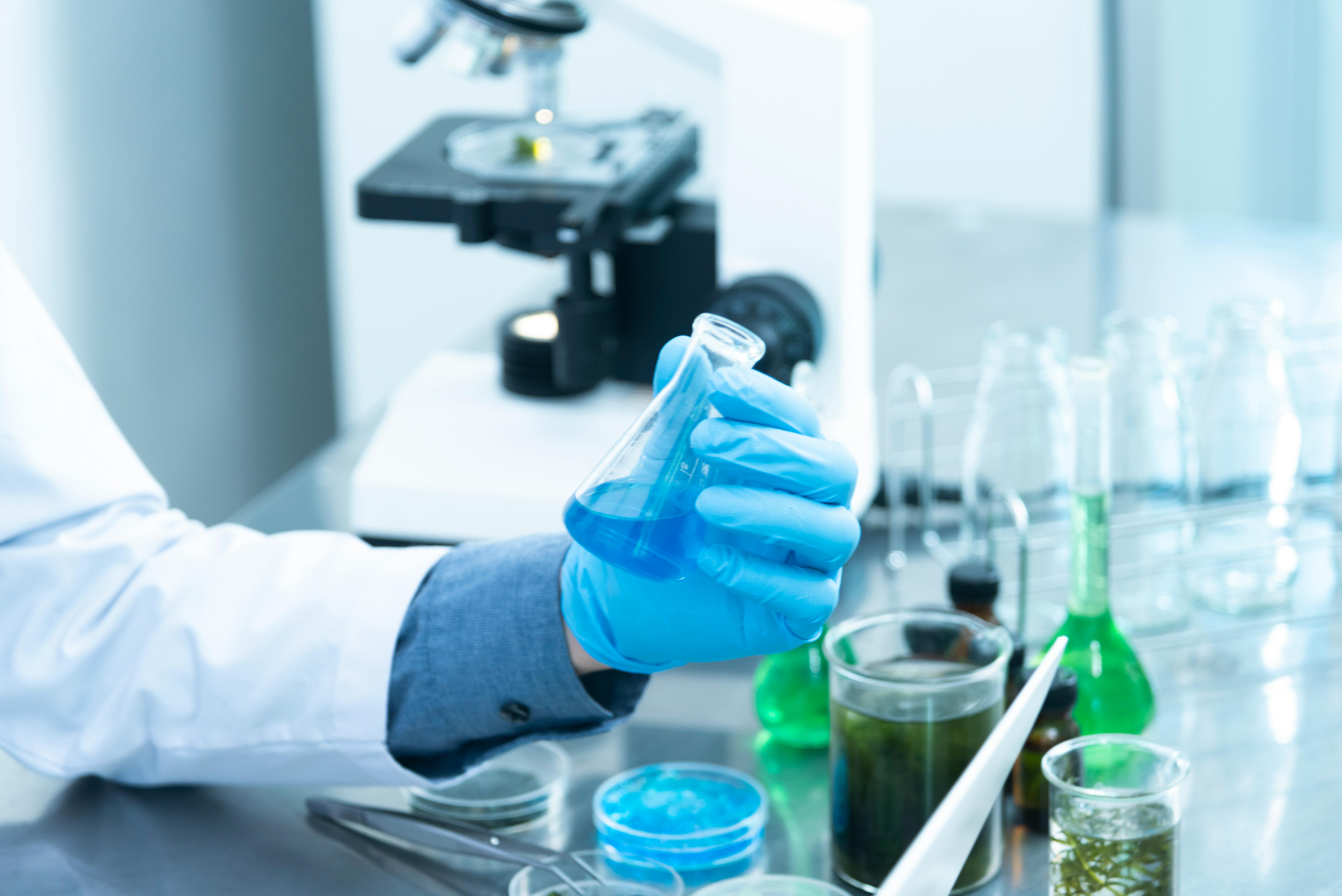
The following images illustrate core concepts in AI‑driven protein design. All images are royalty‑free and optimized for web use; ensure appropriate attribution if reused.
Tools and Resources for Researchers and Students
A growing ecosystem of software and educational resources supports work in AI‑driven protein design.
- AlphaFold protein structure database for predicted structures of many natural proteins.
- ESM (Evolutionary Scale Modeling) family of protein language models.
- Tutorials and lectures on YouTube, such as talks from the Synthetic Biology community channels, covering generative design workflows.
- Professional discussions on LinkedIn, where biotech leaders share case studies and hiring needs in computational protein engineering.
For students or professionals entering the field, a solid grounding in biochemistry, Python programming, and basic machine‑learning concepts is highly beneficial.
Recommended Reading and Hardware for AI‑Driven Protein Design
For those looking to deepen their expertise or build a small home or lab workstation, consider the following resources and products, which are widely used and well‑reviewed in the United States.
Books and References
- Introduction to Protein Structure by Carl Branden and John Tooze – a classic reference for understanding protein folding and structural principles that underlie modern design.
Computing Hardware
- Alienware Aurora Gaming Desktop with NVIDIA RTX GPU – a popular prebuilt workstation‑class desktop suitable for running medium‑scale deep learning models and protein‑design workflows locally.
While major labs often rely on cloud clusters or institutional HPC systems, a capable GPU desktop can be sufficient for educational projects, smaller models, and prototype workflows.
Challenges, Risks, and Ethical Considerations
Alongside excitement, AI‑driven protein design raises serious scientific and societal questions.
Scientific and Technical Limitations
- Generalization beyond training data: models may struggle to make reliable predictions in sequence or structural regimes far from those represented in natural databases.
- Complex in vivo behavior: stability, expression, and function in living systems depend on cellular context, post‑translational modifications, and interactions that models only partially capture.
- Scaling and interpretability: as models grow, understanding why a design works (or fails) remains challenging, complicating debugging and mechanistic insight.
Biosafety, Governance, and Dual‑Use
Because the same tools that generate life‑saving therapeutics could in principle be misused, dual‑use concerns are actively debated in policy circles.
- Access control to high‑risk capabilities, such as models tuned to enhance pathogenic features.
- Screening requirements at DNA synthesis providers to prevent unauthorized construction of dangerous sequences.
- Responsible publication, balancing open science with red‑team review of potential misuse scenarios.
“AI will not make biology inherently safe or unsafe—it will amplify our choices. Governance frameworks must keep pace with capability.”
Regulatory and Clinical Pathways
For AI‑designed therapeutics, regulators such as the FDA and EMA are evaluating:
- How to weigh in silico evidence alongside preclinical and clinical data.
- What documentation and model transparency are needed for approval.
- How to handle iterative “software‑like” updates to biological products.
Multi‑stakeholder collaborations between academia, industry, regulators, and civil society will be crucial in shaping trustworthy standards.
Looking Ahead: The Future of AI‑Designed Proteins
Over the next decade, several trends are likely to define the trajectory of AI‑driven protein design:
- Integration with multi‑omics and systems biology: models will increasingly incorporate transcriptomic, metabolomic, and phenotypic data, enabling designs that consider whole‑cell and organism‑level effects.
- Real‑time design in the lab: tightly coupled AI–robotic platforms where model outputs drive experiments on the fly, and experimental data immediately retrain or fine‑tune models.
- Personalized therapeutics: custom protein drugs generated for individual patients based on genomic and molecular profiling, potentially within clinically relevant time frames.
- Open, standardized APIs for protein design—similar to cloud AI APIs today—allowing broader communities to build applications without managing complex model infrastructure.
If these capabilities mature responsibly, AI‑designed proteins could become a foundational technology for addressing global challenges in health, sustainability, and manufacturing.
Conclusion
AI‑designed proteins represent a profound shift in how scientists interact with the molecular fabric of life. What began as an effort to predict how natural proteins fold has evolved into a generative discipline where new‑to‑nature enzymes, binders, and materials are conceived in silico and realized in the lab.
By coupling protein language models, diffusion frameworks, structural prediction, and high‑throughput experiments, researchers are turning protein engineering into an iterative, data‑rich engineering practice. The potential benefits—to medicine, green chemistry, materials science, and synthetic biology—are immense, but so are the responsibilities surrounding biosafety, ethics, and equitable access.
For scientists, engineers, and policy makers alike, understanding AI‑driven protein design is no longer optional. It is quickly becoming a central pillar of 21st‑century biotechnology.
Additional Tips for Learners and Practitioners
If you are interested in contributing to this field, consider the following practical steps:
- Build foundational skills in:
- Biochemistry and structural biology.
- Python programming and numerical computing (NumPy, PyTorch, TensorFlow).
- Version control (Git) and reproducible research practices.
- Explore open datasets such as UniProt, PDB, and AlphaFold DB for hands‑on projects.
- Participate in online courses and workshops on computational biology, many of which are offered by universities via platforms like Coursera and edX.
- Engage with professional communities at conferences (e.g., ISMB, SynBioBeta) or via virtual seminars.
Staying informed about policy and ethics discussions is equally important; follow organizations working on biosecurity, responsible AI, and open science to understand the broader impact of your technical work.
References / Sources
The following sources provide deeper insight into AI‑driven protein design and synthetic biology:
- Jumper, J. et al. (2021). “Highly accurate protein structure prediction with AlphaFold.” Nature. https://www.nature.com/articles/s41586-021-03819-2
- Baek, M. et al. (2021). “Accurate prediction of protein structures and interactions using a three‑track neural network.” Science. https://www.science.org/doi/10.1126/science.abj8754
- Facebook AI Research. “ESM Protein Language Models.” https://github.com/facebookresearch/esm
- Nature Reviews articles on protein design and synthetic biology: https://www.nature.com/subjects/protein-engineering
- bioRxiv preprints on AI‑driven protein design: https://www.biorxiv.org/search/protein%20design%20deep%20learning
