
How AI Is Rewriting Life’s Code: Inside the New Era of Biological Software
The convergence of artificial intelligence and protein science is shifting biology from a largely descriptive discipline into one that is increasingly programmable. Since DeepMind’s AlphaFold stunned the structural biology community with near-experimental accuracy for protein structure prediction, an entire ecosystem of models and platforms has emerged. These tools do not just interpret nature’s proteins; they are beginning to generate new ones from scratch.
In this article, we explore how AI for protein design works, why scientists talk about “biological software,” and how this technology is reshaping microbiology, drug discovery, and synthetic biology. We will also examine biosecurity concerns, major technical milestones, and the road ahead as wet labs and compute clusters fuse into a single design–build–test–learn pipeline.
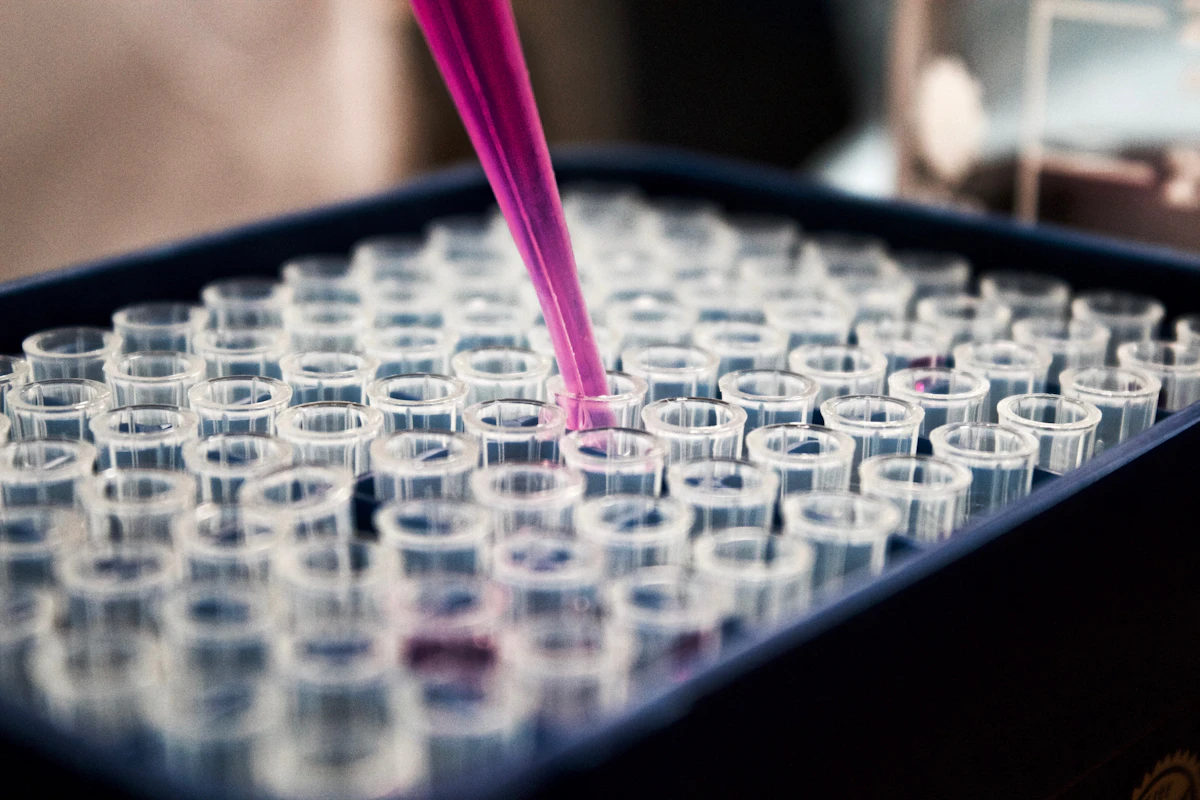
Visualizing the New Era of Protein Design
Mission Overview: From Structure Prediction to Biological Software
The original grand challenge—predicting a protein’s 3D structure from its amino-acid sequence—occupied structural biology for decades. AlphaFold2 and related approaches (such as RoseTTAFold) effectively solved a large part of this problem for single-chain proteins, triggering what many have called a “ImageNet moment” for biology.
Having cracked prediction, the field rapidly pivoted toward design. If an algorithm can learn the mapping from sequence to structure and function, it can also be inverted: given a desired shape or biochemical role, generate candidate sequences that are likely to behave as intended. This inversion is what fuels the notion of proteins as “biological software”:
- Sequences act like code, encoding instructions for molecular behavior.
- Folding rules and energy landscapes form the runtime environment.
- Cellular pathways and organisms become the execution platform.
“We are moving from reading the code of life to writing it—systematically and at scale.” — Broad Institute synthetic biologist, paraphrasing themes common in talks and interviews.
Technology: How AI Designs Proteins
Modern AI systems for protein design borrow architectures from natural language processing and computer vision, then adapt them to biochemical constraints. Several technical pillars define this “biological software stack.”
1. Structure Prediction as a Differentiable Module
Models such as AlphaFold2, OpenFold, and ESMFold act as differentiable or quasi-differentiable modules that map sequences to 3D coordinates and confidence metrics. Design pipelines iterate between:
- Proposing a candidate sequence.
- Predicting its structure and stability.
- Scoring against design objectives (e.g., binding geometry, active site shape).
- Refining the sequence with gradient-based or heuristic search.
2. Generative Models for De Novo Sequences
New generative models treat protein sequences like a specialized language. Examples include:
- Protein language models (e.g., Meta’s ESM family) trained on millions of sequences.
- Diffusion models that generate 3D backbone coordinates and then “decorate” them with amino acids.
- Autoregressive transformers that hallucinate novel sequences under structural or functional constraints.
These systems can generate proteins that have never existed in nature yet fold stably and perform designed functions once tested in the lab.
3. Massive Open Protein Databases
The open release of the AlphaFold Protein Structure Database, covering predicted structures for essentially all known proteins, democratized access to 3D information that used to require years of crystallography or cryo-EM.
- Microbiologists can quickly explore enzymes from obscure microbes.
- Virologists can examine viral proteins for vaccine and antiviral design.
- Ecologists can study large protein families across environmental samples.
4. Integrated Design–Build–Test–Learn Pipelines
AI models are most powerful when coupled to automated experimental platforms:
- Design: AI proposes thousands of candidate sequences.
- Build: DNA synthesis and cloning insert sequences into microbial or mammalian expression systems.
- Test: High-throughput assays measure activity, binding, or stability.
- Learn: Experimental data are fed back to retrain or fine-tune the model.
This closed loop resembles continuous integration in software engineering—only the “deployment” happens in cells and organisms.
Scientific Significance: Rethinking Evolution and Design
AI-enabled protein design is not just a tool; it is changing how scientists conceptualize evolution, function, and the design space of life.
Exploring Vast Sequence Space
The space of possible proteins is astronomically large. Traditional directed evolution samples this space locally, starting from an existing protein and making incremental mutations. Generative AI, by contrast, can jump to entirely different regions:
- Sampling sequences that are far from natural homologs.
- Discovering novel folds and topologies.
- Combining motifs in ways evolution may never have tried.
“We are now able to search functional protein space orders of magnitude faster than natural selection alone.” — commonly expressed sentiment in AI-protein design literature.
Microbiology and Environmental Applications
For microbiologists and environmental scientists, AI-designed proteins enable:
- Carbon capture enzymes optimized for industrial flue gases.
- Bioremediation catalysts that break down plastics, PFAS, or oil spills.
- Metabolic rewiring of microbes to synthesize complex natural products or biofuels.
These applications extend the toolkit of synthetic ecology, opening pathways to engineer microbiomes and environmental consortia with precise biochemical roles.
Drug Discovery and Protein Therapeutics
Pharmaceutical R&D is one of the most aggressive adopters of AI-based protein engineering. Key directions include:
- Antibody optimization for higher affinity, reduced immunogenicity, and longer half-life.
- Cytokine engineering to tune immune responses while minimizing toxicity.
- Enzyme replacement therapies with improved stability and tissue targeting.
Companies now combine AI-generated designs with experimental platforms such as yeast display, phage display, and single-cell screening to rapidly converge on lead drug candidates.
Conceptual Shift: Life as Programmable Matter
As protein design becomes more systematic, the metaphor of life as programmable matter gains traction—especially among software engineers entering biotech. Tools that visualize protein folding in real time on YouTube or interactive platforms help bridge the conceptual gap between code and cells.
This narrative has educational power but also risks oversimplifying biology’s complexity. Proteins rarely act alone; they operate within networks, pathways, and evolving populations. Responsible communication emphasizes both power and limitations.
Milestones: Key Developments in AI-Driven Protein Design
Since 2020, a series of breakthroughs has turned AI-protein design from a niche pursuit into a central pillar of modern biotechnology.
1. AlphaFold and RoseTTAFold
DeepMind’s AlphaFold2 and the Baker lab’s RoseTTAFold demonstrated that deep learning can infer protein structures with near-experimental accuracy for many targets, as highlighted in Nature. This led to:
- Massive predicted structure databases for most known proteins.
- Widespread adoption in structural biology, from GPCRs to viral proteins.
2. Diffusion and Generative Design Models
Inspired by image generators, researchers developed diffusion models that create 3D protein backbones and sequences conditioned on desired geometries, binding interfaces, or symmetries. Several studies have reported “first-try” success: designs that work in the lab without exhaustive optimization.
3. Industrial and Startup Adoption
A wave of startups and pharma collaborations emerged, integrating AI for:
- Antibody and biologic optimization.
- Enzyme engineering for green chemistry.
- Novel vaccine antigen design.
Many companies maintain active presences on LinkedIn and X (Twitter), sharing case studies, preprints, and job postings that further amplify public awareness.
4. Community Tools and Open Science
Open-source efforts such as OpenFold and community servers for structure prediction and design (e.g., ColabFold) lowered barriers for smaller labs and even teaching labs. Crowdsourced initiatives let students and citizen scientists explore protein design using web interfaces, accelerating cultural adoption.
Challenges: Limitations, Risks, and Biosecurity
Despite the excitement, AI-driven protein design faces serious scientific, practical, and ethical hurdles.
Scientific and Technical Limitations
- Dynamics and disorder: Many proteins are intrinsically disordered or adopt multiple conformations. Static 3D models only capture part of their behavior.
- Context dependence: A protein’s function depends on cellular context, post-translational modifications, and interaction partners.
- Off-target effects: Designed proteins may interact with unintended molecules, causing toxicity or unexpected phenotypes.
These challenges mean experimental validation is not optional. AI narrows the search but does not replace the need for rigorous bench science.
Biosecurity and Dual-Use Concerns
The same tools that enable life-saving therapies could, in theory, be misused to design harmful proteins or enhance pathogens. Policy discussions, including in Science and Nature, emphasize:
- Access control for particularly powerful design models.
- Screening of DNA synthesis orders for dangerous sequences.
- Responsible publication norms that balance openness with risk mitigation.
“We need governance frameworks that evolve as fast as the technology itself, without stifling life-saving innovation.” — a recurring theme in expert panels on AI and biosecurity.
Regulatory and Ethical Landscape
Regulators are still adapting to biologics and gene therapies, let alone AI-designed molecular machines. Open questions include:
- How to evaluate safety for proteins with no natural analogs.
- How to attribute responsibility when AI models contribute design ideas.
- How to ensure equitable access to resulting therapies and industrial technologies.
These issues intersect with broader debates on AI ethics, data governance, and global health equity.
Practical Tools and Learning Resources
For scientists, students, and software developers entering this field, several tools and resources can accelerate learning.
Hands-On Learning
- Interactive tutorials on platforms such as Google Colab demonstrate how to run simplified structure prediction or sequence design workflows.
- YouTube channels from leading labs and educators visually explain protein folding, molecular docking, and AI architectures.
- Open notebooks shared on GitHub provide reproducible pipelines that integrate PyTorch, JAX, or TensorFlow with bioinformatics libraries.
Recommended Reading and Courses
- Review articles in journals like Nature Reviews Drug Discovery, Cell, and Science on AI and protein engineering.
- Online bioinformatics and structural biology courses from universities and platforms such as Coursera and edX.
- Technical blogs and LinkedIn posts from researchers in AI-bio startups, which often share accessible explanations and diagrams.
Hardware and Lab Equipment (Amazon Examples)
For wet-lab teams building their own small-scale design–build–test pipelines, some widely used equipment includes:
- Eppendorf Research Plus Pipettes and Microcentrifuges for precise liquid handling and sample preparation.
- Thermo Scientific Lab Armor Beads for stable temperature control in incubations of protein samples.
- New Brunswick Innova Shakers commonly used for bacterial and yeast culture growth during protein expression.
These products illustrate the types of tools typically found in labs linking AI-driven design with experimental validation.
Future Directions: Toward Programmable Cells and Systems
Looking ahead, AI for protein design will increasingly integrate with other layers of biological engineering.
Multiscale Design: From Proteins to Pathways
Researchers are beginning to couple protein design models with:
- Gene circuit design tools for controlling expression timing and location.
- Metabolic network models to predict pathway flux and resource usage.
- Whole-cell simulations that approximate system-level behavior.
The long-term vision is “systems-level biological software,” where protein components, regulatory logic, and cellular context are co-designed.
Personalized and Precision Therapeutics
In medicine, AI-designed proteins may enable:
- Patient-specific biologics tuned to individual immune systems or tumor profiles.
- Next-generation vaccines that adapt quickly to evolving pathogens.
- Smart delivery systems that activate only under specific cellular conditions.
Education and Workforce Transformation
As protein design tools become more intuitive and visual, they support new forms of STEM education. High school and undergraduate students already use web-based tools to view protein structures and simple design tasks. YouTube explainers, TikTok animations, and interactive notebooks are helping a generation of “bio-native” developers who think in both code and sequences.
Conclusion: Responsible Innovation in the Age of Biological Software
AI for protein design is ushering in an era where we can search, simulate, and shape the space of possible proteins with unprecedented speed. From open structure databases to generative models that dream up novel enzymes, the tools now exist to treat proteins as programmable elements in a broader biological software stack.
Yet power brings responsibility. Experimental validation, rigorous safety testing, and robust governance are essential to ensure that these capabilities are directed toward public good—curing disease, cleaning the environment, and creating sustainable materials—rather than causing harm.
For students, researchers, and technologists, this is a uniquely exciting time: the boundary between coding and cell biology is dissolving. Learning to navigate both domains—while respecting the complexity and unpredictability of living systems—will define the next generation of breakthroughs at the intersection of AI, microbiology, and synthetic biology.
Additional Insights: How to Get Involved
If you are considering stepping into AI-driven protein design, here are practical ways to start:
- Strengthen your foundations in molecular biology, statistics, and machine learning. Combining these skill sets is highly valued in research groups and startups.
- Contribute to open-source projects in computational biology on GitHub—many labs welcome outside contributors for documentation, testing, and code improvements.
- Engage with professional communities on platforms like LinkedIn, specialized Slack/Discord channels, and conference workshops focused on AI in biology.
- Stay up to date by following key labs and scientists on X (Twitter) and subscribing to newsletters that track breakthroughs in protein engineering and synthetic biology.
By combining curiosity, technical skills, and ethical awareness, you can help shape how “biological software” is developed and deployed in the decades ahead.
References / Sources
Selected references and further reading:
- Jumper, J. et al. (2021). Highly accurate protein structure prediction with AlphaFold. Nature. https://www.nature.com/articles/s41586-021-03819-2
- Baek, M. et al. (2021). Accurate prediction of protein structures and interactions using a three-track neural network. Science. https://www.science.org/doi/10.1126/science.abj8754
- AlphaFold Protein Structure Database. https://alphafold.ebi.ac.uk
- Reviews on AI and protein design in Nature Reviews Drug Discovery and Cell. https://www.nature.com/nrd/
- Policy and biosecurity discussions in Science and Nature. https://www.science.org , https://www.nature.com
