
Gut Health 2.0: Flavor-Packed Fermented Bowls to Feed Your Microbiome
Gut Health 2.0: Fermented Grain Bowl with Kimchi, Kefir Dressing & Crunchy Seeds
Gut health has stepped into the spotlight, and I like to think of it as the perfect excuse to cook more vibrant, flavor-packed food. This microbiome-friendly fermented grain bowl brings together tangy kimchi, creamy kefir, fiber-rich whole grains, and crunchy seeds in one deeply satisfying dish. It’s inspired by the global gut health trend—where fermented foods, prebiotic fiber, and “microbiome diets” are less about restriction and more about filling your plate with colorful, diverse plants.
In many traditional food cultures—from Korean kimchi and Japanese miso to Central European sauerkraut and Indian fermented batters—people were “feeding their microbes” long before we even had a word for the microbiome. This bowl nods to those roots while fitting comfortably into a modern, busy kitchen: hearty enough for dinner, yet light, fresh, and kind to your digestion.

Recipe Summary: Microbiome-Friendly Fermented Grain Bowl
Prep Time: 20 minutes
Cook Time: 25–30 minutes (for grains)
Total Time: ~40–45 minutes
Servings: 2 generous bowls
Difficulty: Easy
Dietary: High-fiber, gut-friendly, vegetarian (with easy vegan option)
Keywords: gut health bowl, fermented food recipe, microbiome diet, high-fiber dinner, kimchi grain bowl, kefir dressing, plant-based gut health.
Gut Health 2.0: Fermented Foods, Fiber & the Microbiome Diet
Gut health has evolved from vague “take a probiotic” advice to a rich, evidence-backed way of thinking about food. As of 2026, nutrition conversations are full of terms like microbiome, prebiotic fiber, and the gut–brain axis, but the everyday application is comfortingly simple: more real food, more plants, more fermentation, fewer ultra-processed products.
- Fermented foods as staples: yogurt with live cultures, kefir, kimchi, sauerkraut, miso, tempeh, and naturally fermented pickles appear in everything from snack boards to breakfast bowls.
- Prebiotic fiber focus: ingredients like onions, garlic, leeks, asparagus, oats, barley, beans, lentils, and slightly green bananas help “feed” beneficial microbes.
- Plant diversity challenges: a now-famous guideline is to aim for about 30 different plant foods per week, counting fruits, vegetables, nuts, seeds, whole grains, herbs, spices, and legumes.
- Less ultra-processed food: people are more aware of how some additives, excess sugar, and highly refined products can upset the gut for certain individuals.
Instead of a rigid “microbiome diet,” the modern gut health approach is principle-based: lots of plants and fiber, regular fermented foods, and gradual changes so your digestion can adapt comfortably.
This fermented grain bowl is a delicious, practical expression of those principles: whole grains for slow-burning carbs and fiber, a rainbow of vegetables and herbs for plant diversity, fermented kimchi and kefir for live cultures, and seeds for crunch and healthy fats.

Equipment You’ll Need
- Medium saucepan with lid (for cooking grains)
- Cutting board and sharp knife
- Small bowl or jar for dressing
- Whisk or fork
- 2 serving bowls
- Measuring cups and spoons
Ingredients for Fermented Grain Bowl
For the Grain Base
- 3/4 cup (150 g) uncooked whole grains (brown rice, barley, quinoa, or a mix)
- 1 1/2 cups (360 ml) water or low-sodium vegetable broth
- 1/4 teaspoon sea salt (optional, adjust if broth is salty)
For the Gut-Friendly Toppings
- 1/2 cup (about 80 g) kimchi, roughly chopped (look for unpasteurized, refrigerated brands with live cultures)
- 1/2 cup (about 60 g) raw sauerkraut or other fermented cabbage (optional but wonderful for extra tang)
- 1 cup (about 80 g) mixed leafy greens (baby spinach, arugula, or salad mix)
- 1 small carrot, peeled and cut into thin ribbons or matchsticks
- 1/2 small cucumber, thinly sliced
- 1/4 small red onion or 2 spring onions, thinly sliced (prebiotic alliums)
- 1/2 ripe but slightly firm banana, sliced (optional, for a subtle prebiotic sweetness)
- 2 tablespoons fresh herbs, chopped (such as cilantro, parsley, or chives)
- 2 tablespoons roasted mixed seeds (pumpkin, sunflower, sesame, or hemp)
- 1 tablespoon extra-virgin olive oil (for drizzling)
For the Kefir Microbiome Dressing
- 1/2 cup (120 ml) plain kefir or thin plain yogurt with live cultures
- 1 tablespoon lemon juice or apple cider vinegar
- 1 teaspoon wholegrain mustard or Dijon
- 1 small garlic clove, finely grated or minced (or use garlic-infused oil if sensitive to FODMAPs)
- 1 teaspoon honey or maple syrup (optional, to balance acidity)
- 1–2 tablespoons water, as needed to thin
- Sea salt and freshly ground black pepper, to taste
Step-by-Step Instructions
1. Cook the Whole Grains
- Rinse the grains under cold running water until the water runs mostly clear. This helps remove excess starch and any dust.
- Add the grains, water or broth, and salt to a medium saucepan. Bring to a gentle boil over medium-high heat.
- Once boiling, reduce the heat to low, cover with a lid, and simmer until tender and liquid is absorbed:
- Brown rice: 25–30 minutes
- Quinoa: 15 minutes
- Barley or mixes: check package, usually 25–35 minutes
- Remove from heat and let sit, covered, for 5 minutes to steam. Then fluff with a fork. Let cool slightly so the heat doesn’t overwhelm the fermented toppings.
2. Mix the Kefir Microbiome Dressing
- In a small bowl or jar, combine kefir, lemon juice or vinegar, mustard, grated garlic, and honey or maple syrup (if using).
- Whisk or shake until smooth and creamy. Add 1–2 tablespoons of water to reach a pourable consistency.
- Season with salt and pepper to taste. You’re aiming for a bright, tangy, lightly garlicky flavor that complements the kimchi.

3. Prep the Vegetables & Fermented Toppings
- While the grains cook, wash and dry your leafy greens.
- Peel the carrot and use a vegetable peeler to shave it into ribbons, or cut into thin matchsticks for extra crunch.
- Slice the cucumber into rounds or half-moons.
- Thinly slice the red onion or spring onions.
- Roughly chop the kimchi and sauerkraut so they’re easy to eat in each bite.
- Slice the banana if using, and chop the fresh herbs.

4. Assemble Your Gut Health Grain Bowls
- Divide the warm grains between two bowls, creating a cozy base.
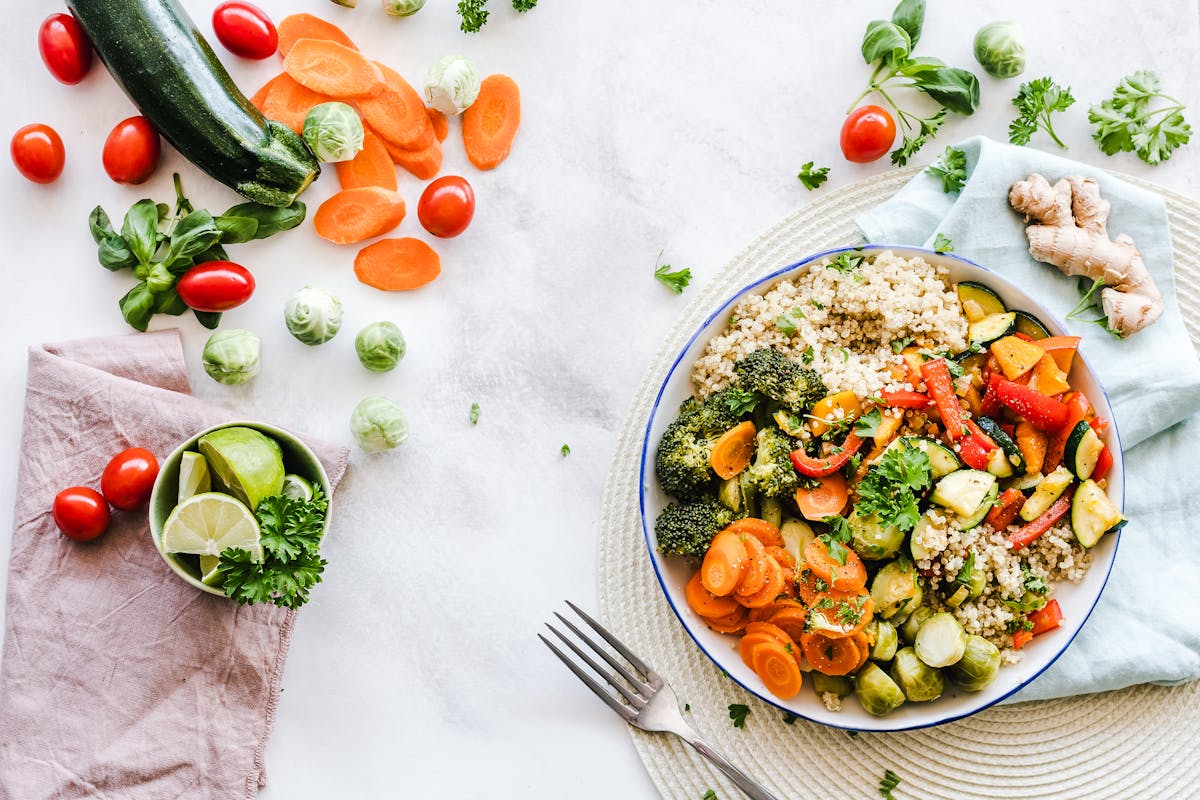
- Arrange the leafy greens, carrot, cucumber, onions, banana slices (if using), kimchi, and sauerkraut on top in small sections so you can see each colorful component.
- Drizzle each bowl with olive oil for silkiness and satisfaction.
- Spoon the kefir dressing generously over the top, or serve it on the side for dipping.
- Finish with a shower of roasted mixed seeds and chopped fresh herbs.

5. Taste, Adjust & Enjoy
- Taste a forkful with a bit of everything—grain, veg, kimchi, dressing, and seeds. Adjust seasoning with extra salt, pepper, or lemon if needed.
- If you’re new to fermented foods, use a smaller portion of kimchi and sauerkraut to start; you can always add more next time as your palate and gut adapt.
- Enjoy immediately while the grains are still pleasantly warm and the vegetables are crisp and fresh.
Gut-Friendly Tips, Variations & Substitutions
Make It Vegan or Dairy-Free
- Swap kefir for an unsweetened plant-based yogurt with live cultures (coconut, soy, or almond).
- Thin with water or a splash of plant milk and season the same way.
Gluten-Free & Low-FODMAP Tweaks
- Gluten-free: use quinoa, buckwheat, or certified gluten-free oats instead of barley or wheat-based grains; ensure kimchi and soy sauces are gluten-free.
- Lower FODMAP: limit onion and garlic; try garlic-infused oil instead of raw garlic, and use smaller amounts of kimchi if cabbage is a trigger.
Change Up the Fermented Foods
- Replace sauerkraut with fermented dill pickles or carrot pickles.
- Add cubes of tempeh, lightly pan-seared in olive oil and tamari.
- Stir a teaspoon of miso paste into the dressing for deeper umami (avoid boiling miso to keep its cultures intact).
Boost the Fiber & Plant Count
- Scatter on extra seeds (chia, flax, hemp) just before serving.
- Add cooked beans or lentils for even more prebiotic goodness.
- Toss in a handful of shredded red cabbage, radishes, or roasted sweet potato cubes.

Storage & Meal Prep for Gut Health Bowls
This fermented grain bowl is wonderfully meal-prep friendly if you store each component thoughtfully. Keeping some parts separate preserves texture and the vitality of your fermented foods.
- Cooked grains: cool completely, then store in an airtight container in the fridge for up to 4 days.
- Cut vegetables: store separately in sealed containers or jars with a paper towel at the bottom to absorb moisture; best within 3 days.
- Kimchi & sauerkraut: keep in their brine in the fridge; they can often last weeks or longer, staying pleasantly tangy.
- Kefir dressing: refrigerate in a jar with lid for up to 3 days; shake before using, as it may separate slightly.
- Seeds: keep in a cool, dark place or in the fridge to preserve their healthy fats and crunch.
Reheating Guidelines
- Reheat grains gently in a pan with a splash of water or broth over low heat, or microwave in short bursts, just until warm.
- Do not heat the kimchi, sauerkraut, or kefir dressing to very high temperatures if you want to preserve their live cultures. Add them after reheating the grains.
Serving Suggestions & Complementary Gut-Healthy Dishes
Think of this fermented grain bowl as a centerpiece in a day of gut-friendly eating. You can round it out with simple sides and snacks that continue to nourish your microbiome.
- Serve with:
- A small bowl of miso soup with seaweed and tofu.
- Roasted root vegetables (carrots, parsnips, beetroot) sprinkled with herbs and seeds.
- A simple green salad dressed with extra-virgin olive oil and lemon.
- Gut-loving breakfast ideas: overnight oats with kefir and berries, or wholegrain toast with avocado, sauerkraut, and a drizzle of olive oil.
- Snacks: plain yogurt with fruit and nuts, a small glass of kombucha, or crunchy raw veggies with hummus.

Over time, these small, delicious habits—an extra spoonful of kimchi here, a handful of seeds there, an extra vegetable or herb—can add up to a happier, more diverse gut ecosystem. Let your curiosity (and your taste buds) guide you.
Recipe Metadata
The following structured data helps search engines understand and feature this gut health recipe.
