
From ‘Clueless’ to ‘Philadelphia’: Why the National Film Registry’s 2025 Picks Matter More Than Ever
The Library of Congress has added Philadelphia, Clueless, The Karate Kid, John Carpenter’s The Thing, and holiday staple White Christmas to the National Film Registry for 2025—an eclectic mix that says as much about what American audiences value now as it does about Hollywood’s past. Each year’s 25-film list quietly redraws the map of “essential” American cinema, and this time the Registry has leaned hard into emotional politics, generational nostalgia, and genre respect.
On paper, it’s just another list. In practice, the National Film Registry is a time capsule of what the U.S. considers “culturally, historically, or aesthetically significant.” Seeing a ‘90s teen comedy sit alongside a landmark AIDS drama, a Cold War–era Christmas musical, and a once-dismissed horror remake offers a snapshot of where our conversations about identity, genre, and memory have landed in 2025.
What the National Film Registry Actually Does (Beyond Making Lists)
The National Film Registry, overseen by the Library of Congress, selects 25 films each year for preservation. To qualify, a film must be at least 10 years old and considered “culturally, historically or aesthetically significant.” That definition is intentionally broad, which is why you’ll see big studio hits, experimental shorts, documentaries, and even home movies sharing the same shelf.
Crucially, this is not an “awards list.” It’s about preservation and recognition, not ranking. Once selected, films are prioritized for archiving in formats that will outlast changing technology and market tastes. In an era of disappearing streaming titles and vanishing physical media, the Registry is essentially saying: these movies don’t get to be lost.
Each year’s crop also doubles as a subtle canon correction. Silent cinema, independent films, work by women and filmmakers of color, and genres once treated as disposable—like horror and teen movies—are gradually being pulled into the “classic” conversation.
‘Philadelphia’: Mainstream Hollywood Faces the AIDS Crisis
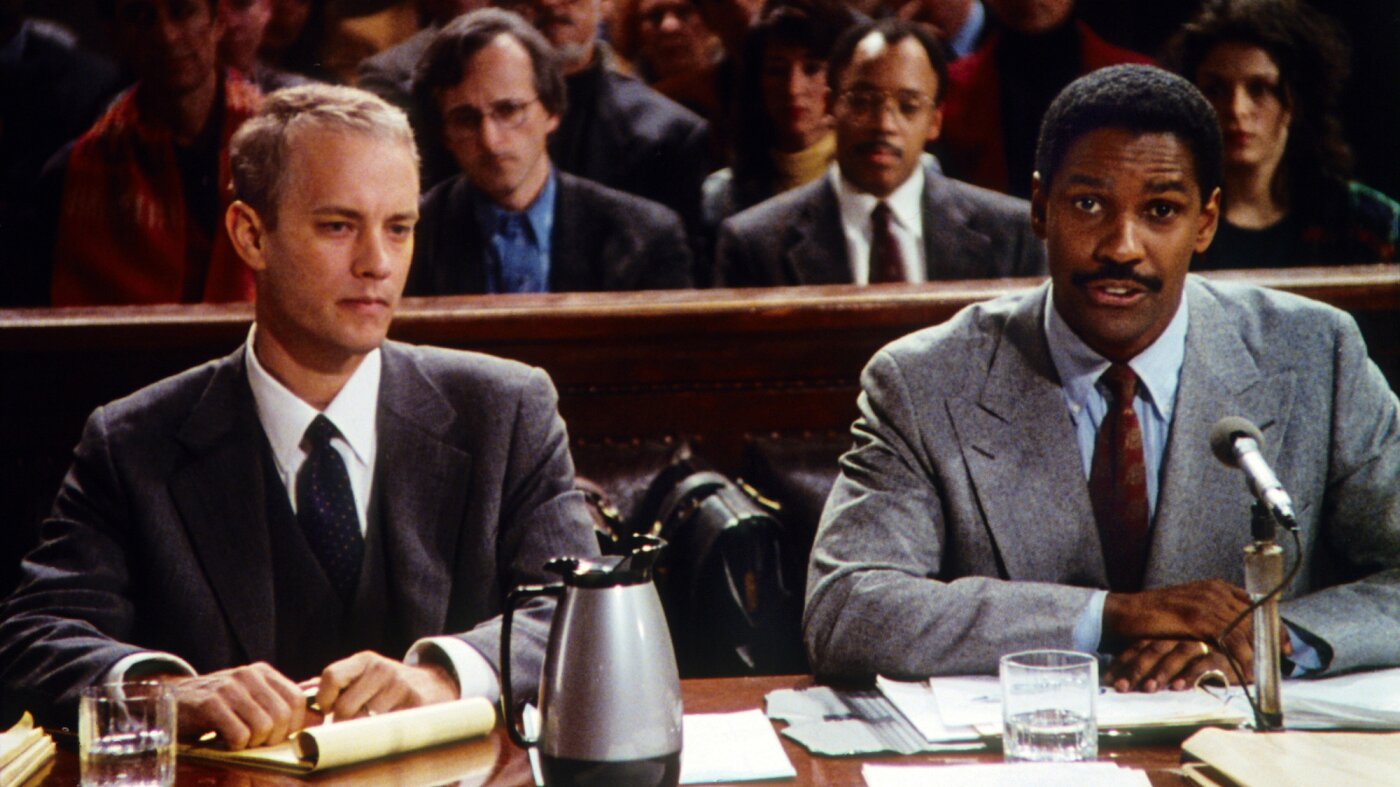
When Jonathan Demme’s Philadelphia arrived in 1993, Hollywood had spent more than a decade largely sidestepping the AIDS crisis. Independent cinema had addressed it; mainstream studio pictures mostly hadn’t. Casting Tom Hanks and Denzel Washington—two of the era’s most bankable stars—was a pointed attempt to make a then-controversial subject feel unavoidable.
“We wanted people who would ordinarily turn away from a film about AIDS to walk into the theater almost by accident.” — Jonathan Demme, on the strategy behind Philadelphia
The film follows Andrew Beckett (Hanks), a lawyer fired from his firm when colleagues discover he has AIDS, and Joe Miller (Washington), the initially homophobic attorney who agrees to represent him. It’s part courtroom drama, part civics lesson, and part emotional melodrama—designed to be accessible first and radical (for its time) second.
From a 2025 vantage point, Philadelphia can feel both groundbreaking and cautious. Its sexuality is muted, and its political edges are sanded down to reach a broad audience. But that’s precisely why its inclusion in the Registry is significant: it represents a moment when high-gloss Hollywood finally stopped looking away and began explaining the AIDS crisis to suburban multiplex audiences.
In Registry terms, Philadelphia is a textbook “historically significant” film: less for formal innovation than for the cultural work it did—bringing an epidemic, and the humanity of those living with it, into the center of the country’s biggest screens.
‘Clueless’: The Teen Comedy That Became a Cultural Blueprint
It’s hard to overstate how thoroughly Amy Heckerling’s Clueless seeped into ‘90s culture. Released in 1995, the film reworked Jane Austen’s Emma into a bubblegum-bright Beverly Hills teen comedy, then quietly reinvented the genre. The result: a movie that spawned catchphrases, influenced fashion, and helped set the template for MTV-era teen storytelling.
Alicia Silverstone’s Cher is both a satire of wealth and a surprisingly sincere heroine: shallow, yes, but also generous, self-questioning, and slowly aware of her privilege. The film’s greatest trick is that it laughs with Cher as much as it laughs at her, making the audience complicit in both the mockery and the affection.
“People thought they were getting a fluffy teen comedy. I thought I was making a period piece about the 1990s.” — Amy Heckerling, on Clueless
For the Registry, Clueless represents something long undervalued: the teen girl movie as serious cultural artifact. Its Valley-speak dialogue, mall-centric geography, and hyper-styled costumes have aged into pure anthropology. Watching it in 2025, you’re not just revisiting a comedy—you’re peering into a pre-digital teen ecosystem, before social media rewrote the rules of popularity and performance.
Including Clueless is an acknowledgment that poppy, fashion-forward teen films aren’t just guilty pleasures; they’re time capsules for language, gender politics, and youth culture. The Registry is effectively saying: this is how the ‘90s wanted to see itself.
‘The Karate Kid’: Underdog Myth, Immigrant Story, and the Long Tail of Nostalgia
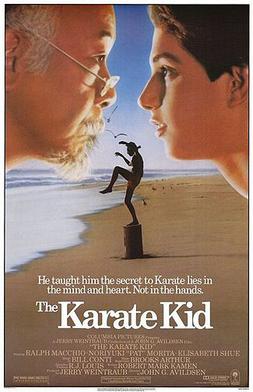
On the surface, The Karate Kid (1984) is one of the most straightforward entries on the list: a cleanly told underdog sports story about Daniel LaRusso (Ralph Macchio), a bullied Jersey transplant, and Mr. Miyagi (Pat Morita), the Okinawan maintenance man who becomes his mentor. But its lasting influence goes far beyond the “wax on, wax off” memes.
The film smuggles in a gentle portrait of immigrant experience and post-war trauma through Miyagi, whose backstory—internment, grief, quiet resilience—lands with surprising weight for a PG movie. Pat Morita’s performance, which earned him an Oscar nomination, is the emotional center of the film and a major reason it’s more than just training montages and tournament brackets.
“We wanted kids to come for the karate and stay for the relationship.” — Director John G. Avildsen on The Karate Kid
The Karate Kid also has one of the longest cultural half-lives of any ‘80s crowd-pleaser, thanks to sequels, remakes, and the surprisingly nuanced streaming series Cobra Kai, which reframes its rivalries through a modern lens. In Registry terms, it’s a film that embodies both the “historical” (its depiction of Japanese American experience) and the “cultural” (its endless quotability and ongoing franchise relevance).
Elevating The Karate Kid into the Registry formalizes what audiences have known for decades: it’s not just a formative VHS staple; it’s a surprisingly layered snapshot of ‘80s suburban anxiety, cross-cultural mentorship, and the evergreen appeal of a good tournament climax.
From ‘The Thing’ to ‘White Christmas’: Genre Films Get Their Due
The 2025 slate doesn’t stop with feel-good ‘80s hits and ‘90s milestones. John Carpenter’s The Thing (1982), once dismissed as too grotesque and nihilistic, now sits comfortably on “best horror films of all time” lists. Its addition to the Registry formalizes that critical rehab and underscores how thoroughly genre reputations can flip over a few decades.
Meanwhile, White Christmas (1954) taps into another side of American film memory: comfort viewing. Technicolor holiday musicals, fronted by stars like Bing Crosby and Danny Kaye, are baked into multiple generations’ December rituals. Including White Christmas isn’t edgy; it’s a nod to how ritual rewatching can make a film as central to American culture as any prestige drama.
Together, titles like The Thing and White Christmas show the Registry actively widening its definition of “classic”: not just awards-bait dramas, but movies that shaped how Americans scare themselves and how they celebrate.
Double Recognition: Actors Cementing Their Place in Film History
This year’s additions also highlight a quieter pattern: performers receiving “double recognition” as multiple films from their careers enter the Registry. Without turning the list into a Hall of Fame, the Library of Congress is effectively tracking which actors’ bodies of work have endured beyond hype cycles and box office tallies.
Some of these double recognitions are unsurprising—iconic leading men and women whose films have been fixtures of repertory screenings and home libraries for decades. Others are more revealing, elevating character actors or performers whose influence was more subcultural than mainstream, but whose work has proven unexpectedly durable.
“When you see the same names appearing across different eras and genres, you’re really looking at a map of who helped define American screen acting.” — A film historian commenting on the National Film Registry’s ongoing lists
The effect is cumulative. Over time, you can trace unofficial “careers within the canon,” noting how some actors move from teen movies to serious drama to cult genre fare, with all stages ultimately recognized as historically significant.
Strengths, Blind Spots, and the Politics of the 2025 List
The 2025 selections do a lot right. They validate genres once dismissed as “lowbrow,” recognize the cultural labor of teen cinema, and foreground films that tackled social issues for mass audiences. Philadelphia, Clueless, and The Karate Kid form a sort of emotional triangle: social conscience, adolescent identity, and aspirational resilience.
At the same time, every list is a mirror of its moment. While the Registry has improved in recent years at including films by women, LGBTQ+ creators, and directors of color, there’s still a long backlog of work outside the traditional studio system that waits for recognition. The presence of highly commercial titles can also spark debate: which less famous films lost their slot this year so that already beloved favorites could be further canonized?
That tension is built into the project. Preservation needs public-facing “headline” films to justify funding and attention, but its deeper value lies in rescuing fragile or overlooked works that don’t have streaming deals or Blu-ray releases. The hope is that high-profile picks like Clueless or The Karate Kid will direct new audiences toward the lesser-known titles sharing the same annual list.
Trivia, Deep Cuts, and Where to Watch

For viewers looking to explore beyond the headliners, the National Film Registry is an underrated discovery tool. Each year’s list is a curated syllabus that pairs familiar comfort watches with documentaries, experimental works, and regional films you might never stumble across on an algorithm-driven feed.
Why This Year’s Picks Feel Especially 2025

Taken together, the 2025 National Film Registry selections feel suspiciously like a cross-generational group chat. You have Gen X and Millennial nostalgia objects (Clueless, The Karate Kid), a prestige drama that marked a turning point in mainstream empathy (Philadelphia), a rehabilitated horror masterpiece (The Thing), and an old-school Christmas musical (White Christmas) that refuses to leave the seasonal rotation.
That mix reflects where we are now: anxious about erasure in the streaming era, eager to validate “low” genres, and increasingly aware that the stories we grew up with shaped our views on identity, justice, and community. By locking these films into a preservation vault, the Registry is effectively saying to future viewers: this is what moved people, entertained them, comforted them, and made them argue.
The canon is no longer just what shows up in textbooks; it’s what persists in memories, rewatches, and memes. With Philadelphia, Clueless, and The Karate Kid now officially part of the National Film Registry, the line between “comfort movie” and “American film history” has never been thinner—and that feels exactly right for 2025.
